📋 Quick Summary
In this article:
How AI Is Changing Creative Work
AI-Assisted vs AI-Generated Works
SEO, AEO, GEO & AI Search Optimization
Can AI-generated content be copyrighted?
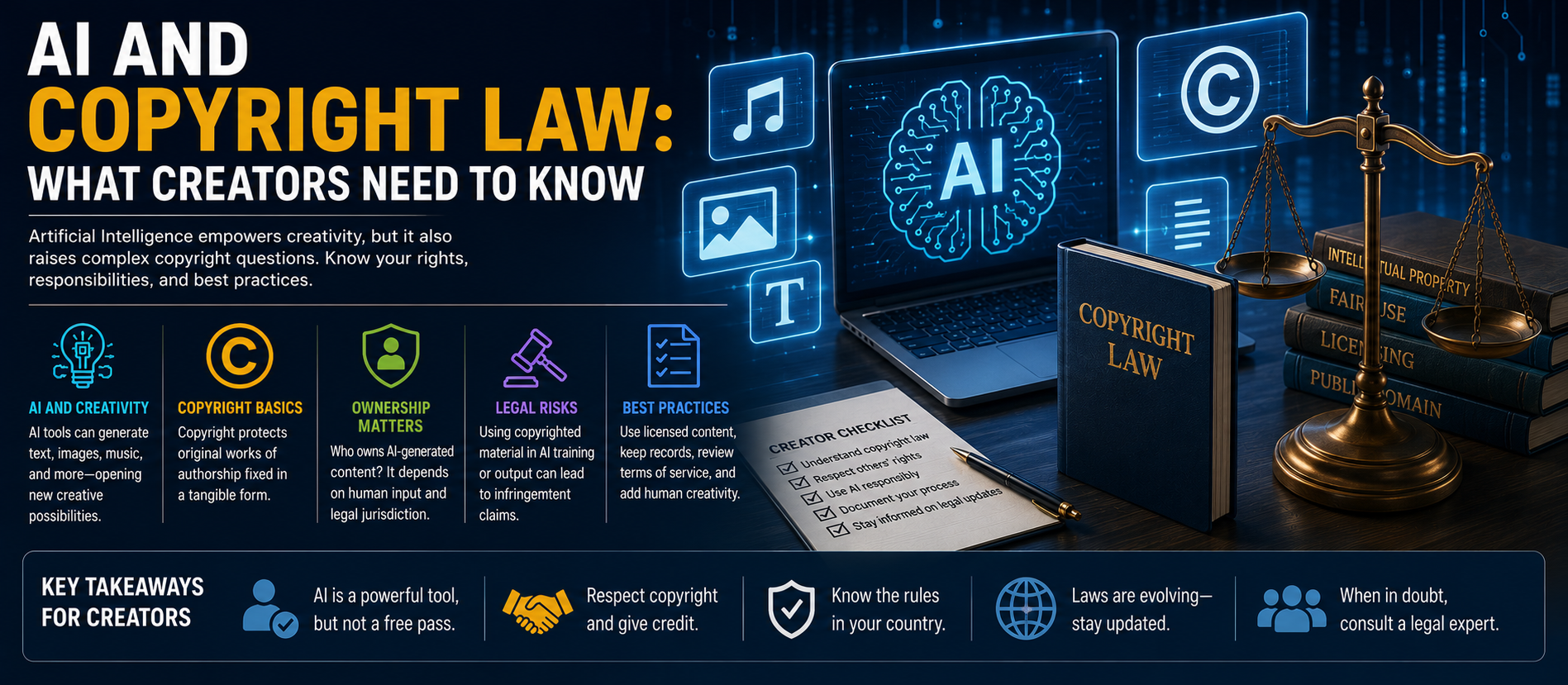
Artificial intelligence is changing how people write, design, compose music, edit videos, develop software, and create digital art. While AI offers powerful creative opportunities, it also raises complex copyright questions involving ownership, licensing, fair use, training data, infringement risks, and commercial exploitation.
This WordPress-ready guide explains how AI intersects with copyright law, the rights of creators, common legal issues, licensing considerations, and practical compliance strategies for individuals and businesses in 2026.
What Is Copyright?
Copyright protects original creative works such as books, articles, photographs, illustrations, music, films, software, and other eligible expressions. Protection and requirements vary by jurisdiction.
- Literary works
- Artwork
- Music
- Software
- Photography
- Video content
How AI Is Changing Creative Work
- AI writing assistants
- Image generation
- Music composition
- Video creation
- Code generation
- Translation tools
Key Copyright Questions
- Who owns AI-assisted content?
- Can AI-generated works receive copyright protection?
- How should training data be licensed?
- When could infringement claims arise?
AI-Assisted vs AI-Generated Works
Many legal systems distinguish between works primarily created by humans with AI assistance and works generated largely through automated systems. The applicable legal outcome depends on jurisdiction and the facts of each case.
Training Data and Licensing
The use of copyrighted material to train AI models has become a major legal issue worldwide. Courts and regulators continue to evaluate licensing, consent, exceptions, and rights-holder interests.
Risks for Creators
- Copyright infringement allegations
- Trademark conflicts
- Unauthorized reuse of protected works
- Licensing violations
- Platform policy violations
Best Practices
- Review AI platform terms
- Maintain records of creative contributions
- Verify commercial usage rights
- Respect third-party intellectual property
- Seek legal advice for high-value projects
Businesses Using AI
Organizations should establish internal AI governance policies covering copyright compliance, employee training, content review, and intellectual property management.
Future Trends
- AI-specific copyright legislation
- Expanded licensing models
- Greater transparency requirements
- International regulatory cooperation
SEO, AEO, GEO & AI Search Optimization
SEO, AEO, GEO, and AI Search Optimization help educational copyright content reach creators through Google, Bing, answer engines, and AI-powered search platforms.
Frequently Asked Questions
Can AI-generated content be copyrighted?
The answer depends on the applicable law and the degree of human creative contribution.
Can creators use AI commercially?
Often yes, subject to platform terms, licensing conditions, and applicable intellectual property laws.
Should businesses adopt AI policies?
Yes. Clear governance helps reduce legal and operational risk.
Conclusion
AI is reshaping copyright law and creative industries. Creators who understand licensing, ownership, attribution, and evolving legal standards are better positioned to protect their work while using AI responsibly. Because laws continue to evolve, professional legal advice is recommended for significant commercial projects.
Digiifrog
Website: www.digiifrog.com
Digital Marketing, SEO, AEO, GEO & AI Search Solutions for Modern Businesses.
Ready to Grow?
Talk to us about a strategy tailored to your brand — we will help you stand out in search, AI discovery and social.

Comments (0)
Log in to leave a comment.