
📋 Quick Summary
In this article:
Quick Answer: What Is the Best Asset Allocation Strategy Using ETFs?
Why Use ETFs for Asset Allocation?
Important Factors Before Choosing an ETF Allocation
1. Financial Goals
2. Investment Time Horizon
3. Risk Tolerance
4. Liquidity Needs
5. Local Regulations and Taxes
Strategy 1: Conservative ETF Asset Allocation
Strategy 2: Moderate ETF Asset Allocation
Strategy 3: Growth-Focused ETF Asset Allocation
💡 Key Insight
Asset allocation is an important part of investing. It determines how your money is divided among different investment categories, such as stocks, bonds, and cash. A well-planned allocation can help investors balance growth opportunities with risk management.
Exchange-traded funds, or ETFs, can provide exposure to different markets and asset classes. A single ETF may hold many securities, helping investors build diversified portfolios.
This guide explains the best asset allocation strategies using ETFs in clear and simple language. It is designed for educational purposes and does not provide personalized investment advice.
Quick Answer: What Is the Best Asset Allocation Strategy Using ETFs?
The best ETF asset allocation depends on your financial goals, time horizon, risk tolerance, liquidity needs, and personal circumstances. Many investors use ETFs to diversify across stocks, bonds, and other asset categories, then review their portfolios periodically.
There is no single portfolio allocation that works for everyone. A person investing for a goal decades away may have different needs from someone who expects to use the money soon.
What Is Asset Allocation?
Asset allocation is the process of dividing an investment portfolio among different types of assets. The main purpose is to manage risk while pursuing financial goals.
Common asset classes include:
- Stocks: Often used for long-term growth potential but can experience significant price volatility.
- Bonds: May provide income and diversification benefits but also carry interest-rate and credit risks.
- Cash or cash-like assets: Can provide liquidity for near-term needs but may lose purchasing power because of inflation.
- Other assets: Depending on the investor and available products, these may include real estate or commodities.
Asset allocation focuses on the overall structure of your portfolio rather than simply finding the investment with the highest recent return.
Why Use ETFs for Asset Allocation?
ETFs can be useful tools for building diversified portfolios. Depending on the fund, an ETF may provide exposure to hundreds or even thousands of securities.
Potential benefits include:
- Broad diversification through a single fund.
- Access to different markets and asset classes.
- Exchange-based trading during market hours.
- A wide range of investment options.
- Potentially lower costs than some investment products.
However, ETFs are not automatically low-risk. Investors should review the fund's objective, holdings, fees, trading costs, risks, liquidity, and tax treatment where relevant.
Important Factors Before Choosing an ETF Allocation
1. Financial Goals
First, identify why you are investing. Your goal may involve retirement, education, a future home, financial independence, or another long-term objective. The purpose of the money can influence how much risk may be appropriate.
2. Investment Time Horizon
Your time horizon is the period before you expect to use the money. Funds needed soon may require a different level of risk from money intended for a long-term goal.
3. Risk Tolerance
Risk tolerance includes your financial ability and emotional willingness to experience losses. If market declines cause you to panic and abandon your strategy, your portfolio may be taking more risk than you can comfortably handle.
4. Liquidity Needs
Consider emergency savings, expected expenses, income stability, and debt obligations. Money needed for essential short-term expenses may not be appropriate for long-term investment risk.
5. Local Regulations and Taxes
ETF availability, tax rules, investment accounts, and regulations vary by country. Always consider the rules that apply in your location.
Strategy 1: Conservative ETF Asset Allocation
A conservative allocation generally places greater emphasis on bonds, cash, or lower-volatility assets and a smaller percentage in stocks.
An educational example could be:
- 30% diversified stock ETFs.
- 50% diversified bond ETFs.
- 20% cash or short-term investments.
This is only an example. It illustrates a portfolio that gives greater importance to stability and liquidity.
A conservative approach may appeal to investors with shorter time horizons or lower tolerance for market volatility. However, bonds and cash still involve risks, including inflation and interest-rate changes.
Strategy 2: Moderate ETF Asset Allocation
A moderate strategy attempts to balance growth potential with risk management.
An educational example could include:
- 60% diversified stock ETFs.
- 30% diversified bond ETFs.
- 10% cash or short-term investments.
The stock portion could include domestic and international markets. The bond portion could also vary based on duration, credit quality, and investment objectives.
A moderate portfolio can still experience meaningful losses during broad market declines. The word “moderate” does not guarantee a specific level of performance or safety.
Strategy 3: Growth-Focused ETF Asset Allocation
A growth-focused strategy generally places a larger percentage of the portfolio in stocks.
An educational example could be:
- 80% diversified stock ETFs.
- 15% diversified bond ETFs.
- 5% cash or short-term investments.
Investors with long time horizons may consider greater equity exposure. However, higher stock allocations can also experience larger short-term declines.
This type of strategy requires the ability to tolerate volatility and remain focused on long-term goals during difficult market periods.
Strategy 4: The Simple Two-ETF Portfolio
Some investors prefer simplicity. A two-ETF portfolio may include one broadly diversified stock ETF and one broadly diversified bond ETF.
The investor then chooses the percentage allocated to each ETF based on personal goals and risk tolerance.
The main advantage is simplicity. Fewer investments can make a portfolio easier to monitor. However, investors should still understand what each ETF owns and whether the combination provides the desired diversification.
Strategy 5: The Three-Fund ETF Approach
A simple three-fund approach may include:
- A domestic stock ETF.
- An international stock ETF.
- A bond ETF.
This structure can provide exposure to multiple geographic markets while remaining relatively easy to manage.
International investing may reduce dependence on a single country's economy, but it also involves additional risks, including currency changes, political developments, and regional economic conditions.
Strategy 7: Core-and-Satellite ETF Strategy
The core-and-satellite approach divides a portfolio into two sections.
The core usually contains broad, diversified ETFs that form the main foundation of the portfolio.
The satellite portion may contain smaller investments in specific sectors, themes, industries, or regions.
For example, broad-market ETFs could form the core while a smaller allocation targets technology, healthcare, renewable energy, or another sector.
This strategy can allow investors to explore specific ideas without allowing one trend to dominate the entire portfolio.
How to Choose Stock ETFs
Stock ETFs can provide exposure to different parts of the market. Investors may consider:
- Broad domestic markets.
- Large companies.
- Small and mid-sized companies.
- International developed markets.
- Emerging markets.
- Specific sectors.
Broad-market ETFs may provide more diversification than narrowly focused sector funds. Sector ETFs can increase concentration risk if they represent a large portion of your portfolio.
How to Choose Bond ETFs
Bond ETFs also vary significantly. Important factors may include:
- Interest-rate sensitivity.
- Credit quality.
- Government or corporate exposure.
- Domestic or international holdings.
- Income objectives.
Bonds are not risk-free. Rising interest rates, inflation, and credit problems can affect their value.
The Role of Cash in Asset Allocation
Cash can provide liquidity for emergencies, planned expenses, and short-term financial needs.
However, holding too much cash for a long period may reduce investment growth opportunities and may lose purchasing power during inflation.
The right amount of cash depends on your personal circumstances rather than a universal percentage.
How Often Should You Rebalance an ETF Portfolio?
Rebalancing means adjusting investments when portfolio percentages move away from your intended allocation.
There is no single schedule that works for everyone. Some investors review portfolios periodically, while others use predetermined percentage thresholds.
Before rebalancing, consider:
- Transaction costs.
- Taxes.
- How far the allocation has changed.
- Your investment strategy.
Frequent changes can increase costs and encourage emotional decisions.
Common ETF Asset Allocation Mistakes to Avoid
Owning Too Many Similar ETFs
Buying many ETFs does not automatically create better diversification. Different funds may hold many of the same companies or securities.
Ignoring Portfolio Overlap
Always review the holdings and objectives of your ETFs. Significant overlap can create more concentration than the number of funds suggests.
Chasing Recent Performance
Past performance does not guarantee future results. Choosing investments only because they recently performed well can lead to poor timing.
Ignoring Fees and Costs
Expense ratios, trading costs, account charges, and taxes can affect long-term investment results.
Taking More Risk Than You Can Handle
A portfolio that looks attractive during a strong market may become difficult to hold during a major decline. Choose a risk level you can realistically manage.
A Step-by-Step Process for Building an ETF Portfolio
- Define your financial goal.
- Determine your investment time horizon.
- Review emergency savings and expensive debt.
- Assess your risk tolerance.
- Choose appropriate asset classes.
- Select diversified ETFs.
- Set target allocation percentages.
- Review your portfolio periodically.
Sample ETF Allocation Models
The following examples are for educational purposes only and are not personalized recommendations.
Conservative Example
- 30% broad stock exposure.
- 50% bond exposure.
- 20% cash or short-term investments.
Moderate Example
- 60% broad stock exposure.
- 30% bond exposure.
- 10% cash or short-term investments.
Growth-Oriented Example
- 80% broad stock exposure.
- 15% bond exposure.
- 5% cash or short-term investments.
These examples are simplified. A real portfolio should reflect individual circumstances and local investment conditions.
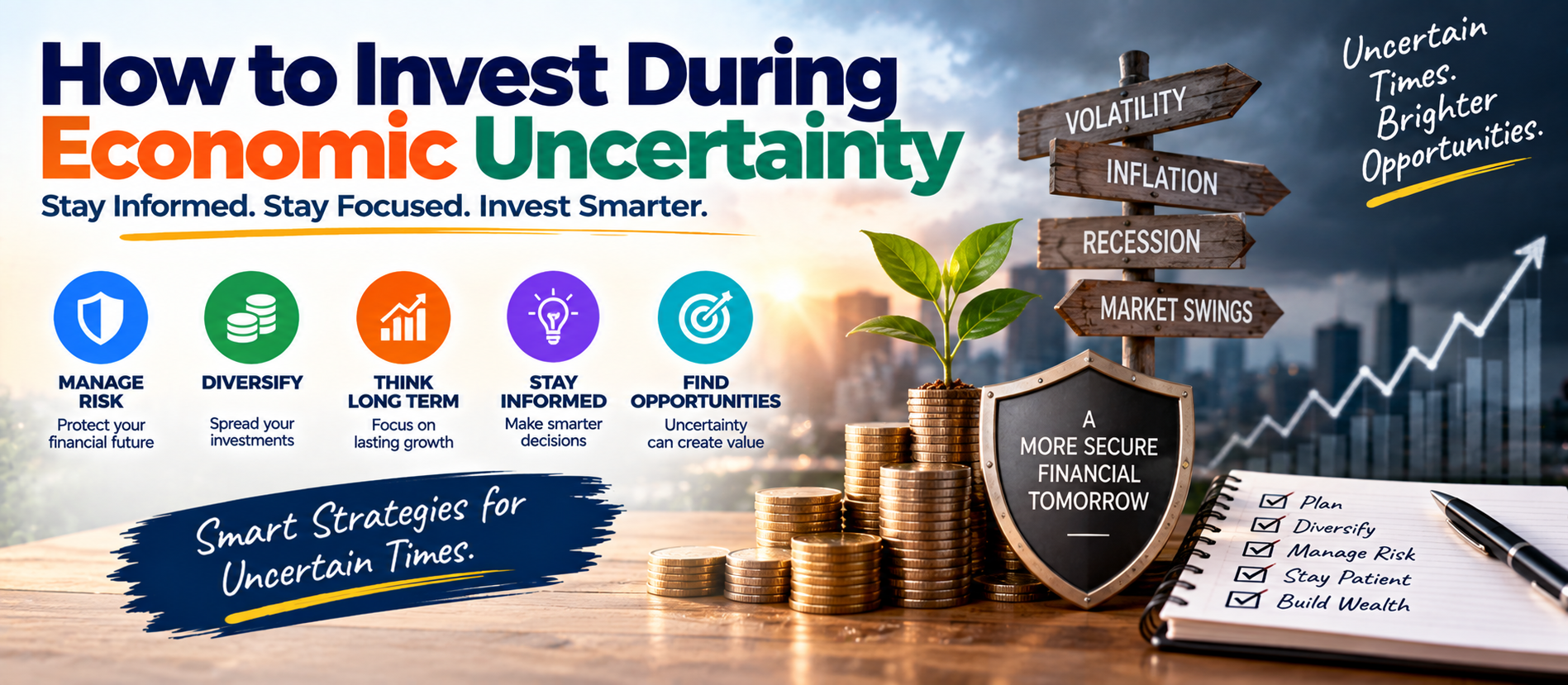
Asset Allocation During Economic Uncertainty
Economic uncertainty can cause investors to question their portfolios. Inflation, changing interest rates, market volatility, and geopolitical events may encourage investors to react quickly.
Before making major changes, review whether your:
- Financial goals have changed.
- Time horizon has changed.
- Income situation has changed.
- Liquidity needs have increased.
- Risk tolerance has changed.
Short-term news alone may not justify rebuilding an entire portfolio. However, meaningful changes in your personal financial situation may require a review.
SEO, AEO, GEO, and AI Search Optimization
People increasingly use search engines and AI-powered platforms to research investment topics. Clear and responsible financial content is important.
SEO can target phrases such as best asset allocation strategies using ETFs, ETF portfolio allocation, diversified ETF portfolio, and how to build an ETF portfolio.
AEO focuses on direct answers to questions such as “What is the best ETF asset allocation?” and “How many ETFs should I own?”
GEO matters because ETF availability, tax treatment, investment regulations, currencies, and account structures vary across countries.
AI Search optimization benefits from clear headings, direct answers, structured information, transparent risk explanations, and appropriate disclaimers.
Frequently Asked Questions
What is the best asset allocation using ETFs?
The best allocation depends on your goals, time horizon, financial circumstances, liquidity needs, and risk tolerance. There is no universal allocation suitable for every investor.
How many ETFs should be in a portfolio?
There is no required number. A small number of broad ETFs may provide meaningful diversification, while many funds may create unnecessary overlap.
Are ETFs good for diversification?
Many ETFs can provide diversification, but the level depends on the fund's holdings and strategy. A narrow sector ETF may be less diversified than a broad-market ETF.
How often should I rebalance my ETF portfolio?
The appropriate frequency depends on your strategy, taxes, costs, and portfolio changes. Periodic reviews can help determine whether allocations have moved significantly from their intended targets.
Can an ETF portfolio lose money?
Yes. ETFs are investments and can lose value. Diversification may reduce certain risks but does not guarantee profits or prevent losses.
Final Thoughts
The best asset allocation strategy using ETFs begins with understanding your personal financial needs before selecting investments. Your goals, time horizon, liquidity requirements, financial stability, and risk tolerance should guide your decisions.
ETFs can make it easier to gain diversified exposure to stocks, bonds, and global markets. However, an ETF is only a tool. The overall strategy matters more than simply owning a large number of funds.
⚠ Watch Out
Keep your portfolio understandable. Review investment risks and costs, avoid unnecessary complexity, and periodically check whether your allocation still supports your financial goals.
For more educational insights about personal finance, investing, business, technology, SEO, AEO, GEO, and AI Search optimization, visit www.digiifrog.com.
Disclaimer
This article is for educational purposes only and is not investment, financial, legal, or tax advice. It is not a recommendation to buy or sell any investment. All investments involve risk, including possible loss of principal. Consult a qualified financial professional before making significant decisions.
Ready to Grow?
Talk to us about a strategy tailored to your brand — we will help you stand out in search, AI discovery and social.
Comments (0)
Log in to leave a comment.