📋 Quick Summary
In this article:
What Makes a Digital Marketing Agency Right for a Small Business?
1. Start With Clear Business Goals
2. Look for Strong SEO and Local SEO Capabilities
3. Choose an Agency That Understands Paid Advertising
4. Website Quality and CRO Matter
5. Content Marketing Should Answer Real Customer Questions
6. AEO, GEO, and AI Search Optimization
7. Check Reporting and Transparency
Focus Keyword: Best Digital Marketing Agency for Small Businesses
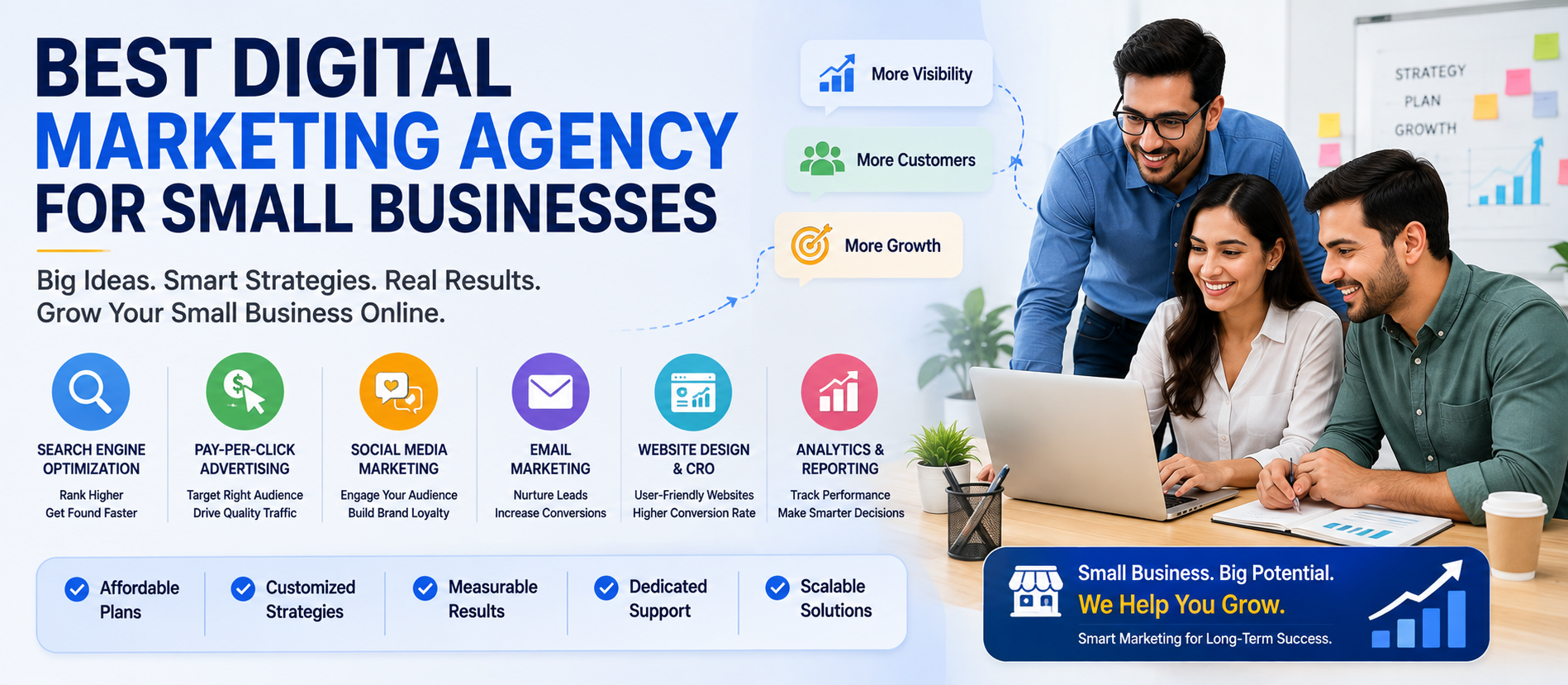
Choosing the best digital marketing agency for small businesses is not about hiring the biggest agency or purchasing every available marketing service. Small businesses need a practical partner that understands budgets, competition, customer intent, and the importance of turning digital activity into enquiries, sales, bookings, and long-term growth.
In 2026, customers discover businesses through Google Search, Google Maps, paid advertising, social media, content, email, and AI-powered search experiences. The right agency should connect these channels into a measurable strategy instead of treating each one as an isolated activity.
Designfo supports businesses with website strategy, SEO, local SEO, paid marketing, conversion optimization, content, marketing automation, AEO, GEO, and AI Search Optimization.
What Makes a Digital Marketing Agency Right for a Small Business?
A good agency starts with your business problem rather than immediately selling a package. A local service provider may need more calls from nearby customers. A B2B company may need qualified leads. An ecommerce brand may need product visibility, advertising, and retention automation.
- Your target customers
- Your business goals
- Your service area or market
- Your sales process
- Your available budget
- Your existing website and data
- Your most valuable conversions
The strongest strategy is not the one with the most channels. It is the one that concentrates resources on the opportunities most likely to create measurable business value.
1. Start With Clear Business Goals
Before hiring an agency, decide what marketing should achieve. “More traffic” may be useful, but traffic alone does not create revenue.
Better Goals Include
- Increase qualified enquiries
- Generate more phone calls
- Increase online sales
- Book more appointments
- Improve local visibility
- Increase repeat purchases
- Reduce customer acquisition costs
A capable agency should connect campaign metrics with these outcomes wherever possible.
2. Look for Strong SEO and Local SEO Capabilities
SEO for small businesses remains valuable because customers continue to search for products, services, solutions, and local providers. A strong SEO program should include technical foundations, customer-intent research, useful content, relevant pages, and clear measurement.
For local businesses, Google Business Profile is important. Complete and accurate information can support relevant local visibility, while local results are influenced primarily by relevance, distance, and prominence.
Ask an Agency About
- Technical SEO audits
- Keyword and customer-intent research
- Service and location pages
- Google Business Profile optimization
- Review strategy
- Content planning
- Search Console and analytics reporting
⚠ Watch Out
Avoid agencies that guarantee rankings. Sustainable SEO should focus on useful, reliable information and a strong website experience.
3. Choose an Agency That Understands Paid Advertising
Paid advertising can help a small business reach customers faster when campaigns are connected to clear conversion goals. Depending on the business, this may include Google Ads, search advertising, display campaigns, remarketing, social ads, or ecommerce campaigns.
- Campaign structure
- Audience strategy
- Keyword and intent targeting
- Creative and ad copy
- Landing-page alignment
- Conversion tracking
- Budget optimization
Do not judge advertising only by impressions or clicks. Ask how the agency measures qualified leads, sales, revenue, or another meaningful outcome.
4. Website Quality and CRO Matter
Sending more visitors to a weak website can waste marketing budget. Conversion Rate Optimization (CRO) should therefore be part of the discussion.
Visitors should quickly understand what the business offers, who it serves, why it is credible, and what action to take next. Clear value propositions, useful service information, mobile usability, trust signals, fast pages, strong calls to action, and simple forms can improve the customer journey.
5. Content Marketing Should Answer Real Customer Questions
Content should not exist simply to publish more pages. The best agencies build content around customer questions, buying concerns, comparisons, problems, and decision-making needs.
Useful Content Includes
- Service guides
- Buying guides
- Frequently asked questions
- Case studies
- Comparison pages
- Local resource pages
- Industry insights
Original expertise and useful information are more valuable than generic pages written only to attract search traffic.
6. AEO, GEO, and AI Search Optimization
More customers now use conversational and AI-powered search experiences to research businesses. However, small businesses should be careful about agencies selling “secret AI ranking hacks.”
A practical AI Search Optimization strategy should focus on:
- Clear website structure
- Accurate business information
- Original expert content
- Useful answers to customer questions
- Detailed service and product information
- Relevant images and videos
- Technical accessibility for search systems
AEO and GEO should not replace SEO fundamentals. The practical objective is to make it easy for customers and search systems to understand what you do, where you operate, why you are credible, and which problems you solve.
7. Check Reporting and Transparency
A good agency should explain what it is doing and why. Monthly reporting should connect activity to business objectives rather than presenting a collection of confusing charts.
Useful Reports May Include
- Organic visibility and qualified traffic
- Leads and conversion performance
- Advertising spend and outcomes
- Local visibility
- Content performance
- Completed work and next priorities
💡 Key Insight
Ask what data you will be able to access. A business should understand and retain access to important marketing accounts, analytics, websites, and advertising assets.
8. Review Experience, Proof, and Process
Before choosing an agency, review case studies, portfolios, testimonials, and working processes. Ask for relevant experience when available.
- How do you create a strategy?
- Who will work on the account?
- How often will we communicate?
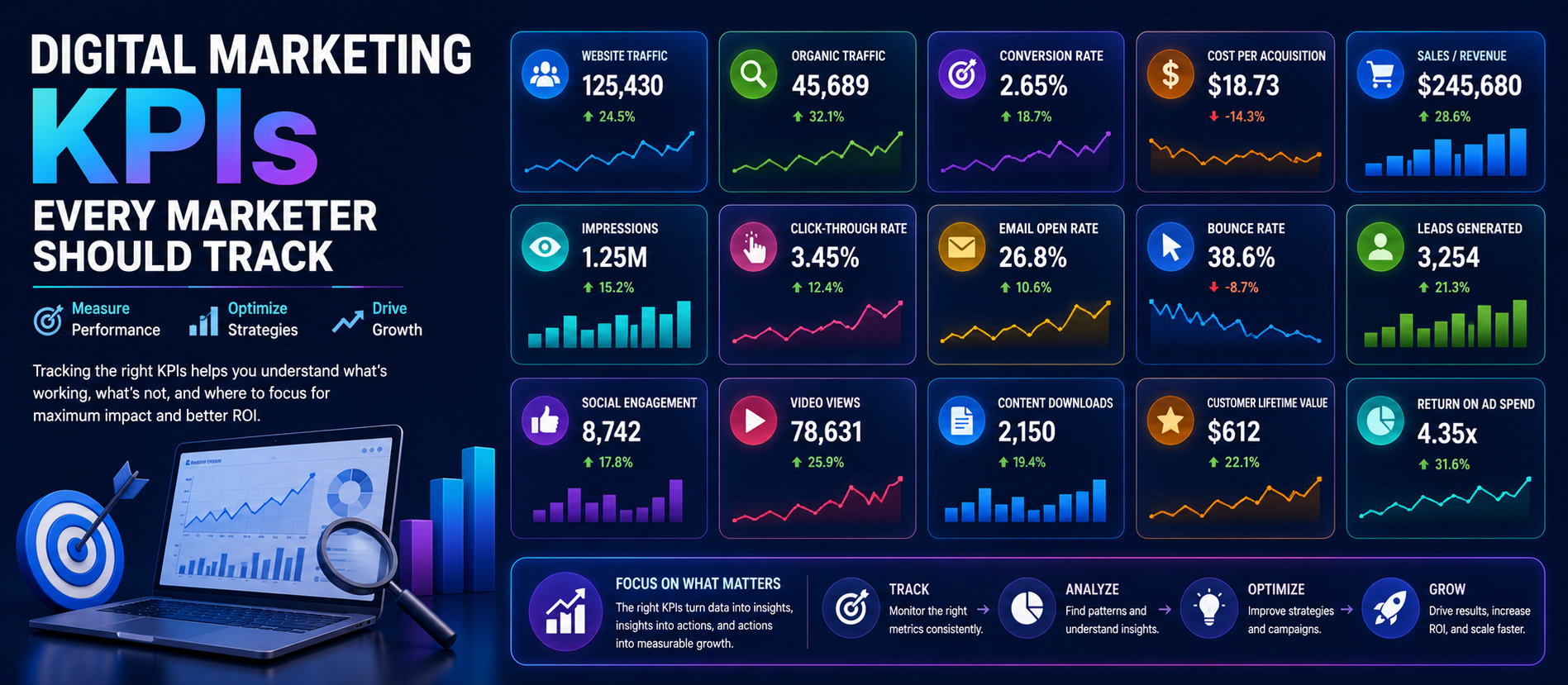
- Which KPIs will we track?
- How do you test and improve campaigns?
- What happens if a campaign underperforms?
- Who owns the accounts and data?
A trustworthy agency should be comfortable explaining its methods in clear language.
9. Avoid Agencies That Make Every Service the Immediate Priority
A small business may eventually benefit from SEO, Google Ads, social media, email, automation, content, CRO, and reputation management. That does not mean everything should start at once.
The right agency should create priorities. For example, a business with an outdated website and no conversion tracking may need strong foundations before expanding into broader advertising.
10. Compare Value, Not Only the Lowest Price
The cheapest agency is not always the most affordable over time. Poor strategy, weak tracking, low-quality content, or wasted advertising spend can become expensive.
- Scope of work
- Experience and specialization
- Reporting quality
- Communication
- Technology and tools
- Expected deliverables
- Strategic involvement
- Contract flexibility
Essential Digital Marketing Services for Small Businesses
SEO
Build long-term visibility through technical quality, useful content, and clear website structure.
Local SEO
Improve local discoverability with accurate business information, relevant local content, and reputation management.
Google Ads
Reach customers with commercial intent and measure meaningful conversions.
Social Media Marketing
Build awareness, distribute useful content, communicate with audiences, and support paid campaigns when relevant.
Email and Marketing Automation
Nurture leads, follow up with prospects, improve customer communication, and support retention.
Conversion Rate Optimization
Improve landing pages, forms, calls to action, trust, and customer journeys so existing traffic can create more value.
How Designfo Supports Small Business Growth
Designfo helps businesses build connected digital strategies instead of treating every marketing channel as an isolated project.
Designfo Services
- SEO and Technical SEO
- Local SEO and Google Business Profile Strategy
- Google Ads and Paid Advertising
- Website Development and Landing Pages
- Conversion Rate Optimization
- Content Marketing
- Marketing Automation
- AEO, GEO, and AI Search Optimization
- Digital Strategy and Growth Planning
The objective is simple: attract the right audience, provide useful information, build trust, measure valuable actions, and continuously improve performance.
Checklist: How to Choose the Best Digital Marketing Agency
- Define your primary business goal.
- Identify your ideal customers and service areas.
- Audit your website and current marketing assets.
- Choose channels based on customer intent.
- Verify the agency's process and experience.
- Ask how success will be measured.
- Confirm ownership and access to accounts.
- Review reporting and communication expectations.
- Start with realistic priorities.
- Measure leads, sales, and business value—not just traffic.
Frequently Asked Questions
What is the best digital marketing agency for small businesses?
The best agency depends on your goals, industry, audience, budget, and current digital maturity. Look for a partner that understands your business model, prioritizes the right channels, provides transparent reporting, and measures meaningful outcomes.
What services should a small business hire first?
Start with the biggest growth opportunity. This may include website improvements, SEO, local SEO, Google Business Profile optimization, conversion tracking, or targeted paid advertising.
Is SEO still important in the age of AI search?
Yes. SEO fundamentals, clear technical structure, and unique, valuable content remain important for search visibility, including AI-powered search experiences.
How long does digital marketing take to show results?
The timeline depends on the channel, competition, budget, website condition, and business model. Paid campaigns may generate data more quickly, while SEO and authority-building generally require a longer, consistent process.
Should a small business use marketing automation?
Yes, when it solves a real workflow problem. Automation can support lead follow-up, email nurturing, appointment reminders, customer communication, and internal efficiency.
Conclusion
Choosing the best digital marketing agency for small businesses should be a business decision, not a popularity contest. The right partner understands your customers, identifies high-priority opportunities, creates a measurable plan, and improves performance over time.
In 2026, a strong strategy can connect SEO, local SEO, paid advertising, content, conversion optimization, marketing automation, AEO, GEO, and AI Search Optimization where they genuinely support the business.
Designfo
Website: www.designfo.in
Ready to Grow?
Talk to us about a strategy tailored to your brand — we will help you stand out in search, AI discovery and social.

Comments (0)
Log in to leave a comment.