📋 Quick Summary
In this article:
Why Branding Matters in Real Estate
Choose a Clear Market Position
Create a Strong Unique Value Proposition
Develop a Memorable Brand Name
Create a Professional Visual Identity
Build a High-Quality Real Estate Website
Build Trust Through Content Marketing
Use Storytelling to Humanize Your Brand
Create a Consistent Brand Voice
Build a Strong Social Media Presence
💡 Key Insight
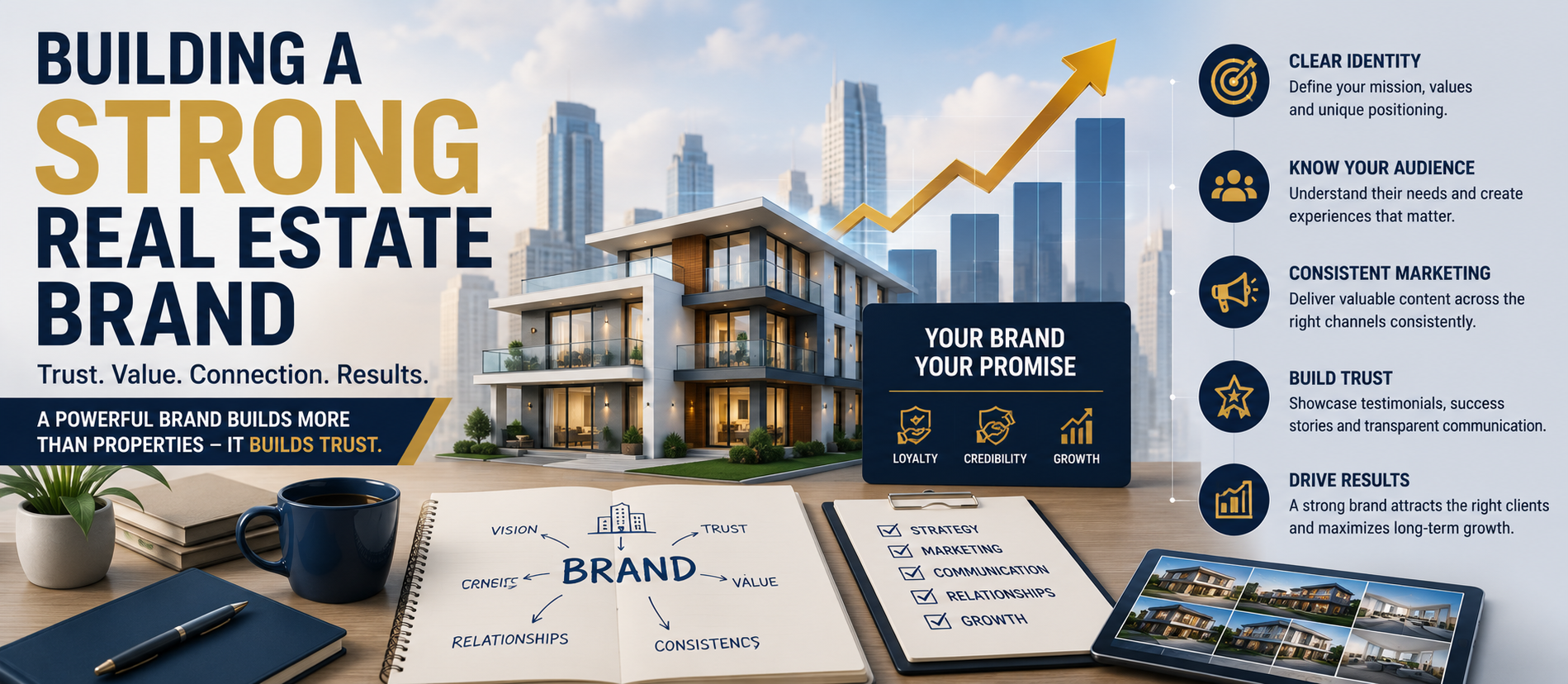
Building a strong real estate brand is essential in a competitive property market where buyers, sellers, investors, tenants, and developers have more choices than ever before. A recognizable and trustworthy brand helps a real estate professional or company stand apart from competitors, communicate a clear value proposition, attract qualified leads, and build long-term relationships.
A real estate brand is much more than a logo, color palette, website, or advertising campaign. It represents the complete experience people associate with your business. Your reputation, expertise, communication style, online presence, customer service, market specialization, visual identity, content, reviews, and client results all contribute to brand perception.
This comprehensive WordPress-ready guide explains how to build a powerful real estate brand from the ground up. It also explores how SEO, AEO (Answer Engine Optimization), GEO (Generative Engine Optimization), and AI Search Optimization can strengthen brand visibility across Google, Bing, AI assistants, and emerging search platforms.
What Is a Real Estate Brand?
A real estate brand is the identity, reputation, promise, and experience associated with a real estate professional, agency, brokerage, developer, property management company, or investment business.
Strong brands create clear expectations. When people see your business name, website, content, advertisements, property listings, or social media profiles, they should quickly understand what you offer and why they should trust you.
- Your market positioning
- Your target audience
- Your visual identity
- Your communication style
- Your expertise and specialization
- Your customer experience
- Your online reputation
- Your unique value proposition
Why Branding Matters in Real Estate
Real estate decisions involve significant financial commitments and emotional considerations. Clients want to work with professionals they recognize, trust, and believe can guide them through complex transactions.
A strong brand can improve credibility, increase referrals, support premium pricing, attract better clients, reduce dependence on paid advertising, and create long-term business value.
Define Your Target Audience
Successful branding begins with understanding the people you want to serve. Trying to appeal to everyone can create a generic brand that fails to connect with any specific audience.
Real estate businesses may focus on:
- First-time home buyers
- Luxury property buyers
- Home sellers
- Real estate investors
- Commercial property clients
- Rental property owners
- Developers and builders
- International buyers
- Senior housing clients
- Relocation customers
Research your audience's needs, concerns, goals, preferred communication channels, and decision-making process.
Choose a Clear Market Position
Market positioning explains how you want your business to be perceived compared with competitors.
You might position your brand as a local neighborhood specialist, luxury property advisor, investment expert, technology-driven brokerage, sustainable real estate consultant, commercial property specialist, or first-time buyer educator.
A clear position makes your marketing more focused and memorable.
Create a Strong Unique Value Proposition
Your unique value proposition should explain why clients should choose your real estate business.
Strong value propositions are specific, relevant, credible, and focused on customer outcomes.
Instead of simply claiming to provide excellent service, explain how your expertise, technology, process, market knowledge, communication, negotiation, or specialized resources create measurable value.
Develop a Memorable Brand Name
A strong brand name should be easy to remember, pronounce, spell, and search online. It should align with your market positioning and remain flexible enough to support future growth.
Before selecting a name, research trademarks, domain availability, social media usernames, competitor names, and local business registrations.
Create a Professional Visual Identity
Your visual identity helps people recognize your business across websites, social media, advertisements, signs, brochures, presentations, email campaigns, and property listings.
- Logo design
- Brand colors
- Typography
- Photography style
- Iconography
- Graphic design system
- Marketing templates
Consistency is more important than complexity. A professional visual system should work across digital and offline channels.
Build a High-Quality Real Estate Website
Your website is one of the most important assets of your real estate brand. It should communicate expertise, showcase properties, generate leads, answer questions, and provide useful resources.
A strong website should include:
- Clear service pages
- Professional biography or company profile
- Property listings
- Location and neighborhood pages
- Client testimonials
- Educational blog content
- Contact forms
- Lead capture tools
- Fast loading speed
- Mobile-friendly design
- Strong security
Build Trust Through Content Marketing
Educational content allows real estate brands to demonstrate expertise before potential clients make direct contact.
Useful content topics include home-buying guides, selling strategies, mortgage education, market reports, investment analysis, neighborhood guides, legal considerations, property management tips, and real estate technology trends.
Consistent publishing can improve search visibility and strengthen topical authority.
Use Storytelling to Humanize Your Brand
People connect with stories more easily than generic marketing claims. Share the purpose behind your business, client success stories, community involvement, professional experiences, lessons learned, and the values that guide your work.
Authentic storytelling can create stronger emotional connections while making your brand more memorable.
Create a Consistent Brand Voice
Your brand voice should remain recognizable across your website, emails, social posts, videos, property descriptions, advertisements, and customer communication.
A real estate brand may choose to sound professional, educational, approachable, premium, innovative, friendly, authoritative, or community-focused.
The most important requirement is consistency and alignment with your target audience.
Build a Strong Social Media Presence
Social media platforms can help real estate businesses increase visibility, showcase expertise, promote properties, communicate with prospects, and build communities.
Content may include:
- Property tours
- Market updates
- Educational videos
- Neighborhood highlights
- Client success stories
- Behind-the-scenes content
- Home-buying tips
- Investment insights
Choose platforms based on your audience rather than trying to maintain an active presence everywhere.
Use Professional Real Estate Photography and Video
High-quality visual content strengthens brand perception. Professional property photography, drone footage, virtual tours, short-form videos, agent introductions, and educational videos can improve engagement.
Create visual standards so your photos and videos remain consistent with your overall brand identity.
Build Authority Through Local Market Expertise
Local expertise is one of the strongest branding opportunities in real estate.
Publish detailed neighborhood guides, local market reports, school information, transportation resources, development updates, property trends, community events, and investment insights.
Becoming a trusted source of local information can generate organic traffic and qualified leads.
Develop a Strong Google Business Profile Presence
Local real estate businesses should maintain accurate business information, professional photos, service descriptions, regular updates, customer reviews, and relevant categories.
Local search visibility can help attract buyers and sellers who are actively looking for real estate services in specific geographic markets.
Build and Manage Online Reviews
Reviews influence trust and purchasing decisions. Encourage satisfied clients to provide honest feedback on relevant platforms.
⚠ Watch Out
Respond professionally to both positive and negative reviews. Never purchase fake reviews or manipulate rating systems.
Consistent reputation management helps protect long-term brand credibility.
Deliver an Exceptional Client Experience
Marketing can attract attention, but customer experience determines whether people recommend your brand.
- Respond quickly
- Communicate clearly
- Set realistic expectations
- Provide accurate information
- Respect client preferences
- Use transparent processes
- Follow up after transactions
Exceptional service can generate repeat business, testimonials, referrals, and long-term loyalty.
Use Email Marketing to Strengthen Relationships
Email marketing allows real estate brands to maintain relationships with leads, clients, investors, and referral partners.
Useful campaigns include property alerts, market updates, educational newsletters, homeownership tips, investment opportunities, neighborhood reports, and personalized follow-up sequences.
Segment audiences to improve relevance and engagement.
Create a Referral Marketing Strategy
Referrals are one of the most valuable sources of real estate business.
Maintain relationships after transactions, provide useful resources, celebrate client milestones, request referrals appropriately, and make it easy for satisfied customers to recommend your services.
Invest in Personal Branding
For individual real estate agents, personal branding can be as important as company branding.
Share your expertise, professional values, market knowledge, communication style, and unique perspective through articles, videos, social media, podcasts, webinars, and community activities.
A strong personal brand can support trust and create opportunities independent of individual advertising campaigns.
Branding for Real Estate Agencies and Brokerages
Agencies need consistent branding across offices, agents, websites, social profiles, listing presentations, advertisements, and client communication.
Create brand guidelines that explain logo usage, colors, typography, tone of voice, photography, marketing templates, and quality standards.
Branding for Luxury Real Estate
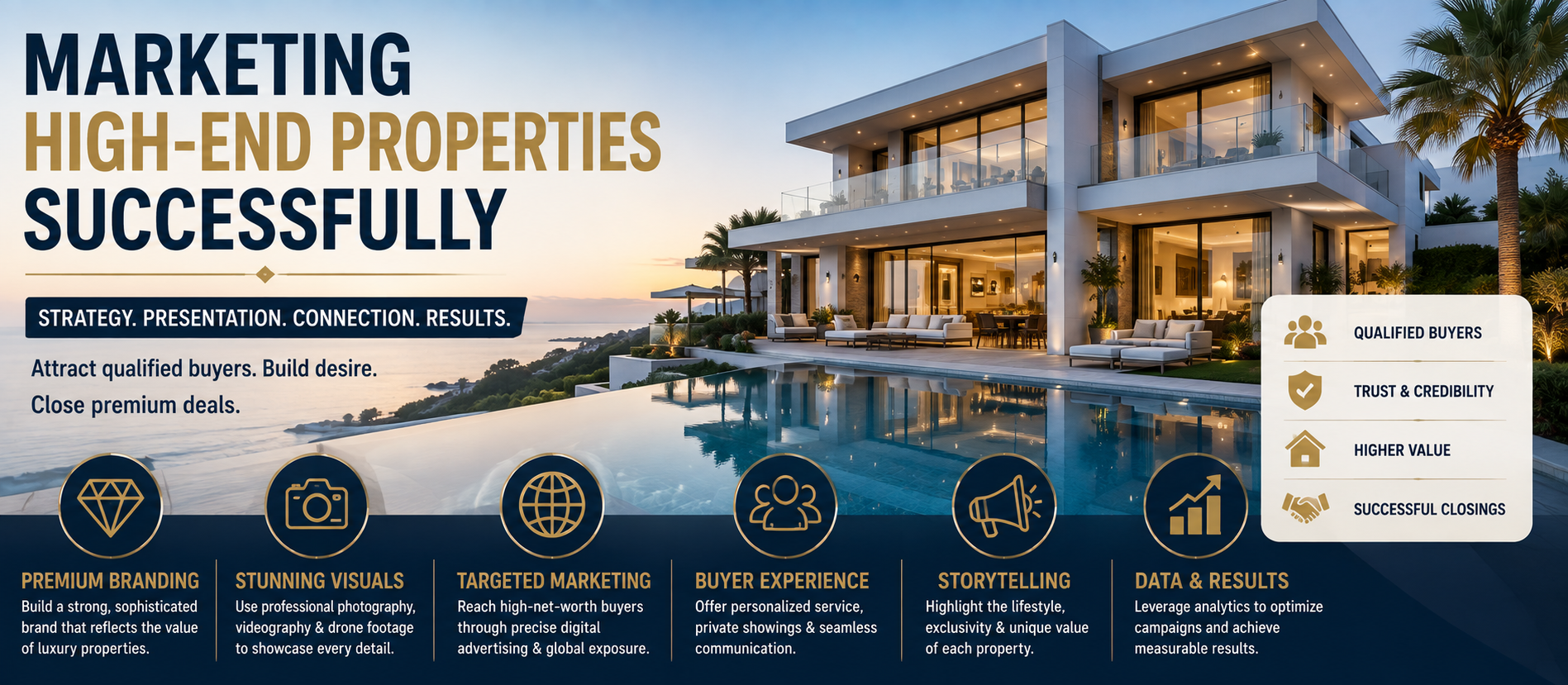
Luxury real estate brands should emphasize exclusivity, discretion, expertise, service quality, premium presentation, global reach, and personalized experiences.
Every detail, from website design and photography to communication and printed materials, should support the desired premium position.
Branding for Real Estate Investors
Investor-focused brands should communicate credibility, financial discipline, transparency, market expertise, and professional management.
Publish case studies, investment education, market analysis, property performance insights, risk explanations, and clearly structured resources.
Use Technology to Improve Brand Experience
Technology can improve customer service and strengthen brand consistency.
- CRM systems
- Marketing automation
- AI chatbots
- Virtual property tours
- Online scheduling
- Digital document management
- Personalized email campaigns
- Analytics dashboards
How AI Is Changing Real Estate Branding
Artificial intelligence helps real estate businesses analyze audiences, personalize marketing, create content, automate customer service, optimize advertisements, improve lead qualification, and analyze campaign performance.
AI-generated content should always be reviewed for accuracy, originality, brand alignment, and compliance before publication.
Measure Real Estate Brand Performance
Branding should be measured using meaningful performance indicators.
- Branded search volume
- Website traffic
- Organic search visibility
- Lead generation
- Conversion rates
- Social media engagement
- Email subscriber growth
- Customer reviews
- Referral rates
- Repeat business
Use data to identify which marketing activities strengthen awareness, trust, and revenue.
Common Real Estate Branding Mistakes
- Trying to serve everyone
- Copying competitors
- Inconsistent visual identity
- Weak website design
- Ignoring customer reviews
- Publishing low-quality content
- Using generic marketing messages
- Failing to track results
- Overpromising and underdelivering
- Changing branding too frequently
SEO for Real Estate Brand Visibility
Search Engine Optimization helps real estate brands become visible when potential clients search for properties, agents, brokers, investment information, and local market services.
Strong SEO strategies include technical optimization, keyword research, local SEO, service pages, location pages, internal linking, schema markup, fast page speed, mobile optimization, backlinks, and high-quality educational content.
AEO for Real Estate Brands
Answer Engine Optimization focuses on creating clear answers to questions users ask through search engines and AI assistants.
Real estate businesses should publish FAQs, concise definitions, step-by-step guides, comparison content, and structured answers to common buyer, seller, landlord, and investor questions.
GEO for Generative Search Visibility
Generative Engine Optimization focuses on creating authoritative, context-rich, trustworthy content that generative AI systems can understand and potentially reference.
Original research, market insights, expert explanations, case studies, local data, transparent business information, and comprehensive educational resources can strengthen digital authority.
AI Search Optimization for Real Estate Branding
Consumers increasingly use AI-powered platforms to research real estate companies, compare services, understand markets, and identify professionals.
Content optimized for AI Search should clearly explain your services, expertise, geographic coverage, customer value, credentials, and unique market position.
Consistent information across your website, business profiles, trusted directories, social platforms, and authoritative publications can help AI systems better understand your brand.
Frequently Asked Questions
Why is branding important in real estate?
Branding helps real estate professionals build trust, stand out from competitors, attract qualified clients, increase referrals, and create long-term business value.
What makes a strong real estate brand?
A strong brand combines clear positioning, professional visual identity, consistent communication, market expertise, high-quality content, positive customer experiences, and a trustworthy reputation.
How can real estate agents build personal brands?
Agents can publish educational content, share local market insights, create videos, participate in community activities, maintain consistent social profiles, and deliver exceptional client service.
Does SEO help real estate branding?
Yes. SEO increases visibility when buyers, sellers, investors, and property owners search for real estate services and information.
What is GEO in real estate marketing?
GEO, or Generative Engine Optimization, focuses on creating authoritative and well-structured content that generative AI search systems can understand and potentially use when answering relevant questions.
How can AI improve real estate branding?
AI can support audience research, personalization, content production, customer service, lead qualification, marketing automation, analytics, and campaign optimization.
Final Thoughts
Building a strong real estate brand requires strategy, consistency, credibility, and patience. Successful brands understand their audiences, communicate a clear value proposition, maintain professional visual identities, publish useful content, deliver excellent customer experiences, and build trustworthy reputations.
Modern real estate branding also requires strong digital visibility. SEO helps businesses rank in traditional search engines, AEO helps content answer user questions, GEO strengthens relevance for generative discovery systems, and AI Search optimization improves the ability of modern AI-powered platforms to understand and surface your expertise.
Real estate professionals who combine strong branding with excellent service, useful content, modern technology, and data-driven digital marketing can create sustainable competitive advantages and long-term business growth.
Digiifrog helps real estate professionals, agencies, brokers, investors, developers, and property businesses build stronger digital brands through advanced SEO, AEO, GEO, AI Search optimization, content marketing, branding strategies, and digital marketing solutions.
Website: www.digiifrog.com
Ready to Grow?
Talk to us about a strategy tailored to your brand — we will help you stand out in search, AI discovery and social.
Comments (0)
Log in to leave a comment.