
📋 Quick Summary
In this article:
What Is Business Email Compromise (BEC)?
Why BEC Attacks Are Increasing
How to Prevent Business Email Compromise
Zero Trust and Identity Security
SEO, AEO & GEO Optimization
AEO & GEO Optimized FAQs
What is Business Email Compromise?
How is BEC different from phishing?
Business Email Compromise (BEC) is one of the fastest-growing cyber threats affecting organizations worldwide. Unlike traditional phishing campaigns that rely on malicious attachments or obvious fake emails, BEC attacks focus on deception, social engineering, and impersonation. Cybercriminals carefully research their targets, imitate trusted executives, suppliers, or business partners, and convince employees to transfer money, disclose confidential information, or change payment details.
What Is Business Email Compromise (BEC)?
⚠ Watch Out
BEC is a cybercrime in which attackers impersonate trusted individuals or organizations through email to manipulate victims into making financial transfers or sharing sensitive information. These attacks often avoid malware and instead exploit trust, urgency, and human behavior.
Why BEC Attacks Are Increasing
- AI-generated emails are highly convincing.
- Remote and hybrid work increase email reliance.
- Public business information enables targeted attacks.
- Financial transactions are increasingly digital.
- Attackers automate reconnaissance using AI.
Common Types of BEC Attacks
- CEO or executive impersonation
- Vendor invoice fraud
- Payroll diversion scams
- Legal and compliance impersonation
- Account credential theft
- Gift card and urgent payment scams
Warning Signs
- Unexpected payment requests
- Changes to bank account details
- Urgent or confidential language
- Minor changes in email addresses
- Requests to bypass normal approval processes
Business Impact
- Financial losses
- Operational disruption
- Data breaches
- Regulatory consequences
- Reputational damage
How to Prevent Business Email Compromise
- Enable Multi-Factor Authentication (MFA).
- Implement DMARC, SPF, and DKIM.
- Verify payment requests through a second communication channel.
- Provide regular phishing awareness training.
- Use advanced email filtering and threat detection.
- Adopt Zero Trust principles.
- Monitor privileged accounts continuously.
AI in BEC Defense
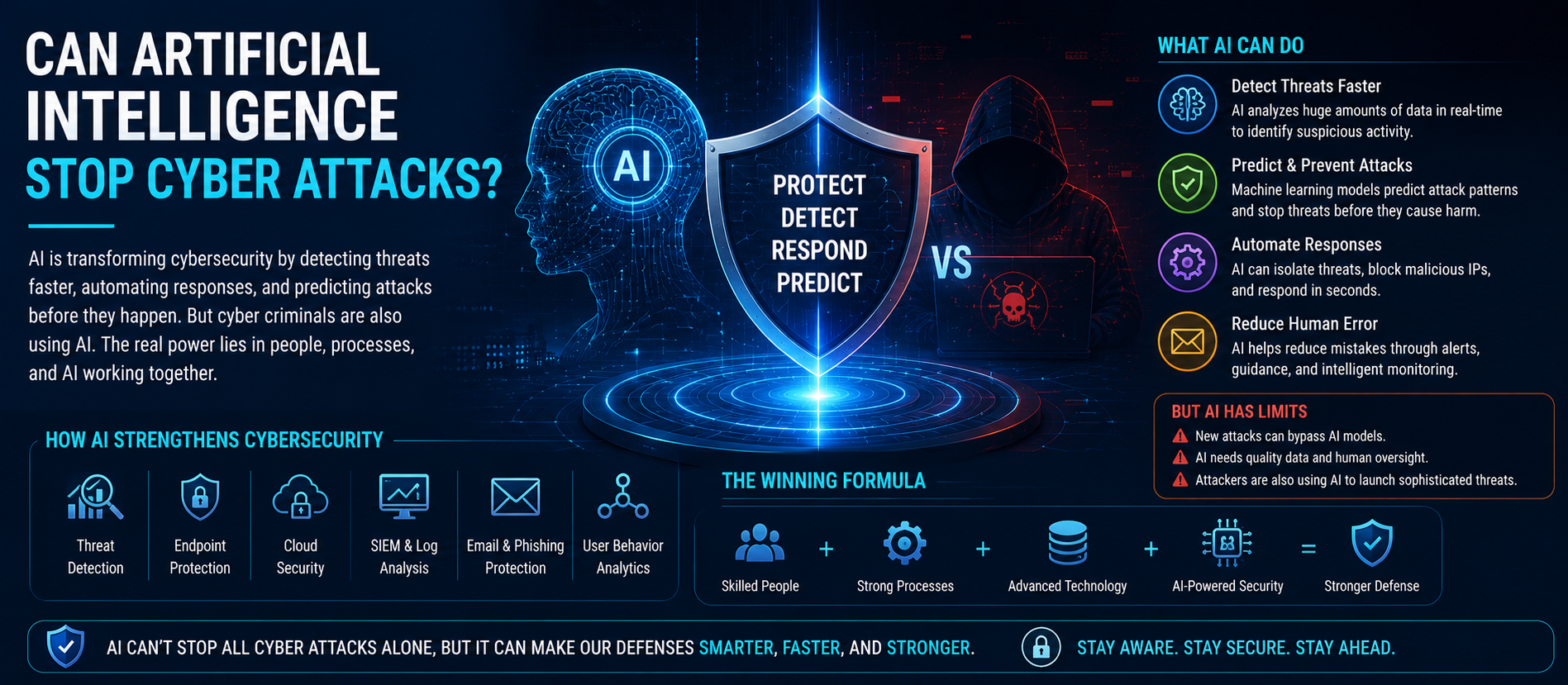
Artificial Intelligence helps detect abnormal communication patterns, identify impersonation attempts, analyze sender reputation, and automate incident response. Combining AI with human verification provides stronger protection.
Zero Trust and Identity Security
Identity is the new security perimeter. Organizations should enforce least-privilege access, strong authentication, conditional access policies, and continuous monitoring to reduce BEC risk.
SEO, AEO & GEO Optimization
Use semantic keywords, structured headings, concise answers, FAQs, and practical examples to improve visibility across Google, Bing, ChatGPT, Gemini, Copilot, and other AI-powered search engines.
AEO & GEO Optimized FAQs
What is Business Email Compromise?
BEC is a social engineering attack where criminals impersonate trusted contacts to steal money or sensitive information.
How is BEC different from phishing?
BEC focuses on personalized impersonation and trust rather than mass phishing emails with malicious attachments.
How can companies prevent BEC?
Deploy MFA, DMARC/SPF/DKIM, employee awareness training, verification procedures, Zero Trust security, and AI-powered email protection.
Conclusion
Business Email Compromise remains one of the most damaging cyber threats in 2026. Organizations that combine strong identity protection, secure email infrastructure, employee awareness, AI-assisted detection, and well-defined financial verification procedures can significantly reduce the risk of successful BEC attacks.
For more expert insights on Cyber Security, Cloud Security, SEO, AEO, GEO, AI Search Optimization, and Digital Transformation, visit Digiifrog at www.digiifrog.com.
Ready to Grow?
Talk to us about a strategy tailored to your brand — we will help you stand out in search, AI discovery and social.

Comments (0)
Log in to leave a comment.