📋 Quick Summary
In this article:
Growth vs. Scalability
Why Fast-Growing Companies Struggle to Scale
1. Define a Clear Scalable Business Model
2. Focus on the Right Customers
3. Build Repeatable Processes
4. Create Standard Operating Procedures
5. Reduce Founder Dependency
6. Build a Scalable Technology Stack
7. Automate Repetitive Work
8. Use AI to Create Operating Leverage
9. Prepare for AI Agents
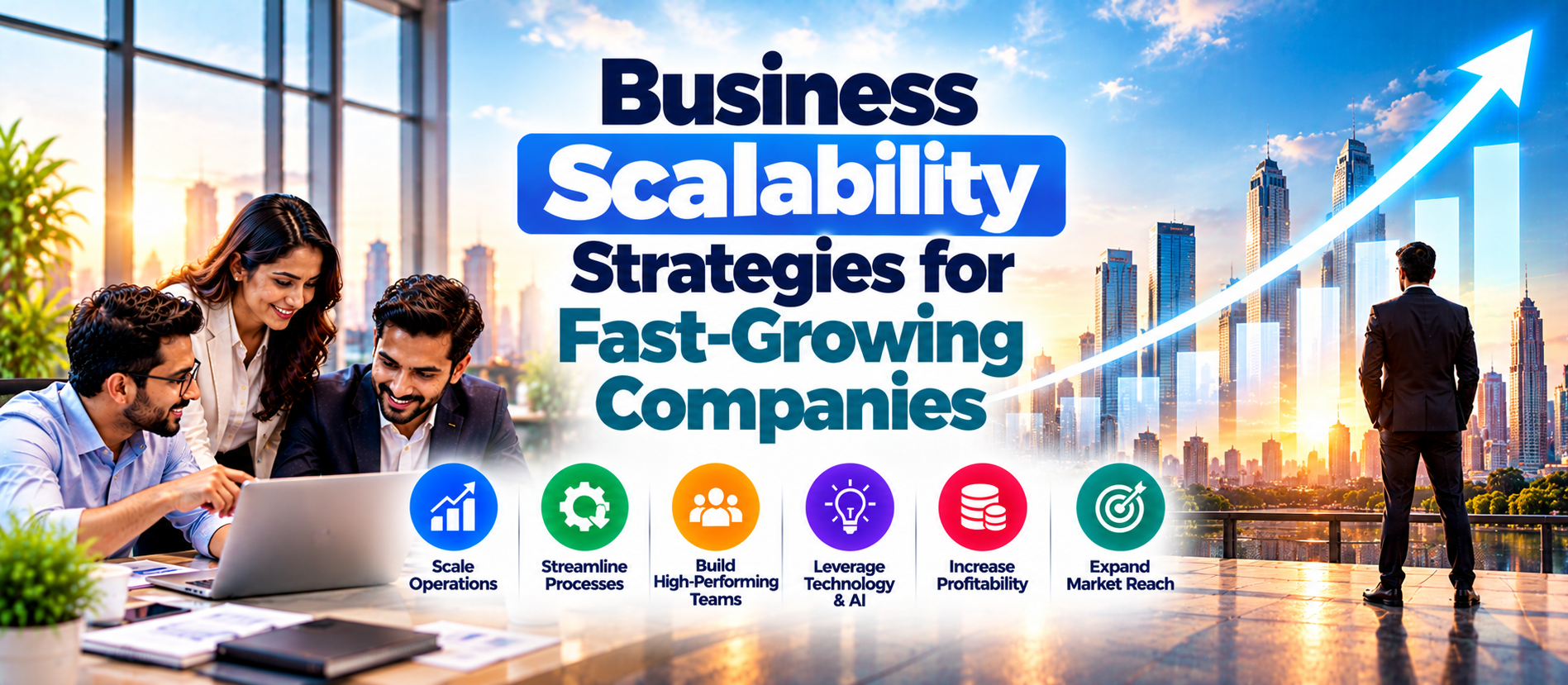
Business scalability means building a company that can handle more revenue, customers, transactions, and complexity without allowing costs and operational problems to rise at the same rate.
In 2026, scalability is increasingly connected to automation, AI, integrated systems, flexible talent, repeatable processes, and organizational agility. Upwork describes scaling as increasing revenue faster than costs and headcount, while emphasizing stronger systems, hiring, priorities, and repeatable processes.
Deloitte's 2026 research also shows why operating models matter. Many organizations are becoming more confident about deploying AI, but a large share recognize that their operating models need to change to sustain AI at scale.
What Is Business Scalability?
Business scalability is the ability to increase revenue, customers, output, or market reach while keeping the growth of costs, complexity, and operational effort under control.
A business may add ten customers and need ten additional employees to serve them. A more scalable company may add ten customers with only a small increase in resources because its processes, systems, automation, and team structure can absorb additional demand.
Growth vs. Scalability
| GrowthScalability | |
| Revenue increases | Revenue increases faster than operating costs |
| More volume creates more manual work | Systems absorb higher volume |
| Headcount rises with workload | Technology and processes increase productivity |
| Founder remains involved in many decisions | Decision rights are distributed |
| Processes depend on individuals | Processes are documented and repeatable |
Why Fast-Growing Companies Struggle to Scale
Early-stage companies often rely on founder knowledge, spreadsheets, informal communication, manual approvals, individual relationships, and flexible workarounds. These methods can work at low volume. They become risky when the business grows.
- The founder approves too many decisions.
- Teams use different processes for the same task.
- Customer support volume rises faster than capacity.
- Sales growth creates delivery bottlenecks.
- Important information is stored in spreadsheets or private messages.
- Reporting requires too much manual effort.
- Employees copy data between systems.
- Hiring is reactive instead of planned.
- Quality falls as volume increases.
- Technology systems do not communicate with each other.
1. Define a Clear Scalable Business Model
Before optimizing operations, clarify how the business creates and captures value. Define the ideal customer, core products or services, revenue streams, pricing model, acquisition channels, delivery model, margin targets, and competitive advantage.
A scalable model should have a repeatable path from customer acquisition to revenue and delivery. If every customer needs a completely different solution, standardize packages, service levels, or processes before aggressive expansion.
2. Focus on the Right Customers
Not every customer contributes the same value. Identify customers that fit your capabilities, provide healthy margins, have strong lifetime value, and are likely to remain with the business.
Create an ideal customer profile based on industry, company size, need, budget, buying behavior, service requirements, profitability, and retention potential. Clear targeting makes sales, marketing, customer success, and product decisions easier to scale.
3. Build Repeatable Processes
Process standardization is one of the strongest foundations of scalability. Map workflows across sales, marketing, delivery, finance, customer support, procurement, HR, and operations.
For each workflow, define the trigger, inputs, steps, owner, approval points, expected output, exception process, and performance metric.
McKinsey's 2026 research emphasizes that leading organizations are redesigning workflows and operating models rather than simply adding AI tools to existing processes.
4. Create Standard Operating Procedures
Standard Operating Procedures turn individual knowledge into organizational knowledge. Document recurring activities such as lead qualification, proposal creation, customer onboarding, order processing, invoicing, employee onboarding, complaint handling, quality checks, project delivery, and month-end reporting.
Keep SOPs short, practical, searchable, and easy to update. The objective is consistent execution, not paperwork.
5. Reduce Founder Dependency
Founder involvement is valuable. Founder dependency is a scalability risk. If every pricing decision, customer issue, hiring decision, supplier negotiation, or operational problem requires the founder, growth will slow down.
Create decision rights for managers and teams. Use clear role definitions, approval limits, escalation rules, team KPIs, management dashboards, and regular operating reviews.
6. Build a Scalable Technology Stack
Technology should reduce coordination effort. Depending on the business, a scalable stack may include CRM, ERP or finance software, project management, customer support, HR, marketing automation, analytics, document management, procurement, and communication tools.
The exact tools matter less than reliable integration. When systems share accurate data, employees spend less time entering the same information multiple times.
7. Automate Repetitive Work
Automation can create operating leverage. Good candidates include lead routing, follow-up reminders, customer onboarding tasks, invoice generation, payment reminders, report creation, employee onboarding, approval notifications, data synchronization, and customer notifications.
IBM's 2026 research describes a shift toward automation designed around business outcomes such as cash flow, cost to serve, and operational performance.
Do not automate a broken process. Simplify the process first.
8. Use AI to Create Operating Leverage
AI can help fast-growing companies increase capability without adding the same amount of administrative work. Useful applications include customer support assistance, sales research, content production, data analysis, forecasting, document processing, knowledge search, meeting summaries, and workflow coordination.
💡 Key Insight
Deloitte's 2026 State of AI report shows growing enterprise AI access and production use, while also highlighting governance, infrastructure, data, and talent as important readiness issues.
AI should therefore be connected to real workflows and measurable business outcomes.
9. Prepare for AI Agents
AI agents can potentially handle multi-step workflows instead of only answering questions. For example, a sales agent could research a prospect, update CRM information, prepare outreach, and create a follow-up task under defined permissions.
A support agent could classify a request, retrieve approved information, suggest a response, update a ticket, and escalate unusual cases.
Agentic AI requires governance. Deloitte reports that mature governance for autonomous AI agents remains limited. Define permissions, human review, data access, audit logs, and escalation rules before giving agents operational authority.
10. Design for Integration
Disconnected systems create hidden operational costs. When a sales team closes a deal, information may need to move to finance, delivery, customer success, and support. If every team manually copies it, errors multiply.
Use APIs, integration platforms, webhooks, and standardized data structures where appropriate. Aim for a connected flow from customer acquisition to delivery, billing, support, and renewal.
11. Build a Strong Data Foundation
Scalability depends on reliable information. Define ownership for important data. Establish consistent naming, validation, access controls, and reporting standards.
Important data categories include customer, product, sales, financial, employee, supplier, and operational data. Clean data makes automation and AI more useful. Poor data makes both less reliable.
12. Create a Scalable Customer Acquisition Engine
Growth requires demand, but acquisition must be repeatable. Build a system connecting the target audience, value proposition, content, SEO, AI Search visibility, lead generation, qualification, sales, conversion, and onboarding.
Use CRM automation to track every stage. Measure customer acquisition cost, conversion rate, sales cycle, average contract value, retention, and customer lifetime value.
13. Build an AI-Ready Digital Presence
Customers increasingly use traditional search, AI assistants, conversational interfaces, and recommendation systems to discover companies.
Make your digital presence easy for humans and AI systems to understand. Use clear service pages, direct answers, structured headings, comparison pages, case studies, FAQs, authoritative references, and consistent company information.
This supports SEO, Answer Engine Optimization (AEO), Generative Engine Optimization (GEO), and broader AI Search Optimization.
14. Standardize Customer Onboarding
Customer onboarding can become a bottleneck during rapid growth. Create a repeatable journey with clear stages, ownership, templates, automated reminders, documentation, and success milestones.
Track time to first value, onboarding completion, activation, early support volume, and first-month retention. A standardized onboarding system allows more customers to be served without proportional increases in effort.
15. Build Scalable Customer Support
Combine knowledge bases, self-service, ticket workflows, AI-assisted responses, escalation rules, and customer success. Use automation for simple questions while keeping human support for complex or sensitive issues.
Measure response time, resolution time, tickets per customer, repeat contacts, satisfaction, and support cost.
16. Create a Strong Financial Operating Model
Fast growth can consume cash even when revenue is increasing. Monitor gross margin, operating margin, cash flow, receivables, payables, customer acquisition cost, customer lifetime value, working capital, and other business-specific measures.
Use rolling forecasts. Scaling decisions should consider capacity, cash, and profitability together.
17. Improve Unit Economics
Unit economics show whether growth creates value. Depending on the business model, track revenue per customer, gross profit, acquisition cost, support cost, delivery cost, retention, and lifetime value.
If each additional customer produces lower margins, fix the business model before scaling further.
18. Build a Scalable Hiring Strategy
Fast-growing businesses often hire reactively. This creates rushed recruitment, unclear roles, inconsistent onboarding, and higher costs.
Create workforce plans based on expected demand and capacity. Use clear job descriptions, structured interviews, skills assessments, onboarding, and performance expectations.
Flexible talent can provide specialized skills when a full-time hire is not yet justified. Upwork's 2026 research reports increasing use of specialized and fractional talent as AI changes workforce requirements.
19. Build Managers, Not Just Employees
Scaling requires management capacity. Train managers in delegation, performance management, communication, conflict resolution, decision-making, coaching, and data interpretation.
A company cannot scale effectively if every team depends on the founder or a small group of senior employees.
20. Delegate with Clear Accountability
Delegation should transfer responsibility and appropriate decision authority. Use RACI or similar frameworks. Each important process should have an accountable owner, defined decision rights, expected outcomes, KPIs, and escalation rules.
21. Build a Scalable Supplier Network
Fast growth can put pressure on suppliers. Review supplier capacity, lead times, quality, pricing, geographic risk, and backup options.
For critical inputs, consider dual sourcing or alternative suppliers. Supplier relationships should scale alongside customer demand.
22. Use Outsourcing Strategically
Not every capability needs to be built internally. Businesses can outsource specialized or non-core activities such as IT, payroll, recruitment support, accounting, procurement, customer support, content production, digital marketing, and cybersecurity.
Outsourcing can provide expertise and capacity without requiring permanent internal headcount.
23. Build a Modular Operating Model
Modularity makes growth easier. Instead of designing one giant process, create connected modules for lead capture, qualification, proposal, contract, onboarding, delivery, and customer success.
When the company enters a new market, only affected modules may need to change. This reduces complexity.
24. Improve Operational Visibility
Leadership needs to know where the business is reaching capacity. Create dashboards for revenue, sales pipeline, acquisition, delivery capacity, customer support, cash flow, profitability, employee capacity, and quality.
Dashboards should support decisions. Avoid creating reports that nobody uses.
25. Use Capacity Planning
Capacity planning answers an important question: Can the business handle the next level of demand?
Review capacity across people, systems, suppliers, infrastructure, support, and cash. Build scenarios for 10%, 25%, and 50% demand growth, new market entry, major customer wins, and demand spikes.
26. Protect Quality While Scaling
Growth should not reduce product or service quality. Standardize quality checks, define acceptance criteria, track defects and complaints, and review root causes.
Use automation to monitor quality where appropriate, while maintaining human review for important decisions.
27. Build Business Continuity and Resilience
Prepare for cybersecurity incidents, system outages, supplier failure, key employee departure, data loss, demand shocks, regulatory changes, and economic disruption.
Document recovery plans and test them periodically. Resilience is part of scalability because a system that works only in perfect conditions is not truly scalable.
28. Make Security Part of Scalability
Security becomes more important as a company gains customers, employees, systems, and data. Implement multi-factor authentication, role-based access, least-privilege permissions, backups, endpoint protection, monitoring, vendor reviews, and employee security training.
29. Build an AI Governance Framework
AI creates opportunities and risks. Define approved tools, data rules, human-review requirements, agent permissions, audit requirements, monitoring, security controls, and employee AI training.
Good governance should enable useful AI instead of blocking it. The objective is controlled scaling.
30. Create a Continuous Improvement System
Scalability is not a one-time project. Review operations regularly. Ask where customers wait, where employees repeat work, where errors occur, which approvals create delays, which processes depend on one person, and which tools are not being used.
Turn these findings into a continuous improvement backlog.
Scalability Strategy by Business Function
| FunctionScalability Strategy | |
| Sales | CRM, standardized pipeline, automation, repeatable offers |
| Marketing | Content systems, SEO, AI Search, automation, reusable campaigns |
| Operations | SOPs, workflow automation, capacity planning |
| Finance | Automated billing, reporting, forecasting, controls |
| HR | Structured hiring, onboarding, HR technology, workforce planning |
| Support | Knowledge base, self-service, AI assistance, ticket workflows |
| IT | Cloud infrastructure, monitoring, security, integrations |
| Procurement | Supplier management, sourcing, spend visibility, automation |
How to Measure Business Scalability
- Revenue per employee
- Gross margin
- Operating margin
- Customer acquisition cost
- Customer lifetime value
- Cost to serve
- Support tickets per customer
- Automation rate
- Process cycle time
- Employee productivity
- Customer retention
- System uptime
The right metrics depend on the business model. The key is to measure whether additional revenue is becoming easier or harder to support.
Common Business Scalability Mistakes
- Growing before standardizing: More volume can multiply process problems.
- Hiring for every problem: Some problems require process redesign or automation.
- Buying too much software: More tools do not automatically create efficiency.
- Ignoring integration: Disconnected systems create manual work.
- Keeping every decision with the founder: This creates a leadership bottleneck.
- Ignoring cash flow: Revenue growth can still create financial pressure.
- Scaling sales without delivery capacity: Customers may receive poor service.
- Automating without governance: AI and automation need controls.
- Ignoring data quality: Poor data weakens analytics and AI.
- Measuring only revenue: Sustainable scaling requires efficiency and profitability.
A Practical 90-Day Scalability Roadmap
Days 1–30: Diagnose
Map the customer journey and major internal workflows. Identify where employees spend time, where customers wait, where errors occur, and where leadership becomes a bottleneck. Calculate basic unit economics and capacity.
Days 31–60: Standardize and Automate
Create SOPs for high-volume workflows. Remove unnecessary approvals. Integrate systems. Automate repetitive work. Establish ownership and KPIs. Start with small automation projects that have measurable value.
Days 61–90: Scale and Measure
Test redesigned processes with higher volume. Monitor cost, cycle time, quality, customer experience, and employee workload. Expand successful improvements across other teams.
How AI Changes Business Scalability in 2026
AI is changing the economics of scaling. Historically, companies often needed to add people as demand increased. AI can reduce the amount of administrative work required for each additional unit of demand.
But AI alone does not create a scalable business. McKinsey argues that durable AI advantage comes from redesigning workflows and operating models, not simply deploying widely available tools.
Deloitte similarly reports that organizations need operating-model changes to sustain AI at scale.
The practical approach is to identify the outcome, redesign the workflow, improve data, automate predictable work, use AI where it adds value, maintain human accountability, and measure financial impact.
Scalability and AI Search, AEO, and GEO
As companies grow, digital discovery becomes another scalability challenge. A business needs content that can attract customers across traditional search and AI-powered discovery.
Use direct answers, descriptive headings, FAQs, structured information, original insights, and trustworthy references. Create reusable content around customer questions, industries, services, comparisons, problems, and use cases.
Direct answer: The best business scalability strategies combine repeatable processes, automation, integrated technology, strong financial controls, scalable hiring, delegation, customer experience systems, data visibility, and responsible AI. These strategies help companies increase revenue and capacity without increasing complexity and costs at the same rate.
Frequently Asked Questions
What are business scalability strategies?
Business scalability strategies are methods that help a company increase revenue, customers, or output without increasing costs, headcount, and complexity at the same rate. They include process standardization, automation, technology integration, delegation, financial planning, and capacity management.
What is the difference between growth and scalability?
Growth means the business becomes larger. Scalability means the business can become larger more efficiently. A scalable company increases revenue or output faster than its operating costs and resources.
How can a small business prepare for rapid growth?
Start by documenting core processes, defining roles, improving financial visibility, standardizing customer onboarding, implementing basic technology, automating repetitive tasks, and planning capacity before demand exceeds available resources.
How does automation help business scalability?
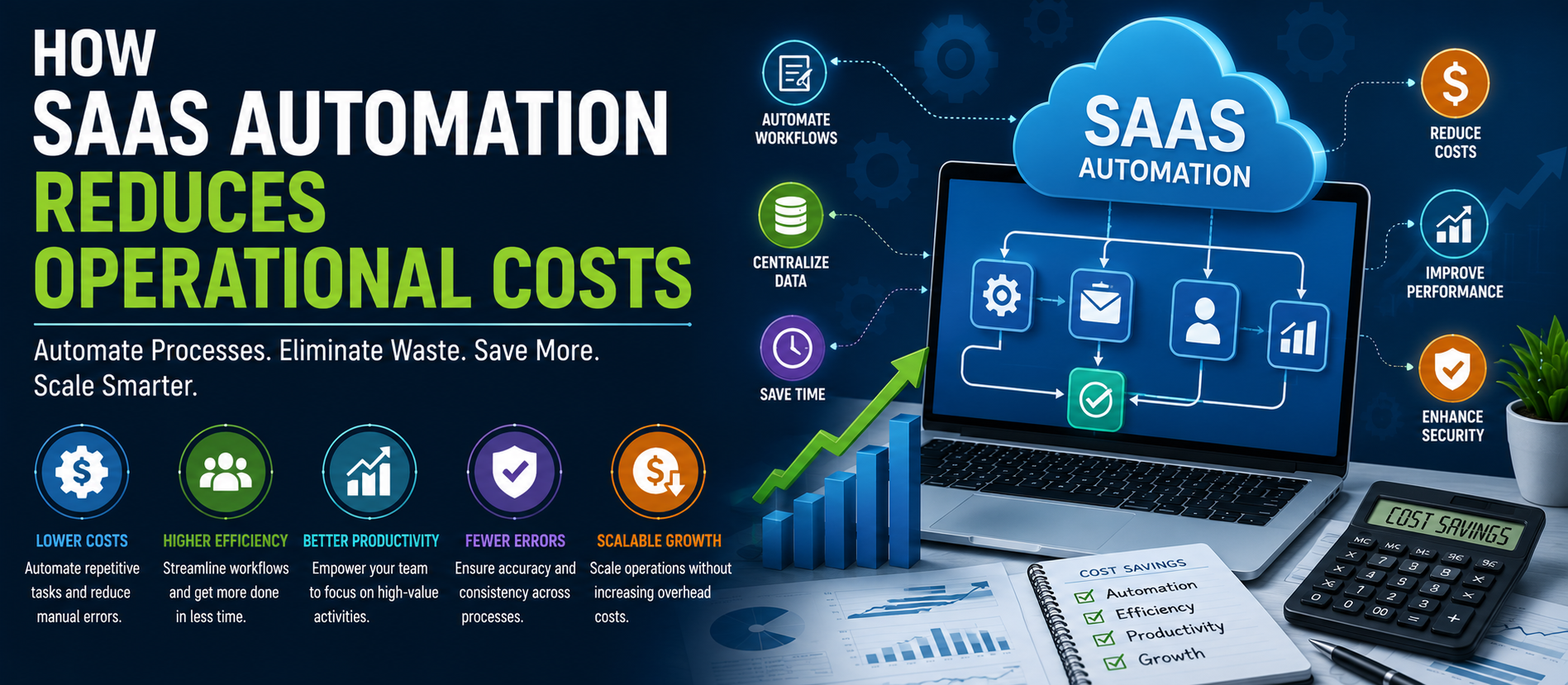
Automation reduces repetitive manual work, improves consistency, speeds up workflows, and allows teams to handle more volume without proportional increases in administrative effort.
Can AI help a company scale faster?
Yes. AI can support customer service, sales, marketing, forecasting, analytics, document processing, knowledge management, and workflow coordination. The strongest results usually come when AI is integrated into redesigned business processes.
Should fast-growing companies outsource some operations?
Yes. Outsourcing can provide specialized skills and capacity for non-core functions such as IT, HR, accounting, procurement, cybersecurity, customer support, and digital marketing.
How do you know if a business is ready to scale?
Signs include predictable demand, healthy unit economics, repeatable sales, documented processes, sufficient delivery capacity, reliable financial reporting, capable managers, and systems that can handle higher transaction volume.
What is the biggest scalability mistake?
A common mistake is scaling demand before scaling operations. If sales grow faster than delivery, support, finance, and management capacity, growth can reduce customer satisfaction and profitability.
Conclusion
The strongest business scalability strategies for fast-growing companies focus on leverage.
Build repeatable processes. Document important workflows. Reduce founder dependency. Integrate technology. Automate repetitive work. Use AI responsibly. Strengthen financial controls. Build management capacity. Standardize customer experience. Plan workforce and operational capacity before demand arrives.
Fast growth should not require constant operational firefighting. The scalable business turns growth into a repeatable system. People make important decisions. Processes create consistency. Technology provides leverage. Data supports better decisions. Automation handles repetitive work. AI expands capability under appropriate governance.
Deloitte reports that many leaders see speed and agility as important sources of future advantage, while McKinsey emphasizes workflow and operating-model redesign as a differentiator for companies creating value from AI.
For fast-growing companies, the question is not simply, “How can we grow faster?” The better question is, “How can we build a business that can handle the growth?”
Digiifrog helps businesses improve digital operations, automation, SEO, AI Search visibility, and technology-driven growth. Visit www.digiifrog.com to explore practical digital and business solutions.
Research References
- McKinsey, “The New Management Playbook for AI: How to Move Faster and Create More Value,” 2026.
- Deloitte, “Rewiring the Enterprise Operating Model for AI Scale,” 2026.
- Deloitte, “The Orchestration Advantage,” 2026.
- Deloitte, “The State of AI in the Enterprise: 2026 AI Report.”
- McKinsey, “The Operating Model Advantage: Why AI Winners Are Rewiring Their Organizations,” 2026.
- McKinsey, “Winning the Race to Rewire in 2026: Capturing Operational Advantage.”
- Upwork, “How to Scale a Business in 2026: 9 Strategies for Growth.”
- IBM, “The Next Generation of Automation Won’t Follow Workflows,” 2026.
- SAP, “With AI, Fast-Growing Companies Could Compete on Innovation, Not Size,” 2026.
- Deloitte India, “Indian Enterprises Lead Global Peers in At-Scale AI Adoption,” 2026.
Ready to Grow?
Talk to us about a strategy tailored to your brand — we will help you stand out in search, AI discovery and social.

Comments (0)
Log in to leave a comment.