📋 Quick Summary
In this article:
Why Engineers Use CAD Software
Applications Across Engineering
Cloud-Based CAD Platforms
What Is CAD Software?
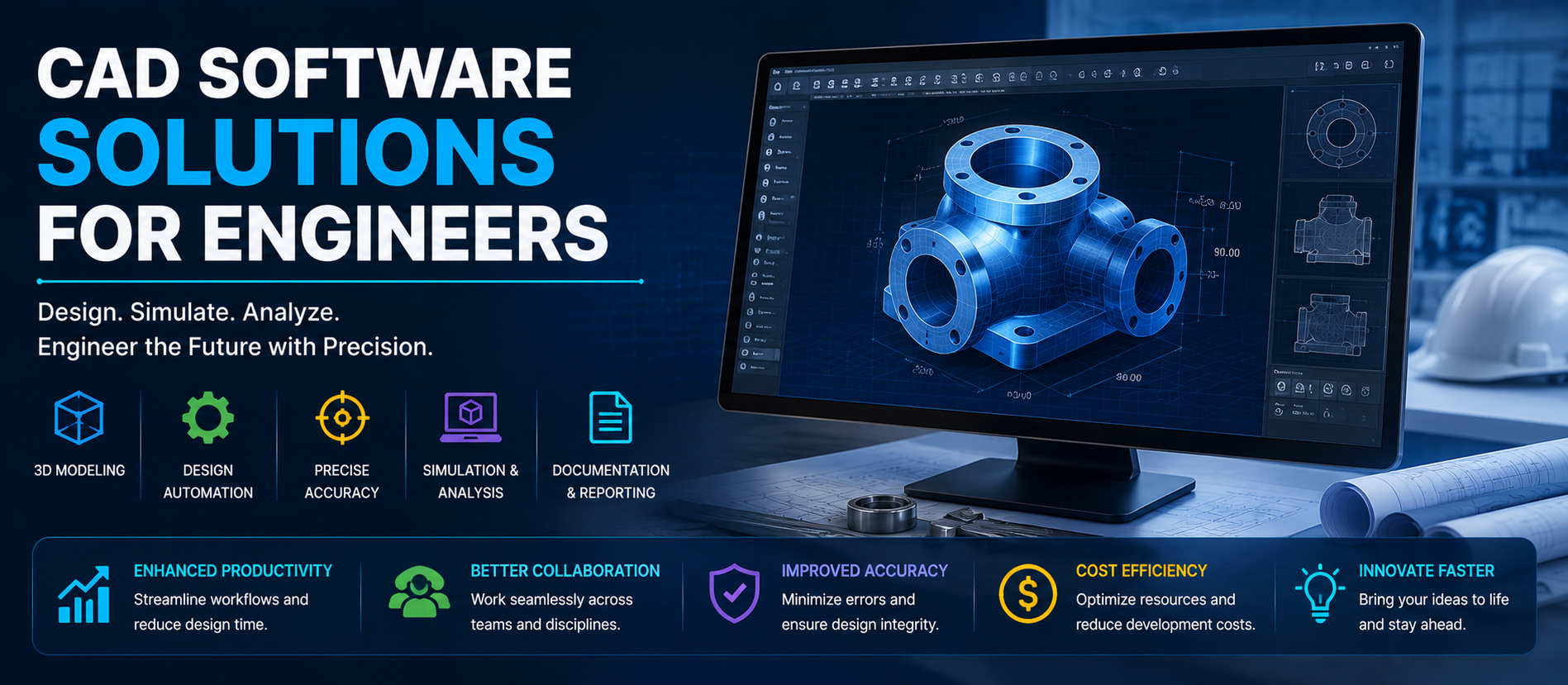
CAD software is a computer application used to create precise 2D drawings, 3D models, assemblies, prototypes, and engineering documentation. It replaces manual drafting while providing advanced visualization, simulation, and manufacturing support.
- 2D drafting
- 3D modeling
- Parametric design
- Simulation and analysis
- Technical documentation
- Rendering and visualization
- Manufacturing integration
Why Engineers Use CAD Software
- Improve design accuracy
- Reduce development time
- Minimize costly errors
- Accelerate product innovation
- Support team collaboration
- Create production-ready documentation
Key Features
- 3D solid modeling
- Assembly design
- Sheet metal tools
- Finite Element Analysis (FEA)
- Motion simulation
- Cloud collaboration
- Version control
- CAM integration
Applications Across Engineering
Mechanical Engineering
Design machinery, equipment, tools, and production components with precision.
Civil Engineering
Create infrastructure layouts, structural models, and construction documentation.
Electrical Engineering
Develop enclosure designs, wiring layouts, and electromechanical systems.
Architecture
Produce intelligent building models and construction plans.
Cloud-Based CAD Platforms
Cloud-native CAD software allows engineering teams to collaborate from anywhere, share revisions instantly, and manage projects securely without relying on local infrastructure.
AI in CAD Software
Artificial Intelligence assists engineers by generating design alternatives, optimizing components, automating repetitive modeling tasks, detecting design conflicts, and improving manufacturability.
- Generative design
- Design optimization
- Automatic drawing creation
- Predictive engineering analysis
- Smart material recommendations
Benefits for Businesses
- Higher productivity
- Reduced prototyping costs
- Improved collaboration
- Faster product development
- Better quality control
- Scalable engineering workflows
Implementation Best Practices
- Standardize CAD libraries
- Train engineering teams
- Use cloud collaboration
- Maintain revision control
- Integrate with PLM and ERP systems
Future Trends
- AI-assisted design
- Digital twins
- Cloud engineering
- AR/VR visualization
- Additive manufacturing integration
- Sustainable engineering workflows
SEO, AEO, GEO & AI Search
SEO benefits from technically accurate engineering content and optimized digital resources. AEO relies on structured technical documentation, while GEO focuses on creating authoritative engineering knowledge that generative AI systems can understand and reference.
Why Digiifrog Recommends Modern CAD Software
Digiifrog recommends next-generation CAD platforms because they help engineering teams innovate faster, improve collaboration, reduce development costs, and accelerate digital transformation.
Website: www.digiifrog.com
Conclusion
CAD software remains one of the most valuable technologies for engineers across every industry. With cloud collaboration, AI-powered design assistance, advanced simulation, and integrated manufacturing capabilities, modern CAD solutions enable organizations to build smarter products while improving efficiency, quality, and long-term competitiveness.
Ready to Grow?
Talk to us about a strategy tailored to your brand — we will help you stand out in search, AI discovery and social.


Comments (0)
Log in to leave a comment.