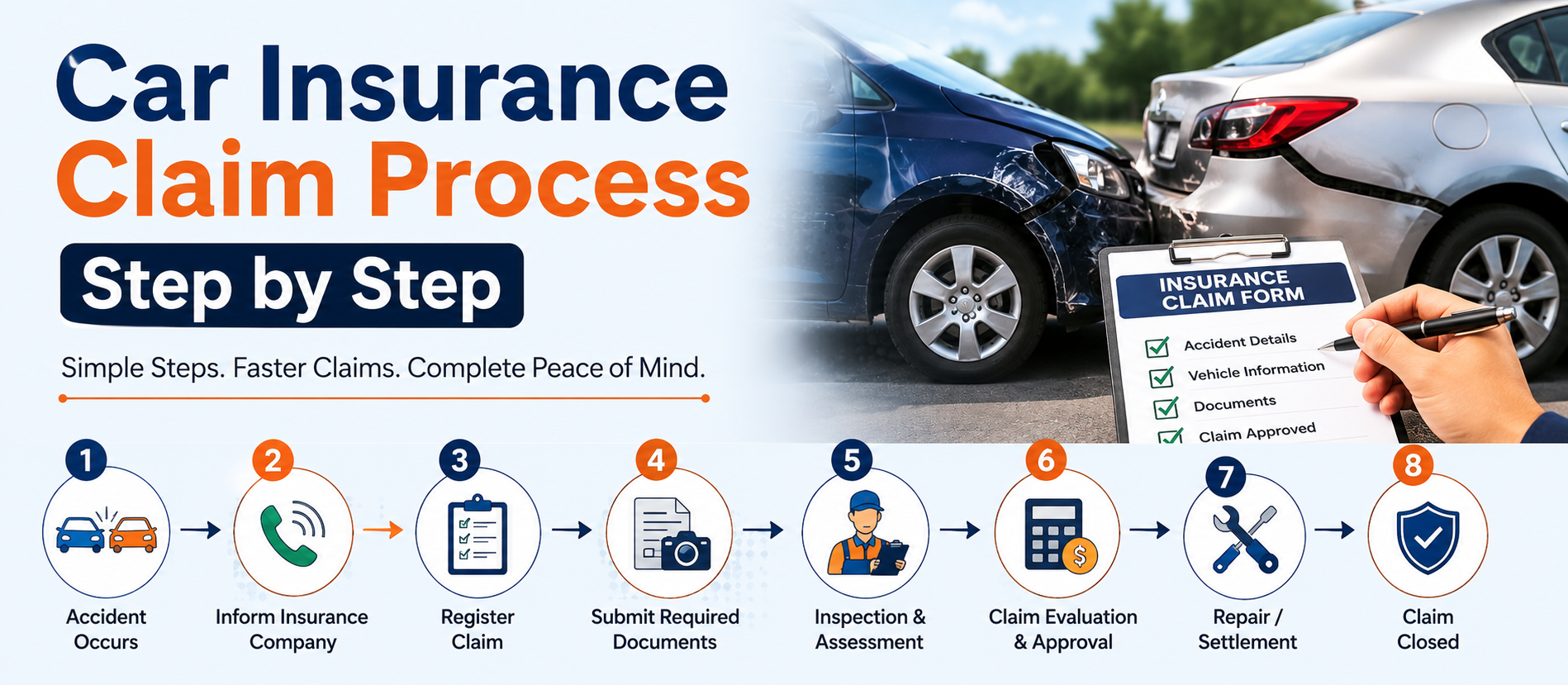
📋 Quick Summary
In this article:
What Is a Car Insurance Claim?
Step 1: Put Safety First
Step 2: Contact the Police When Appropriate
Step 3: Exchange Information With the Other Driver
Step 4: Collect Witness Information
Step 5: Photograph and Document the Accident Scene
Step 6: Review Your Insurance Policy
Step 7: Report the Claim Promptly
Step 8: Receive a Claim Number
Step 9: Cooperate With the Claims Adjuster
Step 10: Get a Vehicle Damage Assessment
Step 11: Understand the Repair Process
Introduction
⚠ Watch Out
Filing a car insurance claim can feel stressful, especially immediately after an accident. Knowing what to do, what information to collect, how the insurer investigates the loss, and what happens before a settlement is issued can make the process much easier. A clear process also helps drivers protect their rights, avoid unnecessary delays, and keep accurate records throughout the claim.
The exact rules, deadlines, coverage requirements, and dispute procedures vary by country, state, insurer, and policy. Your insurance policy is the controlling contract, so always review it and follow the instructions provided by your insurer. Consumer guidance from the National Association of Insurance Commissioners (NAIC) recommends prioritizing safety, collecting accident information, reporting the claim promptly, cooperating with the adjuster's investigation, and keeping records of communications.
This WordPress-ready guide from Digiifrog explains the car insurance claim process step by step. It is optimized for SEO, AEO, GEO, and AI Search Optimization.
Website: www.digiifrog.com
What Is a Car Insurance Claim?
A car insurance claim is a formal request made to an insurance company for coverage or payment after a covered event. Depending on the policy, a claim may involve collision damage, theft, weather-related damage, vandalism, liability for injuries or property damage, or other covered losses.
Before filing, understand what your policy covers. Collision coverage generally addresses damage to your vehicle resulting from a collision, while comprehensive coverage can apply to certain non-collision events such as theft, fire, hail, flooding, or animal impacts. Liability coverage generally addresses your legal responsibility for injuries or property damage to others. Coverage definitions and required coverages differ by jurisdiction and policy.
Step 1: Put Safety First
The first priority after an accident is safety—not paperwork. Check whether anyone is injured and contact emergency services when necessary. If the vehicle can be moved safely and local rules permit it, move it away from active traffic. Turn on hazard lights and take reasonable steps to prevent another collision.
Do not put yourself in danger to photograph damage or collect information. If the accident scene is unsafe, wait for police or emergency responders and follow their instructions.
Step 2: Contact the Police When Appropriate
Depending on the severity of the accident and local requirements, you may need to notify the police. A police or incident report can provide an independent record of the event and may become useful during the insurance investigation.
Ask how and where you can obtain the report and record the report or incident number. If another driver leaves the scene, contact law enforcement promptly and provide the available vehicle and driver information.
Step 3: Exchange Information With the Other Driver
When it is safe and appropriate, collect the other driver's name, contact information, insurer, policy information, driver's license information, vehicle registration details, and license plate number. Also record the make, model, and year of the other vehicle.
Share your own required information. Keep the interaction factual and professional. Avoid arguing about fault at the scene. Do not make statements that could be interpreted as admitting legal responsibility before the facts have been properly investigated.
Step 4: Collect Witness Information
Independent witnesses may provide useful information about what happened. Ask willing witnesses for their names and contact information. If police officers attend the scene, record the officer's name, badge information when available, and the report number.
Step 5: Photograph and Document the Accident Scene
Take photographs or video when it is safe to do so. Capture the vehicles from multiple angles, visible damage, license plates, road conditions, traffic signs, lane markings, skid marks, debris, weather conditions, and the overall scene.
💡 Key Insight
Make notes about the date, time, location, direction of travel, traffic conditions, and what you remember. A simple diagram showing vehicle positions can also be useful.
NAIC consumer guidance recommends documenting the accident scene and collecting information such as vehicle details, witnesses, road conditions, and police information.
Step 6: Review Your Insurance Policy
Before assuming that every repair or expense will be covered, review your policy. Look at the applicable coverage, deductible, exclusions, limits, rental-car provisions, roadside assistance, and claim-reporting requirements.
Your deductible is the amount you may have to pay toward a covered loss before the insurer pays its portion. A claim involving damage only slightly above the deductible may have a different financial impact than a major loss. However, whether you should file a claim depends on the circumstances, policy terms, applicable law, and potential effects on premiums or renewal.
Step 7: Report the Claim Promptly
Contact your insurer or agent as soon as reasonably possible. Use the claims phone number on your insurance card or the insurer's official app or website if available.
Many insurers request basic information such as the policy number, accident date and location, vehicle details, driver information, description of what happened, police report information, and photographs. Your insurer may also explain which documents are required and what happens next.
Do not wait unnecessarily to report a loss. Policies can contain reporting requirements or deadlines, and delays can complicate an investigation.
Step 8: Receive a Claim Number
Once the claim is opened, ask for the claim number and write it down. Use that number in future emails, calls, documents, and repair communications. Also record the name and contact details of the claims representative or adjuster handling the file.
Step 9: Cooperate With the Claims Adjuster
The insurer will generally assign an adjuster to investigate the loss and assess the damage. The adjuster may inspect the vehicle, review photographs, speak with drivers or witnesses, examine reports, and evaluate repair estimates.
Provide accurate information and answer reasonable questions. Keep notes about conversations, including dates, names, decisions, requests for documents, and expected next steps. NAIC guidance recommends keeping track of communications with your agent or adjuster.
Step 10: Get a Vehicle Damage Assessment
Your insurer may arrange an inspection or use photographs and digital estimating tools to evaluate the vehicle. Depending on the insurer and jurisdiction, you may be directed to a network repair facility or allowed to select a repair shop.
Ask how the insurer handles repair estimates, replacement parts, hidden damage, supplements, and final approval. If additional damage is discovered after repairs begin, the repair shop may need to submit a supplemental estimate to the insurer.
Step 11: Understand the Repair Process
Before authorizing major work, understand who is responsible for approving the estimate and how the deductible will be collected. Ask the repair shop to explain the repair plan, expected completion date, warranties, and any issues that could affect the timeline.
Keep copies of estimates, invoices, photographs, rental-car records, and other related documents. Do not discard important evidence or make unnecessary permanent changes before the insurer has had a reasonable opportunity to inspect the damage.
Step 12: Understand Rental Car and Temporary Transportation Coverage
If your policy includes rental or transportation coverage, ask about eligibility, daily limits, total limits, approved rental providers, and the circumstances under which coverage ends. Rental benefits are often subject to policy-specific limits, so do not assume an unlimited rental period.
Step 13: Review the Settlement Offer
After the investigation and valuation, the insurer may make a settlement offer. Review the explanation carefully. Check the damage assessment, repair costs, deductible, vehicle value if the car is considered a total loss, taxes or fees where applicable, and any deductions.
Ask for clarification if an amount is unclear. NAIC guidance advises consumers who disagree with a settlement to discuss the differences with the insurer, ask questions, and request written explanations of claim decisions.
Step 14: What Happens If the Car Is a Total Loss?
A vehicle may be considered a total loss when repair costs or other applicable criteria make repair uneconomical or when local rules define it as a total loss. The insurer may calculate the vehicle's value using factors such as comparable vehicles, condition, mileage, equipment, and local market information.
Review the valuation report carefully. If you believe relevant vehicle features or comparable vehicles were overlooked, provide documentation that supports your position. The process for disputing valuation varies by policy and jurisdiction.
Step 15: Pay Attention to the Deductible
If your coverage applies and a deductible is required, the deductible normally reduces the amount paid by the insurer for the covered damage. For example, if covered repairs are valued at $5,000 and the applicable deductible is $1,000, the policy may pay $4,000, subject to all other policy terms and limits.
The actual calculation can differ depending on the type of coverage, settlement method, limits, and policy provisions.
Step 16: Keep a Complete Claim File
Create a dedicated digital or physical folder containing:
- Insurance policy and declarations page.
- Claim number.
- Police or incident report.
- Accident photographs and videos.
- Witness information.
- Repair estimates.
- Invoices and receipts.
- Rental-car documents.
- Emails and letters.
- Notes from phone calls.
- Settlement offers and explanations.
- Any appeal or dispute correspondence.
Good recordkeeping makes it easier to answer questions and identify missing information if the claim becomes complicated.
Step 17: What If the Claim Is Delayed or Denied?
First, ask the insurer for a clear explanation. Request the relevant policy language and ask what additional information is needed. Keep communication professional and documented.
If you believe the insurer has handled the claim unfairly and cannot resolve the issue directly, you may have access to a complaint process through your state or regional insurance regulator. In the United States, state insurance departments can investigate certain consumer complaints, including issues involving delays, denials, or claim handling. citeturn0search3turn0search7
Common Car Insurance Claim Mistakes
- Failing to prioritize safety.
- Waiting too long to report the accident.
- Not collecting contact information from witnesses.
- Failing to photograph the scene and damage.
- Providing incomplete or inconsistent information.
- Throwing away important records.
- Authorizing repairs without understanding the insurer's process.
- Ignoring the deductible.
- Accepting a settlement without reviewing the calculation.
- Failing to document conversations.
Car Insurance Claim Checklist
- Check for injuries and move to safety.
- Contact emergency services when necessary.
- Notify police when required or appropriate.
- Exchange driver and insurance information.
- Collect witness details.
- Photograph the scene and vehicle damage.
- Review your policy and deductible.
- Report the claim promptly.
- Record the claim number and adjuster's details.
- Cooperate with the inspection.
- Review repair estimates and supplemental damage.
- Keep all receipts and communication records.
- Review the settlement carefully.
- Ask questions about anything unclear.
- Use the appropriate complaint or dispute process if necessary.
Frequently Asked Questions
How soon should I file a car insurance claim?
Report the accident as soon as reasonably possible and follow the reporting requirements in your policy. Some policies impose specific notification deadlines.
What information do I need to file a car insurance claim?
Commonly requested information includes your policy details, accident date and location, driver and vehicle information, photographs, police report details, witness information, and a description of what happened.
Do I need a police report for an insurance claim?
Requirements vary by location and circumstances. A police or incident report can be useful documentation, particularly for serious collisions, injuries, theft, or hit-and-run incidents.
Can I choose my own repair shop?
Rules and insurer practices vary. Ask your insurer about your options, network shops, warranties, estimates, and applicable local requirements before authorizing repairs.
What is a claims adjuster?
A claims adjuster investigates the loss, evaluates damage, reviews evidence, and helps the insurer determine the amount payable under the policy.
Can I dispute an insurance settlement?
Yes, depending on the circumstances. Start by asking the insurer for a written explanation and discussing the valuation or coverage issue. Your policy may contain appraisal or dispute provisions, and local regulators may provide additional assistance.
Will filing a claim increase my premium?
It can in some circumstances. The effect depends on factors such as the type and frequency of claims, fault rules, insurer practices, and local regulations. NAIC notes that claim history can affect premiums and renewal decisions.
What if the other driver was at fault?
The applicable process depends on local law, fault rules, coverage, and the circumstances of the accident. Your own insurer may also become involved depending on your coverage and situation.
Conclusion
The car insurance claim process becomes much easier when drivers follow a clear sequence: prioritize safety, document the accident, collect information, report the claim promptly, cooperate with the adjuster, understand the repair and settlement process, and keep detailed records.
The most important principle is to stay organized. Do not rely on memory alone. Save photographs, reports, estimates, receipts, claim correspondence, and notes from every important conversation. If you disagree with a decision, ask for a written explanation and review the dispute options available under your policy and local regulations.
Digiifrog
Website: www.digiifrog.com
Insurance coverage, claim deadlines, repair rights, fault rules, and dispute procedures vary by country, state, insurer, and policy. This article is for educational purposes and is not personalized legal, insurance, or financial advice. Always review your policy and confirm current requirements with your insurer or applicable insurance regulator.
Ready to Grow?
Talk to us about a strategy tailored to your brand — we will help you stand out in search, AI discovery and social.


Comments (0)
Log in to leave a comment.