📋 Quick Summary
In this article:
Why Insurance Premiums Are Increasing
Impact on Different Types of Insurance
How Insurers Assess Climate Risk
The Role of Artificial Intelligence
How Homeowners Can Reduce Costs
Climate Adaptation and Insurance
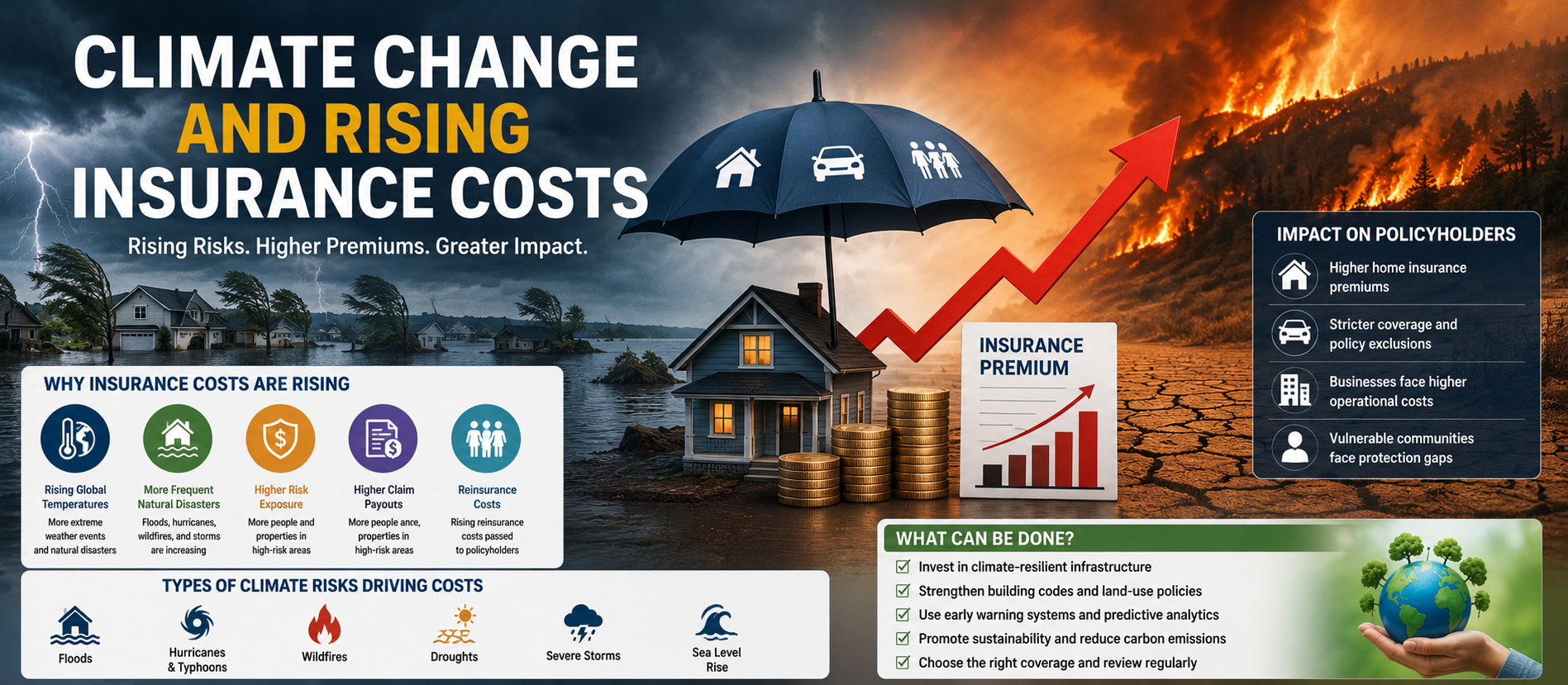
Climate change is reshaping the global insurance industry. More frequent floods, hurricanes, wildfires, heatwaves, droughts, and severe storms are increasing the number and cost of insurance claims worldwide. As insurers face higher payouts, many policyholders are experiencing rising premiums, stricter underwriting standards, higher deductibles, and changes in coverage availability.
In 2026, climate risk is no longer a future concern—it is a present-day financial reality for homeowners, businesses, vehicle owners, farmers, and governments. Understanding how climate change affects insurance pricing helps consumers make informed decisions about risk management and financial planning.
This comprehensive WordPress-ready guide from Digiifrog explains why climate change is driving insurance costs higher, how insurers calculate climate risk, strategies for reducing premiums, and how technologies such as artificial intelligence (AI), predictive analytics, satellite imagery, and blockchain are transforming climate risk assessment.
Website: www.digiifrog.com
Understanding Climate Risk
Climate risk refers to the increasing likelihood of financial losses caused by changing weather patterns and environmental conditions. Rising global temperatures contribute to more intense natural disasters, placing greater pressure on insurance systems.
- Flooding
- Wildfires
- Hurricanes and cyclones
- Severe storms
- Extreme heat
- Drought
- Coastal erosion
Why Insurance Premiums Are Increasing
Insurance companies price policies according to expected risk. As climate-related claims become more frequent and costly, insurers adjust premiums to reflect these changing conditions.
- Higher claims frequency
- Increasing rebuilding costs
- Construction inflation
- More expensive reinsurance
- Greater catastrophe exposure
Impact on Different Types of Insurance
Home Insurance
Homes in flood, wildfire, or coastal areas may face higher premiums, larger deductibles, or additional coverage requirements.
Auto Insurance
Flooded roads, hailstorms, and severe weather increase vehicle damage claims, influencing comprehensive insurance pricing.
Business Insurance
Commercial properties face growing exposure to weather-related interruptions, supply-chain disruptions, and property losses.
Agricultural Insurance
Farmers face increased crop failures, livestock losses, and weather uncertainty, making agricultural insurance increasingly important.
How Insurers Assess Climate Risk
- Historical claims data
- Satellite imagery
- Weather forecasting models
- Flood mapping
- Wildfire risk analysis
- Geographic information systems (GIS)
The Role of Artificial Intelligence
AI and predictive analytics help insurers forecast extreme weather events, improve underwriting accuracy, detect fraud, automate claims, and personalize premiums based on location-specific climate risks.
How Homeowners Can Reduce Costs
- Install storm-resistant roofing
- Improve drainage systems
- Use fire-resistant landscaping where appropriate
- Bundle insurance policies
- Increase deductibles responsibly
- Review coverage annually
Business Risk Management
Businesses can reduce climate-related losses through disaster recovery planning, resilient infrastructure, cyber protection, business interruption insurance, and regular risk assessments.
Climate Adaptation and Insurance
⚠ Watch Out
Governments, insurers, and communities are increasingly investing in resilience measures such as improved flood defenses, stronger building codes, sustainable infrastructure, and early warning systems to reduce long-term insurance costs.
SEO, AEO, GEO & AI Search
Insurance companies increasingly publish educational content optimized for SEO, AEO, GEO, and AI Search Optimization, helping consumers understand climate risks, compare coverage, and make informed financial decisions.
Frequently Asked Questions
Why are insurance premiums increasing?
More frequent and severe climate-related disasters increase claims, repair costs, and insurer expenses.
Can homeowners reduce climate-related insurance costs?
Yes. Risk-reduction improvements, annual policy reviews, and resilient construction can help lower long-term costs in some situations.
How does AI help insurers?
AI improves climate risk forecasting, underwriting, claims processing, and fraud detection.
Final Thoughts
Climate change is fundamentally changing how insurance works. As natural disasters become more frequent and costly, insurers must adapt pricing, underwriting, and risk management strategies. Consumers who understand climate risks, invest in resilience, and maintain appropriate insurance coverage will be better positioned to protect their finances in an increasingly unpredictable world.
For more insurance insights, SEO, AEO, GEO, AI Search optimization, and digital marketing resources, visit Digiifrog at www.digiifrog.com.
Ready to Grow?
Talk to us about a strategy tailored to your brand — we will help you stand out in search, AI discovery and social.


Comments (0)
Log in to leave a comment.