📋 Quick Summary
In this article:
Quick Answer: What Are the Most Common Tax Filing Mistakes?
1. Filing With Incorrect Personal Information
2. Missing a Tax Filing Deadline
3. Forgetting to Report All Taxable Income
4. Using the Wrong Filing Status
5. Making Basic Math Errors
6. Claiming Deductions Without Proper Records
7. Confusing Tax Deductions and Tax Credits
8. Claiming Credits Without Confirming Eligibility
9. Ignoring Changes in Tax Laws
10. Failing to Keep Tax Documents Organized
11. Filing Too Quickly Without Reviewing the Return
Filing a tax return can feel complicated, especially when income, deductions, tax credits, forms, and filing deadlines are involved. Even a small mistake can delay processing, create extra paperwork, or lead to an incorrect tax calculation.
⚠ Watch Out
Learning about common tax filing mistakes to avoid can help individuals and businesses prepare more accurate returns. Good tax filing begins with organization, careful review, and an understanding of the rules that apply to your location and financial situation.
This guide explains common tax filing errors in simple language.
Quick Answer: What Are the Most Common Tax Filing Mistakes?
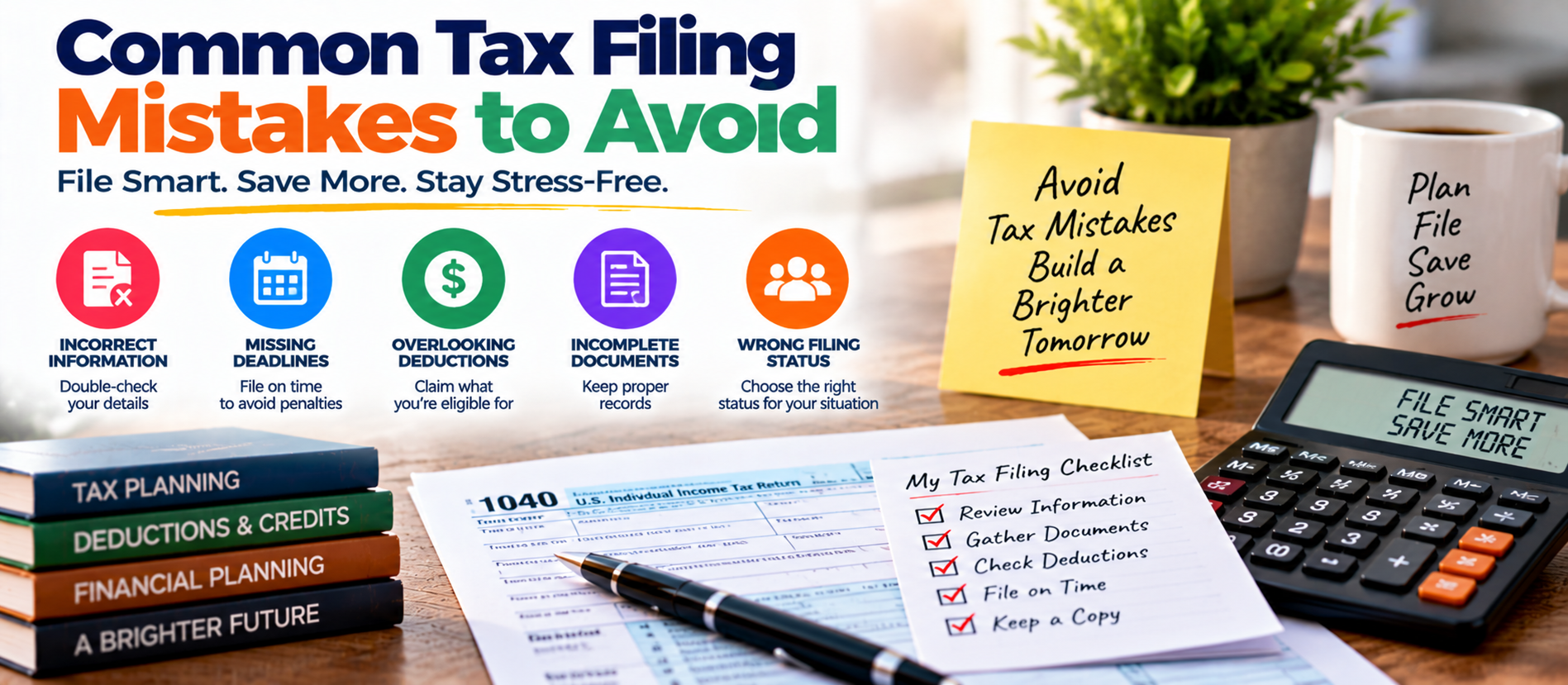
Common tax filing mistakes include using incorrect personal information, missing income, choosing the wrong filing status, making math errors, claiming deductions or credits incorrectly, forgetting required forms, and filing after the deadline.
Tax rules differ by country, state, and local jurisdiction. Always check the requirements that apply to your situation before submitting a return.
1. Filing With Incorrect Personal Information
One of the simplest tax mistakes is entering incorrect personal information. A small error in a name, identification number, address, date of birth, or bank detail can cause processing problems.
Before submitting a return, carefully review:
- Your legal name.
- Tax identification information.
- Date of birth.
- Current address.
- Bank account details, when required for refunds or payments.
- Information for dependents or other people included on the return.
Use official documents as references instead of relying only on memory.
2. Missing a Tax Filing Deadline
Tax deadlines are important. Filing late may result in penalties, interest, or other consequences depending on the tax authority and local rules.
Do not assume that a deadline is the same every year or that all taxes have the same due date. Different returns, payments, and jurisdictions may have different deadlines.
A useful approach is to:
- Check official tax authority deadlines early.
- Create calendar reminders.
- Start gathering documents well before the due date.
- Understand whether an extension is available and what it covers.
An extension to file may not always extend the time to pay taxes that are due.
3. Forgetting to Report All Taxable Income
Income can come from more than one source. A person may remember a regular salary but forget income from freelance work, investments, rental activity, interest, or other sources.
Depending on local tax rules, taxable income may include money earned through:
- Employment.
- Self-employment or freelance work.
- Business activity.
- Investment income.
- Interest or dividends.
- Rental activity.
- Retirement distributions.
- Other reportable transactions.
Not every type of income is treated the same way. Review the rules that apply to your location and income sources.
4. Using the Wrong Filing Status
In tax systems that use filing categories or statuses, selecting the wrong option can affect tax calculations, deductions, credits, and eligibility.
Your correct filing status may depend on factors such as:
- Marital status.
- Family situation.
- Dependents.
- Household arrangements.
- Local tax regulations.
Do not choose a status simply because it appears to produce a lower tax estimate. Use the status that legally applies to your situation.
5. Making Basic Math Errors
Math mistakes can happen when information is entered manually or totals are calculated incorrectly.
Common errors include:
- Adding income incorrectly.
- Entering a number in the wrong field.
- Using an incorrect decimal point.
- Applying a percentage incorrectly.
- Forgetting to include a form or schedule.
Tax software may reduce some calculation errors, but software cannot guarantee that the information entered by the user is correct.
Always review the final return before submission.
6. Claiming Deductions Without Proper Records
Deductions can reduce taxable income when they are legally available. However, claiming an expense without sufficient documentation can create problems.
Depending on local rules, useful records may include:
- Receipts.
- Invoices.
- Bank statements.
- Business records.
- Donation records.
- Mileage logs.
- Official tax documents.
Keep records organized and retain them for the period required by applicable law.
7. Confusing Tax Deductions and Tax Credits
Tax deductions and tax credits are not the same thing.
A deduction generally reduces the income that is subject to tax when allowed by the relevant tax system.
A tax credit generally reduces the amount of tax owed when eligibility requirements are met.
The exact effect of each deduction or credit depends on the rules in your jurisdiction. Understanding the difference can help you avoid incorrect claims.
8. Claiming Credits Without Confirming Eligibility
Tax credits may have detailed eligibility requirements. Eligibility can depend on income, age, family status, education expenses, residency, or other factors.
Before claiming a credit:
- Read the official eligibility rules.
- Confirm that you meet all requirements.
- Keep supporting records.
- Review income limits and other restrictions.
Do not rely solely on social media posts or general advice when making a tax decision.
9. Ignoring Changes in Tax Laws
Tax laws and rules can change. Income thresholds, deduction limits, tax rates, reporting requirements, and available credits may be updated.
Information from an old tax article may no longer apply to the current filing year.
For current requirements, use official tax authority resources or consult a qualified tax professional.
10. Failing to Keep Tax Documents Organized
Disorganized documents increase the chance of missing income or entering incorrect information.
💡 Key Insight
Create a simple tax folder, either physical or digital, for important records.
You may organize documents into categories such as:
- Income documents.
- Bank and investment statements.
- Business expenses.
- Property records.
- Donation records.
- Tax payments.
- Previous tax returns.
Good organization can make filing faster and easier to review.
11. Filing Too Quickly Without Reviewing the Return
Submitting a tax return immediately after completing it can increase the risk of simple mistakes.
Before filing, review:
- Names and identification details.
- Income entries.
- Deductions and credits.
- Bank information.
- Required forms and attachments.
- Tax calculation results.
A final review can catch errors that were missed during data entry.
12. Forgetting About Self-Employment Taxes and Obligations
Self-employed individuals and business owners may have different tax responsibilities than employees.
Possible responsibilities may include:
- Reporting business income.
- Tracking deductible business expenses.
- Making estimated or advance tax payments where required.
- Managing employment-related taxes.
- Keeping detailed business records.
The rules vary significantly by country and jurisdiction. Business owners should understand their local requirements.
13. Mixing Personal and Business Expenses
Mixing personal and business spending can make tax preparation more difficult.
Keeping separate records may help you:
- Identify legitimate business expenses.
- Prepare accurate financial records.
- Reduce confusion during tax filing.
- Provide documentation if records are requested.
Opening separate financial accounts may be useful for many businesses, depending on local banking and business requirements.
14. Not Reporting Investment Transactions Correctly
Investments can create different tax reporting requirements. Interest, dividends, capital gains, capital losses, and other transactions may receive different treatment.
Do not assume that an investment account automatically handles every tax obligation.
Review statements and official tax documents carefully. The rules for investment taxation can vary based on the asset type, holding period, account type, and location.
15. Forgetting State or Local Tax Requirements
Some taxpayers focus only on national or federal taxes and forget that state, provincial, municipal, or local taxes may also apply.
Your obligations may depend on:
- Where you live.
- Where you work.
- Where your business operates.
- Where income was earned.
People who move, work remotely, or earn income in multiple locations may need to pay particular attention to local filing rules.
16. Using Outdated Tax Forms or Information
Tax forms and filing instructions can change from year to year.
Always verify that you are using the correct form and instructions for the relevant tax year.
Using an old form may result in missing information, incorrect calculations, or rejection of the return.
18. Falling for Tax Scams
Tax season can attract scams. Criminals may impersonate tax agencies or financial institutions through phone calls, emails, messages, or fake websites.
Be cautious when someone:
- Demands immediate payment.
- Requests sensitive information unexpectedly.
- Threatens arrest or unusual penalties.
- Asks for payment through unusual methods.
- Pressures you to act without verification.
Use official websites and verified contact information when communicating with tax authorities.
19. Choosing a Tax Preparer Without Research
A tax professional can provide valuable help, but you should still choose carefully.
Before working with a preparer, consider:
- Qualifications and licensing where applicable.
- Experience with your type of tax situation.
- Fees and service terms.
- Professional reputation.
- How your information will be protected.
You remain responsible for reviewing information submitted under your name, even when another person helps prepare the return.
20. Not Planning for Next Year's Taxes
Tax filing should also be an opportunity to improve future financial organization.
After filing, consider:
- Updating recordkeeping systems.
- Reviewing withholding or advance payment arrangements where relevant.
- Organizing receipts throughout the year.
- Tracking business expenses regularly.
- Saving important tax documents securely.
Year-round preparation can reduce stress when the next filing season arrives.
A Simple Tax Filing Checklist
Before submitting your return, consider checking the following:
- Confirm personal information.
- Gather all required income documents.
- Review deductions and supporting records.
- Confirm eligibility for tax credits.
- Check calculations and entered figures.
- Review state, local, or other applicable tax obligations.
- Use the correct tax year and forms.
- Review bank and payment information.
- Submit before the applicable deadline.
- Save copies of the completed return and supporting records.
Frequently Asked Questions
What is the most common tax filing mistake?
Common mistakes include entering incorrect personal information, forgetting income, making calculation errors, claiming deductions incorrectly, and missing filing deadlines.
Can tax software prevent all mistakes?
No. Tax software may help with calculations and form preparation, but it depends on the accuracy of the information entered and may not identify every situation-specific issue.
What records should I keep for tax filing?
Useful records may include income documents, receipts, invoices, bank statements, investment records, business expense records, and copies of previous tax returns. Requirements vary by location.
What should I do if I discover a mistake after filing?
Do not ignore the issue. Review the correction process provided by the relevant tax authority or seek advice from a qualified tax professional.
Should I use a tax professional?
A qualified professional may be useful for complex tax situations, business income, multiple income sources, investments, or cross-jurisdiction tax questions. The need depends on your circumstances.
Final Thoughts
The best way to avoid common tax filing mistakes is to stay organized, verify every important detail, and use current information.
Do not rush through a tax return. Gather your documents, report required income, confirm eligibility for deductions and credits, review your calculations, and check the correct deadlines.
Tax rules can be complex and location-specific. When your situation involves business income, investments, multiple jurisdictions, or other complicated issues, professional guidance may help you understand your obligations.
For more helpful educational content about personal finance, business, technology, SEO, AEO, GEO, and AI Search optimization, visit www.digiifrog.com.
Disclaimer
This article is for general educational and informational purposes only and does not constitute tax, legal, financial, or accounting advice. Tax laws, deadlines, deductions, credits, and filing requirements vary by location and can change. Consult official tax authority resources or a qualified professional for guidance based on your individual circumstances.
Ready to Grow?
Talk to us about a strategy tailored to your brand — we will help you stand out in search, AI discovery and social.


Comments (0)
Log in to leave a comment.