📋 Quick Summary
In this article:
Evidence That Strengthens a Case
SEO, AEO, GEO & AI Search Optimization
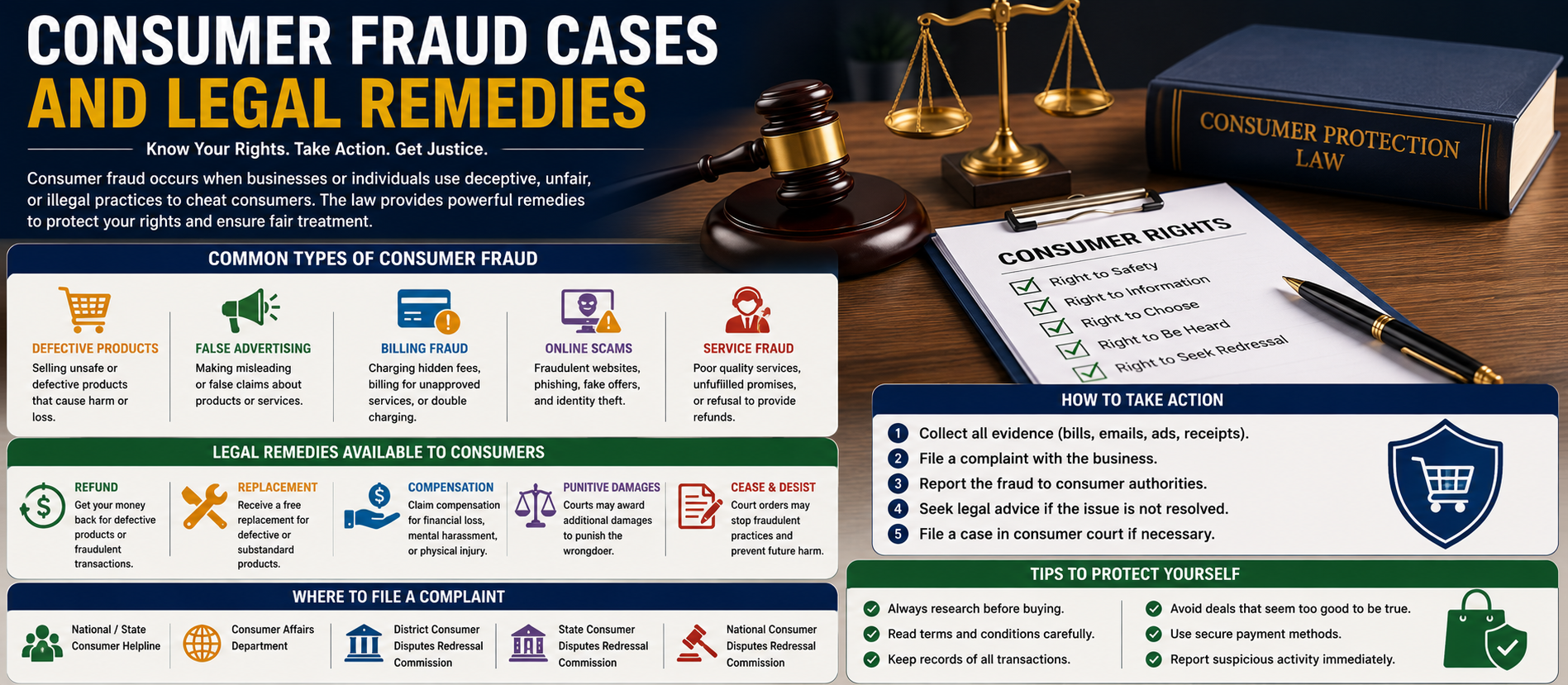
Consumer fraud affects millions of people every year through deceptive business practices, fake products, online scams, misleading advertising, identity theft, financial fraud, and unfair trade practices. Modern consumer protection laws are designed to safeguard buyers by providing legal remedies, compensation mechanisms, and enforcement against dishonest businesses.
What Is Consumer Fraud?
Consumer fraud occurs when a seller, service provider, or individual intentionally deceives consumers to obtain money, property, or another unfair advantage.
- False advertising
- Online shopping scams
- Counterfeit products
- Identity theft
- Warranty fraud
- Investment scams
- Subscription traps
Common Consumer Fraud Cases
- E-commerce fraud
- Credit card fraud
- Phishing attacks
- Fake invoices
- Prize and lottery scams
- Tech support scams
- Travel booking fraud
- Insurance fraud
Warning Signs
- Pressure to act immediately
- Unrealistic discounts
- Requests for advance payment
- Missing business information
- Poor customer support
Legal Remedies Available
Depending on the jurisdiction and circumstances, consumers may have access to:
- Refunds
- Product replacement
- Repairs
- Compensation
- Consumer court complaints
- Civil litigation
- Regulatory complaints
How to File a Complaint
- Collect invoices, receipts, screenshots, emails, and contracts.
- Contact the business and request a resolution.
- Submit a complaint to the appropriate consumer authority if unresolved.
- Consider mediation or legal proceedings where appropriate.
Evidence That Strengthens a Case
- Purchase receipts
- Bank statements
- Email correspondence
- Photographs
- Product packaging
- Recorded complaint history
Business Compliance Tips
- Use transparent pricing
- Provide accurate advertising
- Honor warranties
- Maintain complaint procedures
- Protect customer data
Preventing Consumer Fraud
- Research sellers before purchasing
- Verify websites
- Use secure payment methods
- Read return policies
- Keep transaction records
SEO, AEO, GEO & AI Search Optimization
SEO, AEO, GEO, and AI Search Optimization help educational legal content reach users through Google, Bing, answer engines, and AI-powered search experiences.
Frequently Asked Questions
Can I sue for consumer fraud?
Available remedies depend on the applicable law, the evidence, and the nature of the dispute.
What evidence should I keep?
Retain receipts, contracts, emails, payment records, photographs, and communications.
Can online scams be reported?
Yes. Many jurisdictions provide consumer protection agencies and cybercrime reporting mechanisms.
Conclusion
Understanding consumer fraud and the legal remedies available empowers individuals to protect their finances and enforce their rights. Prompt reporting, careful documentation, and professional legal advice when appropriate can significantly improve the chances of a successful outcome.
Digiifrog
Website: www.digiifrog.com
Digital Marketing, SEO, AEO, GEO & AI Search Solutions for Modern Businesses.
Ready to Grow?
Talk to us about a strategy tailored to your brand — we will help you stand out in search, AI discovery and social.


Comments (0)
Log in to leave a comment.