📋 Quick Summary
In this article:
1. Vector Design Tools
2. Raster Image Editing Software
Prototyping and Interaction Design Tools
Motion Graphics and Animation Software
3D Design and Modeling Software
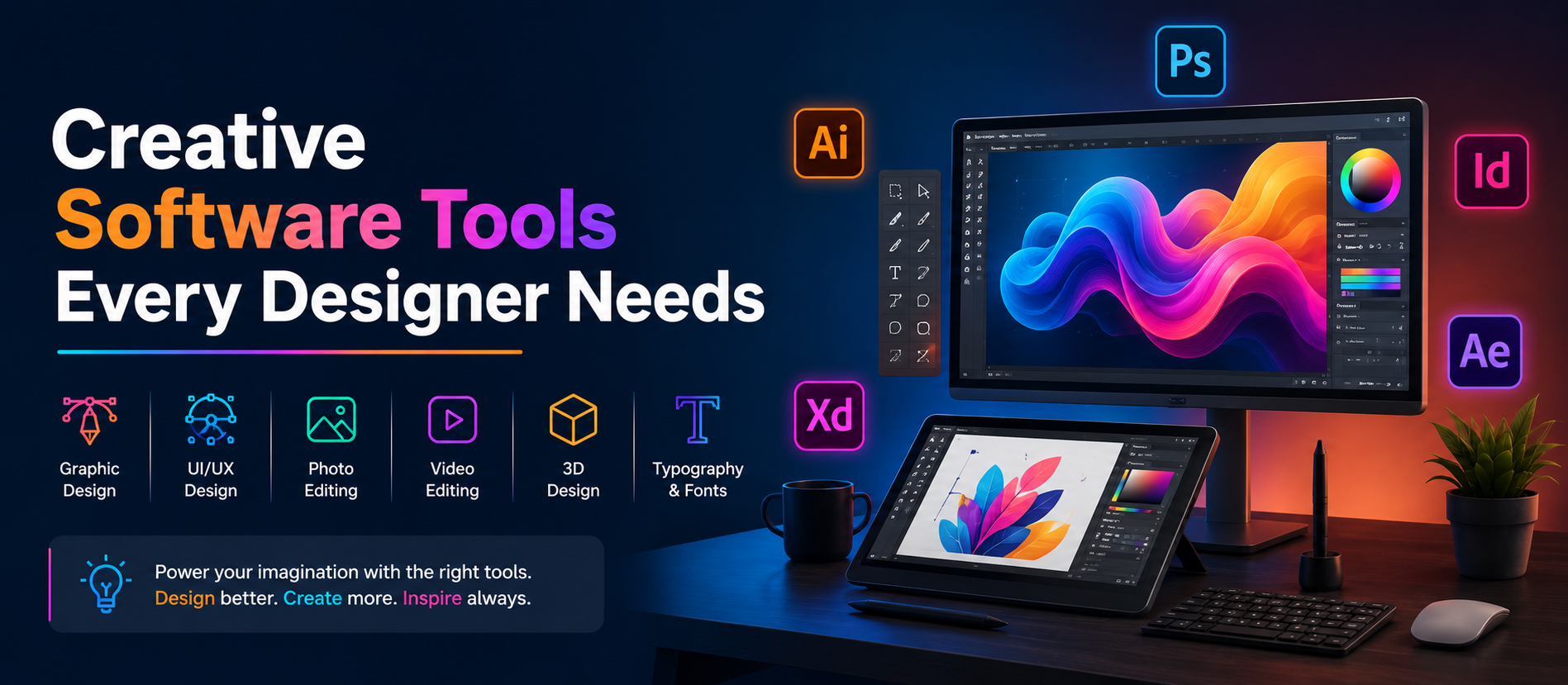
The design industry has evolved dramatically over the past decade. Modern designers are expected to create stunning graphics, engaging user experiences, compelling videos, immersive 3D content, and interactive digital products while maintaining efficiency and creativity. To meet these growing demands, professionals rely on a wide range of creative software tools that streamline workflows, enhance collaboration, and unlock new possibilities.
Whether you're a graphic designer, UI/UX specialist, digital marketer, motion artist, illustrator, web designer, or content creator, having the right software toolkit can significantly impact productivity and creative output.
💡 Key Insight
In this comprehensive guide, we explore the most important creative software tools every designer needs in 2026, their benefits, key features, industry applications, and how they support SEO, AEO, GEO, and AI-powered search strategies.
Why Creative Software Matters
Design is no longer limited to static visuals. Businesses require digital assets across websites, mobile apps, social media platforms, video campaigns, AI-driven experiences, and interactive environments.
Creative software enables designers to:
- Create professional-quality designs
- Improve workflow efficiency
- Collaborate with teams
- Manage creative assets
- Produce content faster
- Maintain brand consistency
- Adapt to evolving design trends
The right tools empower designers to focus more on creativity and less on technical limitations.
Graphic Design Software
1. Vector Design Tools
Vector graphics remain essential for logos, branding materials, illustrations, and scalable design assets.
Key capabilities include:
- Logo creation
- Brand identity design
- Icon development
- Illustration work
- Print-ready artwork
Vector software allows designers to create artwork that can scale without losing quality.
2. Raster Image Editing Software
Photo editing and image manipulation remain foundational skills for modern designers.
These tools support:
- Photo retouching
- Background removal
- Color correction
- Composite image creation
- Digital painting
High-quality image editing software is indispensable for marketing and branding projects.
UI and UX Design Software
User experience has become a major competitive differentiator in digital products.
UI/UX design software helps professionals create intuitive, visually appealing, and user-friendly interfaces.
Core Features:
- Wireframing
- Prototyping
- User flow mapping
- Interactive design
- Design systems
- Collaboration tools
These platforms allow designers to validate concepts before development begins.
Prototyping and Interaction Design Tools
Interactive prototypes help stakeholders visualize digital experiences before coding starts.
Modern prototyping tools support:
- Clickable interfaces
- Animated transitions
- User testing workflows
- Collaboration reviews
- Feedback management
Prototyping reduces development costs by identifying usability issues early.
Motion Graphics and Animation Software
Video and animation content continue to dominate digital marketing channels.
Designers increasingly rely on motion graphics software to create engaging visual experiences.
Popular Applications:
- Explainer videos
- Animated advertisements
- Social media content
- Logo animations
- Visual effects
- Broadcast graphics
Motion design skills are becoming essential in modern creative industries.
Video Editing Software
Video content remains one of the most effective communication formats.
Professional video editing software enables designers and content creators to produce:
- Marketing videos
- YouTube content
- Corporate presentations
- Educational materials
- Product demonstrations
- Social media campaigns
Advanced editing tools now incorporate AI-powered enhancements and automation.
3D Design and Modeling Software
The growing demand for immersive experiences has increased the importance of 3D design tools.
Applications Include:
- Product visualization
- Architectural rendering
- Game asset creation
- Virtual reality experiences
- Augmented reality content
- Industrial design
3D software enables designers to create realistic and engaging visual environments.
Digital Illustration Tools
Illustrators require specialized software for creating detailed artwork and visual storytelling projects.
Modern illustration tools support:
- Pressure-sensitive drawing
- Custom brushes
- Layer management
- Vector and raster workflows
- Animation integration
Digital illustration continues to play an important role in branding, publishing, and advertising.
Creative Collaboration Platforms
Design projects often involve teams distributed across multiple locations.
Collaboration platforms help designers:
- Share files securely
- Review designs
- Manage approvals
- Track revisions
- Coordinate stakeholders
- Maintain design consistency
Cloud-based collaboration has become a standard requirement for creative teams.
Asset Management Software
As design projects grow in complexity, managing creative assets becomes increasingly important.
Benefits Include:
- Centralized file storage
- Version control
- Brand asset management
- Faster content retrieval
- Improved workflow organization
Effective asset management improves efficiency and reduces duplication.
AI-Powered Creative Software
Artificial Intelligence is transforming creative workflows.
Modern design tools increasingly incorporate AI capabilities that help professionals work faster and smarter.
AI Features Include:
- Image generation
- Content suggestions
- Automatic resizing
- Background removal
- Smart editing
- Design recommendations
- Layout optimization
AI allows designers to focus on creativity while automating repetitive tasks.
Website Design Software
Website design remains one of the most important creative disciplines.
Modern web design software enables professionals to create responsive, visually appealing websites without extensive coding.
Key Features:
- Responsive design tools
- Visual editors
- Template systems
- SEO optimization features
- CMS integration
- Performance optimization
Effective website design software supports both aesthetics and functionality.
Social Media Design Tools
Brands require constant streams of visual content for social media platforms.
Specialized social media design software helps creators produce:
- Instagram posts
- Facebook graphics
- LinkedIn content
- YouTube thumbnails
- Advertising creatives
- Story formats
Templates and automation features improve content production efficiency.
Presentation Design Software
Business communication increasingly depends on visually engaging presentations.
Presentation tools support:
- Sales pitches
- Investor presentations
- Training materials
- Educational content
- Business reports
Modern platforms combine design flexibility with collaboration features.
Creative Software for Branding Projects
Branding projects often require multiple software tools working together.
Designers create:
- Logos
- Brand guidelines
- Marketing materials
- Packaging designs
- Digital campaigns
- Corporate identity systems
A comprehensive software toolkit supports every stage of brand development.
How Cloud Technology Is Changing Creative Software
Cloud-based creative software has become increasingly popular.
Advantages Include:
- Access from anywhere
- Automatic updates
- Real-time collaboration
- Secure file storage
- Cross-device compatibility
- Scalable resources
Cloud technology enables distributed creative teams to work efficiently together.
Choosing the Right Creative Software
Not every designer needs the same tools. Software selection should depend on:
- Project requirements
- Skill level
- Budget constraints
- Team collaboration needs
- Workflow preferences
- Industry specialization
The best toolkit balances functionality, efficiency, and long-term scalability.
Emerging Trends in Creative Software
1. AI-Assisted Design
AI-generated visuals and intelligent design suggestions are becoming mainstream.
2. Generative Design Systems
Algorithms increasingly help create layouts, branding concepts, and visual variations.
3. Real-Time Collaboration
Cloud-based collaboration continues to improve productivity.
4. Mixed Reality Design
Designers are creating experiences for augmented and virtual reality platforms.
5. Automated Content Creation
AI-powered tools accelerate content production across multiple formats.
Creative Software and SEO, AEO, GEO Optimization
Creative software plays a vital role in digital marketing success.
SEO (Search Engine Optimization) benefits from optimized images, web designs, visual content, and user-friendly experiences.
AEO (Answer Engine Optimization) requires structured visual content that supports voice search and AI-generated answers.
GEO (Generative Engine Optimization) focuses on creating content that AI search systems can understand, reference, and recommend.
Modern creative software enables businesses to produce assets optimized for all three strategies.
Why Digiifrog Recommends Modern Creative Software Tools
At Digiifrog, we understand that exceptional design drives engagement, conversions, and brand recognition.
Creative software tools empower designers, marketers, entrepreneurs, and businesses to produce professional-quality content efficiently while supporting SEO, AEO, GEO, and AI search visibility goals.
Businesses that invest in modern creative software gain significant competitive advantages in today's digital-first marketplace.
Website: www.digiifrog.com
Conclusion
The creative industry continues to evolve as new technologies reshape how designers work. From graphic design and UI/UX development to video production, AI-assisted workflows, and immersive experiences, creative software tools have become essential for modern professionals.
By building a comprehensive toolkit and staying informed about emerging trends, designers can improve productivity, expand creative possibilities, and deliver exceptional results. As AI, cloud collaboration, and automation continue advancing, the future of creative software promises even greater opportunities for innovation and growth.
Ready to Grow?
Talk to us about a strategy tailored to your brand — we will help you stand out in search, AI discovery and social.


Comments (0)
Log in to leave a comment.