📋 Quick Summary
In this article:
What Are Digital Recovery Tools?
Why Technology Can Help People Stay Sober
1. Telehealth for Addiction Treatment
2. Recovery and Sobriety Apps
3. Digital Therapeutics
4. Digital Cognitive Behavioral Therapy
5. Digital Craving and Trigger Tracking
6. Medication and Appointment Reminders
7. Online Peer Support
8. Wearable Devices
9. Digital Mental Health Support
10. Recovery Planning Through Digital Tools
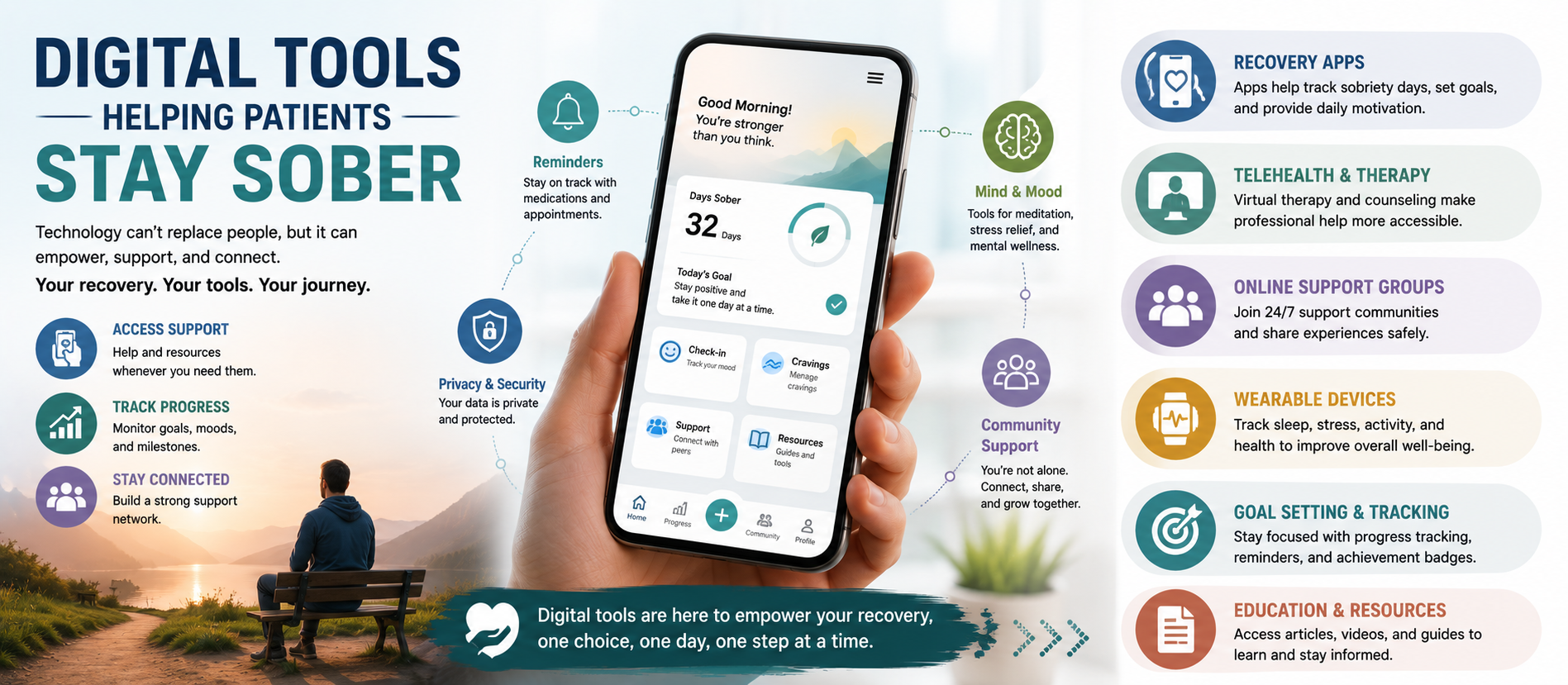
Digital recovery tools are becoming an increasingly useful part of addiction treatment and long-term sobriety. Smartphones, telehealth platforms, recovery applications, digital therapy programs, online peer communities, medication-management tools, wearable devices, and secure patient portals can help people stay connected to care between appointments.
Technology does not replace addiction treatment, medical supervision, counseling, medication, or human connection. Instead, the most useful digital tools extend evidence-based care into everyday life. Current research and federal guidance recognize the potential of telehealth, mobile applications, digital therapeutics, and wearable technologies to improve access, engagement, self-management, and continuity of care for people with substance use disorders. citeturn0search2turn0search5turn0search25
What Are Digital Recovery Tools?
Digital recovery tools are technology-based services designed to support treatment, recovery, monitoring, education, communication, or healthy routines. They can include smartphone apps, websites, video appointments, text-based reminders, online support communities, digital therapy programs, wearable sensors, electronic health portals, and remote medication-related services.
The right technology depends on the person's treatment needs. A person receiving medication for opioid use disorder may benefit from telehealth follow-up, while someone working on relapse prevention may use a structured recovery app, online counseling, or a peer-support community.
Why Technology Can Help People Stay Sober
Recovery happens every day, not only during a weekly appointment. Digital tools can provide support at the moments when people actually need it: when a craving appears, an appointment is approaching, a stressful event occurs, or a person needs to contact a support network.
NIDA-funded research has explored apps and digital therapeutics designed to improve treatment engagement and retention, deliver cognitive behavioral interventions, support medication treatment, and provide ongoing recovery and relapse-prevention services. citeturn0search24turn0search26
1. Telehealth for Addiction Treatment
Telehealth allows patients to communicate with healthcare professionals through secure video, audio, or other approved digital systems. It can reduce barriers such as transportation, distance, work schedules, and limited access to specialists.
SAMHSA's telehealth guidance reviews ways telehealth can support treatment for substance use disorders and emphasizes appropriate clinical implementation. citeturn0search2
For some patients receiving opioid use disorder treatment, federal rules also provide pathways for telehealth-based screening and medication access under specified requirements. citeturn0search4turn0search11
2. Recovery and Sobriety Apps
Smartphone applications can provide reminders, educational material, goal tracking, journaling, coping exercises, recovery planning, and links to support services. Some apps are designed specifically for substance use recovery, while others support general mental wellness or healthy habits.
Apps are most useful when they encourage evidence-based behaviors and fit into a person's broader treatment plan. Users should be cautious about apps that promise instant cures, guarantee sobriety, or discourage professional care.
3. Digital Therapeutics
Digital therapeutics are technology-based interventions designed to deliver structured therapeutic content. Unlike a simple motivational app, a digital therapeutic may use clinically developed programs and evidence-based behavioral strategies.
NIDA has highlighted technologies such as reSET and reSET-O as examples of mobile applications developed to deliver cognitive behavioral interventions for substance use disorders. citeturn0search26
Whether a particular digital therapeutic is appropriate depends on its intended use, clinical evidence, regulatory status, and the individual's treatment needs.
4. Digital Cognitive Behavioral Therapy
Cognitive Behavioral Therapy (CBT) helps people recognize thoughts, situations, and behaviors associated with substance use and develop healthier responses. Digital CBT can make structured educational and skill-building material available outside traditional sessions.
Research supported by NIDA has examined web-based psychosocial interventions that combine skill building with recovery-focused strategies and treatment participation. citeturn0search9
5. Digital Craving and Trigger Tracking
Some recovery applications allow users to record cravings, moods, locations, sleep, stressful events, or other possible triggers. Over time, this information can help individuals recognize patterns.
For example, a person might notice that cravings become stronger after poor sleep or during particular social situations. Discussing these observations with a counselor can help refine a personalized relapse-prevention plan.
6. Medication and Appointment Reminders
Digital reminders can help people remember appointments, medication schedules, therapy sessions, and recovery activities. These features are especially useful when treatment involves multiple providers or a complex routine.
Reminders should support—not replace—professional medication management. Patients should never change doses, stop medication, or alter a treatment plan based solely on an app notification.
7. Online Peer Support
Online recovery communities can reduce isolation and provide access to people with shared experiences. Virtual meetings can be useful for people who cannot attend an in-person group because of distance, mobility, scheduling, or other barriers.
💡 Key Insight
SAMHSA describes peer support as an important part of recovery and emphasizes connection, shared understanding, and empowerment. citeturn0search3
Users should choose respectful, recovery-oriented communities and remember that peer support does not replace professional treatment or emergency services.
8. Wearable Devices
Wearables such as smartwatches and fitness trackers can collect information about activity, sleep, heart rate, and other health-related measures. In behavioral health, wearable technology may support self-management and provide additional information for care.
SAMHSA's 2026 advisory discusses how wearables and other digital tools are expanding behavioral health innovation while also highlighting ethical and privacy considerations. citeturn0search5
Wearable data should not be interpreted as a diagnosis. Health professionals should determine whether and how such information is clinically useful.
9. Digital Mental Health Support
Stress, anxiety, depression, and trauma can complicate addiction recovery. Digital mental health resources may provide relaxation exercises, educational material, mindfulness practices, symptom tracking, or access to professional counseling.
When significant mental health symptoms are present, digital self-help should complement appropriate professional assessment and treatment rather than becoming the only source of care.
10. Recovery Planning Through Digital Tools
A digital recovery plan can organize important information in one place. It might include personal goals, support contacts, appointment details, coping strategies, warning signs, healthy activities, and reminders to reach out when additional support is needed.
Having a plan available on a phone can make it easier to access coping strategies during stressful moments. However, sensitive information should be protected with strong passwords, device security, and appropriate privacy settings.
11. Connecting Patients With Treatment
Technology can help people find treatment programs, communicate with providers, complete assessments, and receive referrals. Digital referral systems can reduce delays between recognizing a need for treatment and connecting with an appropriate service.
NIDA has supported technology development aimed at connecting people with addiction treatment facilities and improving access to services. citeturn0search26
12. Digital Tools for Family Support
Families can also benefit from online education, virtual counseling, caregiver resources, and digital support communities. These tools can help relatives understand addiction, learn healthier communication strategies, and locate appropriate services.
Family resources should encourage supportive boundaries rather than placing responsibility for recovery entirely on relatives.
13. Supporting Employment and Daily Structure
Digital calendars, task-management applications, transportation tools, online education, and employment platforms can help people rebuild daily structure during recovery. SAMHSA's current recovery initiatives emphasize that recovery can include independence, meaningful work, and participation in the workforce. citeturn0search1
These technologies may seem unrelated to addiction treatment, but stable routines and meaningful activities can be important parts of a sustainable recovery lifestyle.
14. Privacy and Data Security Matter
Addiction and mental health information is highly personal. Before using a digital recovery service, patients should understand what information is collected, where it is stored, who can access it, whether information is shared with third parties, and what privacy controls are available.
Secure passwords, multi-factor authentication, device updates, privacy settings, and careful sharing of sensitive information can reduce unnecessary risks. Healthcare organizations should use platforms appropriate for the type of protected health information they handle.
15. Avoiding Technology Overload
More technology does not automatically mean better recovery. Using too many apps can become distracting or stressful. A smaller number of useful tools may be more sustainable.
A good digital strategy should answer a practical question: What problem is this tool solving? If an application helps someone attend appointments, practice coping skills, communicate with a counselor, or remain connected to supportive peers, it may have meaningful value.
16. Combining Digital Tools With Human Care
The strongest model is usually technology plus human support. A recovery app can remind someone about therapy, but a counselor can help interpret a difficult emotional experience. A wearable can show changes in sleep, but a clinician can determine whether those changes require attention. A peer community can provide encouragement, while a medical professional can address withdrawal or medication needs.
This combination allows technology to extend care without pretending that an algorithm can replace the therapeutic relationship.
17. Choosing a Useful Recovery App
- Check who developed the application.
- Look for evidence supporting its claims.
- Understand whether it is a wellness app or a regulated clinical product.
- Review privacy and data-sharing policies.
- Avoid guaranteed-cure claims.
- Check whether the tool fits the person's treatment goals.
- Ask a healthcare professional when uncertain.
18. A Simple Digital Sobriety Routine
A practical routine might include a morning check-in, medication or appointment reminders when appropriate, a short recovery activity, regular physical activity, a mood or craving note, and connection with a support person. The routine should remain simple enough to maintain consistently.
Technology should make recovery easier, not turn recovery into another complicated task.
SEO, AEO, GEO & AI Search FAQs
Can digital tools help people stay sober?
Yes. Digital tools can support treatment engagement, telehealth access, recovery education, coping skills, reminders, peer connection, and relapse-prevention activities. They work best as part of a broader recovery plan. citeturn0search24turn0search25
What are the best digital tools for addiction recovery?
Useful categories include telehealth, evidence-based digital therapeutics, recovery apps, online peer support, appointment reminders, secure patient portals, and selected wearable technologies. The best option depends on individual needs.
Can an app replace addiction treatment?
No. Most apps are supportive tools rather than complete treatment programs. People with substance use disorders may need professional assessment, counseling, medication, medical care, or other services.
Can telehealth support addiction recovery?
Yes. Telehealth can provide treatment and follow-up while reducing barriers such as transportation and distance. SAMHSA provides guidance on using telehealth for substance use disorder care. citeturn0search2
Are recovery apps private?
Privacy varies. Users should read an app's privacy policy, understand data-sharing practices, and use strong account and device security before entering sensitive information.
Can wearable devices help recovery?
Wearables may provide useful information about activity, sleep, and other measures, but they are supportive tools and should not be treated as diagnostic devices without appropriate clinical interpretation.
Conclusion
Digital tools helping patients stay sober are changing how recovery support can be delivered beyond traditional appointments. Telehealth can improve access, digital therapeutics can deliver structured interventions, recovery apps can support daily routines, online communities can reduce isolation, and wearables can provide additional health information.
The science and clinical experience suggest that technology is most valuable when it strengthens—not replaces—evidence-based treatment and human connection. The best digital recovery strategy is therefore personalized, secure, practical, and connected to qualified healthcare professionals and supportive people.
Recovery remains a human process. Technology can provide reminders, information, access, and connection, but lasting recovery also depends on appropriate treatment, relationships, motivation, healthy routines, and support that fits the individual's needs.
Important: This article is educational and does not replace medical or mental health advice. Anyone experiencing severe withdrawal, overdose, or another medical emergency should seek immediate professional or emergency care.
For more rehabilitation, addiction recovery, SEO, AEO, GEO, and AI Search Optimization content, visit Digiifrog at www.digiifrog.com.
Ready to Grow?
Talk to us about a strategy tailored to your brand — we will help you stand out in search, AI discovery and social.

Comments (0)
Log in to leave a comment.