📋 Quick Summary
In this article:
What Are E-Commerce Laws?
Responsibilities of Online Sellers
Common E-Commerce Disputes
SEO, AEO, GEO & AI Search Optimization
E-commerce has transformed how people shop, compare products, and purchase services. While online shopping offers convenience and competitive pricing, buyers should understand the legal protections that apply to digital transactions. E-commerce laws help safeguard consumers from fraud, misleading advertising, unfair contract terms, privacy violations, counterfeit products, and payment disputes.
What Are E-Commerce Laws?
E-commerce laws regulate electronic buying and selling, digital contracts, online payments, consumer protection, privacy, advertising, and cybersecurity. Requirements vary by country and jurisdiction.
Why These Laws Matter
- Protect consumers from fraud
- Promote transparent online business practices
- Support secure digital payments
- Protect personal information
- Encourage fair dispute resolution
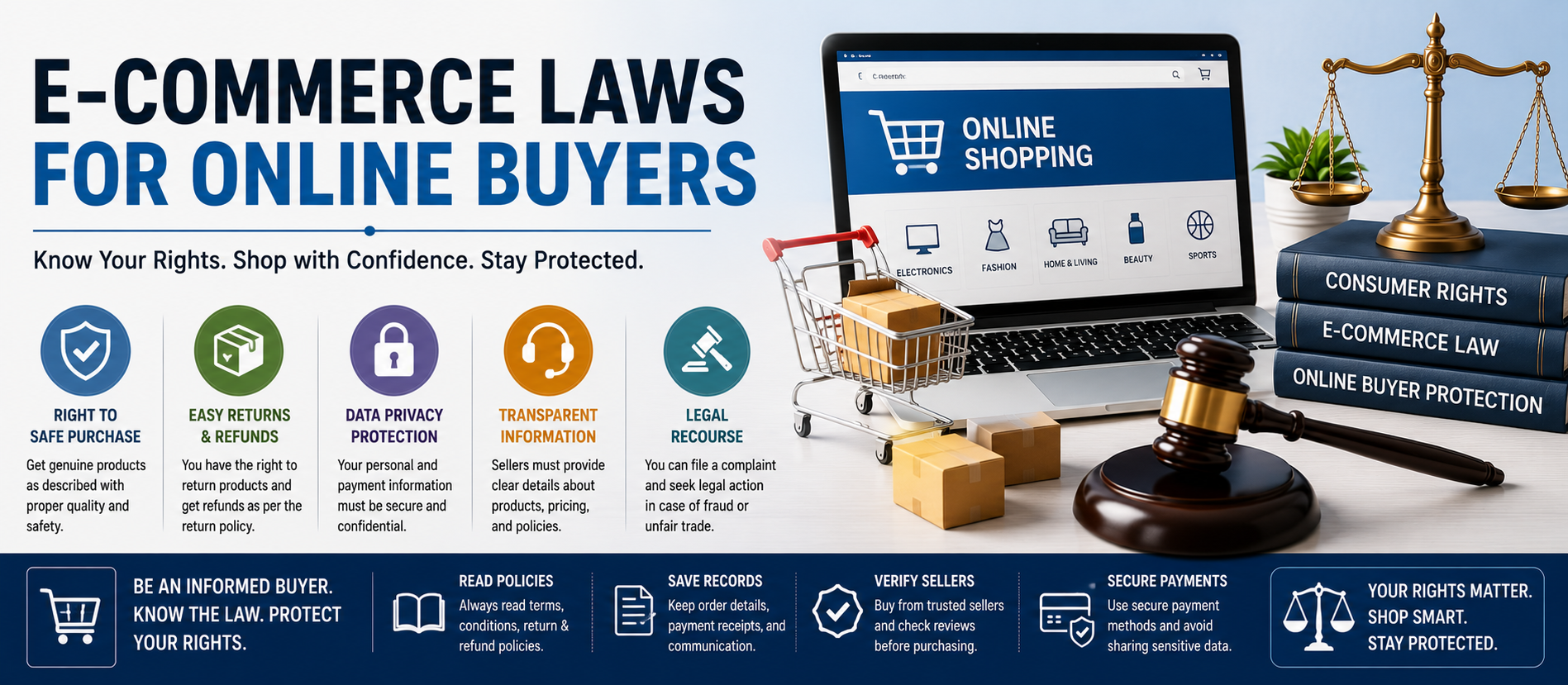
Rights of Online Buyers
- Clear product information
- Transparent pricing
- Secure payment processing
- Privacy protection
- Access to refunds where legally applicable
- Protection against deceptive practices
Responsibilities of Online Sellers
- Provide accurate product descriptions
- Display terms and conditions
- Protect customer data
- Honor applicable warranties
- Deliver products as promised
Common E-Commerce Disputes
- Non-delivery of goods
- Counterfeit products
- Unauthorized transactions
- Refund disputes
- Hidden charges
Payment Security
Consumers should use trusted payment methods, enable multi-factor authentication where available, and monitor financial statements for suspicious activity.
Privacy and Data Protection
Businesses should collect only necessary personal information, publish clear privacy policies, and implement appropriate cybersecurity safeguards.
How to Resolve Disputes
- Contact customer support
- Retain receipts and order confirmations
- Use marketplace dispute procedures
- Report fraud to appropriate authorities
- Seek legal advice for significant disputes
Safe Online Shopping Tips
- Buy from reputable sellers
- Check reviews carefully
- Verify website security
- Read return policies
- Keep transaction records
SEO, AEO, GEO & AI Search Optimization
SEO, AEO, GEO, and AI Search Optimization help educational legal content reach online shoppers through Google, Bing, answer engines, and AI-powered search platforms.
Frequently Asked Questions
Can buyers request refunds?
Refund rights depend on the applicable law, seller policies, and the circumstances of the purchase.
What should buyers do if they receive counterfeit goods?
Document the issue, contact the seller, use available dispute mechanisms, and report fraud where appropriate.
Conclusion
Understanding e-commerce laws helps buyers shop confidently while encouraging businesses to maintain fair, transparent, and secure online practices. Reviewing local consumer protection rules and preserving transaction records can make resolving disputes much easier.
Digiifrog
Website: www.digiifrog.com
Digital Marketing, SEO, AEO, GEO & AI Search Solutions for Modern Businesses.
Ready to Grow?
Talk to us about a strategy tailored to your brand — we will help you stand out in search, AI discovery and social.

Comments (0)
Log in to leave a comment.