📋 Quick Summary
In this article:
What Is an Eco-Friendly Home?
Why Eco-Friendly Homes Are Growing in Popularity
How Sustainability Can Affect Property Value
Energy Efficiency and Home Value
Solar Panels and Renewable Energy
High-Performance Insulation
Energy-Efficient Windows and Doors
Efficient Heating and Cooling Systems
Smart Home Technology and Sustainability
Sustainable Building Materials
Indoor Air Quality and Healthy Homes
💡 Key Insight
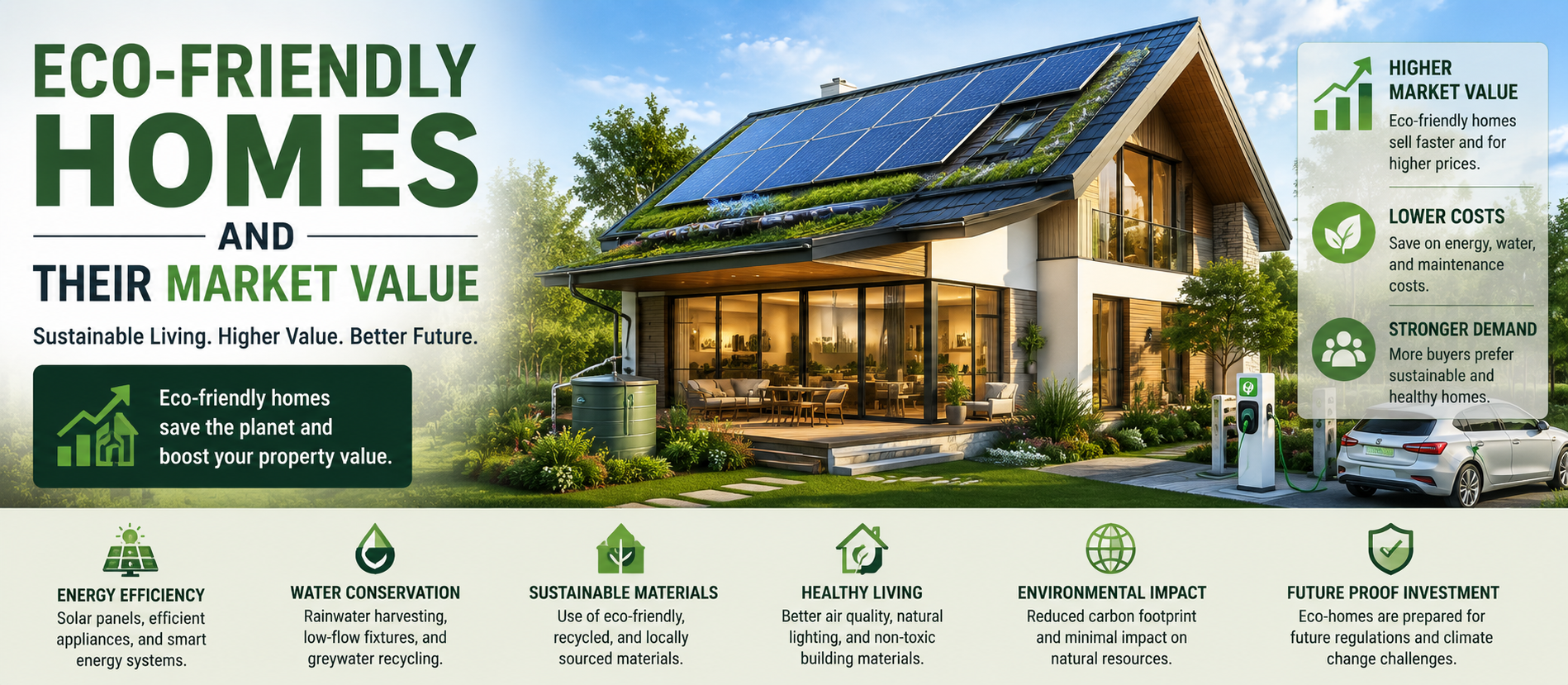
Eco-friendly homes are becoming increasingly important in modern real estate markets as buyers, investors, developers, governments, and communities focus on energy efficiency, sustainability, healthier living environments, and long-term operating costs. A sustainable home is no longer viewed only as an environmentally responsible choice. In many markets, green features can influence buyer demand, property marketability, ownership expenses, rental appeal, and long-term value.
From solar panels and energy-efficient appliances to high-performance insulation, smart energy management, water conservation systems, sustainable building materials, and green certifications, modern eco-friendly properties combine environmental responsibility with financial and lifestyle benefits.
This comprehensive WordPress-ready guide explains what eco-friendly homes are, which sustainable features can influence market value, how buyers and investors evaluate green properties, the challenges of sustainable construction, and how real estate businesses can use SEO, AEO (Answer Engine Optimization), GEO (Generative Engine Optimization), and AI Search Optimization to improve digital visibility.
What Is an Eco-Friendly Home?
An eco-friendly home is designed, built, renovated, or operated to reduce environmental impact while improving energy efficiency, resource conservation, indoor comfort, and long-term performance.
Sustainable homes may use renewable energy, efficient heating and cooling systems, water-saving technologies, responsible construction materials, natural lighting, smart automation, and climate-responsive design.
- Energy-efficient construction
- Renewable energy systems
- Water conservation
- Sustainable building materials
- Smart home technology
- Healthy indoor environments
- Waste reduction
- Climate-resilient design
Why Eco-Friendly Homes Are Growing in Popularity
Several long-term trends are increasing demand for sustainable housing. Rising energy costs encourage buyers to seek efficient homes. Environmental awareness influences consumer preferences. Governments introduce energy standards and incentives. Investors increasingly evaluate climate-related risks, and new technologies make sustainable construction more practical.
Many buyers also value healthier indoor air, natural lighting, comfortable temperatures, lower utility expenses, and reduced maintenance requirements.
How Sustainability Can Affect Property Value
The effect of green features on property value depends on location, market demand, construction quality, energy prices, buyer awareness, certification standards, and the specific improvements installed.
Well-designed eco-friendly homes may benefit from stronger marketability, lower operating expenses, improved buyer interest, faster sales, higher rental demand, and greater long-term resilience.
Energy Efficiency and Home Value
Energy efficiency is one of the most important components of sustainable housing. Buyers increasingly evaluate expected utility expenses when comparing properties.
Energy-efficient features may include high-performance windows, insulation, efficient heating and cooling systems, LED lighting, smart thermostats, heat pumps, energy-efficient appliances, and improved building envelopes.
Homes with lower operating costs may become more attractive when energy prices rise.
Solar Panels and Renewable Energy
Residential solar energy systems can reduce electricity expenses and support cleaner energy production.
The financial impact of solar panels depends on installation costs, local electricity prices, system ownership, financing arrangements, tax incentives, net metering policies, system condition, and buyer preferences.
Owned solar systems may be easier to evaluate during property transactions than complex leases or financing agreements.
High-Performance Insulation
Proper insulation reduces heat transfer and helps maintain comfortable indoor temperatures. Improved insulation can lower heating and cooling requirements while reducing energy consumption.
Attics, walls, floors, basements, roofs, and building envelopes should be evaluated when improving thermal performance.
Energy-Efficient Windows and Doors
High-performance windows and doors can reduce drafts, improve comfort, minimize heat loss, and support lower energy consumption.
Double-glazed or triple-glazed windows, low-emissivity coatings, insulated frames, and professional installation can improve building performance.
Efficient Heating and Cooling Systems
Heating, ventilation, and air conditioning systems represent a major portion of household energy consumption.
High-efficiency HVAC equipment, heat pumps, smart thermostats, zoning systems, and regular maintenance can improve comfort and reduce operating costs.
Smart Home Technology and Sustainability
Smart technology helps homeowners monitor and control energy consumption.
- Smart thermostats
- Automated lighting
- Energy monitoring systems
- Smart appliances
- Water leak sensors
- Automated window coverings
- Remote HVAC controls
When integrated properly, smart systems can improve efficiency while increasing convenience.
Water Conservation Features
Water-efficient homes can reduce utility costs and support environmental conservation.
Common features include low-flow fixtures, efficient toilets, rainwater harvesting, drought-resistant landscaping, smart irrigation systems, greywater reuse systems, and leak detection technology.
Sustainable Building Materials
Eco-friendly homes may use materials selected for durability, recycled content, responsible sourcing, low environmental impact, and healthier indoor environments.
- Reclaimed wood
- Recycled metal
- Low-VOC paints
- Responsibly sourced timber
- Recycled insulation
- Durable flooring materials
Material quality, installation, maintenance requirements, and lifecycle performance should be considered alongside environmental benefits.
Indoor Air Quality and Healthy Homes
Healthy indoor environments are becoming an important component of sustainable housing.
Ventilation systems, air filtration, moisture management, low-emission materials, natural lighting, humidity control, and proper building maintenance can improve indoor comfort and air quality.
Passive Solar Design
Passive solar design uses building orientation, window placement, shading, thermal mass, insulation, and natural ventilation to reduce energy requirements.
Homes designed around local climate conditions may provide greater comfort with lower energy consumption.
Net-Zero Energy Homes
Net-zero energy homes are designed to produce approximately as much energy as they consume over a defined period.
Achieving net-zero performance generally requires highly efficient construction, reduced energy demand, renewable energy systems, smart controls, and careful design.
These homes represent an important direction in sustainable residential development.
Green Building Certifications
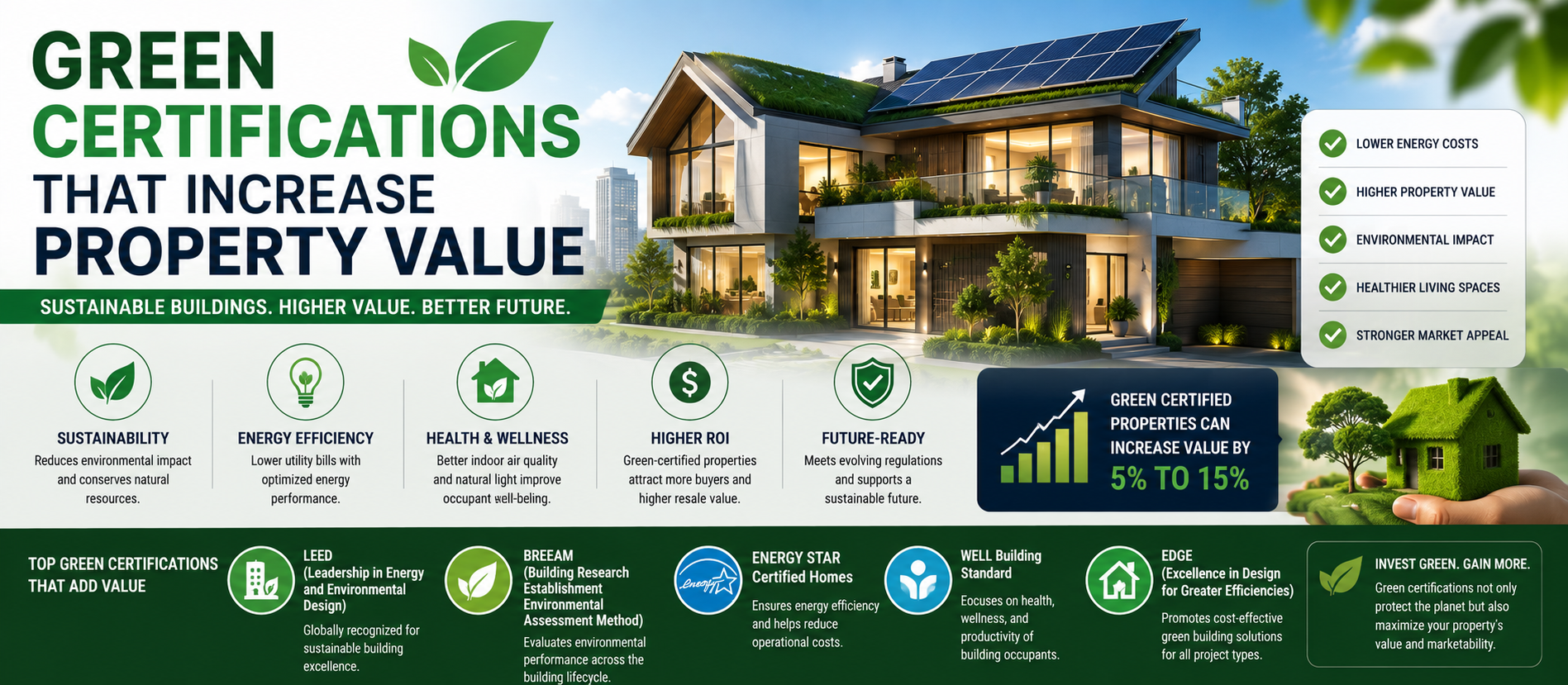
Independent green building certifications can provide structured methods for evaluating energy efficiency, sustainability, indoor environmental quality, water conservation, and building performance.
Certification systems vary by country and property type. Examples may include LEED, ENERGY STAR, Passive House standards, BREEAM, and other national or regional programs.
Certification may improve buyer confidence when the program is recognized and the property meets measurable standards.
Do Green Certifications Increase Property Value?
Certified properties may benefit from stronger marketability, reduced operating expenses, improved tenant interest, and greater confidence among environmentally conscious buyers.
The actual financial impact depends on local market demand, certification quality, property type, location, operating performance, and buyer awareness.
Eco-Friendly Homes and Buyer Demand
Modern buyers increasingly compare properties based on total ownership costs rather than purchase price alone.
Utility expenses, maintenance requirements, indoor comfort, climate resilience, technology, and environmental performance can influence purchasing decisions.
Younger buyers and environmentally conscious consumers may place greater importance on sustainability features.
Eco-Friendly Homes and Rental Demand
Energy-efficient rental properties may attract tenants who value lower utility costs, modern technology, healthy living environments, and environmental responsibility.
Landlords should evaluate whether sustainable upgrades can improve occupancy, tenant retention, rental income, and long-term operating performance.
Sustainable Luxury Real Estate
Luxury home buyers increasingly expect sustainability without sacrificing comfort, design, privacy, or technology.
Premium sustainable properties may include renewable energy, smart automation, high-performance materials, water conservation, wellness spaces, natural landscaping, electric vehicle charging, and energy storage systems.
Eco-Friendly Homes as Real Estate Investments
Investors should evaluate sustainable properties using the same financial discipline applied to other real estate investments.
Important factors include purchase price, rental income, vacancy rates, maintenance costs, energy savings, financing, local demand, property taxes, insurance, incentives, resale potential, and future regulations.
Sustainability can strengthen an investment, but it does not eliminate traditional real estate risks.
Green Renovations That May Improve Marketability
- Improved insulation
- Efficient windows
- Heat pump systems
- Smart thermostats
- Solar energy
- LED lighting
- Water-efficient fixtures
- EV charging infrastructure
- Energy-efficient appliances
- Air sealing improvements
Property owners should compare installation costs, available incentives, expected savings, local buyer demand, and the condition of existing systems before renovating.
Electric Vehicle Charging Stations
The growth of electric vehicle ownership is increasing interest in residential charging infrastructure.
Homes with garages, parking spaces, suitable electrical capacity, and installed chargers may become more attractive to EV owners.
Battery Storage and Home Energy Systems
Residential battery storage can allow homeowners to store electricity generated by solar systems or provide backup power during outages.
The value of battery systems depends on local energy prices, grid reliability, incentives, system costs, and homeowner needs.
Climate Resilience and Property Value
Sustainable real estate increasingly includes climate resilience. Properties may face risks from flooding, storms, wildfires, extreme heat, drought, and other environmental hazards.
Resilient design, drainage systems, fire-resistant materials, efficient cooling, backup energy, landscaping, and appropriate insurance can influence long-term property performance.
The Role of Government Incentives
Governments may offer tax credits, rebates, grants, financing programs, and other incentives for renewable energy, efficiency upgrades, electric vehicle infrastructure, and sustainable construction.
Programs vary by location and can change over time. Property owners should verify current eligibility requirements before making investment decisions.
Challenges of Eco-Friendly Construction
- Higher initial construction costs
- Limited availability of specialized materials
- Shortage of experienced contractors
- Complex certification requirements
- Technology maintenance
- Uncertain return on certain upgrades
- Regional differences in buyer demand
Careful planning, lifecycle cost analysis, and professional guidance can help manage these challenges.
Greenwashing in Real Estate Marketing
Greenwashing occurs when environmental claims exaggerate or misrepresent a property's sustainability performance.
Real estate professionals should use accurate descriptions, measurable performance data, recognized certifications, and transparent explanations when marketing eco-friendly properties.
Trustworthy communication protects buyers and strengthens long-term brand credibility.
How to Market an Eco-Friendly Home
Effective marketing should explain specific benefits rather than using vague sustainability claims.
- Provide energy performance information
- Explain estimated operating savings carefully
- Highlight recognized certifications
- Show renewable energy systems
- Describe smart home technology
- Explain water conservation features
- Highlight healthy indoor environments
- Use professional photography and video
Technology and AI in Sustainable Real Estate
Artificial intelligence and smart building technology can analyze energy consumption, predict maintenance needs, optimize heating and cooling, detect water leaks, evaluate property performance, and support investment decisions.
AI-powered property search tools may also help buyers identify homes that match sustainability preferences.
The Future of Eco-Friendly Homes
Sustainable housing is likely to become increasingly connected with smart technology, renewable energy, energy storage, electric transportation, climate resilience, healthy building design, and stricter performance standards.
As buyers become more informed about operating costs and environmental risks, measurable property performance may play a larger role in real estate decisions.
SEO Strategies for Sustainable Real Estate Websites
Search Engine Optimization helps real estate businesses reach users searching for green homes, energy-efficient properties, sustainable construction, solar homes, and environmentally responsible investments.
Effective SEO strategies include keyword research, technical optimization, original educational content, location pages, internal linking, schema markup, mobile optimization, fast page speed, and trustworthy information.
AEO for Eco-Friendly Real Estate Content
Answer Engine Optimization focuses on providing direct, structured answers to questions buyers and property owners ask.
Real estate websites should publish FAQs, definitions, comparisons, practical guides, checklists, and concise answers related to energy efficiency, solar systems, green certifications, sustainable renovations, and property values.
GEO for Generative Search Visibility
Generative Engine Optimization emphasizes authoritative, comprehensive, and context-rich content that AI-powered systems can understand and potentially reference.
Original research, expert insights, transparent explanations, case studies, market data, and detailed educational resources can strengthen topical authority.
AI Search Optimization for Sustainable Property Marketing
Consumers increasingly use AI assistants and generative search platforms to research sustainable homes, compare green technologies, evaluate property investments, and identify real estate professionals.
Content optimized for AI Search should provide clear answers, accurate terminology, logical structure, factual context, original value, and transparent information.
Frequently Asked Questions
What makes a home eco-friendly?
An eco-friendly home uses energy-efficient construction, renewable energy, water conservation, sustainable materials, smart technology, healthy indoor design, and other features that reduce environmental impact and operating costs.
Do eco-friendly homes have higher market value?
Green features may improve marketability and value in markets where buyers prioritize energy savings, sustainability, modern technology, and lower ownership costs. Actual value depends on location, property quality, market demand, and the specific improvements.
Do solar panels increase home value?
Solar systems may increase buyer interest and property value depending on system ownership, condition, local electricity prices, incentives, financing arrangements, and market demand.
What green upgrades provide the best return?
Cost-effective improvements may include insulation, air sealing, efficient HVAC systems, smart thermostats, LED lighting, water-saving fixtures, and energy-efficient appliances. Returns vary by property and market.
Are green certifications important?
Recognized certifications can provide independent evidence of building performance and may improve buyer confidence and marketability.
Are eco-friendly homes good investments?
Well-selected sustainable properties may offer lower operating costs, strong tenant demand, improved resilience, and long-term appreciation potential, but investors should still conduct thorough financial and market analysis.
Final Thoughts
Eco-friendly homes are becoming an increasingly important part of the modern real estate market. Energy efficiency, renewable energy, smart technology, water conservation, sustainable materials, healthy indoor environments, and climate resilience can improve property performance while supporting environmental goals.
The market value of sustainable features depends on local demand, property quality, installation costs, energy prices, buyer awareness, government incentives, and long-term operating performance. Property owners and investors should evaluate green improvements carefully and prioritize upgrades that provide measurable benefits.
Real estate professionals can also benefit by educating buyers, sellers, landlords, and investors through authoritative digital content. Combining valuable sustainability information with SEO, AEO, GEO, and AI Search optimization can improve visibility across Google, Bing, ChatGPT, Gemini, Perplexity, and emerging AI-powered discovery platforms.
Digiifrog helps sustainable real estate businesses, property professionals, developers, investors, and agencies grow through advanced SEO, AEO, GEO, AI Search optimization, content marketing, branding, and digital marketing strategies.
Website: www.digiifrog.com
Ready to Grow?
Talk to us about a strategy tailored to your brand — we will help you stand out in search, AI discovery and social.
Comments (0)
Log in to leave a comment.