📋 Quick Summary
In this article:
Why Traditional Study Methods Often Fail
The Science of Learning and Memory
1. Active Recall
2. Spaced Repetition
3. The Feynman Technique
4. Interleaving
5. Elaborative Interrogation
6. Dual Coding
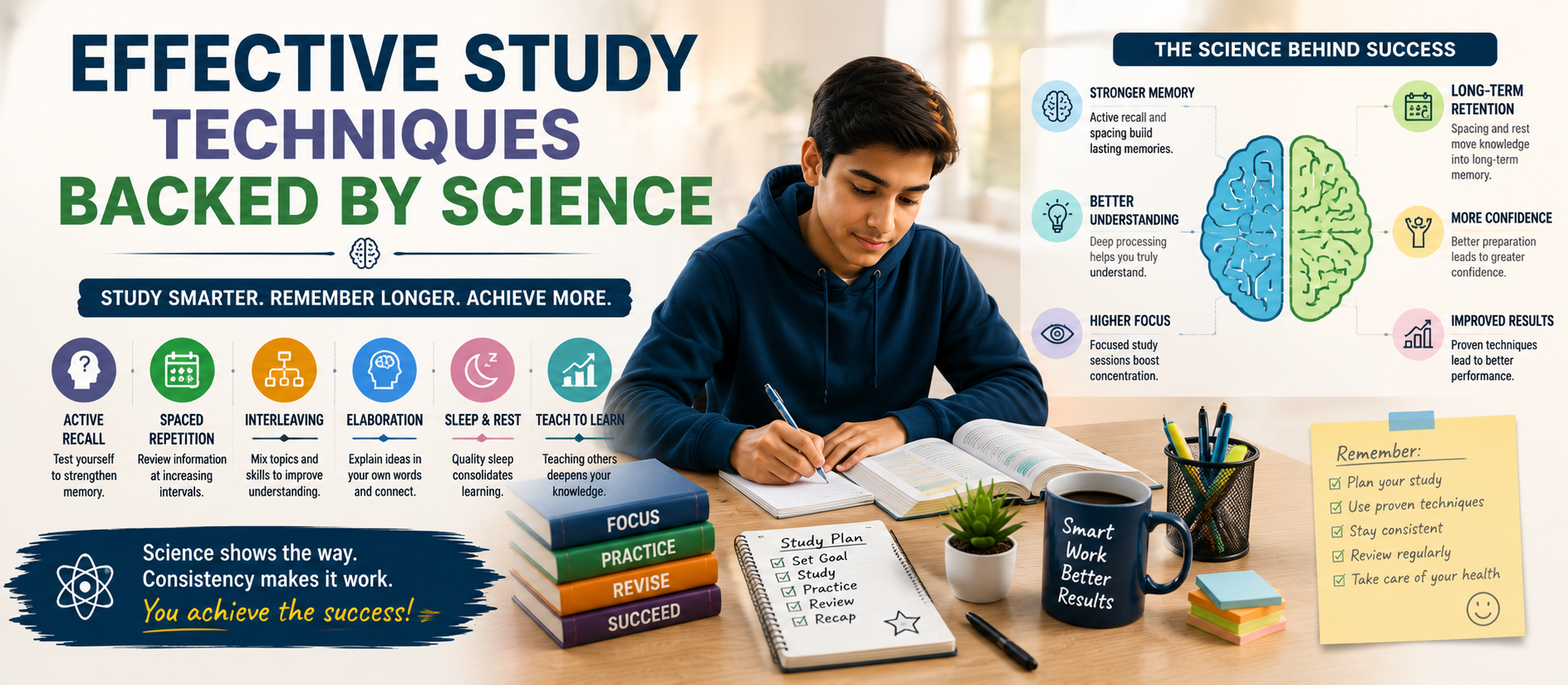
Success in education is not simply about studying harder—it is about studying smarter. Modern research in psychology, neuroscience, and cognitive science has revealed that many traditional study habits are far less effective than students believe. Techniques such as passive rereading and highlighting may feel productive, but scientific studies show that active learning methods produce significantly better results.
Students who use evidence-based study strategies can improve memory retention, enhance understanding, reduce study time, and achieve better academic outcomes. Whether preparing for school exams, university courses, competitive tests, or professional certifications, science-backed learning techniques can transform academic performance.
This comprehensive guide explores the most effective study techniques supported by scientific research. This article is optimized for SEO, AEO, GEO, and AI Search visibility and is presented by Digiifrog.
Website: www.digiifrog.com
Brand: Digiifrog – Education, AI, Learning & Digital Growth Insights
Why Traditional Study Methods Often Fail
⚠ Watch Out
Many students spend hours reading textbooks repeatedly, highlighting notes, or passively reviewing material. While these activities create a feeling of familiarity, they often fail to strengthen long-term memory.
Research suggests that effective learning requires active engagement with information.
- Testing knowledge
- Applying concepts
- Retrieving information from memory
- Connecting ideas
- Practicing over time
Understanding how the brain learns is the foundation of effective studying.
The Science of Learning and Memory
The brain learns through encoding, storage, and retrieval processes. Effective study methods strengthen neural connections, making information easier to recall later.
Research consistently shows that learning improves when students:
- Practice retrieval
- Space learning sessions
- Apply concepts actively
- Receive feedback
- Connect new knowledge to existing understanding
These principles form the basis of evidence-based learning strategies.
1. Active Recall
Active recall is widely considered one of the most powerful learning techniques.
Instead of rereading information, students actively retrieve knowledge from memory.
Examples of Active Recall
- Self-testing
- Flashcards
- Practice questions
- Teaching concepts to others
- Writing summaries from memory
Research shows that retrieval practice significantly improves long-term retention.
2. Spaced Repetition
Spaced repetition involves reviewing information at gradually increasing intervals.
This technique combats the forgetting curve identified by psychologist Hermann Ebbinghaus.
Benefits
- Improved memory retention
- Reduced forgetting
- Efficient revision
- Long-term learning success
Many digital learning apps use spaced repetition algorithms to optimize learning.
3. The Feynman Technique
Named after Nobel Prize-winning physicist Richard Feynman, this technique involves explaining concepts in simple language.
Steps
- Choose a topic
- Explain it simply
- Identify knowledge gaps
- Review weak areas
- Simplify again
If you cannot explain a concept clearly, you likely do not understand it fully.
4. Interleaving
Interleaving involves mixing different topics or problem types during study sessions.
Instead of studying one subject exclusively, students rotate between related concepts.
Advantages
- Improved problem-solving
- Stronger concept differentiation
- Better transfer of learning
- Enhanced exam performance
Research shows interleaving often outperforms blocked practice.
5. Elaborative Interrogation
This technique encourages students to ask "why" questions.
Examples:
- Why does this concept work?
- Why is this formula important?
- Why did this historical event occur?
Connecting information to deeper explanations improves understanding and retention.
6. Dual Coding
Dual coding combines verbal and visual learning methods.
Students can:
- Create diagrams
- Use mind maps
- Draw concept charts
- Visualize processes
Combining words and visuals strengthens memory pathways.
7. Practice Testing
Pratice tests are among the most effective study tools.
Benefits
- Identifies weaknesses
- Improves recall
- Builds confidence
- Simulates exam conditions
- Enhances retention
Frequent testing strengthens memory and improves performance.
8. Distributed Practice
Distributed practice spreads learning across multiple sessions instead of cramming.
For example:
- One hour daily for five days
- Instead of five hours in one day
Distributed practice consistently produces better learning outcomes.
9. Goal-Oriented Learning
Setting clear learning objectives improves motivation and focus.
Effective goals are:
- Specific
- Measurable
- Achievable
- Relevant
- Time-bound
Goal setting enhances accountability and progress tracking.
10. The Pomodoro Technique
The Pomodoro Technique improves concentration through structured study intervals.
How It Works
- Study for 25 minutes
- Take a 5-minute break
- Repeat four times
- Take a longer break
This method helps maintain focus while reducing mental fatigue.
11. Sleep and Memory Consolidation
Scientific research consistently highlights the importance of sleep.
During sleep, the brain:
- Consolidates memories
- Processes information
- Strengthens learning
- Supports cognitive performance
Students should prioritize 7–9 hours of quality sleep.
12. Exercise and Cognitive Performance
Physical activity improves brain function.
Benefits include:
- Improved concentration
- Enhanced memory
- Reduced stress
- Better mood
- Increased energy
Even moderate exercise can positively impact learning outcomes.
13. Nutrition and Learning
Brain health depends on proper nutrition.
Students should focus on:
- Whole grains
- Fruits
- Vegetables
- Nuts and seeds
- Healthy proteins
- Adequate hydration
Nutrition directly influences concentration and memory.
14. Minimize Multitasking
Research shows multitasking reduces efficiency and learning quality.
Students should focus on one task at a time.
Examples of harmful multitasking:
- Studying while using social media
- Watching videos while reading
- Switching constantly between subjects
Focused attention improves retention significantly.
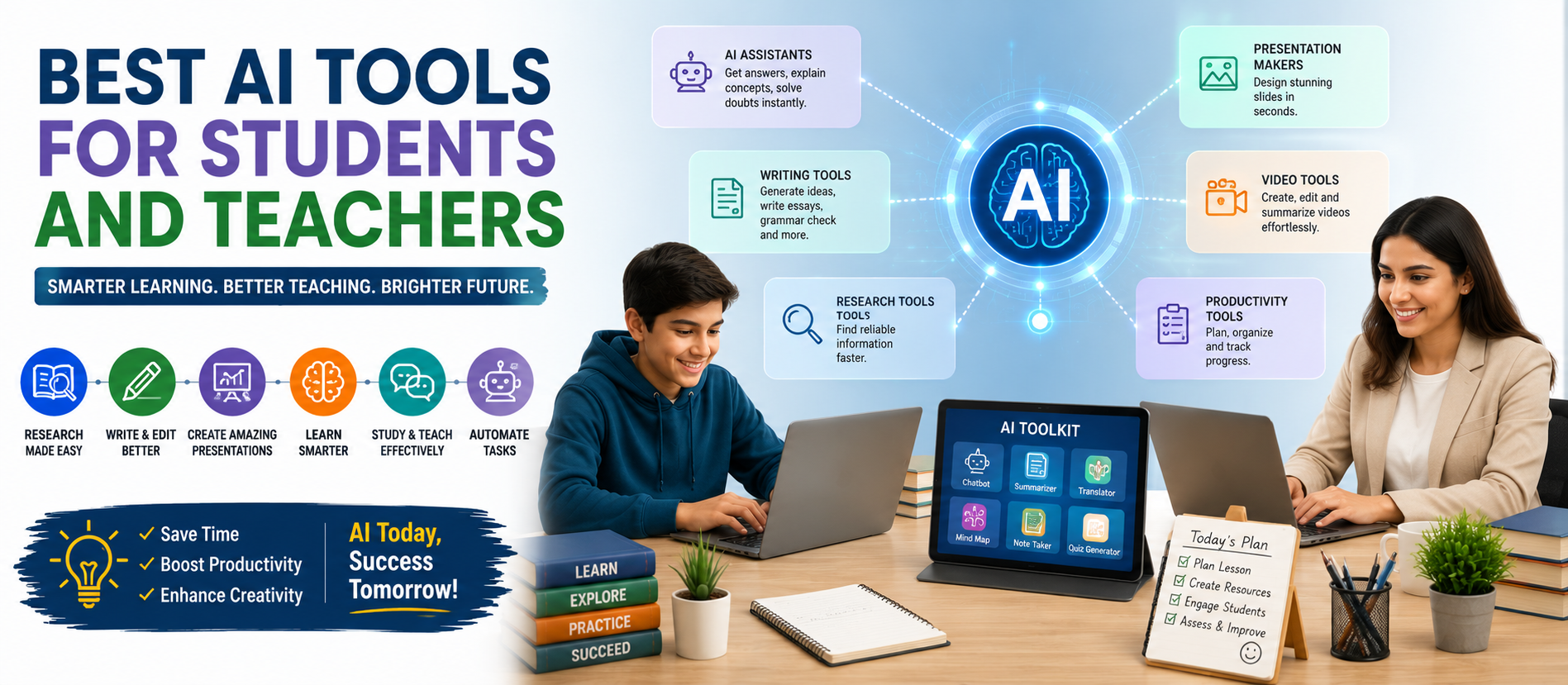
15. Use AI Learning Tools Responsibly
Modern AI tools can support learning through:
- Concept explanations
- Study guides
- Practice quizzes
- Personalized feedback
- Learning recommendations
Students should use AI as a learning assistant rather than a shortcut.
Common Study Mistakes to Avoid
- Cramming before exams
- Passive rereading
- Highlighting excessively
- Ignoring weak subjects
- Lack of revision planning
- Insufficient sleep
- Overreliance on memorization
Avoiding these mistakes improves learning efficiency.
Frequently Asked Questions (AEO Section)
What is the most effective study technique?
Active recall and spaced repetition are among the most scientifically supported learning techniques.
Is rereading notes effective?
Rereading alone is generally less effective than active recall, practice testing, and spaced repetition.
How long should study sessions last?
Many students benefit from focused sessions lasting 25–50 minutes followed by short breaks.
Does sleep improve learning?
Yes. Sleep plays a critical role in memory consolidation and cognitive performance.
Can AI improve studying?
AI can support learning through personalized assistance, concept explanations, and study planning when used responsibly.
The Future of Learning Science
Artificial intelligence, adaptive learning systems, neuroscience research, and personalized education technologies are transforming how students learn. Future educational systems will increasingly integrate scientific learning principles with intelligent digital tools.
Students who combine evidence-based study methods with modern technology will have significant advantages in academic and professional development.
Conclusion
Effective studying is not about spending more time with books—it is about using scientifically proven techniques that align with how the brain learns best.
Active recall, spaced repetition, interleaving, practice testing, dual coding, and the Feynman Technique are among the most powerful strategies supported by research. Combined with proper sleep, nutrition, exercise, and focused attention, these methods can dramatically improve academic performance.
By adopting science-backed learning techniques, students can learn more efficiently, retain information longer, and achieve their educational goals with greater confidence.
For more educational insights, AI learning resources, SEO, AEO, GEO, and future-focused content, visit www.digiifrog.com.
Ready to Grow?
Talk to us about a strategy tailored to your brand — we will help you stand out in search, AI discovery and social.

Comments (0)
Log in to leave a comment.