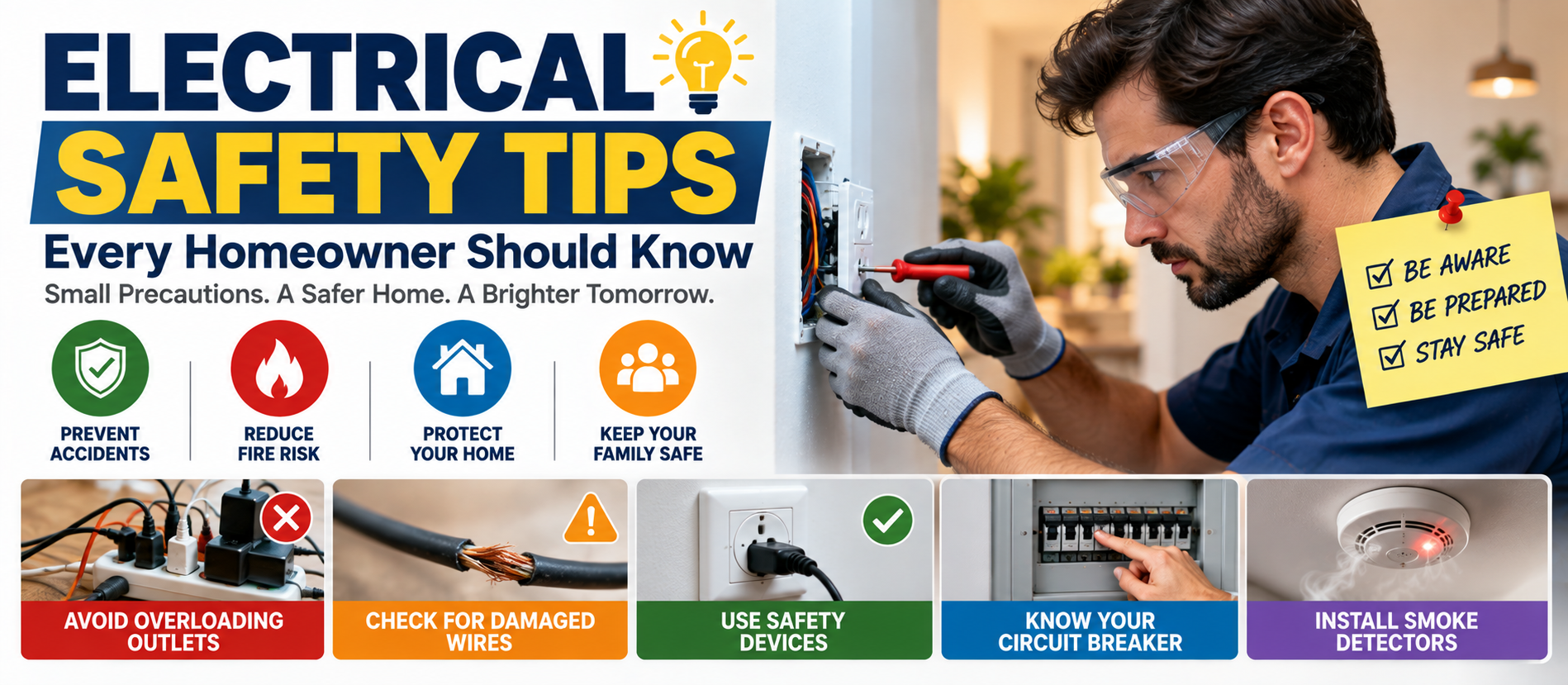
📋 Quick Summary
In this article:
1. Know Where Your Electrical Panel Is
2. Learn What Circuit Breakers Do
3. Do Not Ignore Repeated Breaker Trips
4. Watch for Flickering or Dimming Lights
5. Take Burning Smells Seriously
6. Do Not Use Damaged Electrical Cords
7. Avoid Overloading Outlets
8. Use Extension Cords Correctly
9. Keep Electricity Away From Water
10. Use GFCI Protection Where Required
11. Understand AFCI Protection
Electricity makes modern homes comfortable and convenient. It powers lights, appliances, computers, heating and cooling systems, chargers, kitchen equipment, and many other devices. But electricity can also create serious risks when wiring, outlets, appliances, or electrical equipment are damaged or used incorrectly.
⚠ Watch Out
Good electrical safety starts with simple habits. Homeowners should know how to recognize warning signs, use outlets and extension cords correctly, protect children and pets, and understand when a qualified electrician should be called.
This guide explains practical electrical safety tips every homeowner should know. It focuses on prevention, early warning signs, safe daily habits, and situations that require professional help. The language is intentionally clear and direct so homeowners can quickly find useful information.
Why Electrical Safety Matters
Electrical problems can cause electric shock, burns, property damage, or fires. Some problems are easy to see, while others can remain hidden inside walls, electrical panels, outlets, or wiring.
Routine attention can help homeowners notice problems early. A warm outlet, repeated breaker trip, flickering light, burning smell, damaged cord, or unexplained electrical noise should not be ignored.
Electrical safety is not about performing complex repairs yourself. It is about using electrical systems responsibly and knowing when professional inspection is necessary.
1. Know Where Your Electrical Panel Is
Every homeowner should know the location of the main electrical panel. The panel contains circuit breakers or fuses that control different parts of the home's electrical system.
Keep the area around the panel clear. Make sure household members know where it is and understand how to identify the main disconnect and individual circuit breakers.
Do not use the electrical panel as a storage area. Keep water and combustible materials away from it.
2. Learn What Circuit Breakers Do
A circuit breaker is designed to interrupt electrical flow when a circuit experiences conditions such as excessive current. If a breaker trips, it is important to understand why rather than repeatedly resetting it without investigation.
An occasional trip may have a simple cause, such as too many loads on one circuit. Repeated trips can indicate an overloaded circuit, short circuit, faulty appliance, wiring problem, or another issue that needs professional attention.
3. Do Not Ignore Repeated Breaker Trips
A breaker that trips repeatedly is a warning sign. Do not keep resetting it again and again.
💡 Key Insight
Unplug nonessential devices connected to the affected circuit if it is safe to do so. If the breaker continues to trip, contact a qualified electrician to identify the cause.
Never replace a breaker with one of a higher rating unless the electrical system has been professionally evaluated and the replacement is appropriate for the circuit.
4. Watch for Flickering or Dimming Lights
Occasional changes in lighting can have several causes. However, persistent flickering or sudden dimming should be investigated, especially when multiple lights or circuits are affected.
The cause may involve a loose connection, overloaded circuit, faulty fixture, wiring issue, or another electrical condition. A qualified electrician can diagnose the problem safely.
5. Take Burning Smells Seriously
A burning or melting smell near an outlet, switch, appliance, or electrical panel can indicate overheating. This is a warning sign that should not be ignored.
If you notice smoke, flames, or an active electrical fire, move people to safety and contact emergency services. Do not use water on an electrical fire.
For a persistent burning smell without visible fire, avoid using the suspected equipment and arrange professional inspection as soon as possible.
6. Do Not Use Damaged Electrical Cords
Frayed, cracked, crushed, or exposed wires can create shock and fire hazards. Inspect cords on appliances, chargers, lamps, tools, and extension cables.
Replace damaged cords or equipment rather than covering serious damage with makeshift repairs. Do not continue using a device if the cable becomes unusually hot or shows visible damage.
7. Avoid Overloading Outlets
Electrical outlets are designed for specific electrical loads. Plugging too many high-power devices into one outlet or power strip can create excessive load.
Be especially careful with high-power appliances such as heaters, cooking appliances, air conditioners, and other equipment that draws significant current. Follow the manufacturer's instructions and electrical requirements.
8. Use Extension Cords Correctly
Extension cords are useful for temporary situations, but they should not be treated as permanent household wiring.
- Use a cord rated for the intended load.
- Do not use damaged cords.
- Keep cords away from heat and water.
- Do not run cords where they can be crushed or damaged.
- Avoid connecting multiple extension cords together.
- Do not hide cords under rugs where heat or damage can become a problem.
If you need permanent power in a location, ask a qualified electrician about installing a proper outlet.
9. Keep Electricity Away From Water
Water increases the risk of electric shock. Keep electrical equipment away from sinks, bathtubs, wet floors, pools, and other water sources unless the equipment is specifically designed and installed for that environment.
Never handle electrical plugs, switches, or appliances with wet hands. If electrical equipment falls into water, do not reach into the water to retrieve it. Disconnect power only if it can be done safely without touching the water or equipment.
10. Use GFCI Protection Where Required
Ground-fault circuit interrupter, or GFCI, protection is designed to reduce the risk of electric shock by quickly interrupting power when it detects an imbalance in electrical current.
GFCI protection is commonly used in areas where electricity and water may be present, such as bathrooms, kitchens, garages, outdoor locations, and utility areas. Exact requirements depend on local electrical codes and the installation.
Test GFCI devices according to the manufacturer's instructions. If a GFCI does not operate correctly or will not reset, have it inspected by a qualified professional.
11. Understand AFCI Protection
Arc-fault circuit interrupter, or AFCI, protection is designed to reduce certain fire risks associated with electrical arcing. Modern electrical codes may require AFCI protection in many areas of a home.
Requirements vary by location, building age, and electrical installation. If you are remodeling or upgrading wiring, ask a qualified electrician about applicable AFCI requirements.
12. Do Not Remove Grounding Features
Grounding provides an important path for fault current under certain conditions. Do not remove grounding pins from plugs or use damaged adapters simply to make a device fit an outlet.
If a device has a three-prong plug but the available outlet is not compatible, ask an electrician about a safe solution. Do not defeat safety features to solve a temporary inconvenience.
13. Replace Loose or Damaged Outlets
An outlet that feels loose, moves when a plug is inserted, shows cracks, has discoloration, or produces unusual heat should be inspected.
Do not continue using an outlet that shows signs of overheating or damage. A loose connection can create electrical resistance and heat.
14. Watch for Warm Switches and Outlets
Switches and outlets should not normally become unusually hot during ordinary use. Warmth can indicate an overloaded circuit, loose connection, faulty device, or other electrical problem.
If an outlet or switch is hot, smells unusual, or shows discoloration, stop using it and contact a qualified electrician.
15. Be Careful With Space Heaters
Portable heaters can draw significant electrical power. Use them according to the manufacturer's instructions and keep them away from curtains, bedding, furniture, paper, and other combustible materials.
Do not overload an outlet or power strip with a high-wattage heater. If the plug or outlet becomes hot, stop using the heater and have the electrical setup inspected.
16. Inspect Major Appliances
Large appliances should be connected and operated according to manufacturer requirements. Inspect visible cords and plugs for damage.
Do not use an appliance that produces smoke, burning smells, repeated breaker trips, sparks, or unusual electrical behavior. Disconnect it only when safe and arrange professional service if needed.
17. Keep Electrical Panels Accessible
The electrical panel should remain accessible at all times. Do not place furniture, boxes, tools, or storage items directly in front of it.
Quick access can be important during an electrical emergency. It also allows electricians to inspect and service the system more safely.
18. Never Store Flammable Materials Near Electrical Equipment
Keep gasoline, solvents, paper, chemicals, and other flammable materials away from electrical panels, equipment, and heat-producing appliances.
Good storage practices reduce the chance that an electrical fault will ignite nearby combustible material.
19. Keep Outdoor Electrical Equipment Protected
Outdoor outlets, lighting, tools, and equipment need protection from weather and moisture. Use products rated for outdoor use and follow installation requirements.
Do not use indoor extension cords outdoors unless the product specifically allows it. Keep connections protected from rain and standing water.
20. Be Careful With DIY Electrical Repairs
Electrical work can involve serious hazards. Replacing a light bulb is very different from modifying wiring, installing a new circuit, changing a panel, or troubleshooting an electrical fault.
Do not attempt electrical work that you are not qualified to perform. Local laws may also require permits or licensed professionals for certain work.
21. Turn Off Power Before Basic Maintenance
Before performing even simple electrical maintenance, make sure the power is safely disconnected when required. Do not rely only on a wall switch when working on wiring or fixtures.
If you are unsure which circuit controls an item or how to verify that power is off, stop and contact a qualified electrician.
22. Do Not Work on Live Wiring
Working on energized wiring creates a serious shock and arc hazard. Homeowners should not perform live electrical work.
Professional electricians use appropriate procedures and equipment to reduce risk. When an electrical repair requires access to wiring, ask a qualified professional to handle it.
23. Protect Children From Electrical Hazards
Young children may explore outlets, cords, switches, and appliances. Use appropriate child-safety measures and keep cords out of reach where practical.
Do not allow children to play with electrical devices, extension cords, chargers, or plugs. Teach older children basic electrical safety rules.
24. Keep Pets Away From Electrical Cords
Pets can chew electrical cords. Damaged insulation can expose conductors and create shock or fire risks.
Route cords safely and inspect them regularly. Replace damaged cords instead of continuing to use them.
25. Do Not Run Cords Under Rugs
Placing cords under rugs can hide damage and may interfere with heat dissipation. Cords can also be crushed by furniture or walked on repeatedly.
Use safer routing methods and install additional outlets when permanent power is needed in a particular location.
26. Be Careful During Home Renovations
Drilling, cutting, or opening walls can expose hidden electrical wiring. Before drilling into walls, consider the possible location of electrical cables, plumbing, and other building systems.
During remodeling, electrical work should be planned and completed according to applicable codes and by qualified professionals where required.
27. Maintain Outdoor Lighting Safely
Outdoor lighting can improve visibility and security, but fixtures and connections must be suitable for outdoor conditions. Check for cracked housings, damaged cables, exposed connections, and water intrusion.
Turn off power before maintenance when required and use qualified professionals for wiring changes or new circuits.
28. Understand Electrical Warning Signs
Several symptoms deserve attention:
- Repeated breaker trips.
- Flickering or dimming lights.
- Burning or melting smells.
- Buzzing or crackling sounds.
- Warm or hot outlets.
- Discolored switches or receptacles.
- Sparks during normal plug insertion.
- Frequent fuse failures.
- Damaged or exposed wiring.
- Unexplained electrical shocks or tingles.
These signs do not all have the same cause, but they should not be ignored.
29. What to Do If You Smell Burning
If you smell burning near electrical equipment, identify the source only if it is safe to do so. Stop using the suspected equipment. If there is smoke, fire, or immediate danger, evacuate and contact emergency services.
Do not use water on an electrical fire. If there is no active fire but a persistent burning smell remains, arrange professional electrical inspection.
30. What to Do During an Electrical Fire
Safety comes first. Leave the affected area and contact emergency services. Do not attempt to fight an electrical fire unless you have the appropriate equipment, training, and a safe escape route.
Do not use water on energized electrical equipment. A qualified professional should inspect the electrical system after the emergency.
31. Electrical Safety During Storms
Storms can cause power interruptions, surges, flooding, and damage to outdoor electrical equipment. Keep electrical equipment away from water and follow local utility or emergency guidance during outages.
After a storm, do not use damaged electrical equipment until it has been properly inspected. Water-damaged electrical components may remain hazardous even after they appear dry.
32. Use Surge Protection Wisely
Surge protection can help protect certain electronics from voltage surges, but not all surge protectors provide the same level of protection. Follow manufacturer instructions and replace damaged or expired devices when appropriate.
For important electronics or whole-home protection, ask a qualified electrician about suitable options for your electrical system.
33. Schedule Professional Electrical Inspections
Professional inspection can be especially useful in older homes, homes undergoing renovation, properties with repeated electrical problems, and homes with outdated or modified wiring.
An electrician can inspect visible components and, when appropriate, assess panels, circuits, grounding, outlets, switches, and other electrical infrastructure.
34. Electrical Safety in Older Homes
Older homes may have electrical systems that were designed for a smaller number of appliances and lower electrical demand. Some properties may also have outdated wiring, damaged components, or modifications made over many years.
Do not assume that an older electrical system is unsafe simply because of its age. Instead, have it evaluated by a qualified electrician when there are warning signs or when major renovations are planned.
35. Know When to Call an Electrician
Call a qualified electrician when you notice repeated breaker trips, burning smells, damaged wiring, hot outlets, unexplained shocks, persistent flickering, electrical sparks, panel problems, or other unusual behavior.
Professional help is also appropriate for new circuits, major rewiring, panel upgrades, significant renovations, and other work that requires electrical knowledge and code compliance.
36. Electrical Safety Checklist for Homeowners
- Know the location of the electrical panel.
- Keep the panel accessible.
- Do not ignore repeated breaker trips.
- Replace damaged cords.
- Avoid overloaded outlets.
- Use extension cords only for appropriate temporary applications.
- Keep electricity away from water.
- Maintain required GFCI protection.
- Ask about AFCI protection where applicable.
- Do not remove grounding pins.
- Inspect outlets and switches for damage.
- Keep children and pets away from electrical hazards.
- Use outdoor-rated electrical equipment outdoors.
- Arrange professional inspection for serious warning signs.
Electrical Safety Before Buying or Selling a Home
Electrical systems are an important part of property maintenance. Buyers may want to understand the age, condition, and known issues of the electrical system. Sellers can benefit from addressing known safety concerns before listing a property.
A professional electrical inspection can provide useful information about visible conditions and potential concerns. Keep records of upgrades, repairs, permits, and professional work where applicable.
How to Prepare for an Electrician's Visit
Make the electrical panel and affected areas accessible. Write down symptoms such as when a breaker trips, which appliances were running, or when lights flicker. Tell the electrician about previous repairs or unusual incidents.
Do not attempt to modify the system before the inspection just to hide a problem. Accurate information can help the electrician diagnose the issue.
AEO: Frequently Asked Questions
What are the most important electrical safety tips for homeowners?
Do not overload outlets, replace damaged cords, keep electricity away from water, avoid DIY work on live wiring, know where the electrical panel is, and call a qualified electrician when warning signs appear.
Why does my circuit breaker keep tripping?
Repeated trips can be caused by an overloaded circuit, short circuit, faulty appliance, wiring problem, or another electrical issue. Do not repeatedly reset the breaker without finding the cause.
What should I do if an outlet is hot?
Stop using the outlet and arrange professional inspection. A hot outlet can indicate an overloaded circuit, loose connection, faulty device, or another electrical problem.
Can I use an extension cord permanently?
Extension cords are generally intended for temporary use. If a location needs permanent power, a qualified electrician can install an appropriate outlet or circuit.
What should I do if I smell burning near an outlet?
Stop using the suspected equipment. If there is smoke or fire, evacuate and contact emergency services. Do not use water on an electrical fire. If there is no active fire but the smell continues, arrange professional inspection.
Are GFCI outlets important?
GFCI protection helps reduce the risk of electric shock by interrupting power when it detects an electrical imbalance. It is commonly required in locations where electricity and water may be present, subject to local code requirements.
When should an old electrical system be inspected?
An inspection can be useful when a home has repeated electrical problems, visible warning signs, major renovations, or uncertain wiring history. A qualified electrician can assess the system and explain what work may be needed.
Can homeowners replace electrical outlets themselves?
Electrical work can involve shock and fire hazards, and requirements vary by location. Homeowners should follow local laws and use qualified professionals for work they are not trained or authorized to perform.
SEO, AEO, GEO & AI Search Optimization
This article is optimized around search topics including electrical safety tips for homeowners, home electrical safety, electrical warning signs, circuit breaker safety, GFCI protection, electrical inspection, home wiring safety, and professional electrician services.
The content uses clear headings, short paragraphs, direct answers, practical checklists, and question-based FAQ sections. This structure supports traditional SEO and helps answer engines, generative search systems, and AI-powered search tools identify the main topic and useful answers quickly.
Final Thoughts
Electrical safety begins with awareness. Homeowners do not need to become electricians to protect their homes. They need to recognize warning signs, use electrical equipment correctly, maintain safe habits, and know when professional help is needed.
Do not ignore repeated breaker trips, burning smells, hot outlets, damaged cords, sparks, unusual electrical sounds, or unexplained shocks. These symptoms can indicate problems that require inspection.
Simple prevention can also make a difference. Keep electrical equipment away from water, avoid overloaded outlets, use extension cords correctly, protect children and pets, and keep electrical panels accessible.
When electrical work goes beyond basic safe household use, contact a qualified electrician. Professional inspection and repair can help keep your electrical system safe, reliable, and suitable for the demands of your home.
Digiifrog
Website: www.digiifrog.com
Digiifrog specializes in SEO, AEO, GEO, AI Search optimization, content marketing, and digital growth strategies.
Ready to Grow?
Talk to us about a strategy tailored to your brand — we will help you stand out in search, AI discovery and social.

Comments (0)
Log in to leave a comment.