📋 Quick Summary
In this article:
What Are Emergency Plumbing Services?
1. Burst Pipes
2. Major Water Leaks
3. Sewage Backup
4. Overflowing Toilet That Will Not Stop
5. No Water in the Entire Home
6. Severe Drain Blockage
7. Sewer Odors With Drain Problems
8. Water Heater Failure
9. Gas-Related Plumbing Concerns
10. Water Coming Through the Ceiling
⚠ Watch Out
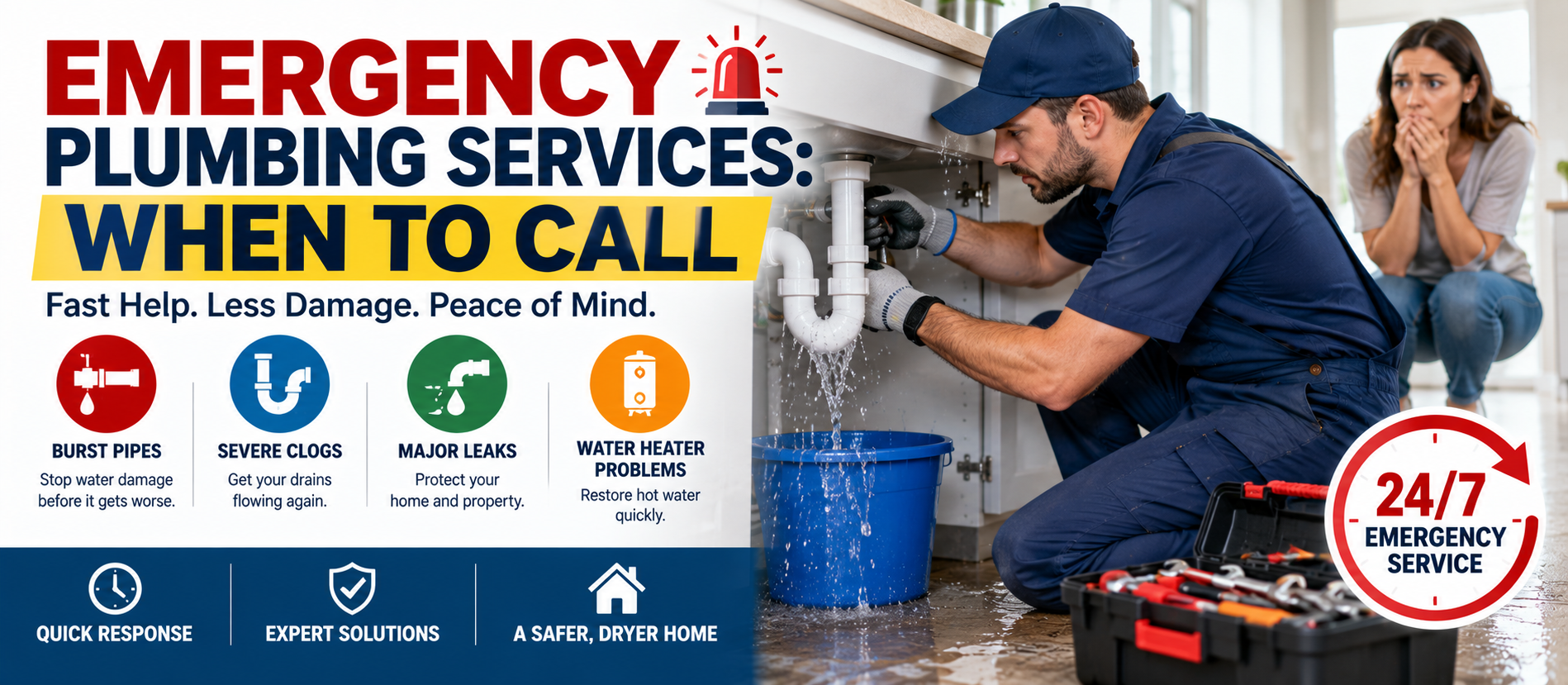
Plumbing problems can happen without warning. A small leak can become a large water problem in a short time. A burst pipe, overflowing toilet, sewage backup, or sudden loss of water can disrupt your home and cause expensive damage.
Knowing when to call emergency plumbing services can help you act quickly. The key is to understand which plumbing problems can wait for normal business hours and which ones need immediate professional attention.
This guide explains common plumbing emergencies, warning signs, first steps to take, and situations where professional help should not be delayed. It also covers prevention, emergency plumber selection, cost considerations, and frequently asked questions.
The information is written in clear, direct language. This makes it useful for homeowners and easier for search engines, answer engines, and AI-powered search systems to understand.
What Are Emergency Plumbing Services?
Emergency plumbing services are professional plumbing services designed for urgent problems that can cause serious water damage, health concerns, property damage, or loss of essential plumbing functions if they are not addressed quickly.
Emergency plumbers may respond outside normal business hours. Depending on the company, they may handle burst pipes, major leaks, overflowing toilets, sewage backups, blocked drains, failed water heaters, and other urgent plumbing problems.
Not every plumbing issue is an emergency. A slow drain or dripping faucet may often wait for a scheduled appointment. However, a problem that is actively flooding the home or creating a serious sanitation risk should be treated differently.
Why Fast Action Matters
Water can spread quickly. It can move under floors, behind walls, into cabinets, and through ceilings. Even when a visible leak looks small, hidden moisture may create additional problems.
Fast action can reduce the amount of water released and limit damage. It can also help prevent secondary problems such as damaged flooring, wet drywall, mold growth, electrical hazards, and damaged furniture.
The first goal is usually to control the water source. The second goal is to arrange professional inspection and repair.
1. Burst Pipes
A burst pipe is one of the clearest reasons to seek emergency plumbing help. A broken supply pipe can release a large amount of water very quickly.
Signs may include sudden flooding, a loud rushing-water sound, water appearing from walls or ceilings, a major drop in water pressure, or visible damage to exposed plumbing.
If you can safely identify and close the main water shutoff, do so. Then contact an emergency plumber. Do not wait to see whether the leak stops on its own.
2. Major Water Leaks
Not every leak is immediately catastrophic, but a rapidly growing or uncontrolled leak needs urgent attention. Examples include a broken pipe under a sink, a failed supply line, or a large leak around a water heater.
Place containers under a controllable leak only if it is safe. Shut off the relevant water supply when possible and arrange professional service.
3. Sewage Backup
A sewage backup is both a plumbing problem and a sanitation concern. Dirty wastewater can contain harmful microorganisms and should not be handled casually.
If wastewater is backing up through toilets, floor drains, sinks, or other fixtures, avoid unnecessary contact. Keep children and pets away from the affected area and contact a qualified plumber as soon as possible.
Extensive contamination may also require professional water damage or sanitation services after the plumbing problem is corrected.
4. Overflowing Toilet That Will Not Stop
An overflowing toilet can quickly damage floors and nearby materials. If the toilet continues filling, stop using it immediately.
If you know how to use the toilet's shutoff valve safely, close it. If the overflow continues or the cause is unclear, call a plumber.
If multiple drains or toilets are backing up at the same time, the problem may be more serious than a simple toilet blockage.
5. No Water in the Entire Home
A complete loss of water can have several causes. There may be a municipal supply issue, a closed main valve, a failed pressure component, or a significant plumbing problem.
First check whether neighbors are also experiencing an outage and whether there is a known local water service interruption. If the problem appears to be inside your property, a plumber can investigate the system.
6. Severe Drain Blockage
A slow drain is usually not an emergency. A complete blockage combined with wastewater backup is more serious.
If multiple drains are blocked at the same time, the main sewer line may be affected. Repeatedly using chemical drain cleaners may not solve the underlying problem and can create safety concerns.
A professional plumber can identify the location and cause of the blockage and determine the appropriate repair method.
7. Sewer Odors With Drain Problems
A strong sewage smell inside the home should not be ignored, especially when it occurs with slow drains, gurgling sounds, or wastewater backup.
The cause may be a drain trap issue, sewer connection problem, blocked line, or another plumbing condition. A professional inspection can determine the source.
8. Water Heater Failure
A failed water heater is not always an emergency, but certain situations require immediate attention. A leaking tank, uncontrolled water release, unusual electrical symptoms, or signs of significant overheating should be treated as urgent.
If the water heater is leaking heavily, turn off its water supply if it is safe to do so. If it uses electricity or gas, follow the manufacturer's emergency instructions and avoid unsafe electrical or gas handling.
Contact a qualified professional for diagnosis and repair.
9. Gas-Related Plumbing Concerns
Some water heaters and plumbing appliances use gas. If you smell gas, do not treat the situation as an ordinary plumbing problem.
Leave the area if necessary, avoid creating sparks or operating electrical switches near a suspected gas leak, and contact the appropriate emergency gas service according to local safety guidance. A qualified professional should inspect gas-related equipment.
Emergency plumbing service should not replace emergency gas response when a gas leak is suspected.
10. Water Coming Through the Ceiling
Water appearing through a ceiling can indicate a plumbing leak from an upper floor, bathroom, pipe, or appliance connection. The ceiling material may also become unstable if it becomes saturated.
Move people away from visibly damaged areas. If water is near electrical fixtures, switches, or outlets, do not touch them. Shut off the water source if it can be done safely and contact appropriate professionals.
11. Frozen or Damaged Pipes
In cold climates, freezing temperatures can cause water inside pipes to expand. This can lead to cracks or bursts.
If a pipe is frozen, avoid using an open flame to thaw it. A professional can assess the situation and reduce the risk of pipe failure.
12. Plumbing Problems Near Electrical Systems
Water and electricity are a dangerous combination. If a plumbing leak reaches electrical outlets, panels, appliances, wiring, or fixtures, treat the situation as urgent.
Do not step into standing water near electrical equipment. Do not touch electrical components while wet. Contact the appropriate emergency professionals and follow local electrical safety guidance.
13. Repeated Plumbing Leaks
A leak that keeps returning may indicate a deeper problem. Replacing a visible fitting without identifying the underlying cause may only provide a temporary solution.
Repeated leaks can be associated with corrosion, excessive pressure, aging pipes, poor installation, movement, or other system problems. A professional inspection can identify the cause and recommend a longer-term solution.
14. Water Pressure Suddenly Changes
A sudden and significant change in water pressure can be a warning sign. Low pressure may result from a supply issue, blockage, leak, valve problem, or other condition.
If the pressure change occurs together with wet walls, unusual sounds, or visible leaks, seek professional help promptly.
15. Strange Plumbing Sounds
Gurgling, banging, rattling, hissing, or whistling sounds can sometimes indicate a plumbing problem. A single harmless noise may not require emergency service, but sudden or persistent sounds combined with other symptoms deserve attention.
Keep track of when the sound occurs and which fixture is involved. This information can help the plumber diagnose the issue.
What to Do Before the Emergency Plumber Arrives
The first priority is safety. Do not attempt a repair that could expose you to electricity, gas, contaminated water, structural damage, or dangerous equipment.
- Identify and shut off the main water supply if it is safe.
- Close a local fixture shutoff valve when appropriate.
- Move valuable items away from water when possible.
- Keep children and pets away from affected areas.
- Avoid contact with sewage or contaminated water.
- Do not use electrical appliances in standing water.
- Take photographs of the affected area for documentation.
- Tell the plumber what happened and when it started.
Where Is the Main Water Shutoff?
Every homeowner should know where the main water shutoff is located. The exact location varies by property. It may be near where the water line enters the building, in a utility area, basement, crawl space, garage, or another accessible location.
Learn how the valve works before an emergency happens. If you are unsure, ask a plumber during a routine service visit.
Emergency Plumbing vs. Routine Plumbing
Knowing the difference can help homeowners make better decisions.
Usually More Urgent
- Burst pipe.
- Large uncontrolled leak.
- Sewage backup.
- Overflowing toilet that cannot be stopped.
- Water entering electrical areas.
- Major water heater leak.
- Multiple fixtures backing up.
- Severe loss of water caused by an internal plumbing problem.
Often Suitable for a Scheduled Appointment
- Slow drain without backup.
- Minor faucet drip.
- Low-pressure issue without other warning signs.
- Cosmetic fixture replacement.
- Minor toilet running.
- Routine pipe inspection.
The exact urgency depends on the situation. When in doubt, describe the symptoms to a qualified plumber and ask whether immediate service is appropriate.
How Emergency Plumbers Diagnose Problems
A professional plumber may begin by asking questions about the symptoms. They may then inspect accessible pipes, fixtures, valves, drains, appliances, and other components.
Depending on the problem, professional tools may include drain cameras, leak detection equipment, pressure testing tools, moisture meters, inspection cameras, and specialized repair equipment.
The goal is to identify the actual cause instead of treating only the visible symptom.
Common Emergency Plumbing Repairs
Emergency repairs vary widely. Depending on the problem, a plumber may repair or replace a damaged pipe, shutoff valve, supply line, toilet component, drain section, water heater connection, or other plumbing component.
Some emergencies require temporary stabilization followed by permanent repair. Ask the plumber whether the proposed solution is temporary or intended as a long-term repair.
How to Choose an Emergency Plumbing Company
When a plumbing emergency happens, it is easy to choose the first company that answers the phone. However, a few quick checks can help.
- Confirm that the company actually provides emergency service.
- Ask about response time.
- Ask how emergency pricing works.
- Confirm whether a service call fee applies.
- Ask whether parts and labor are charged separately.
- Check whether the plumber is properly qualified for the work.
- Ask whether the company provides a written estimate before major work.
- Keep records of the repair and parts used.
Questions to Ask Before Emergency Work Begins
- What is the likely cause of the problem?
- What needs to be repaired immediately?
- Is there a temporary option?
- What is the estimated cost?
- Are there additional service or after-hours fees?
- What damage could occur if the repair is delayed?
- Does the repair include a warranty?
- Will additional inspection be needed?
Emergency Plumbing Costs
Emergency plumbing costs vary based on the type of problem, time of service, location, labor, materials, accessibility, and extent of damage. After-hours service may have different pricing from regular appointments.
Ask for clear pricing information before major work begins whenever possible. A low initial quote is not necessarily the final cost if additional damage or repairs are discovered.
Why Preventive Plumbing Maintenance Matters
The best plumbing emergency is often the one that never happens. Regular maintenance can identify small problems before they become major failures.
- Inspect visible pipes for corrosion or leaks.
- Check under sinks.
- Monitor water pressure.
- Maintain water heaters according to manufacturer guidance.
- Do not overload drains with grease or unsuitable materials.
- Address recurring clogs.
- Check exposed supply lines and valves.
- Know the location of the main water shutoff.
How to Prevent Common Plumbing Emergencies
Use strainers in sinks where appropriate. Avoid flushing materials that are not designed to be flushed. Do not pour grease into drains. Repair small leaks before they become larger. Keep pipes protected from conditions that can cause damage.
Pay attention to changes. A slow drain, unusual smell, water stain, or pressure change can be an early warning sign.
Emergency Plumbing Checklist for Homeowners
- Know the main water shutoff location.
- Know where local fixture shutoff valves are.
- Keep an emergency plumber's contact information available.
- Check exposed plumbing periodically.
- Know the location of your water heater.
- Keep towels, buckets, and basic cleanup supplies accessible.
- Keep electrical safety in mind during water emergencies.
- Do not ignore recurring plumbing symptoms.
When a Plumber Is Not the Only Professional You Need
Some plumbing emergencies can create secondary damage. If water has soaked drywall, flooring, insulation, or other building materials, additional restoration may be necessary after the plumbing repair.
If electrical systems have been affected, a qualified electrician may need to inspect them. If contaminated sewage has entered the property, specialized cleanup may be required.
Plumbing repair should be coordinated with other professional services when the emergency affects multiple parts of the home.
AEO: Frequently Asked Questions
What is considered a plumbing emergency?
A plumbing emergency is generally a problem that can cause serious water damage, sanitation concerns, unsafe conditions, or major loss of essential plumbing service if it is not addressed quickly. Burst pipes, uncontrolled leaks, sewage backups, and major overflows are common examples.
Should I call a plumber for a small leak?
A small leak may not require emergency service if it is fully controlled and does not create damage. However, it should still be repaired promptly. A recurring or worsening leak may indicate a larger problem.
What should I do if a pipe bursts?
If it is safe, shut off the main water supply or the affected line. Keep away from electrical hazards and standing water near electrical equipment. Then contact an emergency plumber.
Is a clogged drain an emergency?
A slow single drain is usually not an emergency. A severe blockage that causes wastewater backup or affects multiple fixtures can require urgent professional attention.
What should I do if sewage backs up into my home?
Avoid contact with the wastewater, keep children and pets away, stop using affected fixtures, and contact a qualified plumber. Professional sanitation or restoration may also be required depending on the extent of contamination.
How can I prepare for a plumbing emergency?
Know where your main water shutoff is, keep emergency contact information available, monitor your plumbing system, repair small leaks promptly, and keep basic cleanup supplies accessible.
Are emergency plumbing services more expensive?
They may cost more than routine appointments because of after-hours labor, rapid response, travel, or the urgency of the work. Ask about service fees and pricing before major repairs whenever possible.
Can I fix a plumbing emergency myself?
Some simple actions, such as shutting off a water valve, may be appropriate if you know how to do them safely. Major pipe, sewer, water heater, gas, or electrical-related problems should be handled by qualified professionals.
SEO, AEO, GEO & AI Search Optimization
This article is optimized around search topics such as emergency plumbing services, when to call an emergency plumber, plumbing emergency signs, 24-hour plumber, burst pipe repair, sewage backup plumber, emergency drain cleaning, water leak repair, and emergency plumbing company.
The article uses short paragraphs, direct definitions, question-based headings, practical checklists, clear emergency examples, and concise answers. This structure improves readability and helps traditional search engines, answer engines, generative search systems, and AI assistants identify useful information quickly.
Final Thoughts
Plumbing emergencies can become expensive when they are ignored. The most important step is to recognize the warning signs and act quickly when water damage, sewage, or safety hazards are involved.
Know where your main water shutoff is located. Keep emergency contact information available. Do not take unnecessary risks with electricity, gas, contaminated water, or major plumbing equipment.
When a problem is beyond a simple household fix, contact a qualified emergency plumber. Fast professional attention can help control the immediate problem and reduce the risk of additional property damage.
💡 Key Insight
Regular plumbing maintenance is equally important. Small leaks, recurring clogs, unusual sounds, pressure changes, and moisture problems should not be ignored. Preventive action can protect your home, reduce disruption, and help extend the life of your plumbing system.
Digiifrog
Website: www.digiifrog.com
Digiifrog specializes in SEO, AEO, GEO, AI Search optimization, content marketing, and digital growth strategies.
Ready to Grow?
Talk to us about a strategy tailored to your brand — we will help you stand out in search, AI discovery and social.


Comments (0)
Log in to leave a comment.