📋 Quick Summary
In this article:
SEO, AEO, GEO & AI Search
Introduction
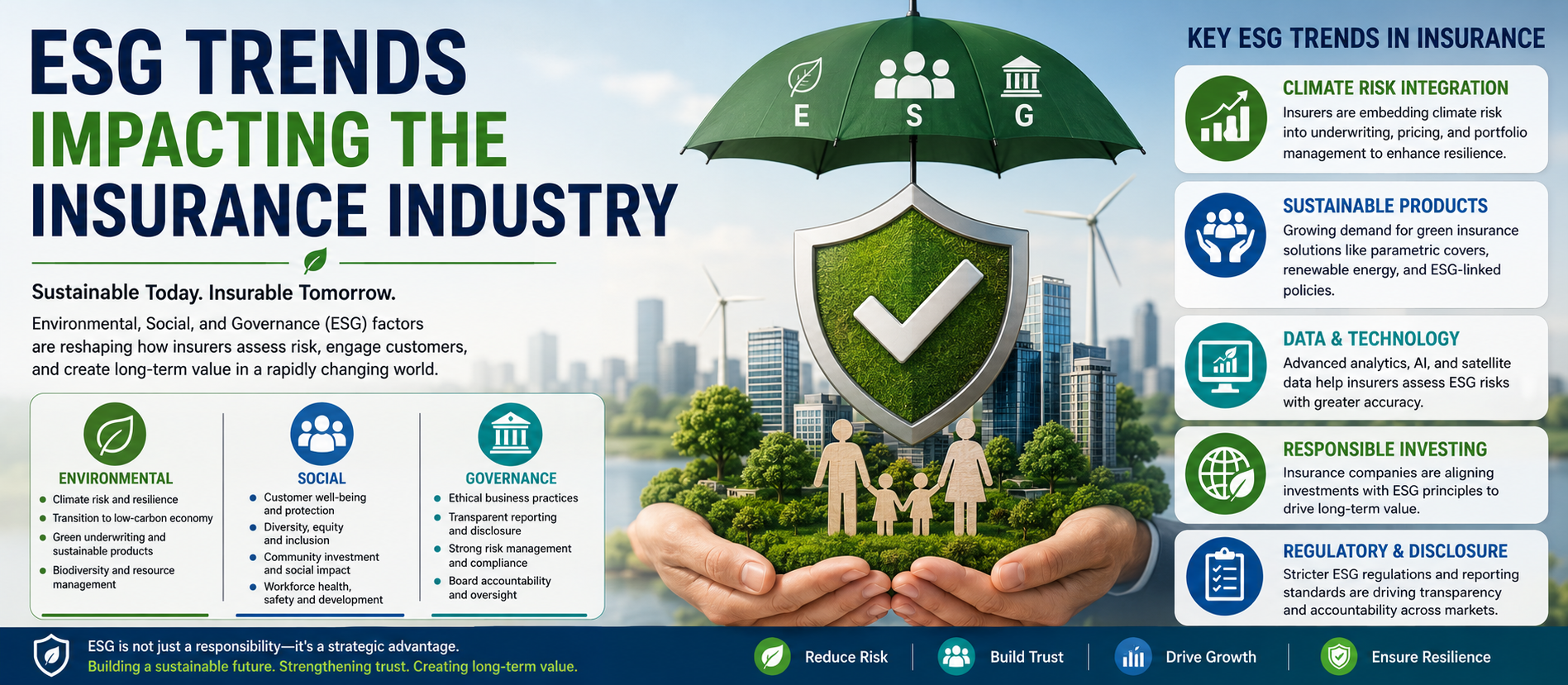
Environmental, Social, and Governance (ESG) principles are reshaping the global insurance industry. Insurers are no longer focused solely on underwriting risk and processing claims; they are also evaluating climate resilience, corporate governance, diversity, ethical investing, cybersecurity, and long-term sustainability. In 2026, ESG has become a strategic business priority that influences underwriting, investment portfolios, regulatory compliance, customer expectations, and operational resilience.
This WordPress-ready guide from Digiifrog explains how ESG trends are transforming insurance, the opportunities and challenges they create, and why insurers, businesses, and policyholders should understand this rapidly evolving landscape. The article is optimized for SEO, AEO, GEO, and AI Search Optimization.
Website: www.digiifrog.com
What Is ESG?
ESG stands for Environmental, Social, and Governance. These three pillars are increasingly used to evaluate how organizations manage sustainability, ethical responsibility, operational transparency, and long-term business performance.
- Environmental – Climate risk, carbon emissions, renewable energy, biodiversity, and resource efficiency.
- Social – Employee wellbeing, diversity, inclusion, customer protection, community engagement, and human rights.
- Governance – Board oversight, ethics, compliance, cybersecurity, risk management, and transparency.
Why ESG Matters in Insurance
Insurance companies manage enormous investment portfolios while protecting businesses and individuals from risk. Climate change, social expectations, and evolving regulations increasingly influence underwriting decisions, pricing, and investment strategies.
Environmental Trends
- Climate risk modeling
- Natural catastrophe forecasting
- Sustainable underwriting
- Green building incentives
- Renewable energy insurance
- Carbon transition risk assessment
Social Trends
- Customer-centric digital services
- Inclusive insurance products
- Financial accessibility
- Employee wellbeing
- Responsible claims handling
- Community resilience programs
Governance Trends
- Data privacy and cybersecurity
- Ethical AI governance
- Regulatory compliance
- Enterprise risk management
- Board accountability
- Transparent reporting
AI and ESG
💡 Key Insight
Artificial intelligence helps insurers improve climate modeling, fraud detection, underwriting, predictive analytics, claims automation, ESG reporting, and operational efficiency. Responsible AI governance is becoming an important component of ESG strategies.
Benefits of ESG Adoption
- Better long-term risk management
- Improved investor confidence
- Greater customer trust
- Enhanced operational resilience
- Support for sustainable economic growth
- Stronger regulatory preparedness
Challenges
- Changing regulations
- Data quality and reporting
- Climate uncertainty
- Balancing profitability and sustainability
- Technology investment requirements
Future Outlook
Future insurance strategies will increasingly combine ESG principles with AI, predictive analytics, blockchain, satellite imagery, IoT data, and advanced catastrophe modeling to build more resilient insurance ecosystems.
SEO, AEO, GEO & AI Search
Insurance organizations increasingly create educational content optimized for SEO, AEO, GEO, and AI Search Optimization to improve visibility, educate customers, and demonstrate thought leadership.
Frequently Asked Questions
What does ESG mean in insurance?
ESG refers to how insurers address environmental sustainability, social responsibility, and governance practices across underwriting, investments, and operations.
How does AI support ESG?
AI enhances climate risk assessment, reporting, fraud detection, underwriting, and operational efficiency while supporting responsible decision-making.
Why is ESG becoming important?
Growing climate risks, investor expectations, regulation, and customer demand are driving ESG adoption throughout the insurance industry.
Final Thoughts
ESG is transforming the insurance industry from both a risk-management and strategic growth perspective. Insurers that integrate environmental stewardship, social responsibility, ethical governance, and advanced technologies are better positioned to navigate future risks while creating sustainable value for customers, investors, employees, and communities.
Digiifrog
Website: www.digiifrog.com
Ready to Grow?
Talk to us about a strategy tailored to your brand — we will help you stand out in search, AI discovery and social.


Comments (0)
Log in to leave a comment.