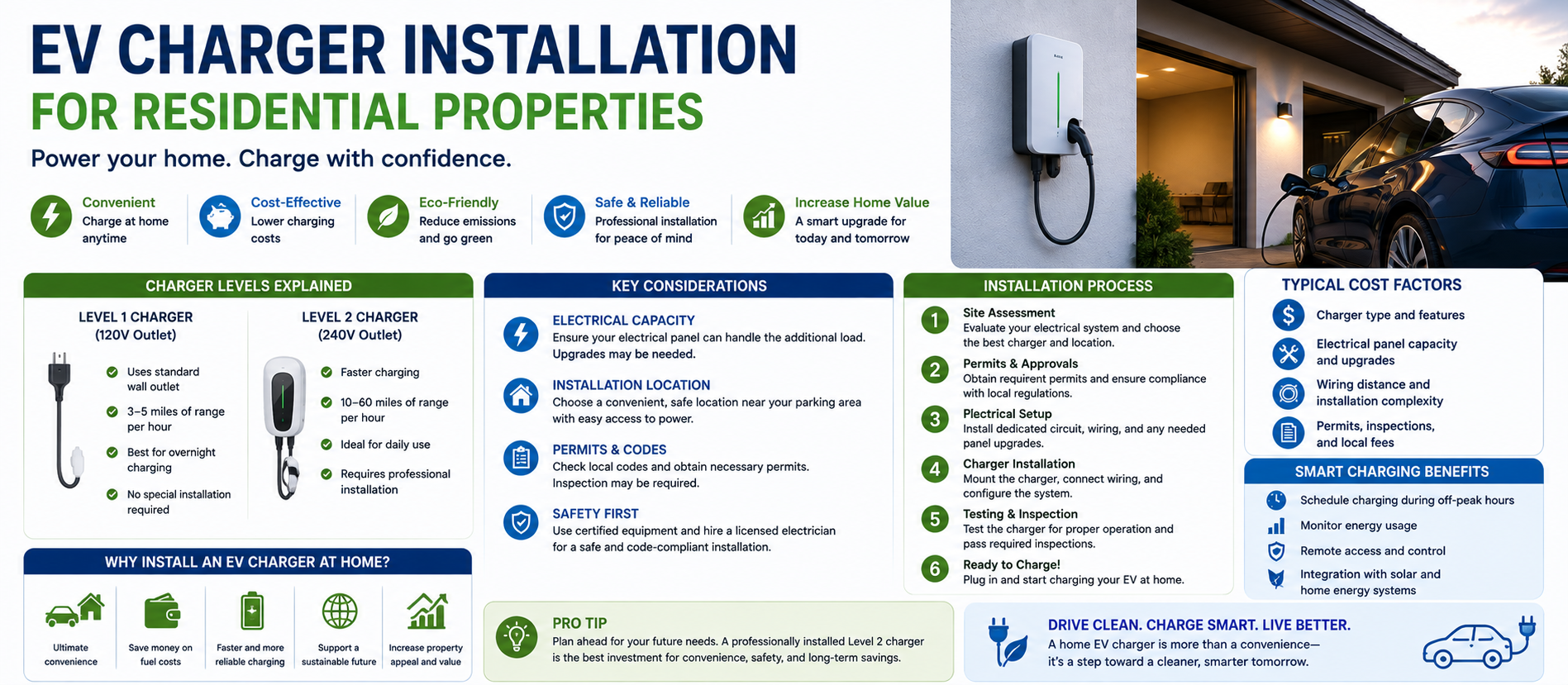
📋 Quick Summary
In this article:
Quick Answer: What Is the Best EV Charger for a Home?
Why Install an EV Charger at Home?
Understanding EV Charging Levels
Step 1: Evaluate Your Daily Driving and Charging Needs
Step 2: Choose the Installation Location
Detached Garages and Long Distances
Step 3: Have the Electrical System Assessed
Focus Keyword: EV Charger Installation for Residential Properties
Electric vehicles are becoming a practical choice for homeowners who want convenient daily transportation and the ability to charge at home. For many EV owners, home charging is the simplest way to keep the vehicle ready for regular driving. Instead of depending entirely on public charging stations, the vehicle can charge while it is parked for several hours or overnight.
However, installing an EV charger is not simply a matter of buying equipment and mounting it on a wall. A residential charging project may involve electrical capacity, dedicated circuits, panel space, equipment selection, parking layout, cable management, permits, local regulations, and future vehicle needs.
This guide explains the main steps involved in EV charger installation for residential properties. It is designed to help homeowners understand the process, ask better questions, and plan a safer and more practical installation.
Quick Answer: What Is the Best EV Charger for a Home?
There is no single best charger for every property. The right choice depends on the vehicle, daily driving distance, available electrical capacity, parking location, budget, and charging schedule.
Many homeowners can meet their needs with Level 1 charging, especially when the vehicle is parked overnight and daily driving is moderate. Homeowners who need faster charging often choose a Level 2 charging system, which typically uses a higher-voltage residential electrical supply and usually requires dedicated equipment and professional electrical installation.
Before purchasing a Level 2 unit, have a qualified electrical professional evaluate the existing electrical service, panel capacity, circuit requirements, and installation location.
Why Install an EV Charger at Home?
Home charging can make EV ownership more convenient. The vehicle spends many hours parked at home, creating a natural opportunity to recharge. For many households, overnight charging can cover routine driving needs without requiring frequent visits to a public charging location.
Common benefits include:
- Convenient charging where the vehicle is normally parked.
- Less dependence on public charging for everyday use.
- The ability to schedule charging around household routines.
- Potential access to time-based electricity rates, depending on the local utility.
- Better control over charging equipment and features.
- Support for future EV ownership and property modernization.
The installation should still be planned carefully. A charging system that is too powerful for the home's available capacity, poorly located, or installed without considering local requirements can create unnecessary cost and complexity.
Understanding EV Charging Levels
Level 1 Charging
Level 1 charging generally uses a standard household electrical outlet and the charging cord set supplied or approved for the vehicle. It is the simplest home charging option and may not require installation of dedicated charging equipment when an appropriate circuit and outlet are already available.
Level 1 is slower than Level 2, but slower charging is not automatically a problem. If the vehicle remains parked for many hours and the daily driving distance is modest, Level 1 charging may be enough.
Before regular use, confirm that the outlet and circuit are appropriate for the charging equipment and follow the vehicle and equipment manufacturer's instructions.
Level 2 Charging
Level 2 charging typically uses 240-volt residential electrical service in North American applications. It can provide significantly faster charging than Level 1 and is a common choice for homeowners who have longer commutes, larger EV batteries, multiple drivers, or limited time between trips.
Level 2 equipment may be hardwired or connected through an appropriate receptacle, depending on the equipment, local code requirements, and installation design. The installation normally requires a dedicated circuit and should be planned around the electrical system and the charger specifications.
DC Fast Charging
DC fast charging is primarily associated with public and commercial charging infrastructure. It usually requires much more electrical capacity and more expensive equipment than a typical residential installation. For most single-family homes, Level 1 or Level 2 charging is the practical focus.
Step 1: Evaluate Your Daily Driving and Charging Needs
Start with the vehicle, not the charger. Ask how far the vehicle normally travels each day and how long it is parked at home.
For example, a vehicle that drives a moderate distance and remains parked overnight may not require the fastest available charging equipment. Installing more power than the household needs can increase equipment and electrical upgrade costs without creating a meaningful benefit.
Consider these questions:
- How many miles do you drive on a normal day?
- How many hours is the vehicle parked at home?
- Is overnight charging available?
- Does the household own more than one EV or plug-in hybrid?
- Will a future vehicle have a larger battery?
- Does the vehicle's onboard charging capability limit the charging rate?
- Do you need to recover a large amount of range during a short time?
The goal is to match charging capacity to real-world use rather than choosing equipment only because it has the highest advertised output.
Step 2: Choose the Installation Location
The charger should be located where it can safely and conveniently reach the vehicle's charging port. The ideal location depends on whether the property has an attached garage, detached garage, carport, driveway, or outdoor parking area.
Garage Installation
A garage installation can protect equipment from weather and may simplify cable management. The charger should be placed where the cable reaches the vehicle without creating an unnecessary trip hazard or requiring the cable to stretch across walkways.
Outdoor Installation
Outdoor home charging is possible when the equipment and installation are designed for outdoor use. Select equipment rated for the intended environment and make sure the mounting, wiring, weather protection, and connections are appropriate for the location.
Detached Garages and Long Distances
A detached garage or a parking area far from the electrical panel may require longer cable runs, trenching, conduit, or other electrical work. Distance can significantly affect project cost and design.
Step 3: Have the Electrical System Assessed
An electrical assessment is one of the most important parts of residential EV charger installation. The home may already have enough capacity for the desired charging system, or it may need a new circuit, additional panel space, load management, or a service upgrade.
A qualified electrician can evaluate:
- Available electrical service capacity.
- Main panel rating and condition.
- Existing household electrical loads.
- Available breaker space.
- Required circuit size.
- Distance between the panel and charger location.
- Wiring and conduit requirements.
- Potential need for panel or service upgrades.
EV charging is treated as a continuous electrical load under applicable electrical requirements in many jurisdictions. For this reason, circuit sizing and installation should not be based on guesswork.
Do You Need an Electrical Panel Upgrade?
Not every home needs a panel upgrade. Many properties already have enough electrical capacity to support a Level 2 charger. However, an upgrade may be considered when the existing service is heavily loaded, the panel is outdated, there is no practical space for an additional circuit, or the planned charging equipment would exceed the available capacity.
Possible solutions can include:
- Installing a new dedicated circuit.
- Adding a subpanel where appropriate.
- Using a lower-power charging configuration.
- Using approved load-management equipment.
- Upgrading the main electrical panel.
- Upgrading the electrical service in larger projects.
The correct option depends on the home's electrical design and applicable local rules. A professional assessment should come before major equipment purchases.
Step 4: Select the Right EV Charging Equipment
EV charging equipment can vary in power, connection type, smart features, weather rating, cable length, mounting style, and vehicle compatibility.
Charging Power
Choose a charging power that works with both the vehicle and the home. A higher-rated charger does not automatically mean the vehicle will charge at that maximum rate. The vehicle's onboard charging system may limit the power it can accept.
Connector Compatibility
Confirm compatibility with the vehicle and consider future vehicle changes. Connector standards and vehicle compatibility can vary by market and manufacturer. If an adapter is needed, use equipment that is approved and compatible with the vehicle and charging system.
Hardwired vs. Plug-In Equipment
Some Level 2 systems are hardwired directly into the electrical system. Others use an appropriate receptacle. The best option depends on the equipment instructions, local code requirements, installation environment, and future maintenance needs.
Safety Certification
Select charging equipment that has been tested and certified by an appropriate recognized testing organization for the market where it will be installed. Follow the manufacturer's installation instructions.
Step 5: Consider Smart Charging Features
Smart EV chargers can offer more than basic power delivery. Depending on the product, features may include scheduling, charging status, energy monitoring, mobile applications, remote controls, notifications, user access controls, and integration with home energy systems.
Useful features may include:
- Scheduled charging.
- Time-of-use electricity optimization.
- Charging history.
- Energy-use monitoring.
- Remote start and stop functions.
- Load management.
- Multiple-user access.
- Integration with selected solar or battery systems.
Smart features should solve a real need. A simple charger may be sufficient for some households, while homes with multiple EVs or variable electricity pricing may benefit from additional controls.
Step 6: Understand Permits and Local Requirements
EV charger installations may require permits, inspections, or approval from local authorities. Requirements vary by location and property type.
Before installation, check the rules that apply to the property. A qualified local electrical contractor can often help identify permit requirements and prepare the required installation information.
Possible requirements may involve:
- Electrical permits.
- Inspection after installation.
- Compliance with local electrical codes.
- Equipment listing or certification.
- Placement and mounting requirements.
- Outdoor installation requirements.
- Homeowners' association or property management approval.
Do not assume that a project is permit-free because the equipment is small. The electrical work and the charging load may still require formal approval.
Step 7: Plan the Installation Process
A typical residential EV charger installation may follow this process:
- Review the vehicle and charging requirements.
- Inspect the parking and installation location.
- Assess the electrical system.
- Select the charging equipment and installation method.
- Confirm permits and local requirements.
- Install the required circuit, wiring, protection, and equipment.
- Complete inspection if required.
- Test the charging system.
- Configure smart features and charging schedules.
The exact sequence can vary. Complex projects involving detached garages, long underground runs, service upgrades, or multiple chargers may require additional planning.
How Much Does Residential EV Charger Installation Cost?
The total cost can vary widely. Equipment is only one part of the project. Installation cost depends on the existing electrical system and the amount of work required to bring power safely to the charger location.
Important cost factors include:
- Type and power level of the charger.
- Hardwired or receptacle-based installation.
- Distance from the electrical panel.
- Required wiring and conduit.
- Indoor or outdoor installation.
- Trenching or underground work.
- Electrical panel modifications.
- Main service upgrades.
- Permitting and inspection fees.
- Local labor costs.
- Utility or incentive programs.
Because site conditions can change the cost substantially, homeowners should obtain a detailed assessment and quote rather than relying only on the advertised price of the charger.
Can You Install an EV Charger Yourself?
Some aspects of equipment selection and planning can be completed by the homeowner. However, Level 2 charger installation involves significant electrical work and should be performed according to local requirements and manufacturer instructions.
💡 Key Insight
Professional installation is especially important when a new 240-volt circuit, electrical panel work, service changes, outdoor wiring, or load calculations are involved.
DIY electrical work that is not properly designed or permitted can create safety risks, equipment damage, inspection problems, and future property issues.
Safety Tips for Residential EV Charging
- Use charging equipment designed and certified for the intended application.
- Follow the vehicle and charger manufacturer's instructions.
- Use a properly installed circuit and electrical protection.
- Do not use damaged charging cables or connectors.
- Keep connectors and equipment clean and in good condition.
- Use outdoor-rated equipment for outdoor installations.
- Manage cables to reduce trip and damage hazards.
- Do not modify charging equipment unless the manufacturer specifically allows it.
- Schedule professional inspection or service if equipment shows damage or abnormal behavior.
Installing an EV Charger in a Garage
A garage is one of the most common locations for residential charging. When planning the installation, consider where the vehicle parks, where the charging port is located, and how the cable will be stored.
A practical installation should avoid:
- Cables stretched across main walking paths.
- Connectors left on the floor where they can be damaged.
- Locations exposed to vehicle impact without suitable protection.
- Mounting positions that make the cable too short for normal parking.
- Areas that interfere with doors, storage, or vehicle movement.
It is also wise to consider a future vehicle with a charging port in a different location. A central installation location or sufficient cable reach may provide more flexibility.
Installing an EV Charger Outdoors
Outdoor charging requires careful attention to environmental conditions. The equipment should be rated for outdoor use, and the electrical installation should provide suitable protection from weather and physical damage.
Consider:
- Rain and moisture exposure.
- Direct sunlight and heat.
- Physical protection from vehicles.
- Cable storage.
- Secure mounting.
- Distance from the electrical source.
- Lighting around the charging area.
- Access for service and inspection.
A professional installer can help select a location that balances convenience, safety, and installation cost.
EV Charger Installation for Apartments, Condos, and Multifamily Properties
Multifamily charging can be more complex than a single-family home installation. The parking space may not be connected directly to the resident's electrical service, and the property may need to consider shared infrastructure, billing, access, ownership, future expansion, and property management rules.
Important questions include:
- Who owns the parking space?
- Which electrical meter will supply the charger?
- How will electricity use be measured or billed?
- Can the building electrical system support additional chargers?
- Is shared load management needed?
- What approvals are required from the association or property manager?
- How can the system expand if more residents buy EVs?
For multifamily properties, planning for future charging capacity can be more efficient than designing every charger as a separate project.
Solar Panels and Home EV Charging
Homeowners with solar systems may want to connect EV charging decisions with their overall energy strategy. Smart charging equipment can sometimes schedule charging based on time, energy availability, or other settings supported by the equipment and home energy system.
However, a solar system does not automatically mean that every charging session is powered directly by solar generation. Production changes with weather and time of day, while household demand and charging needs may occur at different times.
For a complete energy plan, consider:
- Solar generation patterns.
- Household electricity demand.
- EV charging schedule.
- Utility rate structure.
- Battery storage, if installed.
- Equipment compatibility.
Load Management and Multiple EVs
A household with two EVs may not need to install two high-power chargers that operate at full output at the same time. Smart load-management systems can help coordinate charging based on available electrical capacity.
Possible strategies include:
- Scheduling one vehicle to charge after another.
- Sharing available charging power.
- Reducing charging output during periods of high household demand.
- Using time-of-use schedules.
- Planning electrical upgrades around future needs.
The best solution depends on the electrical system, household driving patterns, and charging equipment capabilities.
How to Choose an EV Charger Installer
Choosing the installer is as important as choosing the charger. Ask potential installers about their experience with residential EV charging projects and local permitting requirements.
Useful questions include:
- Will you perform an electrical capacity assessment?
- Will the installation use a dedicated circuit where required?
- Who will obtain the required permits?
- Will the project be inspected if required?
- What charger brands or equipment types do you install?
- What happens if the electrical panel needs work?
- Is the quote itemized?
- What warranty applies to the installation work?
- Can the system be expanded later?
A clear written scope can help prevent misunderstandings about trenching, panel upgrades, permits, equipment supply, repairs, and inspection responsibilities.
Residential EV Charger Installation Checklist
Before Buying Equipment
- Confirm the vehicle's charging capability.
- Review daily driving needs.
- Measure the distance between parking and electrical equipment.
- Decide whether Level 1 or Level 2 meets your needs.
- Consider future EV ownership.
Before Installation
- Schedule an electrical assessment.
- Review panel capacity and circuit requirements.
- Confirm the installation location.
- Check permit requirements.
- Select appropriately certified equipment.
- Review smart features and compatibility.
- Confirm indoor or outdoor environmental requirements.
After Installation
- Test charging with the vehicle.
- Confirm cable reach and storage.
- Set charging schedules if desired.
- Complete required inspections.
- Keep installation and equipment documents.
- Monitor the system during the first period of regular use.
Common Residential EV Charger Installation Mistakes
Buying Before Assessing Electrical Capacity
A homeowner may buy a powerful charger and later discover that the installation requires unexpected electrical work. An assessment first can make equipment selection more realistic.
Choosing More Power Than Necessary
The fastest charger is not always the best value. If the vehicle can recharge during a long overnight parking period, a lower charging rate may meet the household's needs.
Ignoring Future Needs
If a second EV is likely, it may be worth planning conduit, panel space, or load-management options during the first installation.
Poor Cable Planning
A charger may technically work but still be inconvenient if the cable barely reaches the vehicle or crosses a walking area.
Ignoring Permits and Local Rules
Electrical and building requirements can vary by location. Confirm requirements before installation.
SEO, AEO, GEO, and AI Search Optimization for EV Charging Businesses
EV charging companies can improve online visibility by publishing useful answers to real homeowner questions. Traditional SEO benefits from clear service pages and well-organized information. AEO benefits from direct answers, FAQs, and structured headings. GEO and AI Search Optimization benefit from factual, specific, easy-to-understand content that explains services, locations, requirements, and next steps.
Useful content topics include:
- How much does home EV charger installation cost?
- Do I need a panel upgrade for a Level 2 charger?
- What is the difference between Level 1 and Level 2 charging?
- Can an EV charger be installed outside?
- Do I need a permit for a home EV charger?
- How do I install an EV charger in a detached garage?
- Can two EV chargers share one home's electrical capacity?
For local search visibility, businesses should maintain accurate service areas, contact details, licensing information where applicable, clear descriptions of charger installation services, and genuinely useful location-specific content.
Frequently Asked Questions
Do I need a Level 2 charger at home?
Not always. Level 1 charging may be sufficient for some households with moderate daily driving and long overnight parking periods. Level 2 is useful when faster charging better matches the vehicle and household schedule.
Can every home support a Level 2 EV charger?
Many homes can support Level 2 charging, but the available electrical capacity and installation requirements vary. A qualified electrician should assess the electrical system before installation.
Do EV chargers require a dedicated circuit?
Residential Level 2 installations are generally designed around dedicated electrical circuits and applicable code requirements. The exact design should be determined by a qualified installer based on the equipment and local rules.
Can I install an EV charger outside?
Yes, when the equipment is rated for outdoor use and the electrical installation is designed for the environment and applicable requirements.
How long does a home EV charger installation take?
A simple installation may be completed relatively quickly, while projects involving long cable runs, trenching, panel upgrades, utility work, or permits can take longer. The project scope determines the timeline.
Does a Level 2 charger always charge my EV at its maximum rating?
No. The vehicle, charger, circuit, and charging settings can all affect the actual charging rate.
Final Thoughts
EV charger installation for residential properties is a practical upgrade that can make electric vehicle ownership more convenient. The best project begins with planning rather than equipment shopping.
First, understand your daily driving and charging needs. Next, choose a practical parking location and have the electrical system assessed. Select appropriate equipment, follow local permitting requirements, and use qualified professionals for electrical work.
Whether you choose Level 1 charging, a basic Level 2 unit, or a smart charging system with energy management features, the goal is the same: safe, reliable charging that fits your home and lifestyle.
For clear, practical, and search-optimized digital content, visit Digiifrog at www.digiifrog.com.
Disclaimer: This article is for general informational purposes only. Electrical codes, permits, connector standards, incentives, equipment requirements, and installation rules vary by location and can change. Consult qualified electrical professionals and applicable local authorities before installing or modifying EV charging equipment.
Ready to Grow?
Talk to us about a strategy tailored to your brand — we will help you stand out in search, AI discovery and social.


Comments (0)
Log in to leave a comment.