📋 Quick Summary
In this article:
Why Financial Planning Matters
Key Financial Planning Strategies
Pay Off High-Interest Debt
SEO, AEO, GEO & AI Search
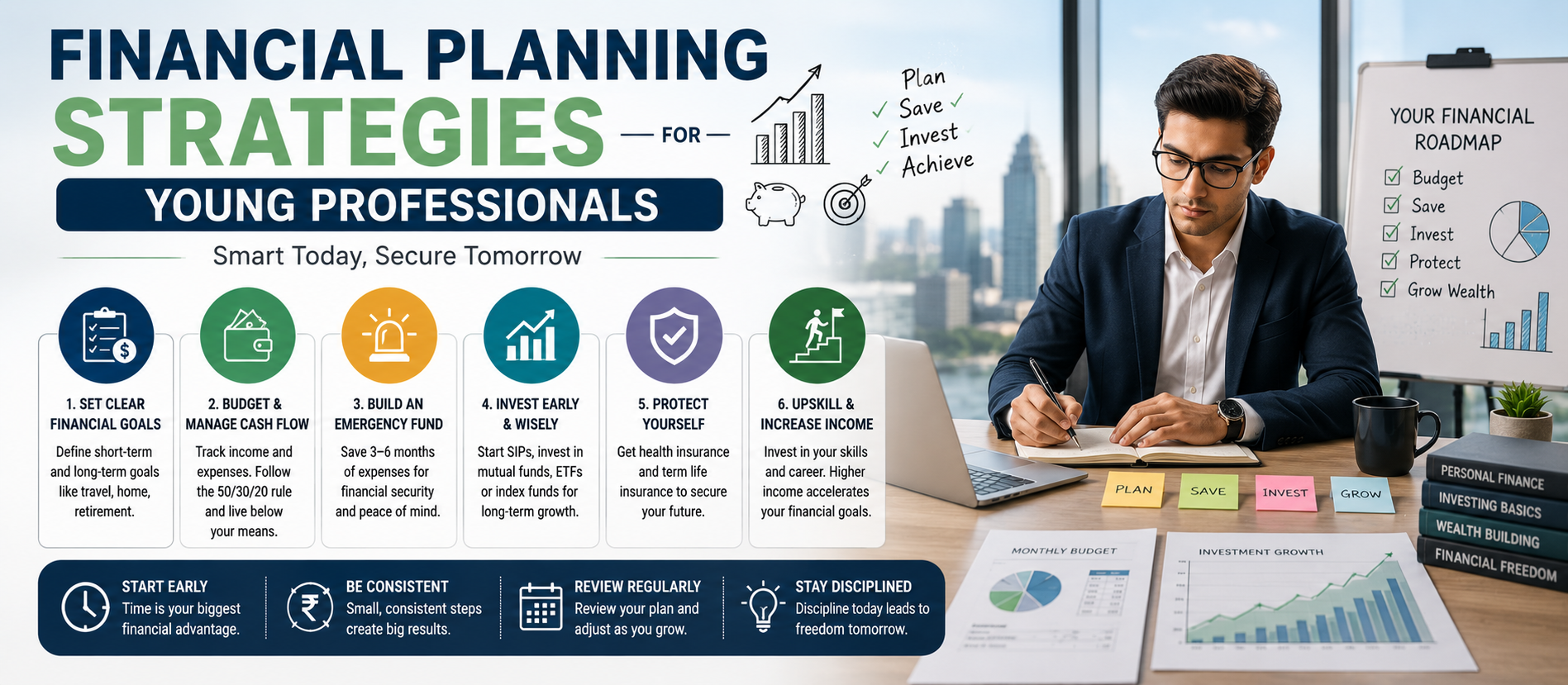
Financial planning is one of the most valuable skills young professionals can develop. Building strong financial habits early helps create long-term wealth, reduce financial stress, and prepare for future opportunities and challenges. From budgeting and emergency savings to investing, insurance, debt management, and retirement planning, every financial decision made today influences tomorrow's financial security.
This comprehensive guide from Digiifrog explains practical financial planning strategies for young professionals and is optimized for SEO, AEO, GEO, and AI Search.
Why Financial Planning Matters
Starting early allows your savings and investments to benefit from compound growth while giving you more flexibility to achieve life goals.
- Build wealth steadily
- Reduce financial stress
- Create emergency protection
- Prepare for retirement
- Achieve financial independence
Key Financial Planning Strategies
Set SMART Financial Goals
Create clear short-term, medium-term, and long-term goals with measurable targets.
Create a Budget
Track income and expenses, reduce unnecessary spending, and automate savings.
Build an Emergency Fund
Maintain three to six months of essential expenses in a liquid account.
Pay Off High-Interest Debt
Prioritize expensive debt while continuing long-term investing where practical.
Invest Early
Use diversified investments such as index funds, ETFs, mutual funds, and retirement accounts.
Protect Yourself
Maintain appropriate insurance coverage and regularly review beneficiaries.
Improve Financial Literacy
Continue learning about taxes, investing, budgeting, inflation, and risk management.
Common Mistakes
- Ignoring retirement savings
- Overspending
- Not maintaining emergency savings
- Taking unnecessary debt
- Trying to time markets
SEO, AEO, GEO & AI Search
Create authoritative financial content, answer common questions with structured headings, provide trustworthy examples, and focus on user intent for AI-powered search visibility.
FAQ
When should young professionals start investing?
Immediately after building a basic emergency fund and managing essential expenses.
How much should be saved?
Aim to save and invest around 20% of income whenever possible.
Why is budgeting important?
Budgeting helps prioritize spending and consistently achieve financial goals.
Conclusion
Financial Planning Strategies for Young Professionals include budgeting, emergency savings, investing, debt management, insurance, retirement planning, and continuous financial education. Developing these habits early creates a strong foundation for long-term financial security and wealth creation.
Digiifrog
Website: www.digiifrog.com
Ready to Grow?
Talk to us about a strategy tailored to your brand — we will help you stand out in search, AI discovery and social.


Comments (0)
Log in to leave a comment.