📋 Quick Summary
In this article:
The Impact of Technology on Future Careers
1. Artificial Intelligence Literacy
2. Digital Literacy
3. Critical Thinking and Problem-Solving
4. Creativity and Innovation
5. Emotional Intelligence
6. Communication Skills
7. Adaptability and Flexibility
8. Data Literacy
9. Financial Literacy
10. Leadership Skills
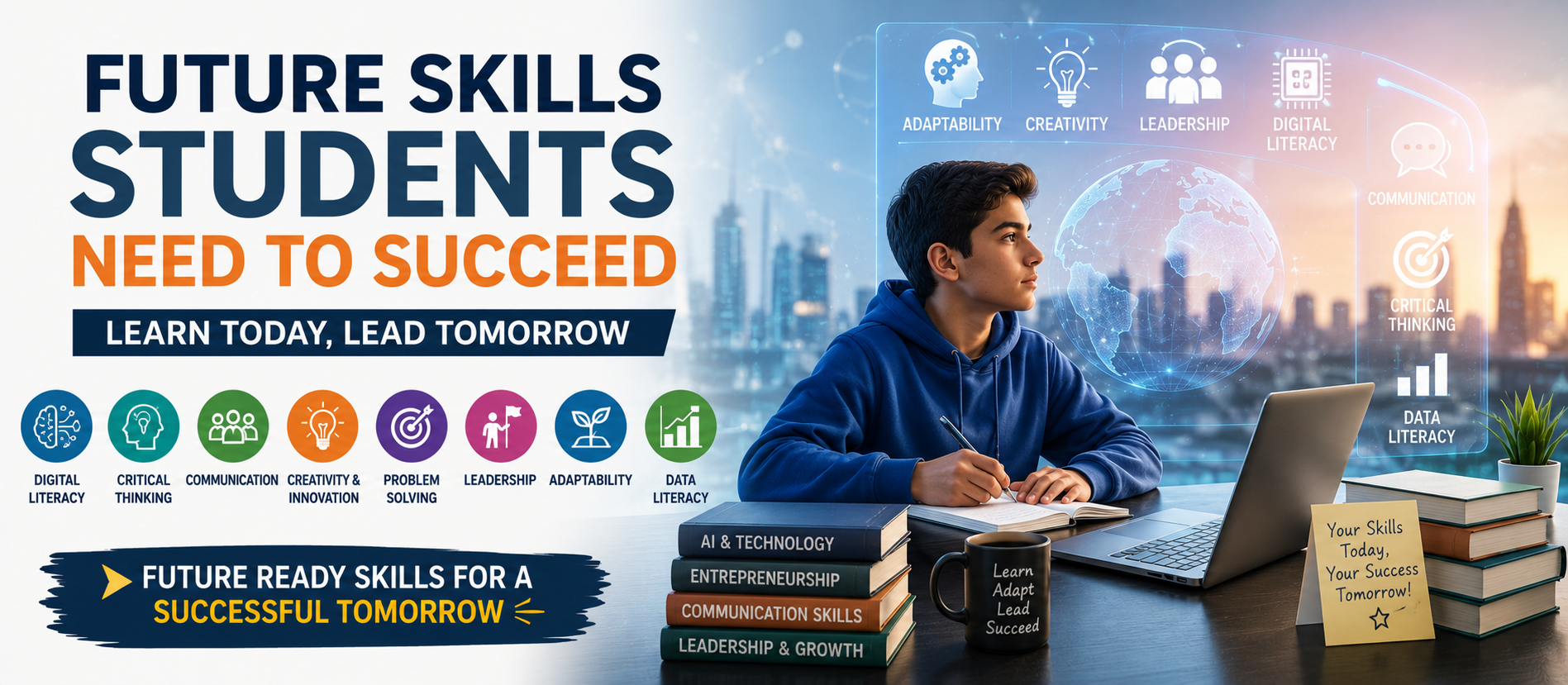
The world of education and employment is changing faster than ever before. Advances in artificial intelligence, automation, digital transformation, remote work, and globalization are reshaping industries and creating new career opportunities. Many jobs that exist today may evolve significantly over the next decade, while entirely new professions will emerge. As a result, students must prepare not only for today's workforce but also for the future economy.
💡 Key Insight
Academic qualifications remain important, but employers increasingly seek individuals who possess a combination of technical expertise, digital literacy, adaptability, creativity, emotional intelligence, and lifelong learning capabilities. Future-ready students must develop skills that allow them to thrive in rapidly changing environments and continuously adapt to new technologies and challenges.
This comprehensive guide explores the most important future skills students need to succeed in the coming years. The article is optimized for SEO, AEO, GEO, and AI Search visibility and is presented by Digiifrog.
Website: www.digiifrog.com
Brand: Digiifrog – Education, AI, Career & Digital Growth Insights
Why Future Skills Matter
The future workforce will be driven by innovation, technology, and continuous learning. Employers are increasingly prioritizing skills over traditional credentials alone. Students who develop future-oriented competencies gain a significant advantage in career opportunities, entrepreneurship, leadership, and personal development.
Future skills help students:
- Remain competitive in changing industries
- Adapt to technological advancements
- Increase employability
- Build career resilience
- Enhance earning potential
- Support lifelong learning
- Prepare for emerging job roles
Learning these skills early provides a strong foundation for long-term success.
The Impact of Technology on Future Careers
Technology is transforming nearly every profession. Artificial intelligence, robotics, cloud computing, big data, and automation are changing how businesses operate and how employees perform their work.
While technology may automate repetitive tasks, it also creates demand for uniquely human capabilities such as creativity, critical thinking, emotional intelligence, and innovation.
Students must learn how to work alongside technology rather than compete against it.
1. Artificial Intelligence Literacy
Artificial Intelligence is becoming a core component of modern industries.
Students should understand:
- How AI works
- AI applications in business
- Prompt engineering basics
- AI ethics
- Machine learning concepts
- AI-powered productivity tools
AI literacy helps students leverage technology effectively while understanding its limitations and responsibilities.
2. Digital Literacy
Digital literacy extends beyond basic computer skills.
Future-ready students should know how to:
- Use productivity software
- Collaborate through digital platforms
- Conduct online research
- Protect personal data
- Evaluate digital information critically
- Navigate emerging technologies
Digital competence is essential across nearly all industries.
3. Critical Thinking and Problem-Solving
Automation can process information quickly, but human judgment remains invaluable.
Critical thinking enables students to:
- Analyze situations objectively
- Evaluate evidence
- Identify solutions
- Make informed decisions
- Solve complex problems
Organizations increasingly value employees who can think independently and strategically.
4. Creativity and Innovation
Creativity remains one of the most difficult human skills to automate.
Creative thinking helps students:
- Generate new ideas
- Develop innovative products
- Improve processes
- Create unique solutions
- Adapt to changing environments
Innovation drives progress across industries.
5. Emotional Intelligence
Emotional intelligence (EQ) is becoming increasingly important in collaborative workplaces.
Key components include:
- Self-awareness
- Empathy
- Self-regulation
- Relationship management
- Social skills
Strong emotional intelligence improves teamwork, leadership, and communication.
6. Communication Skills
Effective communication remains one of the most valuable professional skills.
Students should develop:
- Public speaking abilities
- Written communication
- Presentation skills
- Active listening
- Cross-cultural communication
Clear communication supports collaboration and leadership success.
7. Adaptability and Flexibility
The future workforce will require continuous adaptation.
Students must learn how to:
- Embrace change
- Learn new technologies
- Handle uncertainty
- Adjust to new work environments
- Develop resilience
Adaptability is often a key differentiator in career advancement.
8. Data Literacy
Data has become one of the most valuable resources in modern organizations.
Students should understand:
- Data interpretation
- Basic analytics
- Data visualization
- Evidence-based decision-making
- Data ethics
Data literacy supports informed decision-making across industries.
9. Financial Literacy
Financial skills are essential for personal and professional success.
Students should learn:
- Budgeting
- Saving strategies
- Investment basics
- Debt management
- Tax planning fundamentals
- Financial goal setting
Financial literacy promotes long-term economic stability.
10. Leadership Skills
Leadership extends beyond management positions.
Future leaders must demonstrate:
- Decision-making
- Vision development
- Team motivation
- Conflict resolution
- Strategic thinking
Leadership skills help students influence positive outcomes.
11. Collaboration and Teamwork
Modern workplaces rely heavily on collaborative environments.
Students should learn:
- Team communication
- Conflict management
- Shared responsibility
- Respect for diverse perspectives
- Cooperative problem-solving
Strong teamwork enhances productivity and innovation.
12. Entrepreneurial Thinking
Entrepreneurial skills benefit both business owners and employees.
These skills include:
- Opportunity recognition
- Innovation
- Risk assessment
- Resourcefulness
- Strategic planning
Entrepreneurial thinking encourages initiative and creativity.
13. Project Management Skills
Managing projects effectively is valuable in nearly every profession.
Students should understand:
- Goal setting
- Planning techniques
- Resource allocation
- Time management
- Risk management
- Progress tracking
Project management improves efficiency and organization.
14. Cybersecurity Awareness
As digital systems expand, cybersecurity knowledge becomes increasingly important.
Students should learn:
- Password security
- Phishing prevention
- Data protection
- Online privacy
- Cybersecurity best practices
Cyber awareness helps protect personal and organizational information.
15. Global and Cultural Awareness
Globalization requires students to work effectively across cultures.
Important competencies include:
- Cultural sensitivity
- Global communication
- International collaboration
- Diversity appreciation
- Cross-cultural understanding
Global awareness enhances workplace effectiveness and leadership.
16. Lifelong Learning Mindset
The most important future skill may be the ability to continuously learn.
Lifelong learners:
- Stay curious
- Adapt to new technologies
- Pursue ongoing education
- Develop new competencies
- Remain relevant professionally
Continuous learning is essential in rapidly evolving industries.
17. Creativity Combined with Technology
The future belongs to individuals who combine human creativity with technological capabilities.
Students who can:
- Use AI creatively
- Design innovative solutions
- Create digital content
- Develop technology-enhanced experiences
will be highly valuable in future workplaces.
18. Resilience and Mental Agility
Rapid change requires mental strength and adaptability.
Resilient students can:
- Recover from setbacks
- Manage uncertainty
- Handle pressure
- Maintain motivation
- Learn from failures
Resilience supports long-term success and well-being.
How Schools Can Prepare Students for the Future
Educational institutions play a critical role in developing future skills.
Schools can support future readiness through:
- Project-based learning
- Technology integration
- Entrepreneurship programs
- AI literacy initiatives
- Collaborative learning environments
- Career readiness programs
Modern education must evolve alongside workforce demands.
Frequently Asked Questions (AEO Section)
What are future skills?
Future skills are competencies that help individuals succeed in rapidly changing workplaces influenced by technology, automation, and globalization.
Why is AI literacy important for students?
AI literacy helps students understand, use, and collaborate effectively with artificial intelligence technologies.
What skills will employers value most in the future?
Critical thinking, communication, emotional intelligence, adaptability, digital literacy, creativity, and AI literacy are among the most valued future skills.
Can technical skills alone guarantee success?
No. Employers increasingly seek a combination of technical expertise and human-centered skills such as communication, leadership, and adaptability.
How can students develop future skills?
Students can build future skills through continuous learning, practical projects, technology training, leadership experiences, and real-world problem-solving opportunities.
The Future Workforce Landscape
The future workforce will reward individuals who can adapt quickly, think creatively, collaborate effectively, and continuously learn. Technology will continue reshaping industries, but human skills will remain essential for innovation, leadership, and strategic decision-making.
Students who begin developing future skills today will be better positioned to succeed in tomorrow's careers.
Conclusion
Future success requires more than academic achievement. Students must prepare for a world where artificial intelligence, automation, digital transformation, and global collaboration are becoming standard.
By developing AI literacy, digital skills, communication abilities, emotional intelligence, critical thinking, creativity, adaptability, financial literacy, and lifelong learning habits, students can position themselves for success in any future career path.
The future belongs to those who are willing to learn, adapt, innovate, and grow continuously.
For more educational insights, future skills resources, AI innovations, SEO, AEO, GEO, and future-focused content, visit www.digiifrog.com.
Ready to Grow?
Talk to us about a strategy tailored to your brand — we will help you stand out in search, AI discovery and social.

Comments (0)
Log in to leave a comment.