📋 Quick Summary
In this article:
Why Garage Door Safety Matters
1. Teach Children Never to Play With the Garage Door
2. Keep Garage Door Remotes Away From Young Children
3. Keep the Wall Control Out of Children's Reach
4. Test the Automatic Reverse Feature Regularly
5. Check the Photo-Eye Safety Sensors
6. Never Walk or Run Under a Closing Garage Door
7. Keep the Door Within Sight When Closing It
8. Keep Pets Away From the Door's Path
9. Keep Toys, Bicycles, and Tools Away From the Door
10. Never Touch Garage Door Springs Unless You Are Qualified
11. Do Not Attempt DIY Cable Repairs
A garage door is one of the largest moving objects in a home. It can weigh hundreds of pounds and move with significant force. Because most modern garage doors operate automatically, families often use them many times every day without thinking about the potential hazards.
⚠ Watch Out
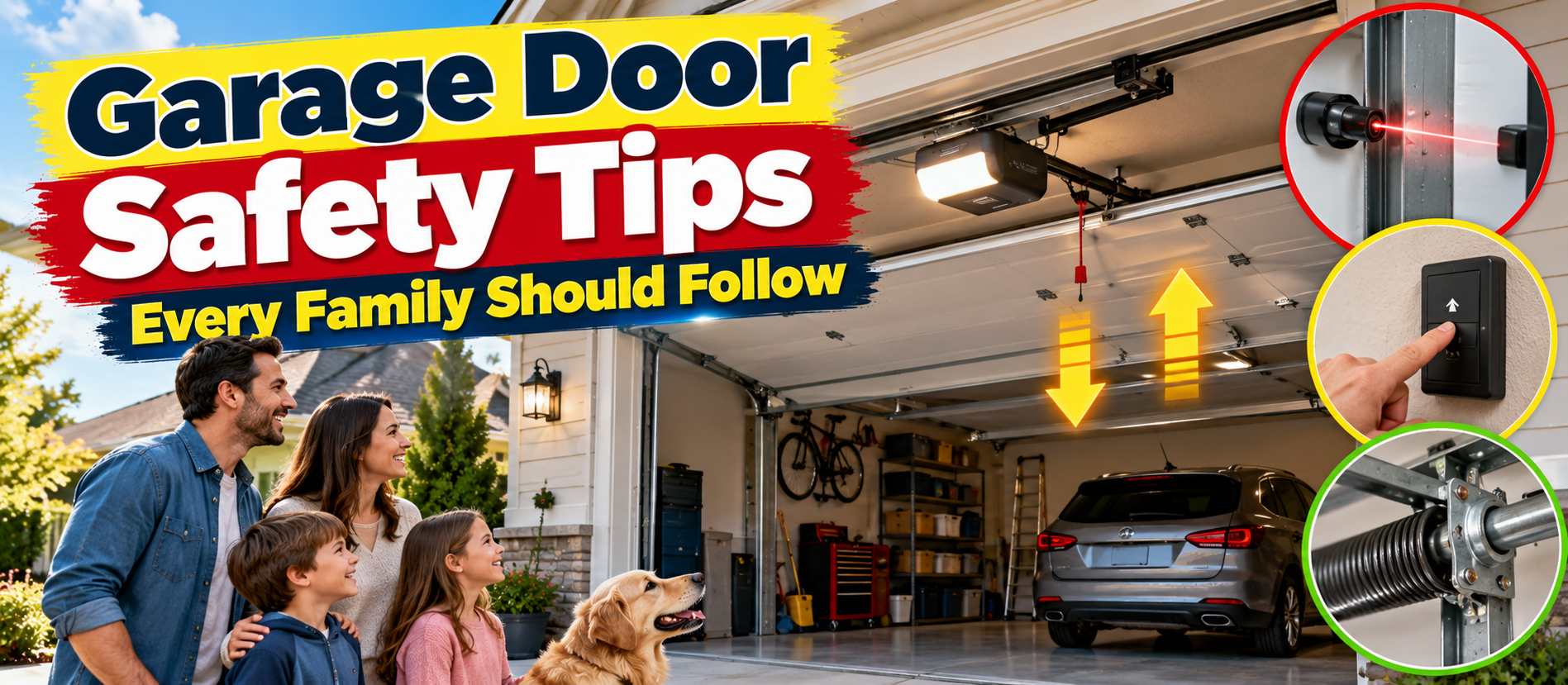
Good habits can make garage door use much safer. Children should never play around a moving door. Remote controls should be kept away from young children. Safety sensors should remain clean and correctly aligned. The door and opener should be tested regularly. Damaged springs, cables, tracks, rollers, or other hardware should be handled by a qualified professional.
The U.S. Consumer Product Safety Commission (CPSC) requires automatic residential garage door operators to comply with a mandatory consumer product safety standard. CPSC also emphasizes entrapment protection, regular testing, and keeping controls away from children.
This guide explains the most important garage door safety tips every family should follow. The goal is simple: reduce preventable accidents, protect children and adults, and keep the garage door system working safely.
Why Garage Door Safety Matters
Garage doors can create several types of hazards. A closing door can trap a person or object. A damaged spring or cable can release stored energy. A poorly balanced door can move unexpectedly. A remote control can allow a child to operate the door without understanding the danger.
There are also less obvious risks. A vehicle can strike the door. A person can walk under a moving door. Toys or bicycles can be left in the door's path. A damaged sensor can prevent the automatic opener from responding correctly to an obstruction.
Family safety therefore depends on both equipment and behavior. A properly installed opener is not a substitute for safe habits. Children should be taught that the garage door is not a toy, and adults should follow the manufacturer's operating and maintenance instructions.
1. Teach Children Never to Play With the Garage Door
This is one of the most important rules in the home.
Children should never race under a closing garage door, hang from the door, climb on it, push against it, or use the opener as a game. They should also avoid playing near the tracks, rollers, springs, and other moving hardware.
CPSC specifically advises families not to allow children to walk or run under a closing door and not to allow children to operate door controls.
Use simple language when teaching young children. Tell them that the garage door is heavy, moves automatically, and can hurt someone if they stand underneath it.
2. Keep Garage Door Remotes Away From Young Children
Remote controls should be treated like other devices that can operate potentially dangerous equipment. Do not leave them on a low table, near toys, or where young children can reach them easily.
CPSC recommends keeping remote controls away from children.
Consider using a remote with a keychain only when it can be kept securely with an adult. If your vehicle has a built-in garage door control, children should still be taught not to press the buttons without permission.
3. Keep the Wall Control Out of Children's Reach
The wall-mounted garage door control should be positioned high enough that young children cannot easily operate it. The user should still be able to access it comfortably and safely.
CPSC safety guidance recommends placing the wall control as high as practical to restrict children's access.
If your wall button is unusually low, ask a qualified garage door professional whether it should be relocated.
4. Test the Automatic Reverse Feature Regularly
The automatic reversal system is a critical safety feature. The opener should detect an obstruction during closing and reverse the door rather than continuing downward.
CPSC guidance has long recommended regular testing of the reversing mechanism. Current federal requirements for residential garage door operators include entrapment protection features.
Follow the exact testing procedure in your opener's owner's manual. CPSC materials describe a floor-level test using an appropriate test object. If the door fails to reverse as required, stop using the automatic opener and arrange for qualified service.
Never rely on your hands, feet, or body to test the reversing system.
5. Check the Photo-Eye Safety Sensors
Many automatic garage door openers use photo-eye sensors near the bottom of the door opening. One sensor sends a beam toward the other. If something interrupts the beam, the opener should respond according to its safety design.
Keep both sensors clean and unobstructed. Dust, dirt, spider webs, objects, or accidental movement can interfere with operation.
Check that the sensors are securely mounted and aligned. If the opener displays a sensor error, the door behaves unexpectedly, or the sensors appear damaged, contact a qualified technician.
CPSC identifies sensor or electric-eye protection as an important garage door safety feature.
6. Never Walk or Run Under a Closing Garage Door
Do not try to beat the door as it closes.
This behavior is especially dangerous for children, but adults should avoid it as well. A door can move faster than expected, and a person may trip while attempting to pass underneath it.
Wait for the door to open fully before walking through. If the door is closing, step away and allow it to complete its cycle before operating it again.
7. Keep the Door Within Sight When Closing It
When possible, watch the garage door while it closes. Do not activate the opener and immediately drive away or walk out of sight.
CPSC safety labeling guidance tells users to keep a closing door within sight.
Watching the door helps you notice people, pets, bicycles, toys, vehicles, or other objects that may enter the opening.
8. Keep Pets Away From the Door's Path
Pets may not understand the movement of an automatic garage door. A dog or cat can walk into the opening while the door is moving.
Keep pets away from the door area during opening and closing. Do not assume that the safety sensors will replace supervision. Sensors and reversal systems are safety features, not permission to allow animals to play beneath a moving door.
9. Keep Toys, Bicycles, and Tools Away From the Door
Do not store toys, sports equipment, bicycles, ladders, boxes, or tools where they can fall into the door's path.
A simple storage system can reduce this risk. Use wall racks, shelves, hooks, and cabinets to keep objects organized and away from moving components.
Before closing the garage, quickly check the opening. Make sure the floor is clear and no child or pet is nearby.
10. Never Touch Garage Door Springs Unless You Are Qualified
Garage door springs store significant mechanical energy. Torsion springs and extension springs can cause serious injury if they are incorrectly adjusted, removed, or replaced.
Homeowners should not attempt to repair or replace springs simply because a video makes the job look easy. The correct spring, tools, procedures, and safety controls depend on the door system.
If a spring is broken, stretched, separated, rusted severely, or behaving abnormally, contact a qualified garage door technician.
11. Do Not Attempt DIY Cable Repairs
Garage door cables work with the spring and lifting system. A loose, broken, or displaced cable can indicate a mechanical problem.
Do not pull, cut, reconnect, or reposition a loaded cable without the appropriate training. A professional can identify the underlying cause and repair the system safely.
12. Watch for a Door That Looks Unbalanced
A properly functioning garage door should move smoothly. If it suddenly feels much heavier, moves unevenly, slams down, rises unexpectedly, or refuses to remain in a partially open position, there may be a balance or hardware problem.
CPSC safety guidance explains that a properly operating garage door should be balanced and warns that a severely unbalanced door can unexpectedly fall. CPSC recommends professional service when a door is not balanced or binds or sticks.
Do not compensate for a mechanical problem by repeatedly adjusting the opener force settings. The underlying door or spring problem should be evaluated.
13. Inspect Tracks and Rollers Visually
The tracks guide the door as it moves. Rollers travel within or along the track system.
Homeowners can perform a visual check for obvious damage, loose components, obstruction, or unusual wear. Do not bend tracks or attempt to realign major hardware yourself unless you are qualified to do so.
If the door suddenly becomes noisy, jerky, crooked, or difficult to move, arrange for professional inspection.
14. Listen for Unusual Noises
New or unusual sounds can provide an early warning.
Pay attention to:
- Loud grinding
- Repeated popping
- Metal scraping
- Severe rattling
- Sudden banging
- Straining from the opener
- Uneven movement
- Persistent squealing
Not every noise means an emergency, but a significant change in sound should not be ignored. A professional can determine whether lubrication, adjustment, hardware replacement, or a larger repair is required.
15. Keep the Door and Hardware Properly Maintained
Routine maintenance can help identify problems before they become serious. Follow the manufacturer's maintenance instructions for lubrication, inspection, and testing.
CPSC materials recommend checking springs, hardware, and fittings and emphasize periodic testing of garage door openers.
Do not apply random lubricants to every component. Some parts have specific lubrication requirements, while certain components should not be lubricated by homeowners. Follow the manufacturer's instructions.
16. Keep the Garage Door Safety Labels Visible
Safety labels provide reminders about entrapment hazards and operating procedures. Do not remove or paint over important safety labels.
If labels are missing or unreadable, check the manufacturer's documentation or ask a qualified service provider about replacement labels and instructions.
17. Make Sure Everyone Knows the Emergency Release
Automatic garage door openers normally have a manual emergency release that allows the door to be disconnected from the opener. Family members should know what it is and understand when it may be necessary to use it.
However, do not use the emergency release as a casual shortcut for operating a damaged or unbalanced door. If the door is heavy, unstable, or damaged, professional service is safer.
CPSC standards include a manually operated means to detach the opener from the door.
18. Do Not Leave the Garage Door Partially Open Without a Reason
A partially open garage door can create security, weather, and safety issues. It can also provide an opening for children or pets to enter the area unnoticed.
When practical, close the door fully or open it fully as intended by the system. If the door stops partway unexpectedly, investigate the cause rather than repeatedly forcing it to move.
19. Teach Children a Simple Garage Door Safety Rule
Families with young children can use one easy rule:
“Stay away from the garage door when it is moving.”
Teach children to wait for an adult if they need to enter or leave through the garage. Make it clear that remote controls are not toys.
Older children can learn how the sensors and emergency release work, but they should still follow the family's rules about operating the door.
20. Keep the Garage Well Organized
Garage organization is part of safety. A cluttered garage makes it easier for objects to fall into the door's path and harder for people to see hazards.
Keep:
- Cleaning products on stable shelves
- Tools in secure storage
- Bicycles on proper racks
- Toys in bins away from the door
- Ladders secured when not in use
- Boxes away from moving hardware
- Vehicles positioned safely before the door closes
21. Never Let a Vehicle Block the Door's Safety Area
When parking inside a garage, make sure the vehicle is completely clear of the door's movement. Do not rely on mirrors or cameras alone.
If your garage has limited space, mark a safe parking position on the floor so drivers know where to stop.
22. Be Careful During Power Outages
Power outages can change how the garage door operates. If the automatic opener is unavailable, the emergency release may allow manual operation depending on the system.
Do not force the door if it feels unusually heavy or does not move normally. A garage door that is difficult to lift manually may have a spring, cable, track, or balance problem.
23. Be Careful With Smart Garage Door Openers
Smart garage door systems can provide useful features such as notifications, remote operation, activity logs, and integration with home automation.
Convenience should not replace basic safety. Keep account credentials secure, use strong authentication where available, and teach family members who is authorized to operate the door remotely.
If a smart system reports that the door is open, check the reason before repeatedly opening or closing it remotely.
24. Inspect the Door After Severe Weather
Strong wind, storms, flooding, hail, and other weather events can damage garage doors and their hardware.
After severe weather, look for:
- Bent or damaged panels
- Loose tracks
- Damaged rollers
- Broken windows
- Disconnected cables
- Damaged springs
- Door sections that are out of alignment
- Water or debris around the door
If the door is visibly damaged or unstable, keep people away and call a qualified professional.
25. Know When to Stop Using the Door
One of the most important safety decisions is knowing when not to operate the system.
Stop normal use and seek professional help if:
- The door falls unexpectedly
- The door will not stay open
- A spring breaks
- A cable comes off
- The door becomes severely crooked
- The door binds or sticks
- The opener runs but the door does not move correctly
- The safety reversal feature fails
- The photo-eye sensors do not work correctly
- Major hardware is bent or broken
CPSC specifically advises professional service when a garage door is not balanced or binds or sticks.
Garage Door Safety Checklist for Families
- Keep children away from moving doors.
- Keep remote controls out of children's reach.
- Keep wall controls high and inaccessible to young children.
- Test the opener's safety reversal according to the manufacturer's instructions.
- Keep photo-eye sensors clean and aligned.
- Never walk or run under a closing door.
- Keep the closing door within sight.
- Keep pets away from the moving door.
- Keep toys and equipment out of the door's path.
- Do not repair springs or cables unless properly trained.
- Watch for unusual noises and movement.
- Arrange professional service for major mechanical problems.
- Know how the emergency release works.
- Inspect the system after severe weather.
- Keep safety labels and the owner's manual available.
How Often Should You Test a Garage Door Opener?
Testing should follow the opener manufacturer's instructions. CPSC safety materials specifically recommend regular testing of the reversing system, with monthly testing commonly stated in its consumer guidance.
A monthly family safety routine can be useful because problems may develop gradually. The goal is not to replace professional maintenance. It is to catch obvious safety issues early.
Garage Door Maintenance vs. Professional Repair
Homeowners can safely handle simple observational tasks such as keeping the doorway clear, checking sensor alignment visually, cleaning the sensor lenses, testing the opener according to the manual, and keeping remotes away from children.
Professional help is appropriate for springs, cables, significant track problems, structural damage, major opener faults, severe imbalance, and other components that involve stored mechanical energy or heavy moving parts.
Trying to save money on a high-risk repair can create a much larger safety problem.
Common Garage Door Safety Mistakes
Letting Children Use the Remote
A child may press the button without seeing a person, pet, or object beneath the door.
Ignoring a Failed Safety Test
If the opener does not reverse as required, do not continue normal use and hope the problem disappears.
Adjusting Springs Without Training
Garage door springs can store significant energy. Leave spring work to qualified technicians.
Relying Only on Sensors
Safety sensors are important, but supervision and good operating habits remain essential.
Walking Under the Door
Never race a closing door. Wait until the door has opened or closed completely.
Ignoring Strange Noises
A new grinding, popping, scraping, or banging sound may indicate a mechanical issue.
Leaving the Door Remote in an Accessible Place
Keep remote controls secure and teach children not to operate them.
When Should You Replace an Old Garage Door Opener?
Age alone does not provide a complete safety assessment, but older openers may lack modern entrapment protection or may be difficult to maintain reliably.
If an opener does not have the required safety features, fails its reversal test, or has major mechanical or electrical problems, professional evaluation is appropriate. CPSC has repeatedly advised consumers to replace or service openers that lack adequate reversing protection.
When replacing an opener, choose a current model that complies with applicable safety standards and follow the manufacturer's installation instructions.
How to Choose a Garage Door Professional
When repair is needed, choose a company that can explain the problem clearly and provide a written scope of work.
Ask:
- What caused the problem?
- Is the door safe to operate right now?
- Does the opener pass its safety tests?
- Are the springs and cables in good condition?
- Are the tracks and rollers aligned?
- Are the photo-eye sensors functioning correctly?
- What parts need replacement?
- Does the estimate include labor and disposal?
- What warranty applies to the repair?
- Will you test the complete system after the repair?
A good technician should not simply replace a visible part without investigating why it failed.
Garage Door Safety for Older Adults
Older adults may face additional challenges when a garage door becomes heavy, noisy, or difficult to operate manually. A door that requires unusual force should not be treated as normal.
Keep walking paths clear, improve lighting around the garage, and arrange professional service when the door becomes difficult to operate. A well-maintained system reduces the need for users to struggle with heavy equipment.
Garage Door Safety During Home Emergencies
Families should know how to exit the garage if the automatic opener stops working. Review the emergency release instructions and keep the owner's manual accessible.
If a person becomes trapped or injured by a garage door, prioritize emergency medical assistance and avoid attempting risky mechanical repairs during the emergency. If the door is unstable, keep others away until professional help arrives.
Final Thoughts
Garage door safety starts with three things: safe habits, working safety features, and regular maintenance.
Families should teach children never to play around the garage door, keep remotes out of reach, keep the doorway clear, watch the door while it closes, and test the automatic safety features according to the manufacturer's instructions.
Homeowners should also take mechanical warning signs seriously. Broken springs, damaged cables, severe imbalance, bent tracks, unusual movement, and failed safety sensors are not problems to ignore.
💡 Key Insight
A garage door is convenient, but it is also heavy machinery operating in a family living environment. Treating it with the same care given to other important home systems can reduce preventable injuries and costly damage.
For more practical home-service, business, SEO, AEO, GEO, and AI Search content, visit Digiifrog at www.digiifrog.com.
Reference Sources
- U.S. Consumer Product Safety Commission – Automatic Residential Garage Door Operators
- U.S. Consumer Product Safety Commission – Non-Reversing Automatic Garage Door Openers Are a Hazard
- U.S. CPSC – Safety Rules for Automatic Residential Garage Door Openers
- U.S. CPSC – Safety Education Materials
Ready to Grow?
Talk to us about a strategy tailored to your brand — we will help you stand out in search, AI discovery and social.
Comments (0)
Log in to leave a comment.