📋 Quick Summary
In this article:
The Best Interests of the Child Standard
Factors Courts Commonly Consider
Legal Custody vs Physical Custody
Modification of Custody Orders
Common Mistakes Parents Should Avoid
SEO, AEO, GEO & AI Search Optimization
💡 Key Insight
Child custody is one of the most important issues decided during divorce, separation, or disputes involving parents. Courts focus on protecting the child's welfare while balancing the legal rights and responsibilities of each parent. Although custody laws differ between jurisdictions, the guiding principle in many legal systems is the best interests of the child.
This comprehensive guide explains how courts determine child custody, the factors judges commonly evaluate, different custody arrangements, the role of evidence, parenting plans, mediation, and practical steps parents can take to protect their children's well-being.
What Is Child Custody?
Child custody refers to the legal authority and responsibility to make important decisions for a child and provide day-to-day care.
- Legal custody
- Physical custody
- Joint custody
- Sole custody
- Shared parenting arrangements
The Best Interests of the Child Standard
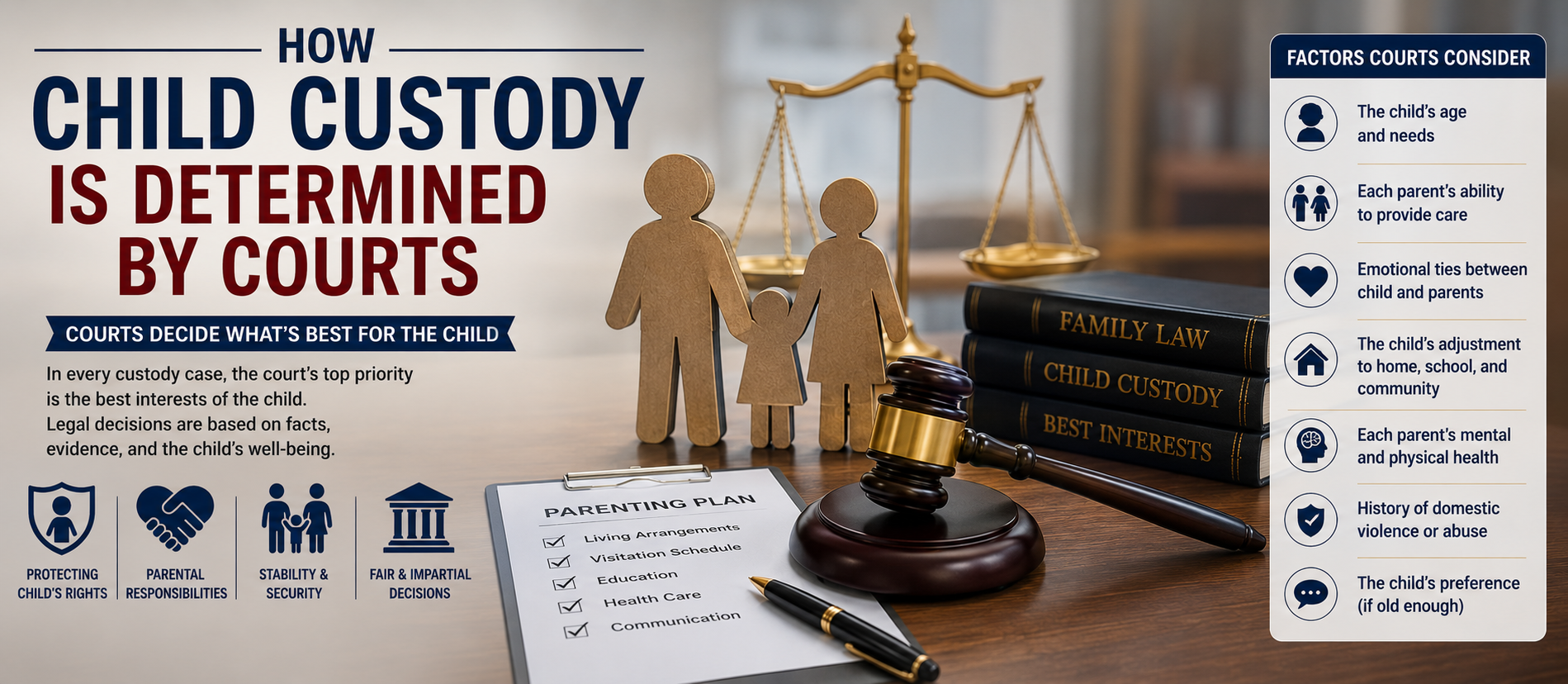
Courts generally base custody decisions on what best promotes the child's health, safety, emotional development, education, and long-term stability.
Factors Courts Commonly Consider
- Child's age and needs
- Relationship with each parent
- Physical and mental health of the parents
- Ability to provide a safe home
- Educational stability
- History of caregiving
- Domestic violence or abuse allegations
- Substance abuse concerns
- Co-parenting ability
- Child's wishes where permitted by law
Legal Custody vs Physical Custody
Legal custody concerns important decisions about education, healthcare, and religion.
Physical custody determines where the child primarily lives and the day-to-day care arrangement.
Joint Custody
Joint custody allows both parents to share responsibilities. Depending on local law, this may involve shared legal custody, shared physical custody, or both.
Sole Custody
Courts may award sole custody when shared arrangements would not adequately protect the child's best interests.
Parenting Plans
Courts often encourage detailed parenting plans addressing:
- Residential schedules
- Holiday arrangements
- School decisions
- Medical care
- Communication methods
- Transportation responsibilities
Evidence Used by Courts
- School records
- Medical reports
- Witness testimony
- Parenting history
- Financial records
- Expert evaluations
Mediation and Settlement
Many family courts encourage mediation to help parents reach mutually acceptable parenting arrangements while reducing conflict.
Modification of Custody Orders
Custody orders may sometimes be modified when there is a significant change in circumstances affecting the child's welfare.
Common Mistakes Parents Should Avoid
- Ignoring court orders
- Speaking negatively about the other parent to the child
- Interfering with visitation
- Failing to cooperate
- Not documenting important events
SEO, AEO, GEO & AI Search Optimization
SEO, AEO, GEO, and AI Search Optimization help educational family law content reach parents searching through Google, Bing, answer engines, and AI-powered search platforms.
Frequently Asked Questions
What is the most important factor in child custody cases?
In many jurisdictions, courts primarily consider the child's best interests.
Can custody orders be changed?
Yes, depending on applicable law and whether a substantial change in circumstances is demonstrated.
Do courts always prefer joint custody?
No. Courts evaluate each case individually based on the child's welfare.
Conclusion
⚠ Watch Out
Child custody decisions are designed to promote the child's safety, stability, and healthy development. Parents who cooperate, prioritize their children's needs, and comply with court procedures are generally better positioned to achieve positive outcomes. Because custody laws differ between jurisdictions, professional legal advice is recommended whenever significant family law issues arise.
Digiifrog
Website: www.digiifrog.com
Digital Marketing, SEO, AEO, GEO & AI Search Solutions for Modern Businesses.
Ready to Grow?
Talk to us about a strategy tailored to your brand — we will help you stand out in search, AI discovery and social.


Comments (0)
Log in to leave a comment.