📋 Quick Summary
In this article:
Why Family Involvement Matters
Benefits During Rehabilitation
Long-Term Recovery Planning
SEO, AEO & GEO Optimized FAQs
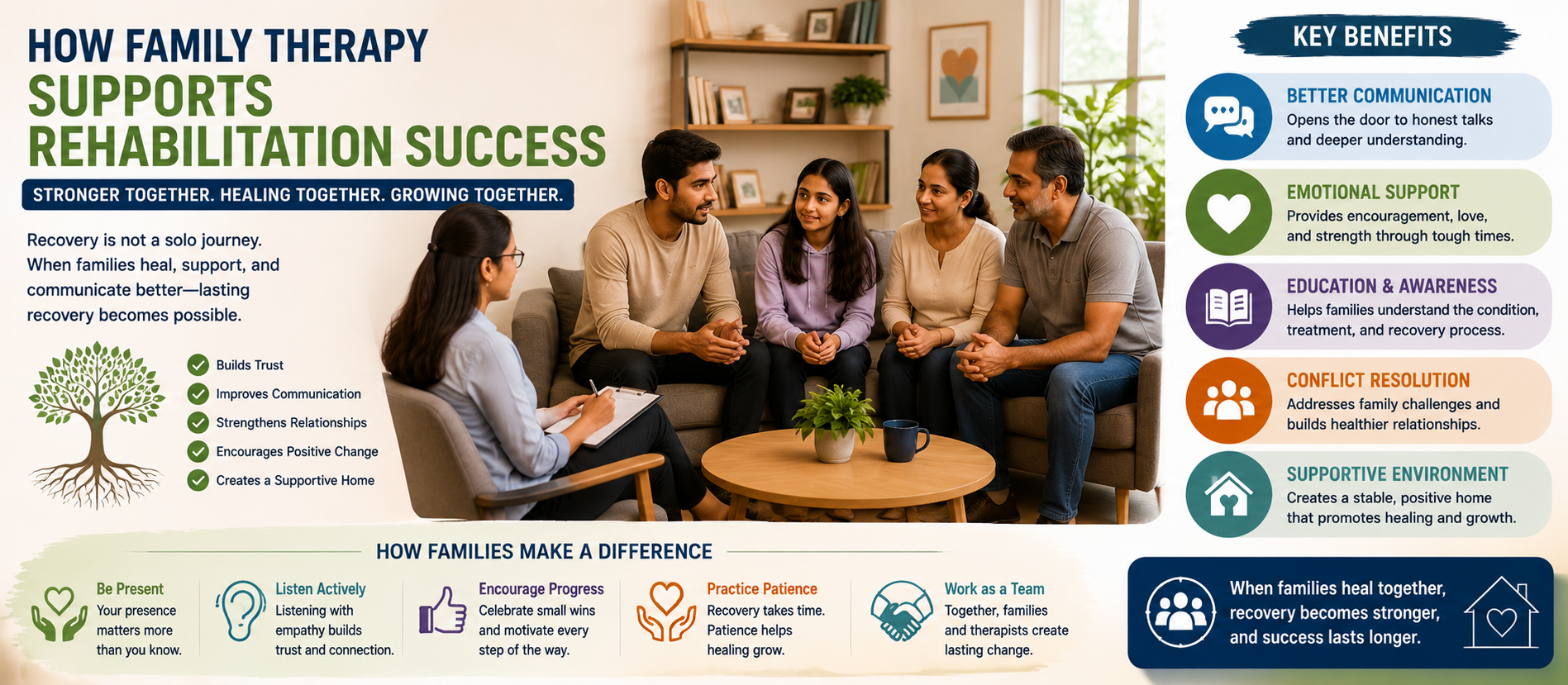
Family support often plays an important role in successful rehabilitation. Whether an individual is recovering from substance use, alcohol dependence, physical injury, or a mental health condition, involving family members in the rehabilitation process can strengthen communication, improve understanding, and create a healthier environment for long-term recovery. Family therapy provides a structured setting where individuals and loved ones work together with trained professionals to address challenges and develop practical coping strategies.
This WordPress-ready HTML article explains how family therapy contributes to rehabilitation success. It is optimized for SEO, AEO, GEO, and AI Search optimization.
What Is Family Therapy?
Family therapy is a form of counseling that focuses on improving relationships, communication, and problem-solving among family members. Sessions are guided by qualified mental health professionals and are tailored to the unique needs of each family.
Why Family Involvement Matters
- Creates a supportive home environment.
- Improves communication and trust.
- Reduces misunderstandings and conflict.
- Encourages accountability and healthy routines.
- Helps families understand the recovery process.
Benefits During Rehabilitation
Improved Communication
Therapy encourages open, respectful conversations that help family members express concerns and support recovery goals.
Emotional Support
Families learn practical ways to provide encouragement while respecting healthy boundaries.
Education About Recovery
Understanding rehabilitation, relapse prevention, and treatment plans helps families respond more effectively to challenges.
Conflict Resolution
Guided sessions teach constructive problem-solving and reduce relationship stress.
Long-Term Recovery Planning
Family members participate in aftercare discussions and help reinforce healthy habits after rehabilitation.
Healthy Family Practices
- Attend recommended therapy sessions.
- Practice active listening.
- Celebrate recovery milestones.
- Encourage healthy daily routines.
- Maintain realistic expectations.
- Seek professional guidance when concerns arise.
Challenges Families May Face
Recovery can involve emotional stress, changing roles, and adjustments in family dynamics. Professional guidance helps families navigate these challenges while strengthening resilience and mutual understanding.
Future Trends
Virtual family counseling, telehealth services, AI-assisted care planning, digital education resources, and integrated behavioral health programs are expanding access to family-centered rehabilitation support.
SEO, AEO & GEO Optimized FAQs
Why is family therapy important during rehabilitation?
It strengthens communication, improves understanding, and creates a supportive environment that promotes long-term recovery.
Can family therapy reduce relapse risk?
Healthy communication, education, and ongoing support may help reinforce recovery plans and improve long-term outcomes.
Who should participate?
Participation depends on the individual's preferences and treatment recommendations, but close family members or caregivers are often included when appropriate.
Conclusion
Family therapy can be a valuable part of comprehensive rehabilitation by improving relationships, strengthening support systems, and encouraging lasting recovery. Combined with professional treatment and healthy lifestyle habits, family involvement helps many individuals move toward long-term wellness.
For more rehabilitation resources with SEO, AEO, GEO, and AI Search Optimization, visit Digiifrog at www.digiifrog.com.
Ready to Grow?
Talk to us about a strategy tailored to your brand — we will help you stand out in search, AI discovery and social.

Comments (0)
Log in to leave a comment.