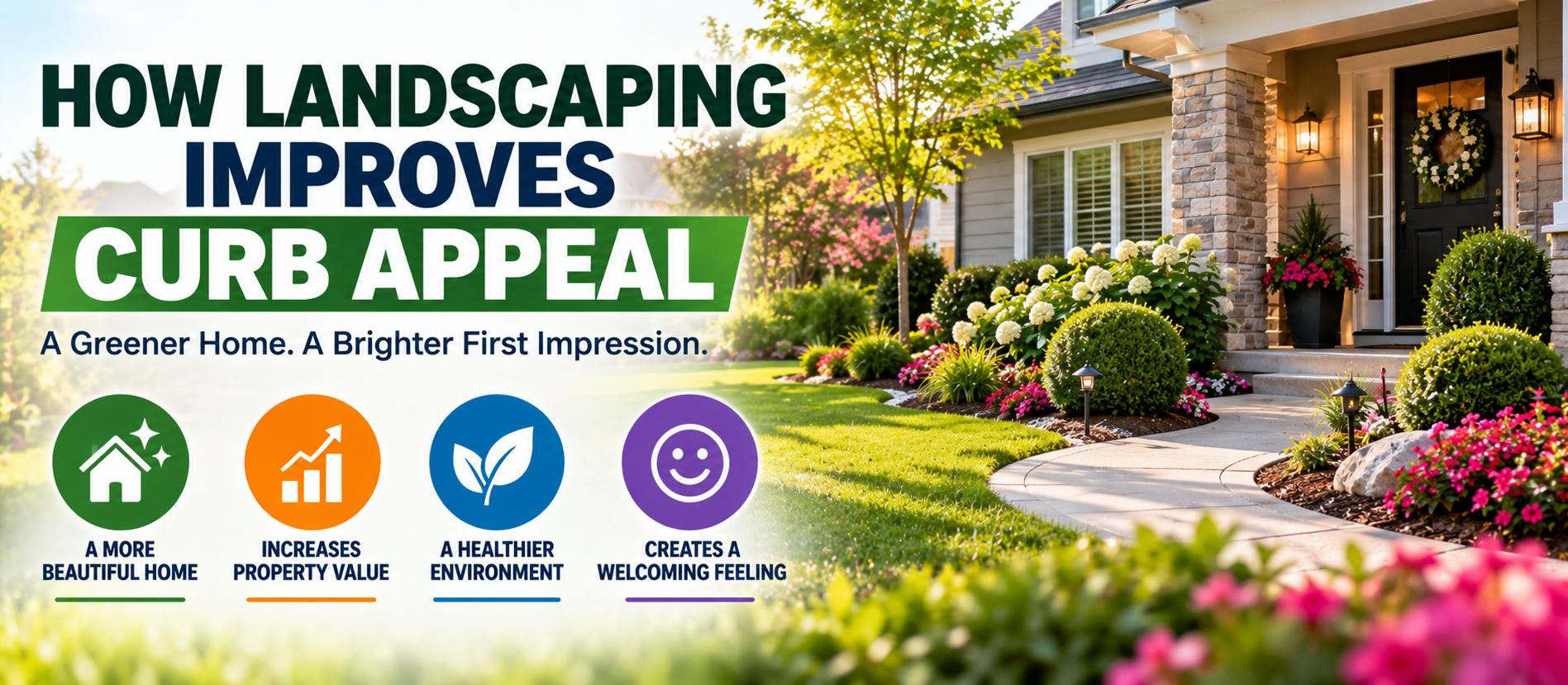
📋 Quick Summary
In this article:
Why Landscaping Has Such a Strong Visual Impact
1. Maintain a Healthy Lawn
2. Keep Lawn Edges Clean
3. Add Well-Planned Flower Beds
4. Use Trees to Frame the Home
5. Trim Overgrown Shrubs
6. Create a Clear Path to the Front Door
7. Improve the Front Door Area
8. Use Mulch for a Finished Look
9. Add Landscape Lighting
10. Keep Driveways and Walkways Clean
A home's exterior creates the first impression. Before visitors enter the house, they see the driveway, front door, lawn, trees, garden beds, walkways, and other outdoor features. This is where curb appeal matters.
Landscaping is one of the most practical ways to improve the appearance of a property. A well-planned landscape can make a home look cleaner, more welcoming, organized, and cared for. It can also improve how outdoor spaces are used.
Good landscaping does not always require a major budget. Simple improvements such as trimming overgrown plants, adding fresh mulch, improving lawn care, defining garden borders, and updating the entrance can make a visible difference.
This guide explains how landscaping improves curb appeal. It covers lawn care, plants, trees, lighting, walkways, mulch, seasonal maintenance, low-maintenance landscaping, front-yard design, and practical planning tips. The article uses short sentences and clear sections for better readability and easier use by homeowners, search engines, answer engines, and AI-powered search tools.
What Is Curb Appeal?
Curb appeal is the overall appearance of a property when viewed from the street or another public-facing area. It includes the home itself and the surrounding landscape.
A home's paint, roof, windows, driveway, front door, fencing, lawn, plants, trees, lighting, and outdoor cleanliness can all affect curb appeal.
Landscaping is important because it connects the building with the outdoor environment. Even a beautiful house can look less attractive when the lawn is neglected or plants are overgrown.
Why Landscaping Has Such a Strong Visual Impact
Landscaping covers a large portion of many residential properties. The lawn and planting areas may be visible from the street throughout the year.
Plants also add color, texture, height, and natural shapes. Trees can create a strong visual frame around a house. Flower beds can direct attention toward the entrance. A clean walkway can create a clear path from the street to the front door.
These elements work together to create a more balanced exterior.
1. Maintain a Healthy Lawn
A healthy lawn can make a property look neat and well maintained. Regular mowing helps keep grass at an appropriate height. Watering, fertilizing, aeration, and weed management may also support lawn health when needed.
A lawn does not need to look perfect to improve curb appeal. The main goal is consistency. Remove excessive weeds, manage bare areas, and keep edges defined.
2. Keep Lawn Edges Clean
Clean lawn edges can make a surprisingly large difference. Grass that grows into sidewalks, driveways, or garden beds can make the landscape look untidy.
Edging creates a visual boundary between different outdoor surfaces. It can make the entire yard appear more organized without requiring expensive materials.
3. Add Well-Planned Flower Beds
Flower beds can add color and personality to the front yard. They can also guide attention toward important features such as the entrance, porch, windows, or walkway.
Choose plants based on local climate, sunlight, soil, water needs, and available space. A smaller number of healthy plants is often better than a crowded bed that becomes difficult to maintain.
4. Use Trees to Frame the Home
Trees can become major landscape features. A well-positioned tree can frame the house and add height to a flat landscape.
Choose tree species carefully. Consider mature size, root growth, sunlight, water needs, maintenance, and distance from buildings, driveways, overhead lines, and underground utilities.
Planting the right tree in the right location can provide long-term visual benefits. Planting an unsuitable tree too close to a structure can create future maintenance problems.
5. Trim Overgrown Shrubs
Overgrown shrubs can hide windows, walkways, architectural details, and lighting. Regular trimming can restore the shape of the landscape and make the house more visible.
Do not remove healthy plants simply because they have grown larger. In many cases, proper pruning can improve their appearance while preserving their value.
6. Create a Clear Path to the Front Door
The entrance is one of the most important parts of curb appeal. A clear walkway helps visitors understand where to enter.
Keep paths free from weeds, leaves, branches, and overgrown plants. Repair damaged sections when necessary. If the path is difficult to see, low planting or landscape lighting can help define it.
7. Improve the Front Door Area
Landscaping can make the front door more noticeable. Plants, containers, small trees, lighting, and carefully placed garden features can create a visual focus around the entrance.
Avoid blocking the door or creating a crowded appearance. The goal is to make the entrance feel welcoming and easy to access.
8. Use Mulch for a Finished Look
Mulch can give garden beds a clean and finished appearance. It can also help conserve soil moisture and reduce some weed growth.
Choose a mulch type that suits the landscape. Apply it evenly and avoid piling it directly against tree trunks or plant stems. Excessive mulch can create moisture and plant-health problems.
9. Add Landscape Lighting
Outdoor lighting can improve curb appeal after sunset. It can highlight trees, planting beds, pathways, architectural features, and the front entrance.
Use lighting with a clear purpose. Path lights can define walkways. Accent lights can highlight plants or trees. Entry lighting can improve visibility around the door.
Avoid excessive brightness. A balanced lighting plan can look more attractive than many randomly placed lights.
10. Keep Driveways and Walkways Clean
Clean hard surfaces support the overall appearance of the landscape. Remove leaves, weeds, dirt, and debris from driveways and walkways.
Repair cracks and damaged sections when appropriate. A clean driveway next to a maintained lawn can make the property look significantly more cared for.
11. Use Plants to Add Seasonal Color
Different plants provide color at different times of the year. A landscape can be designed so that some plants are attractive in spring, others in summer, and others in fall or winter.
Seasonal planning prevents the yard from looking empty after one group of flowers finishes blooming.
12. Choose Plants for the Local Climate
Plants that are suited to local growing conditions are often easier to maintain. Consider temperature, rainfall, humidity, sunlight, soil, and seasonal changes.
Native and climate-appropriate plants can often provide strong landscape value with less intensive care, although plant suitability still depends on the exact site.
13. Balance Color and Texture
Good landscaping is not only about flowers. Leaves, bark, grasses, shrubs, stones, mulch, and hardscape materials all contribute texture.
Use a mix of shapes and textures without creating visual clutter. Repeating a few plant types can create a more coordinated appearance.
14. Use Containers for Small Spaces
Container plants can improve curb appeal when a property has limited planting space. They can be placed near the front door, porch, steps, or walkway.
Choose containers that suit the home's exterior. Make sure they do not block paths or create a trip hazard.
15. Improve the Mailbox Area
The mailbox is often near the street and may be one of the first details people see. A small planting bed or simple border can make this area look more intentional.
Keep plants away from the mailbox opening and maintain clear access for delivery.
16. Define Garden Borders
Clear garden borders separate lawn, planting beds, paths, and other outdoor areas. Borders can be created with edging materials, stones, plants, or simple soil lines.
The best option depends on the style of the property and the amount of maintenance you want.
17. Remove Dead or Diseased Plant Material
Dead branches and unhealthy plant material can make the landscape look neglected. They may also create safety or plant-health concerns.
Remove dead material when appropriate. If a tree has large dead branches, structural problems, or signs of serious disease, consider professional tree care.
18. Manage Weeds Early
Small weeds are easier to manage than large, established growth. Regular observation can help homeowners deal with weeds before they spread.
Use appropriate weed-control methods for the specific landscape. Follow product instructions when using herbicides, and consider non-chemical methods where practical.
19. Keep Hedges and Shrubs in Shape
Consistent pruning can create clean visual lines. Hedges can define property boundaries, while shrubs can frame windows and entrances.
Pruning should match the plant species. Cutting too aggressively can damage some plants or create weak growth.
20. Use Hardscaping to Add Structure
Hardscape features include paths, patios, retaining walls, steps, edging, stone features, and other non-plant elements.
Even a small amount of hardscaping can give the front yard structure. Use materials that complement the home's exterior rather than competing with it.
21. Keep Retaining Walls and Steps Maintained
Cracked, leaning, or damaged landscape structures can reduce curb appeal and may create safety concerns. Inspect steps, retaining walls, borders, and other hardscape elements periodically.
Repair problems before they become larger. Structural retaining wall problems may require professional evaluation.
22. Improve Drainage
Good drainage protects both the landscape and the home. Standing water can damage plants, create muddy areas, and contribute to foundation or moisture concerns when drainage is poorly managed.
Make sure downspouts direct water appropriately. Avoid landscape changes that send large amounts of water toward the foundation.
23. Use Low-Maintenance Landscaping
A beautiful landscape does not have to require constant work. Low-maintenance design can combine suitable plants, mulch, efficient irrigation, defined planting beds, and durable hardscape materials.
This approach can be especially useful for homeowners who travel frequently or have limited time for yard care.
24. Consider Water-Efficient Plants
Water-efficient landscaping can reduce irrigation needs. Select plants suited to local rainfall and site conditions.
Grouping plants with similar water needs can make irrigation easier. Efficient watering systems can also reduce waste.
25. Improve Irrigation Efficiency
Overwatering can damage plants and waste water. Check irrigation systems for broken heads, leaks, poor coverage, and unnecessary watering.
Use timers or smart irrigation controls when appropriate. Adjust schedules for seasonal weather instead of using the same settings all year.
26. Keep Outdoor Furniture Organized
Outdoor furniture can add value to a porch or front sitting area, but too much furniture can make the entrance look crowded.
Choose pieces that fit the scale of the space. Keep them clean and in good condition.
27. Use Decorative Features Carefully
Garden art, planters, stones, fountains, and other decorative features can add personality. However, too many features can create visual clutter.
Choose a small number of items that support the home's style. Keep pathways and important architectural features visible.
28. Match Landscaping to the Home's Style
A traditional home may look good with formal planting and symmetrical lines. A modern home may suit simpler plant groupings and clean hardscape. A cottage-style home may benefit from softer, informal planting.
There is no single correct style. The key is consistency between the house and the landscape.
29. Make the Front Yard Look Intentional
Good curb appeal often comes from visual organization. Create clear zones for lawn, planting, paths, entrance, and other features.
Repeat materials or plant types where appropriate. This creates a sense of design even when the project is simple.
30. Maintain the Landscape Regularly
Landscaping is not a one-time project. Plants grow, leaves fall, weeds appear, and outdoor surfaces collect dirt.
Create a simple maintenance routine. Mow when needed, prune plants, remove debris, check irrigation, refresh mulch, clean paths, and inspect trees.
31. Seasonal Landscaping Tasks
Spring
Clean up winter debris, inspect plants, refresh planting beds, check irrigation, and plan seasonal color.
Summer
Monitor watering, mow regularly, manage weeds, prune suitable plants, and watch for heat or pest stress.
Fall
Remove leaves, prepare plants for seasonal changes, inspect trees, and clean outdoor surfaces.
Winter
Maintain paths, monitor trees and structures, protect suitable plants, and plan improvements for the next growing season.
32. Landscaping and Property Perception
A maintained landscape can communicate that a property is cared for. Clean edges, healthy plants, and an accessible entrance create a sense of order.
This does not mean homeowners need expensive landscaping. Consistency and maintenance often have a greater visual effect than a large collection of costly features.
33. Landscaping Before Selling a Home
Landscaping can be especially important when preparing a home for sale. Buyers often see the exterior before they enter the property.
Focus on high-visibility improvements. Trim shrubs, clean paths, maintain the lawn, remove clutter, refresh mulch, improve the entrance, and repair obvious landscape damage.
Large landscape projects should be considered carefully. The best choice depends on the property's condition, local market, budget, and expected use.
34. Landscaping Does Not Replace Home Maintenance
Beautiful landscaping cannot hide major exterior problems forever. A damaged roof, cracked walkway, peeling paint, broken fence, or drainage problem should also be addressed.
Use landscaping as part of a complete exterior maintenance plan.
35. Common Landscaping Mistakes That Reduce Curb Appeal
- Planting too many different species.
- Allowing shrubs to cover windows.
- Letting grass grow over paths.
- Using too much mulch.
- Blocking the front entrance.
- Ignoring weeds and dead plants.
- Overwatering lawns and planting beds.
- Planting large trees too close to structures.
- Using excessive outdoor decorations.
- Ignoring seasonal maintenance.
- Allowing irrigation leaks.
- Leaving damaged hardscape unrepaired.
36. Budget-Friendly Landscaping Improvements
Homeowners do not need a large budget to improve curb appeal. Start with maintenance tasks that produce visible results.
- Trim overgrown shrubs.
- Edge lawns and paths.
- Remove weeds.
- Clean the driveway and walkway.
- Refresh mulch.
- Add a few suitable plants.
- Use simple containers near the entrance.
- Clean outdoor lighting.
- Remove unnecessary clutter.
- Repair small visible landscape problems.
37. When to Hire a Landscaping Professional
Professional landscaping services can be useful for large redesigns, difficult drainage problems, tree work, irrigation installation, retaining walls, hardscape construction, or complex planting plans.
Professional advice can also help when you want a low-maintenance landscape designed for the site's specific conditions.
38. How to Choose a Landscaping Company
Ask about experience, services, design options, maintenance plans, materials, plant selection, irrigation, project timelines, and pricing.
For major projects, request a written scope of work. Make sure you understand what is included and which tasks are considered additional work.
39. A Simple Curb Appeal Landscaping Plan
- Clean the entire front yard.
- Remove dead and unwanted plant material.
- Trim shrubs and trees as appropriate.
- Edge the lawn and planting beds.
- Repair visible walkway or border problems.
- Refresh mulch where needed.
- Add a small number of suitable plants.
- Improve the front entrance.
- Check outdoor lighting.
- Review irrigation and drainage.
- Create a regular maintenance schedule.
40. How Landscaping Improves Curb Appeal Over Time
Landscaping can become more valuable visually as plants mature. Trees and shrubs may develop stronger forms, while well-maintained garden beds can become established.
The key is long-term planning. Choose plants based on their mature size and maintenance needs. Avoid designs that look attractive for one season but become difficult to manage later.
AEO: Frequently Asked Questions
How does landscaping improve curb appeal?
Landscaping improves curb appeal by adding healthy plants, clean lawn edges, defined garden beds, attractive walkways, trees, lighting, and organized outdoor spaces. These features can make a home look more welcoming and well maintained.
What is the easiest way to improve curb appeal?
Start with basic maintenance. Mow and edge the lawn, trim overgrown shrubs, remove weeds, clean paths, refresh mulch, remove outdoor clutter, and make the front entrance easy to see.
Does landscaping increase home value?
Landscaping can improve how a property is perceived and may contribute to its market appeal. The financial effect varies by property, location, landscape quality, buyer preferences, and local market conditions. No specific return should be assumed for every project.
What plants are best for curb appeal?
The best plants depend on local climate, sunlight, soil, available space, maintenance preferences, and the style of the home. Climate-appropriate plants are often a practical starting point.
How often should landscaping be maintained?
Maintenance needs vary by season, plant type, lawn, climate, and landscape design. Many properties need regular mowing and seasonal pruning, while other tasks can be completed monthly or several times a year.
Can landscaping improve curb appeal on a small budget?
Yes. Simple tasks such as trimming, edging, weeding, cleaning paths, refreshing mulch, and adding a few suitable plants can create visible improvements without a major renovation.
Should I hire a professional landscaper?
Professional help can be useful for major redesigns, tree work, irrigation, drainage, retaining walls, hardscaping, and complex planting plans. Simple maintenance tasks can often be handled by homeowners.
How can I make landscaping low maintenance?
Choose suitable plants, group plants with similar water needs, use mulch appropriately, improve irrigation efficiency, define planting areas, and select durable materials. Good design can reduce future maintenance effort.
SEO, AEO, GEO & AI Search Optimization
This article is optimized around search topics including how landscaping improves curb appeal, curb appeal landscaping ideas, front yard landscaping, landscaping ideas for homeowners, low-maintenance landscaping, landscape design, lawn and garden maintenance, and professional landscaping services.
The article uses short paragraphs, direct answers, descriptive headings, practical lists, question-based FAQ content, and natural keyword placement. This structure supports traditional SEO and helps answer engines, generative search systems, and AI-powered search tools identify the main topic and useful answers.
Final Thoughts
Landscaping is one of the most visible ways to improve a home's exterior. A healthy lawn, trimmed shrubs, attractive planting beds, clean paths, suitable trees, and a welcoming entrance can change how a property looks from the street.
You do not need to complete a major renovation to improve curb appeal. Start with basic maintenance. Clean the property, define the edges, remove overgrowth, refresh planting areas, and improve the entrance.
For larger projects, create a plan based on the home's style, local climate, soil, available sunlight, maintenance time, and budget. Choose plants and materials that will remain practical as the landscape matures.
The best landscaping is not simply attractive on installation day. It is a landscape that remains healthy, organized, functional, and manageable over time.
Digiifrog
Website: www.digiifrog.com
Digiifrog specializes in SEO, AEO, GEO, AI Search optimization, content marketing, and digital growth strategies.
Ready to Grow?
Talk to us about a strategy tailored to your brand — we will help you stand out in search, AI discovery and social.

Comments (0)
Log in to leave a comment.