📋 Quick Summary
In this article:
How Often Should You Repaint Your Home?
Interior vs. Exterior Repainting
1. Living Rooms and Family Rooms
2. Bedrooms
3. Kitchens
4. Bathrooms
5. Hallways and Staircases
6. Children's Rooms
7. Ceilings
8. Doors, Trim, and Baseboards
Signs It Is Time to Repaint Interior Walls
9. Exterior Fading
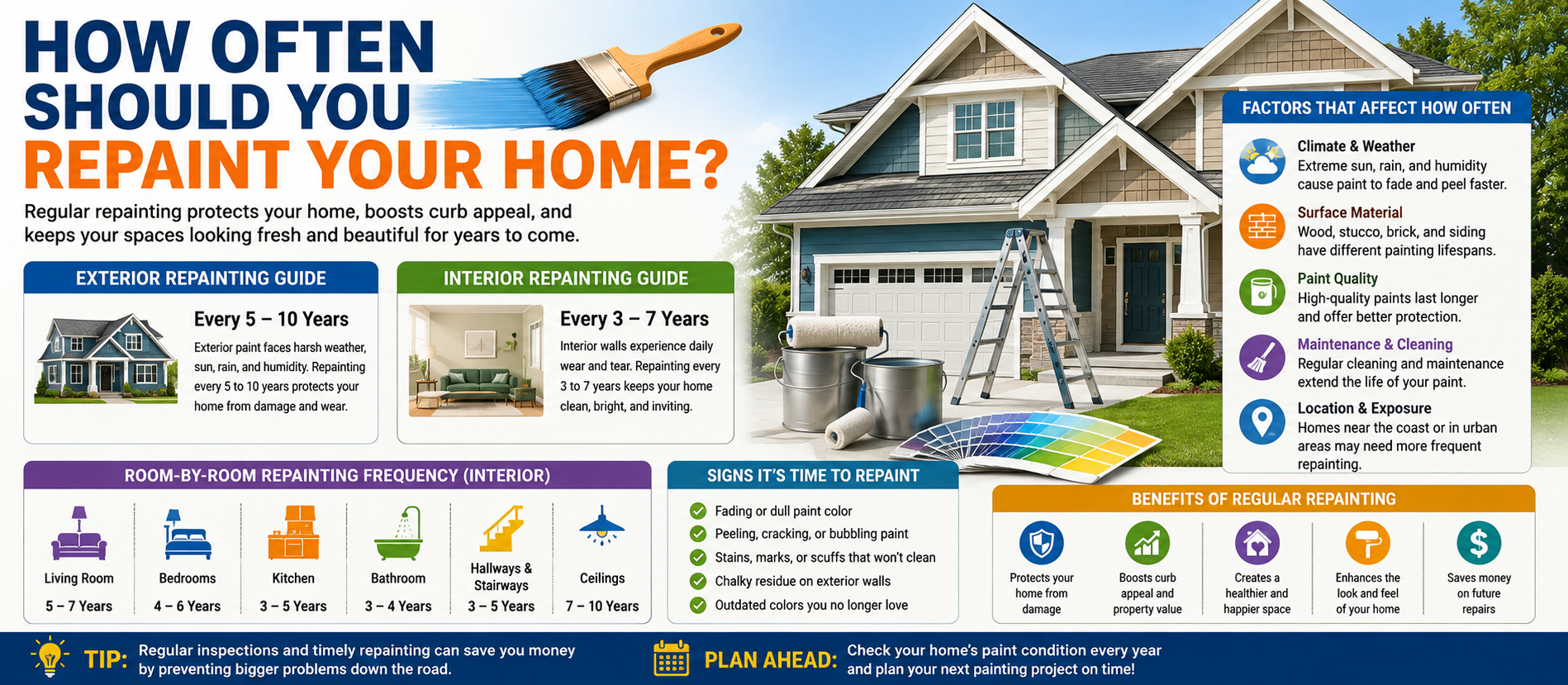
Repainting your home is one of the simplest ways to improve its appearance, protect exposed surfaces, and refresh the overall feel of a property. However, repainting should not be based only on a fixed calendar. The ideal schedule depends on whether you are painting interior or exterior surfaces, the type of substrate, paint quality, previous preparation, climate, sunlight, moisture, traffic, and how well the painted surfaces have been maintained.
💡 Key Insight
The condition of the paint is ultimately more important than the date of the last painting project. Fading, peeling, cracking, bubbling, stains, mildew, exposed substrate, and repeated touch-ups are stronger indicators that repainting may be necessary.
This complete guide explains interior and exterior repainting schedules, room-by-room recommendations, warning signs, climate considerations, paint finishes, surface preparation, maintenance, professional painting, cost factors, common mistakes, and emerging painting technology.
This WordPress-ready HTML article is prepared for Digiifrog (www.digiifrog.com) with a strong focus on SEO, AEO, GEO, and AI Search optimization.
How Often Should You Repaint Your Home?
There is no universal repainting interval for every property. A useful starting point is to inspect the surfaces regularly and repaint when the coating begins showing meaningful wear. For many interior spaces, five to seven years is a reasonable planning range, but bedrooms and guest rooms can last longer while busy hallways, kitchens, bathrooms, and children's rooms can need attention sooner. citeturn0news12
Exterior paint has to withstand sunlight, rain, humidity, wind, temperature changes, pollution, and other environmental conditions. Published guidance for Indian homes commonly gives a broad five-to-ten-year exterior range, with some sources suggesting approximately five to seven years depending on weather and previous paint quality. citeturn0search0turn0search1
Interior vs. Exterior Repainting
Interior and exterior paint perform different jobs. Interior coatings mainly face cleaning, fingerprints, furniture movement, everyday contact, humidity, and cosmetic wear. Exterior coatings must also resist ultraviolet exposure, rain, temperature fluctuations, dust, and other weather conditions.
As a result, a house can have an interior that still looks excellent while the exterior needs repainting, or an exterior in good condition while one heavily used interior room needs a refresh.
1. Living Rooms and Family Rooms
Living and family rooms typically experience moderate traffic. If the walls remain clean and the coating is intact, a full repaint may not be necessary simply because several years have passed.
Repainting becomes useful when the color has faded, the room has been renovated, the finish has become uneven, or visible marks can no longer be removed through normal cleaning.
2. Bedrooms
Bedrooms often require less frequent repainting because they generally experience less traffic than kitchens, halls, and entryways. If the paint remains smooth and attractive, repainting may be driven more by changing design preferences than by coating failure.
Keeping leftover paint for small touch-ups can extend the useful appearance of a bedroom without requiring a full project.
3. Kitchens
Kitchens are exposed to cooking steam, grease, food splashes, cleaning, and frequent activity. These conditions can cause paint to become dull, stained, or difficult to clean.
Before repainting, clean the surface and check ventilation and moisture. Painting directly over grease or dampness can lead to poor adhesion and premature failure.
4. Bathrooms
⚠ Watch Out
Bathrooms can require earlier maintenance because of high humidity, condensation, splashes, and frequent cleaning. Peeling, bubbling, mildew, and discoloration are warning signs.
Do not simply paint over recurring dampness. Check ventilation, plumbing, leaks, and condensation first. Once the moisture source is resolved, use a coating appropriate for the bathroom environment.
5. Hallways and Staircases
Hallways and staircases receive repeated contact from people, furniture, bags, shoes, and hands. Scuffs and marks often appear before other rooms show wear.
Washable, durable finishes can be helpful in these areas. When damage becomes widespread, a complete repaint can provide a more consistent finish than repeated spot repairs.
6. Children's Rooms
Children's rooms can experience drawings, fingerprints, furniture impacts, toys, and frequent cleaning. Durable washable paint can make routine maintenance easier.
Before repainting, repair dents, holes, and damaged drywall. Paint is not a substitute for proper surface repair.
7. Ceilings
Ceilings may remain attractive longer than walls because they receive less physical contact. However, ceiling stains, bubbling, peeling, or discoloration can indicate moisture.
Never use a new coat of paint simply to hide a recurring stain. Identify and correct the underlying moisture source first.
8. Doors, Trim, and Baseboards
Trim and doors can show chips, fingerprints, scratches, and impact marks sooner than surrounding walls. These surfaces often benefit from durable finishes and occasional touch-ups.
If paint is peeling broadly, proper cleaning, sanding, repair, and priming should be completed before applying new paint.
Signs It Is Time to Repaint Interior Walls
- Persistent scuffs and scratches
- Stains that cannot be cleaned
- Faded or uneven color
- Peeling or cracking paint
- Bubbling or blistering
- Visible repair patches
- Uneven sheen
- Frequent touch-ups that no longer blend
- A desired change in color or design
Recent expert guidance similarly identifies visible nicks, scuffs, stains, dullness, fading, and uneven sheen as practical signals that an interior refresh may be appropriate. citeturn0news12
9. Exterior Fading
Exterior paint is continuously exposed to sunlight. Fading can indicate that the coating is aging and that its original appearance is being lost.
Different elevations can age at different rates because of their orientation, surrounding shade, climate, and exposure. Strongly sun-exposed surfaces may require attention before sheltered walls.
10. Peeling Exterior Paint
Peeling is a clear reason to investigate the exterior. It may result from moisture, poor preparation, incompatible coatings, aging, or surface movement.
Scraping and repainting without correcting the cause can result in another premature failure. The substrate should be cleaned, repaired, and prepared appropriately before repainting.
11. Cracking and Bubbling
Cracked or bubbling paint can be caused by aging, moisture, heat, poor adhesion, or movement in the underlying surface. Widespread cracking or bubbling deserves professional evaluation.
Also distinguish paint-film cracks from cracks in masonry, plaster, stucco, or other structural materials. Significant substrate cracks should be evaluated before painting.
12. Mold and Mildew
Mold-like growth, mildew, damp patches, and recurring dark spots can indicate moisture. Repainting without solving the moisture problem rarely provides a durable result.
Exterior paint guidance also lists mold or mildew and damaged surfaces among signs that a home may need attention before repainting. citeturn0search0
13. Failed Exterior Caulking
Caulking around windows, doors, trim, joints, and penetrations can deteriorate. Gaps can allow water to reach vulnerable areas.
Failed sealant should be removed and replaced with a compatible product before painting. The surface should be dry and properly prepared.
14. Exposed or Damaged Wood
When paint fails and exterior wood becomes exposed, moisture can penetrate the substrate. This is particularly important around siding, trim, windows, doors, porches, decks, and other wood components.
Rotten or structurally damaged wood should be repaired or replaced before painting.
15. Weather and Climate
Climate has a major influence on exterior paint life. Heavy rain, high humidity, strong sunlight, wind, temperature changes, and pollution can accelerate deterioration.
For exterior projects, weather conditions during application are also important. Dulux India recommends dry, mild conditions and advises avoiding extreme temperatures and rain during exterior painting. citeturn0search0
16. Painting in Monsoon or Humid Regions
Homes in humid or monsoon-prone areas may experience more moisture exposure, fungal growth, and dampness. Exterior repainting should be planned around a dependable dry-weather window.
Before painting, inspect walls for cracks, damp patches, algae, failed sealants, and drainage problems. Fixing these issues can help the new coating last longer.
17. Painting in Hot and Sunny Areas
Strong ultraviolet exposure can accelerate fading and weathering. Select exterior products designed for the local environment and follow manufacturer application requirements.
Do not use interior paint as an exterior substitute. Exterior coatings are formulated for different exposure conditions.
18. Painting in Cold or Wet Climates
Cold temperatures and persistent moisture can affect drying and adhesion. Follow the paint manufacturer's temperature, humidity, and curing requirements.
Painting over a damp substrate can trap moisture and contribute to blistering, peeling, or other failures.
19. Why Paint Quality Matters
Paint quality affects coverage, washability, color retention, durability, and resistance to environmental conditions. However, high-quality paint cannot compensate for poor preparation or an unresolved leak.
A durable paint job depends on the complete system: sound substrate, correct preparation, appropriate primer when needed, compatible topcoat, skilled application, and suitable curing conditions.
20. Surface Preparation Is Essential
Cleaning, scraping, sanding, filling, repairing, caulking, and priming can take substantial time. These steps create a stable surface for the new coating.
Painting directly over dirt, grease, loose paint, mildew, or unstable material is one of the most common reasons a new paint job fails prematurely.
21. When Primer Is Necessary
Primer can be useful when covering repaired areas, bare substrates, stains, major color changes, or surfaces that need improved adhesion. The correct primer depends on the substrate and topcoat.
Not every repaint requires a separate primer coat, so follow the coating manufacturer's recommendations.
22. Interior Paint Finishes
Flat, matte, eggshell, satin, semi-gloss, and gloss finishes provide different balances of appearance, washability, durability, and imperfection hiding.
Recent expert advice suggests that satin and semi-gloss finishes can be useful in busy or moisture-prone rooms because they are generally easier to clean, while flatter finishes can be suitable for lower-traffic spaces where hiding surface imperfections is more important. citeturn0news12
23. Exterior Paint Selection
Exterior coatings should be chosen for the specific substrate and climate. Consider UV exposure, rainfall, humidity, surface movement, fungal growth, and the manufacturer's suitability information.
A cheaper coating is not always cheaper in the long term if it fails early and requires additional preparation and labor.
24. Touch-Ups vs. Full Repainting
Touch-ups can be effective when damage is localized and the existing coating remains sound. They work best when the original color, sheen, and product are known.
A full repaint is more appropriate when fading, peeling, uneven sheen, or repair patches cover a large portion of the surface.
25. Repainting Before Selling a Home
Fresh paint can improve the visual presentation of a property, particularly when walls are visibly worn or highly personalized. Neutral colors can create a cohesive appearance, although the best investment depends on the local property market and condition of the home.
Repainting should be considered alongside other improvements rather than automatically treated as a requirement before sale.
26. Repainting After Water Damage
Always repair the cause of water damage before repainting. The source may be plumbing, roofing, condensation, exterior seepage, or another building problem.
Allow affected surfaces to dry appropriately and replace or repair damaged materials before applying primer and paint.
27. Repainting After Drywall Repairs
New drywall and joint-compound repairs absorb paint differently from previously painted surfaces. Primer and careful preparation can reduce visible differences.
Skipping preparation can create flashing, uneven sheen, or visible patches after the repaint.
28. How to Make Interior Paint Last Longer
- Clean walls gently and regularly.
- Remove stains promptly.
- Use washable finishes in busy areas.
- Protect walls from repeated impacts.
- Keep leftover paint correctly labeled.
- Repair leaks and moisture problems quickly.
- Use touch-ups while the surrounding finish remains sound.
29. How to Make Exterior Paint Last Longer
- Keep exterior walls reasonably clean.
- Maintain gutters and drainage.
- Repair failed caulking.
- Trim vegetation that constantly rubs against walls.
- Address cracks and exposed substrate early.
- Inspect after severe weather.
- Use compatible exterior products.
- Follow application and curing requirements.
30. Seasonal Timing for Exterior Painting
Exterior painting should be scheduled according to actual weather conditions rather than simply selecting a month. A dry, moderate period with a reliable forecast is generally preferable to extreme heat, cold, or rain.
Interior painting offers more flexibility because indoor conditions can often be controlled, although temperature, ventilation, and humidity still influence drying and curing.
31. Professional Painting vs. DIY
Small interior projects can be manageable for experienced homeowners. Larger projects, extensive surface preparation, exterior painting, high walls, ladders, scaffolding, and complex repairs may be better handled by professionals.
Exterior painting can involve fall hazards and specialized equipment. Safety should be considered before deciding to perform the work yourself.
32. Benefits of Hiring a Professional Painter
- Detailed surface preparation
- Correct product selection
- Consistent finish quality
- Efficient project completion
- Safer work at height
- Experience with difficult surfaces
- Professional cleanup
- Potential workmanship warranty
33. How to Choose a Reliable Painting Contractor
Ask about experience with your surface type, request a written estimate, verify appropriate insurance and qualifications, review references or recent projects, and ask what preparation is included.
A good estimate should explain repairs, cleaning, scraping, sanding, primer, number of coats, paint products, labor, cleanup, and exclusions. Comparing only the final price can hide major differences in scope.
34. Questions to Ask Before Repainting
- Does the home actually need a full repaint?
- Could cleaning and touch-ups solve the problem?
- What preparation is required?
- Is there a moisture problem?
- Which primer is appropriate?
- Which finish is best for each room?
- How many coats are included?
- What paint products will be used?
- What weather conditions are required?
- How long will the project take?
- What cleanup is included?
- Is a workmanship warranty provided?
35. Common Repainting Mistakes
Painting Over Dirt
Dust, grease, mildew, and chalking can interfere with adhesion.
Painting Over Moisture
Moisture problems should be corrected before repainting.
Skipping Surface Repairs
Paint does not permanently repair rotten wood, damaged drywall, failed caulking, or significant substrate cracks.
Using Interior Paint Outdoors
Exterior surfaces require coatings formulated for outdoor exposure.
Ignoring Product Instructions
Temperature, humidity, drying time, recoat time, and application requirements vary between products.
36. Repainting and Home Value
Well-maintained paint can support curb appeal and the perceived condition of a property. However, repainting does not automatically create a return equal to the project cost.
Before a major repaint, consider whether the property has more urgent maintenance needs such as roof leaks, water intrusion, damaged siding, plumbing problems, or structural repairs.
37. Sustainable Home Painting
Sustainable painting can involve extending the life of existing coatings, avoiding unnecessary repainting, selecting appropriate lower-emission products where suitable, minimizing waste, and disposing of leftover materials responsibly.
Cleaning and targeted touch-ups can sometimes delay a full repaint and reduce material and labor consumption.
38. Choosing Colors That Stay Appealing
Color trends change, but repainting solely because a trend has changed can become expensive. Consider architecture, lighting, flooring, furniture, climate, surrounding buildings, and long-term preferences.
Timeless color schemes may reduce the desire for frequent cosmetic repainting, while accent walls and smaller design updates can refresh a room without repainting the entire home.
39. Digital Tools for Painting Projects
Modern painting businesses increasingly use digital color visualization, online estimates, project-management platforms, customer portals, digital measurements, and photo-based consultations.
These tools can help homeowners compare colors, understand project scope, organize schedules, and communicate with contractors more efficiently.
40. AI and the Future of Home Painting
Artificial intelligence is beginning to support color visualization, project estimation, image analysis, scheduling, customer communication, and maintenance planning. AI-powered visualization can help homeowners preview possible color combinations before purchasing paint.
However, digital tools cannot replace physical inspection. Peeling, dampness, damaged substrates, rot, cracks, and adhesion problems require appropriate professional assessment.
41. Home Painting, SEO, AEO, GEO and AI Search
Painting companies also need strong digital visibility to reach homeowners searching for local services. SEO helps painting businesses appear in traditional search results. AEO focuses on directly answering homeowner questions. GEO helps content become useful in generative search experiences, while AI Search optimization emphasizes clear, structured, trustworthy, and location-relevant information.
A painting company's website should clearly explain interior painting, exterior painting, surface preparation, color consultation, drywall repair, commercial painting, service areas, timelines, pricing factors, and maintenance.
Useful content can answer questions such as how often a home should be repainted, how long exterior paint lasts, when a bathroom needs repainting, how to prepare walls, whether peeling paint requires repair, and how to select a professional painter.
42. Future Trends in Residential Painting
The painting industry is becoming increasingly technology-enabled through digital color tools, AI-assisted recommendations, improved weather-resistant coatings, low-emission products, digital estimates, remote consultations, and predictive maintenance.
Despite these changes, the fundamentals remain the same: sound surfaces, thorough preparation, appropriate primers, compatible coatings, skilled application, and suitable curing conditions.
43. Key Home Painting Trends for 2026
- AI-assisted color visualization
- Digital painting estimates
- Low-emission coating options
- Durable washable interior finishes
- Weather-resistant exterior coatings
- Digital project management
- Remote color consultations
- Predictive maintenance planning
- More detailed surface preparation
- Technology-supported color selection
Frequently Asked Questions About Repainting Your Home
How often should you repaint your home interior?
Many interiors can remain in good condition for about five to seven years, but high-traffic rooms may need attention sooner while low-use rooms can last longer. Surface condition is more important than a fixed calendar. citeturn0news12
How often should you repaint your home's exterior?
Exterior repainting varies by material, climate, paint quality, preparation, and exposure. A broad five-to-ten-year planning range is commonly used, but some surfaces can last longer or require earlier attention. citeturn0search1turn0search4
What are the signs that a house needs repainting?
Common signs include fading, peeling, cracking, bubbling, stains, mildew, exposed substrate, damaged caulking, widespread scuffs, and uneven finish or sheen.
Should I repaint if the paint is still intact?
Not necessarily. If the coating is sound and the appearance is acceptable, cleaning and occasional touch-ups may be enough. Repainting can still be worthwhile for a desired color or design change.
Can I paint over peeling paint?
Painting directly over peeling paint is unlikely to provide a durable result. Loose material should be removed and the underlying surface repaired and prepared before repainting.
What is the best time to paint a house exterior?
Choose a period with suitable temperature, manageable humidity, and a reliable dry-weather window. Product-specific requirements should always be followed. citeturn0search0
How can I make paint last longer?
Use appropriate products, prepare surfaces correctly, maintain clean and dry surfaces, address leaks and moisture promptly, repair damaged areas, and use suitable finishes for each room.
Is professional house painting worth it?
Professional painting can be especially valuable for large projects, extensive preparation, exterior work, difficult surfaces, high areas, or homeowners who want consistent results and efficient completion.
Conclusion
How often you should repaint your home depends more on surface condition and environmental exposure than on a fixed number of years. As a practical starting point, many interior walls may need a refresh around every five to seven years, while exterior repainting can commonly fall around five to ten years depending on material, climate, paint quality, and previous preparation. citeturn0news12turn0search0turn0search1
High-traffic rooms, kitchens, bathrooms, children's spaces, and strongly weather-exposed exterior surfaces often need earlier attention. Fading, peeling, cracking, bubbling, stains, mildew, exposed wood, failed caulking, and uneven finishes are stronger indicators than the calendar alone.
The best way to extend paint life is to prepare surfaces properly, choose a coating appropriate for the substrate and environment, apply it according to manufacturer requirements, and maintain the painted surfaces. Touch-ups can extend the useful appearance of a sound coating, while moisture and substrate problems should be repaired before new paint is applied.
For businesses looking to improve their digital presence, automate customer inquiries, build AI-powered websites, implement SEO, AEO, GEO, AI Search optimization, and develop modern technology solutions for painting and home-service companies, Digiifrog can help. Visit www.digiifrog.com to learn more.
Quick Answer: How Often Should You Repaint Your Home?
As a general planning guide, many interior walls can be repainted about every 5–7 years, while exterior repainting commonly falls around 5–10 years depending on the material, climate, paint quality, and previous preparation. High-traffic rooms and weather-exposed exterior surfaces may need repainting sooner. Do not wait for a fixed date if you see peeling, cracking, bubbling, fading, stains, mildew, exposed substrate, or other signs of paint failure. citeturn0news12turn0search0turn0search1
Ready to Grow?
Talk to us about a strategy tailored to your brand — we will help you stand out in search, AI discovery and social.


Comments (0)
Log in to leave a comment.