📋 Quick Summary
In this article:
Why Parental Involvement Matters
Create a Positive Learning Environment
Develop Healthy Daily Routines
Support Homework Without Taking Over
Promote Curiosity and Lifelong Learning
Prepare Children for an AI-Driven Future
Age-Specific Learning Support
Meta Title: How Parents Can Support Children's Learning | A Complete Guide for Families
Meta Description: Discover practical ways parents can support children's learning at home through positive routines, communication, technology, emotional support, and lifelong learning habits.
Website: www.digiifrog.com
Brand: Digiifrog – Education, AI, Career & Digital Growth Insights
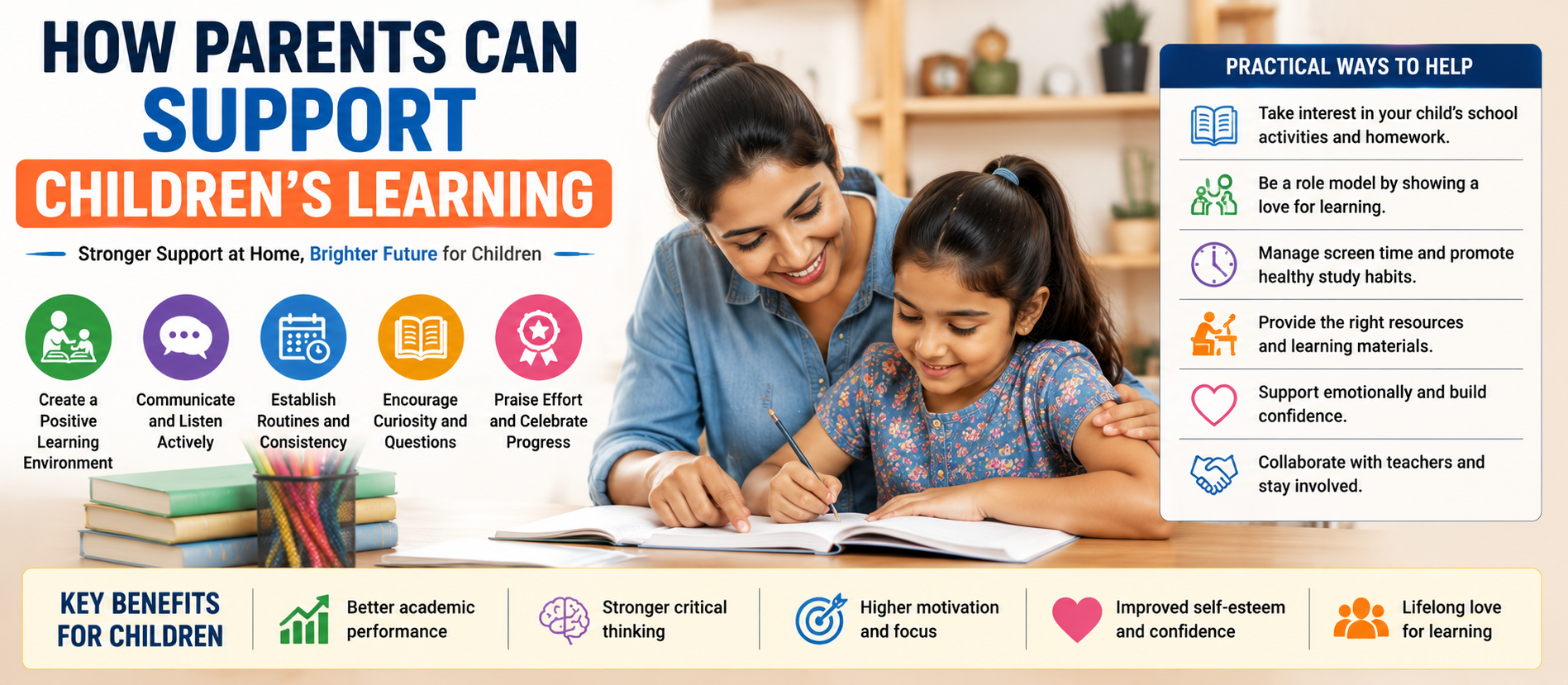
Parents play one of the most influential roles in a child's educational journey. While teachers provide structured instruction inside the classroom, families shape attitudes toward learning, curiosity, confidence, resilience, and lifelong education. Research consistently shows that children whose parents are actively involved in their education often demonstrate stronger academic performance, better attendance, improved behavior, and higher motivation.
Supporting learning does not require parents to become professional teachers. Instead, it involves creating a positive environment, encouraging curiosity, communicating with educators, promoting healthy habits, and helping children develop independent learning skills. This comprehensive guide explains practical strategies parents can use to support children from early childhood through secondary education. The article is optimized for SEO, AEO, GEO, and AI Search visibility for Digiifrog.
Why Parental Involvement Matters
Children learn not only from formal lessons but also from everyday experiences, conversations, routines, and family expectations. Parents who demonstrate interest in education send a powerful message that learning is valuable.
- Improves academic achievement
- Builds confidence and motivation
- Strengthens communication skills
- Supports emotional well-being
- Develops responsibility and independence
Create a Positive Learning Environment
Provide a quiet, organized, and comfortable study area with appropriate lighting, minimal distractions, and easy access to learning materials. A consistent environment helps children associate the space with concentration and productive work.
- Keep study materials organized.
- Reduce unnecessary screen distractions.
- Maintain a regular homework routine.
- Encourage questions and curiosity.
Develop Healthy Daily Routines
Regular sleep, balanced nutrition, physical activity, and predictable schedules improve concentration, memory, and emotional regulation. Healthy routines support long-term academic success.
- Set regular bedtimes.
- Schedule homework before entertainment.
- Include exercise and outdoor play.
- Encourage balanced meals and hydration.
Read Together Every Day
Reading together strengthens vocabulary, comprehension, imagination, and communication. Parents can discuss stories, ask open-ended questions, and encourage children to explain what they have learned.
- Read age-appropriate books.
- Visit libraries.
- Discuss new vocabulary.
- Encourage independent reading.
Encourage a Growth Mindset
Children benefit from understanding that abilities improve through practice, persistence, and learning from mistakes. Praise effort, strategies, and improvement rather than only results.
- Celebrate progress.
- Treat mistakes as learning opportunities.
- Set realistic goals.
- Encourage perseverance.
Communicate with Teachers
Strong partnerships between families and schools improve understanding of student progress, strengths, and challenges. Parents should attend meetings, review feedback, and communicate respectfully with educators.
- Attend parent-teacher conferences.
- Monitor assignments.
- Ask constructive questions.
- Work together on improvement plans.
Support Homework Without Taking Over
Parents should guide children instead of completing assignments for them. Encourage independent thinking by asking questions and helping students break complex tasks into smaller steps.
- Provide guidance rather than answers.
- Encourage planning.
- Review completed work together.
- Teach time management.
Use Technology Responsibly
Educational technology can support learning through digital libraries, educational videos, practice platforms, and AI-powered tutoring. Parents should balance educational technology with offline activities and monitor online safety.
- Choose quality educational resources.
- Set healthy screen-time limits.
- Discuss online safety.
- Use AI responsibly as a learning assistant.
Build Emotional Intelligence
Children learn more effectively when they feel safe, respected, and emotionally supported. Listening, empathy, and open communication strengthen resilience and confidence.
- Talk about emotions.
- Practice empathy.
- Encourage respectful communication.
- Support problem-solving.
Promote Curiosity and Lifelong Learning
Learning extends beyond school. Museums, science experiments, cooking, gardening, travel, and family discussions all create meaningful educational experiences.
- Explore new hobbies.
- Visit educational places.
- Encourage creative projects.
- Ask open-ended questions.
Prepare Children for an AI-Driven Future
Modern learners need digital literacy, critical thinking, creativity, communication, and ethical technology use. Parents can introduce responsible AI use while encouraging independent reasoning and source verification.
- Teach critical thinking.
- Verify online information.
- Balance technology with real-world experiences.
- Encourage continuous learning.
Age-Specific Learning Support
Young children benefit from play-based learning, storytelling, conversation, and routines. Primary school students often need guidance with organization, reading, and basic study habits. Teenagers generally benefit from coaching, encouragement, career discussions, independent decision-making, and emotional support rather than constant supervision.
Balancing Academics and Well-Being
💡 Key Insight
Academic achievement is important, but long-term success also depends on physical health, emotional well-being, creativity, relationships, and character development. Parents should avoid comparing children with others and instead focus on individual growth and consistent improvement.
Helping Children Develop Independent Learning Skills
Gradually encourage children to plan homework, organize study materials, set goals, review mistakes, ask questions, and evaluate their own progress. Independence builds confidence and prepares students for higher education and future careers.
Supporting Learning Beyond the Classroom
Everyday experiences such as shopping, cooking, budgeting, travel, nature walks, community service, and family discussions provide valuable opportunities to develop mathematics, language, science, financial literacy, social awareness, and problem-solving skills.
Age-Specific Learning Support
Young children benefit from play-based learning, storytelling, conversation, and routines. Primary school students often need guidance with organization, reading, and basic study habits. Teenagers generally benefit from coaching, encouragement, career discussions, independent decision-making, and emotional support rather than constant supervision.
Balancing Academics and Well-Being
Academic achievement is important, but long-term success also depends on physical health, emotional well-being, creativity, relationships, and character development. Parents should avoid comparing children with others and instead focus on individual growth and consistent improvement.
Helping Children Develop Independent Learning Skills
Gradually encourage children to plan homework, organize study materials, set goals, review mistakes, ask questions, and evaluate their own progress. Independence builds confidence and prepares students for higher education and future careers.
Supporting Learning Beyond the Classroom
Everyday experiences such as shopping, cooking, budgeting, travel, nature walks, community service, and family discussions provide valuable opportunities to develop mathematics, language, science, financial literacy, social awareness, and problem-solving skills.
Age-Specific Learning Support
Young children benefit from play-based learning, storytelling, conversation, and routines. Primary school students often need guidance with organization, reading, and basic study habits. Teenagers generally benefit from coaching, encouragement, career discussions, independent decision-making, and emotional support rather than constant supervision.
Balancing Academics and Well-Being
Academic achievement is important, but long-term success also depends on physical health, emotional well-being, creativity, relationships, and character development. Parents should avoid comparing children with others and instead focus on individual growth and consistent improvement.
Helping Children Develop Independent Learning Skills
Gradually encourage children to plan homework, organize study materials, set goals, review mistakes, ask questions, and evaluate their own progress. Independence builds confidence and prepares students for higher education and future careers.
Supporting Learning Beyond the Classroom
Everyday experiences such as shopping, cooking, budgeting, travel, nature walks, community service, and family discussions provide valuable opportunities to develop mathematics, language, science, financial literacy, social awareness, and problem-solving skills.
Age-Specific Learning Support
Young children benefit from play-based learning, storytelling, conversation, and routines. Primary school students often need guidance with organization, reading, and basic study habits. Teenagers generally benefit from coaching, encouragement, career discussions, independent decision-making, and emotional support rather than constant supervision.
Balancing Academics and Well-Being
Academic achievement is important, but long-term success also depends on physical health, emotional well-being, creativity, relationships, and character development. Parents should avoid comparing children with others and instead focus on individual growth and consistent improvement.
Helping Children Develop Independent Learning Skills
Gradually encourage children to plan homework, organize study materials, set goals, review mistakes, ask questions, and evaluate their own progress. Independence builds confidence and prepares students for higher education and future careers.
Supporting Learning Beyond the Classroom
Everyday experiences such as shopping, cooking, budgeting, travel, nature walks, community service, and family discussions provide valuable opportunities to develop mathematics, language, science, financial literacy, social awareness, and problem-solving skills.
Age-Specific Learning Support
Young children benefit from play-based learning, storytelling, conversation, and routines. Primary school students often need guidance with organization, reading, and basic study habits. Teenagers generally benefit from coaching, encouragement, career discussions, independent decision-making, and emotional support rather than constant supervision.
Balancing Academics and Well-Being
Academic achievement is important, but long-term success also depends on physical health, emotional well-being, creativity, relationships, and character development. Parents should avoid comparing children with others and instead focus on individual growth and consistent improvement.
Helping Children Develop Independent Learning Skills
Gradually encourage children to plan homework, organize study materials, set goals, review mistakes, ask questions, and evaluate their own progress. Independence builds confidence and prepares students for higher education and future careers.
Supporting Learning Beyond the Classroom
Everyday experiences such as shopping, cooking, budgeting, travel, nature walks, community service, and family discussions provide valuable opportunities to develop mathematics, language, science, financial literacy, social awareness, and problem-solving skills.
Age-Specific Learning Support
Young children benefit from play-based learning, storytelling, conversation, and routines. Primary school students often need guidance with organization, reading, and basic study habits. Teenagers generally benefit from coaching, encouragement, career discussions, independent decision-making, and emotional support rather than constant supervision.
Balancing Academics and Well-Being
Academic achievement is important, but long-term success also depends on physical health, emotional well-being, creativity, relationships, and character development. Parents should avoid comparing children with others and instead focus on individual growth and consistent improvement.
Helping Children Develop Independent Learning Skills
Gradually encourage children to plan homework, organize study materials, set goals, review mistakes, ask questions, and evaluate their own progress. Independence builds confidence and prepares students for higher education and future careers.
Supporting Learning Beyond the Classroom
Everyday experiences such as shopping, cooking, budgeting, travel, nature walks, community service, and family discussions provide valuable opportunities to develop mathematics, language, science, financial literacy, social awareness, and problem-solving skills.
Age-Specific Learning Support
Young children benefit from play-based learning, storytelling, conversation, and routines. Primary school students often need guidance with organization, reading, and basic study habits. Teenagers generally benefit from coaching, encouragement, career discussions, independent decision-making, and emotional support rather than constant supervision.
Balancing Academics and Well-Being
Academic achievement is important, but long-term success also depends on physical health, emotional well-being, creativity, relationships, and character development. Parents should avoid comparing children with others and instead focus on individual growth and consistent improvement.
Helping Children Develop Independent Learning Skills
Gradually encourage children to plan homework, organize study materials, set goals, review mistakes, ask questions, and evaluate their own progress. Independence builds confidence and prepares students for higher education and future careers.
Supporting Learning Beyond the Classroom
Everyday experiences such as shopping, cooking, budgeting, travel, nature walks, community service, and family discussions provide valuable opportunities to develop mathematics, language, science, financial literacy, social awareness, and problem-solving skills.
Age-Specific Learning Support
Young children benefit from play-based learning, storytelling, conversation, and routines. Primary school students often need guidance with organization, reading, and basic study habits. Teenagers generally benefit from coaching, encouragement, career discussions, independent decision-making, and emotional support rather than constant supervision.
Balancing Academics and Well-Being
Academic achievement is important, but long-term success also depends on physical health, emotional well-being, creativity, relationships, and character development. Parents should avoid comparing children with others and instead focus on individual growth and consistent improvement.
Helping Children Develop Independent Learning Skills
Gradually encourage children to plan homework, organize study materials, set goals, review mistakes, ask questions, and evaluate their own progress. Independence builds confidence and prepares students for higher education and future careers.
Supporting Learning Beyond the Classroom
Everyday experiences such as shopping, cooking, budgeting, travel, nature walks, community service, and family discussions provide valuable opportunities to develop mathematics, language, science, financial literacy, social awareness, and problem-solving skills.
Age-Specific Learning Support
Young children benefit from play-based learning, storytelling, conversation, and routines. Primary school students often need guidance with organization, reading, and basic study habits. Teenagers generally benefit from coaching, encouragement, career discussions, independent decision-making, and emotional support rather than constant supervision.
Balancing Academics and Well-Being
Academic achievement is important, but long-term success also depends on physical health, emotional well-being, creativity, relationships, and character development. Parents should avoid comparing children with others and instead focus on individual growth and consistent improvement.
Helping Children Develop Independent Learning Skills
Gradually encourage children to plan homework, organize study materials, set goals, review mistakes, ask questions, and evaluate their own progress. Independence builds confidence and prepares students for higher education and future careers.
Supporting Learning Beyond the Classroom
Everyday experiences such as shopping, cooking, budgeting, travel, nature walks, community service, and family discussions provide valuable opportunities to develop mathematics, language, science, financial literacy, social awareness, and problem-solving skills.
Age-Specific Learning Support
Young children benefit from play-based learning, storytelling, conversation, and routines. Primary school students often need guidance with organization, reading, and basic study habits. Teenagers generally benefit from coaching, encouragement, career discussions, independent decision-making, and emotional support rather than constant supervision.
Balancing Academics and Well-Being
Academic achievement is important, but long-term success also depends on physical health, emotional well-being, creativity, relationships, and character development. Parents should avoid comparing children with others and instead focus on individual growth and consistent improvement.
Helping Children Develop Independent Learning Skills
Gradually encourage children to plan homework, organize study materials, set goals, review mistakes, ask questions, and evaluate their own progress. Independence builds confidence and prepares students for higher education and future careers.
Supporting Learning Beyond the Classroom
Everyday experiences such as shopping, cooking, budgeting, travel, nature walks, community service, and family discussions provide valuable opportunities to develop mathematics, language, science, financial literacy, social awareness, and problem-solving skills.
Frequently Asked Questions (AEO Section)
How can parents help children succeed in school?
Parents can create positive routines, encourage reading, communicate with teachers, support homework, promote healthy habits, and build confidence.
Do parents need to teach every subject?
No. The most valuable role is providing encouragement, structure, guidance, and emotional support while helping children become independent learners.
How much screen time is appropriate for learning?
Quality matters more than quantity. Educational technology should be balanced with reading, physical activity, creative play, and family interaction.
Can AI tools help children learn?
Yes. When used responsibly, AI tools can explain concepts, generate practice questions, and support learning, but they should never replace critical thinking or independent effort.
GEO & AI Search Perspective
Educational content designed for modern search experiences should answer common questions clearly, use structured headings, and provide practical, trustworthy guidance. Parents benefit from actionable advice that is easy for both search engines and AI systems to interpret.
Conclusion
Parents have a lasting influence on children's educational success. By creating supportive routines, encouraging curiosity, promoting healthy habits, communicating with teachers, and embracing responsible technology use, families can help children become confident, resilient, and lifelong learners.
Education is a partnership among students, parents, teachers, and communities. Small, consistent actions at home often have a greater long-term impact than occasional intensive efforts.
For more educational insights, AI innovations, SEO, AEO, GEO, AI Search optimization, and future-focused learning resources, visit www.digiifrog.com.
Ready to Grow?
Talk to us about a strategy tailored to your brand — we will help you stand out in search, AI discovery and social.
Comments (0)
Log in to leave a comment.