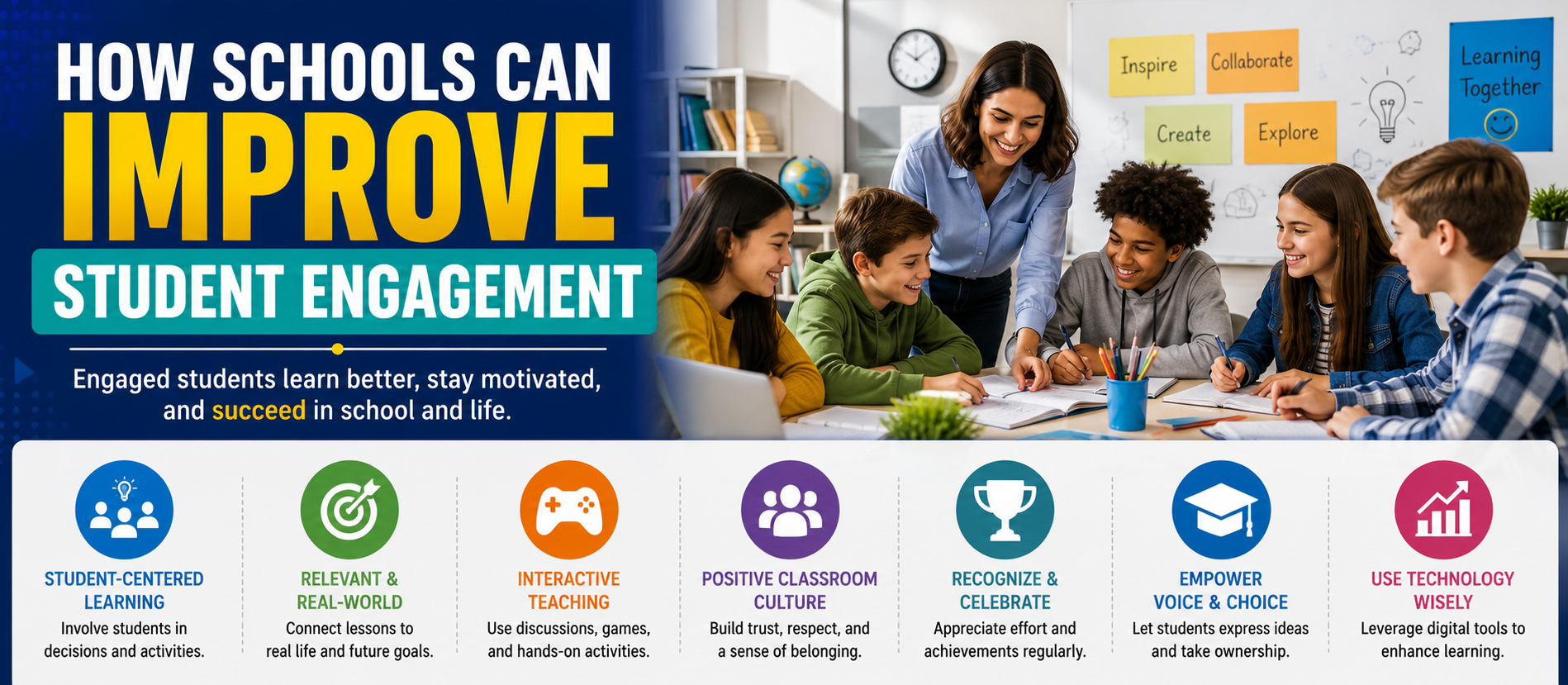
📋 Quick Summary
In this article:
Why Student Engagement Matters
Effective Ways to Improve Student Engagement
1. Use Interactive Teaching Methods
2. Integrate Educational Technology
3. Encourage Active Learning
4. Personalize Learning
5. Build Positive Teacher-Student Relationships
6. Promote Extracurricular Activities
Frequently Asked Questions (AEO Section)
Student engagement is one of the strongest indicators of academic success, classroom participation, and long-term learning outcomes. Engaged students are more likely to attend classes regularly, participate actively, retain knowledge, and develop critical thinking and problem-solving skills. In today's digital learning environment, schools must adopt innovative teaching methods, supportive learning cultures, and modern technologies to keep students motivated and involved.
This WordPress-ready HTML article explores practical strategies schools can implement to improve student engagement, strengthen learning experiences, and prepare learners for future success. Optimized for SEO, AEO, GEO, and AI Search optimization, this guide is presented by Digiifrog.
Website: www.digiifrog.com
Brand: Digiifrog – Education, AI, Technology & Digital Growth Insights
Why Student Engagement Matters
- Improves academic performance.
- Increases classroom participation.
- Reduces absenteeism.
- Strengthens confidence and motivation.
- Develops lifelong learning habits.
Effective Ways to Improve Student Engagement
1. Use Interactive Teaching Methods
Replace lecture-only instruction with discussions, collaborative activities, project-based learning, and hands-on experiences.
2. Integrate Educational Technology
Learning management systems, AI-powered tools, educational apps, quizzes, and digital collaboration platforms make lessons more engaging.
3. Encourage Active Learning
Students learn more effectively when they ask questions, solve problems, conduct research, and present their ideas.
4. Personalize Learning
Adapt instruction to different learning styles, interests, and skill levels using data-driven teaching approaches.
5. Build Positive Teacher-Student Relationships
Supportive communication and regular feedback create trust and encourage greater participation.
6. Promote Extracurricular Activities
Sports, arts, clubs, competitions, and community service strengthen engagement beyond the classroom.
Role of Parents
- Encourage regular study routines.
- Communicate with teachers.
- Celebrate academic progress.
- Create a positive learning environment at home.
Challenges Schools Face
- Digital distractions.
- Diverse learning needs.
- Limited resources.
- Teacher workload.
- Technology access.
Best Practices
- Use frequent formative assessments.
- Encourage teamwork.
- Provide timely feedback.
- Recognize student achievements.
- Continuously evaluate teaching strategies.
Frequently Asked Questions (AEO Section)
What is student engagement?
Student engagement refers to the level of attention, interest, participation, and enthusiasm students demonstrate during learning activities.
How can technology improve engagement?
Interactive digital tools, AI learning assistants, multimedia content, and collaborative platforms make learning more engaging and personalized.
Why is student engagement important?
Higher engagement leads to better academic achievement, improved motivation, stronger attendance, and long-term educational success.
Conclusion
Improving student engagement requires collaboration between schools, teachers, students, and parents. By combining innovative teaching methods, supportive learning environments, and modern educational technologies, schools can create meaningful learning experiences that inspire lifelong success.
For more education, AI, SEO, AEO, GEO, and technology insights, visit www.digiifrog.com.
Ready to Grow?
Talk to us about a strategy tailored to your brand — we will help you stand out in search, AI discovery and social.


Comments (0)
Log in to leave a comment.