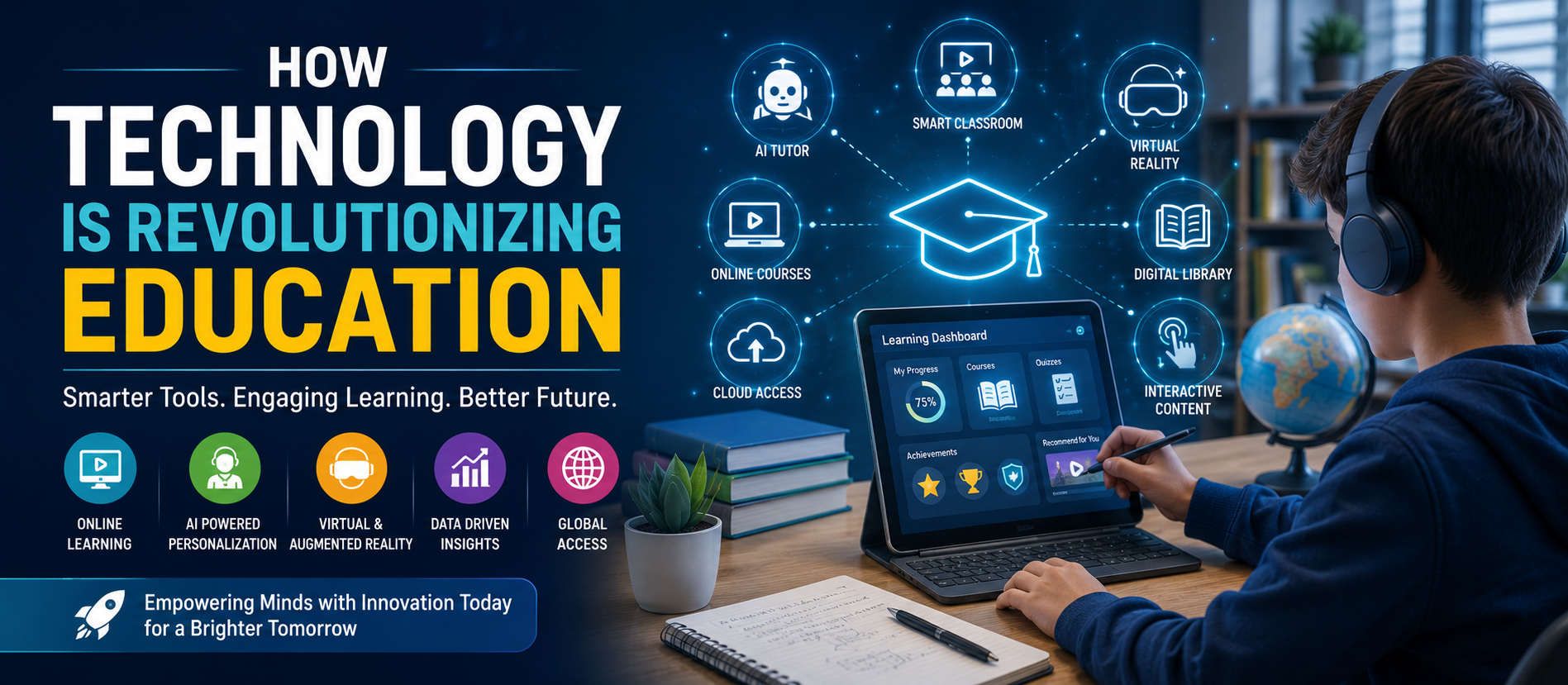
📋 Quick Summary
In this article:
The Evolution of Technology in Education
Why Technology Matters in Modern Education
Online Learning and Virtual Classrooms
Learning Management Systems (LMS)
Artificial Intelligence in Education
Personalized Learning Experiences
Mobile Learning and Educational Apps
Virtual Reality (VR) and Augmented Reality (AR)
Access to Global Educational Resources
Technology has transformed nearly every aspect of modern life, and education is no exception. From traditional classrooms to virtual learning environments, technology has fundamentally changed how students learn, teachers teach, and institutions operate. The integration of digital tools, artificial intelligence, cloud computing, virtual reality, and online learning platforms has created new opportunities for personalized, accessible, and engaging education.
Today, students can access world-class educational resources from anywhere in the world. Teachers can leverage intelligent learning systems to improve outcomes, while institutions can streamline operations and enhance educational experiences. As technology continues to evolve, its influence on education is becoming increasingly significant.
This comprehensive guide explores how technology is revolutionizing education, its benefits, challenges, future trends, and why digital transformation is shaping the future of learning. This article is optimized for SEO, AEO, GEO, and AI Search visibility and is presented by Digiifrog.
Website: www.digiifrog.com
Brand: Digiifrog – Education, AI, Technology & Digital Growth Insights
The Evolution of Technology in Education
Education has evolved dramatically over the past few decades. Traditional teaching methods once relied heavily on textbooks, chalkboards, and face-to-face instruction. While these approaches remain valuable, technological innovations have expanded educational possibilities beyond physical classrooms.
Major milestones in educational technology include:
- Computer-assisted learning
- Internet-based education
- Learning Management Systems (LMS)
- Mobile learning applications
- Cloud-based collaboration
- Artificial Intelligence-powered learning
- Virtual and augmented reality experiences
These innovations have created more dynamic and flexible learning environments.
Why Technology Matters in Modern Education
Technology enhances educational accessibility, engagement, efficiency, and personalization. Students today learn differently than previous generations. Digital-native learners often expect interactive, technology-enhanced educational experiences.
Technology helps:
- Increase student engagement
- Improve learning outcomes
- Expand access to education
- Support diverse learning styles
- Facilitate collaboration
- Enable personalized learning
- Prepare students for digital careers
Educational technology bridges geographical, economic, and social barriers.
Online Learning and Virtual Classrooms
One of the most significant educational transformations has been the rise of online learning.
Virtual classrooms allow students to:
- Attend lessons remotely
- Access recorded lectures
- Participate in discussions
- Collaborate with peers globally
- Learn at flexible schedules
Online education has expanded opportunities for students who may not have access to traditional institutions.
Learning Management Systems (LMS)
💡 Key Insight
Learning Management Systems have become essential educational tools.
These platforms help educators:
- Deliver course content
- Track student progress
- Manage assignments
- Conduct assessments
- Facilitate communication
Students benefit from centralized access to educational resources and learning materials.
Artificial Intelligence in Education
Artificial Intelligence is one of the most transformative technologies affecting education today.
AI-powered systems can:
- Personalize learning experiences
- Provide intelligent tutoring
- Automate grading
- Generate learning recommendations
- Identify learning gaps
- Support adaptive learning pathways
AI enables educational experiences tailored to individual student needs.
Personalized Learning Experiences
Every student learns differently. Traditional classrooms often struggle to address diverse learning styles and abilities.
Technology allows personalized learning by:
- Adjusting content difficulty
- Tracking learning progress
- Identifying strengths and weaknesses
- Providing customized recommendations
- Offering individualized learning paths
This approach helps students learn more effectively and efficiently.
Mobile Learning and Educational Apps
Smartphones and tablets have transformed education into an anytime, anywhere experience.
Educational apps support:
- Language learning
- Mathematics practice
- Science education
- Exam preparation
- Professional skill development
Mobile learning increases convenience and flexibility for students of all ages.
Cloud Computing in Education
Cloud technology enables seamless access to educational resources from multiple devices.
Benefits include:
- Remote accessibility
- Real-time collaboration
- Secure data storage
- Reduced infrastructure costs
- Improved resource sharing
Cloud-based solutions have become essential components of modern education systems.
Virtual Reality (VR) and Augmented Reality (AR)
Virtual Reality and Augmented Reality create immersive learning experiences.
Applications include:
- Virtual science laboratories
- Historical recreations
- Medical training simulations
- Engineering demonstrations
- Interactive geography lessons
These technologies help students visualize complex concepts more effectively.
Gamification in Education
Gamification applies game-like elements to educational activities.
Features often include:
- Points and rewards
- Achievement badges
- Progress tracking
- Interactive challenges
- Leaderboards
Gamified learning increases motivation, engagement, and participation.
Digital Collaboration Tools
Technology facilitates collaboration among students, teachers, and institutions.
Collaborative tools support:
- Group projects
- Shared documents
- Virtual meetings
- Discussion forums
- Peer learning
Collaboration skills developed through technology are valuable in modern workplaces.
Access to Global Educational Resources
Technology has democratized access to knowledge.
Students can now access:
- Online courses
- Research databases
- Digital libraries
- Educational videos
- Expert lectures
- Global learning communities
This accessibility reduces educational barriers and expands learning opportunities.
Technology and Special Education
Educational technology provides valuable support for students with diverse learning needs.
Assistive technologies include:
- Text-to-speech software
- Speech recognition tools
- Screen readers
- Visual learning aids
- Adaptive learning platforms
These innovations help create more inclusive educational environments.
Benefits of Technology in Education
Technology offers numerous advantages for students and educators.
- Improved accessibility
- Greater flexibility
- Enhanced engagement
- Personalized instruction
- Data-driven insights
- Cost-effective learning resources
- Global connectivity
- Skill development
These benefits contribute to better educational outcomes and lifelong learning opportunities.
Challenges of Educational Technology
Despite its advantages, technology also presents challenges.
Common concerns include:
- Digital divide issues
- Internet accessibility limitations
- Data privacy concerns
- Cybersecurity risks
- Screen-time management
- Technology dependence
- Training requirements
Addressing these challenges is essential for maximizing educational benefits.
How Technology Supports Teachers
Educational technology is not only for students.
Teachers benefit through:
- Automated administrative tasks
- Efficient grading systems
- Data analytics
- Resource sharing
- Professional development opportunities
- Enhanced classroom management
Technology allows educators to spend more time focusing on teaching and student support.
The Role of Data Analytics in Education
Data analytics provides valuable insights into learning performance.
Educational institutions can:
- Monitor student progress
- Identify at-risk learners
- Improve curriculum design
- Measure learning outcomes
- Enhance decision-making
Data-driven education supports continuous improvement.
Future Trends in Educational Technology
The future of education will likely be shaped by emerging technologies.
Key trends include:
- Advanced AI tutors
- Predictive learning analytics
- Immersive virtual classrooms
- Blockchain-based credentials
- Adaptive learning systems
- Metaverse learning environments
- Intelligent assessment tools
These innovations will continue transforming educational experiences.
Frequently Asked Questions (AEO Section)
How is technology improving education?
Technology improves education by increasing accessibility, personalization, engagement, collaboration, and learning efficiency.
What role does AI play in education?
AI supports personalized learning, intelligent tutoring, automated grading, adaptive instruction, and student performance analysis.
What are the benefits of online learning?
Online learning provides flexibility, accessibility, convenience, cost savings, and access to global educational resources.
Can technology replace teachers?
No. Technology can support and enhance teaching, but human educators remain essential for mentorship, emotional support, and critical thinking development.
What is the future of educational technology?
The future includes AI-powered tutoring, immersive virtual learning environments, adaptive learning systems, and advanced educational analytics.
The Future of Learning in a Digital World
As technology continues to advance, education will become increasingly personalized, accessible, and data-driven. Students will have greater opportunities to learn at their own pace while accessing world-class educational resources from anywhere in the world.
The combination of artificial intelligence, virtual reality, cloud computing, and adaptive learning technologies will redefine how knowledge is delivered and acquired.
Conclusion
Technology is revolutionizing education by transforming how students learn, how teachers teach, and how institutions operate. Digital tools, AI-powered systems, online learning platforms, cloud technologies, and immersive experiences are creating educational opportunities that were unimaginable just a few decades ago.
While challenges remain, the benefits of educational technology continue to outweigh the limitations. Institutions that embrace innovation responsibly will be better positioned to prepare students for success in an increasingly digital world.
Technology is not replacing education—it is enhancing and expanding it. The future of learning will depend on the effective integration of technology with human creativity, critical thinking, and lifelong learning.
For more educational insights, AI innovations, digital growth strategies, SEO, AEO, GEO, and future-focused content, visit www.digiifrog.com.
Ready to Grow?
Talk to us about a strategy tailored to your brand — we will help you stand out in search, AI discovery and social.

Comments (0)
Log in to leave a comment.