📋 Quick Summary
In this article:
Quick Answer: How Can You Avoid Credit Card Debt?
What Is a Credit Card Debt Trap?
1. Understand How Credit Card Interest Works
2. Do Not Spend Based on Your Credit Limit
3. Create a Monthly Spending Budget
4. Pay the Full Statement Balance When Possible
Why Minimum Payments Can Become a Trap
5. Track Your Credit Card Balance Weekly
6. Avoid Using Credit Cards for Everyday Shortfalls
7. Be Careful With Cash Advances
8. Avoid Impulse Buying
9. Do Not Open Too Many Cards for Rewards
Credit cards can be useful financial tools, but they can also create expensive debt when they are used without a clear repayment plan. Easy access to credit, minimum payment options, high interest charges, and repeated spending can make a manageable balance grow into a serious financial problem.
⚠ Watch Out
Learning how to avoid credit card debt traps starts with understanding how credit card debt works. The goal is not necessarily to avoid credit cards completely. The goal is to use them carefully, borrow only what you can realistically repay, and avoid habits that keep you in debt for years.
This guide explains practical ways to avoid common credit card debt traps using simple and clear language.
Quick Answer: How Can You Avoid Credit Card Debt?
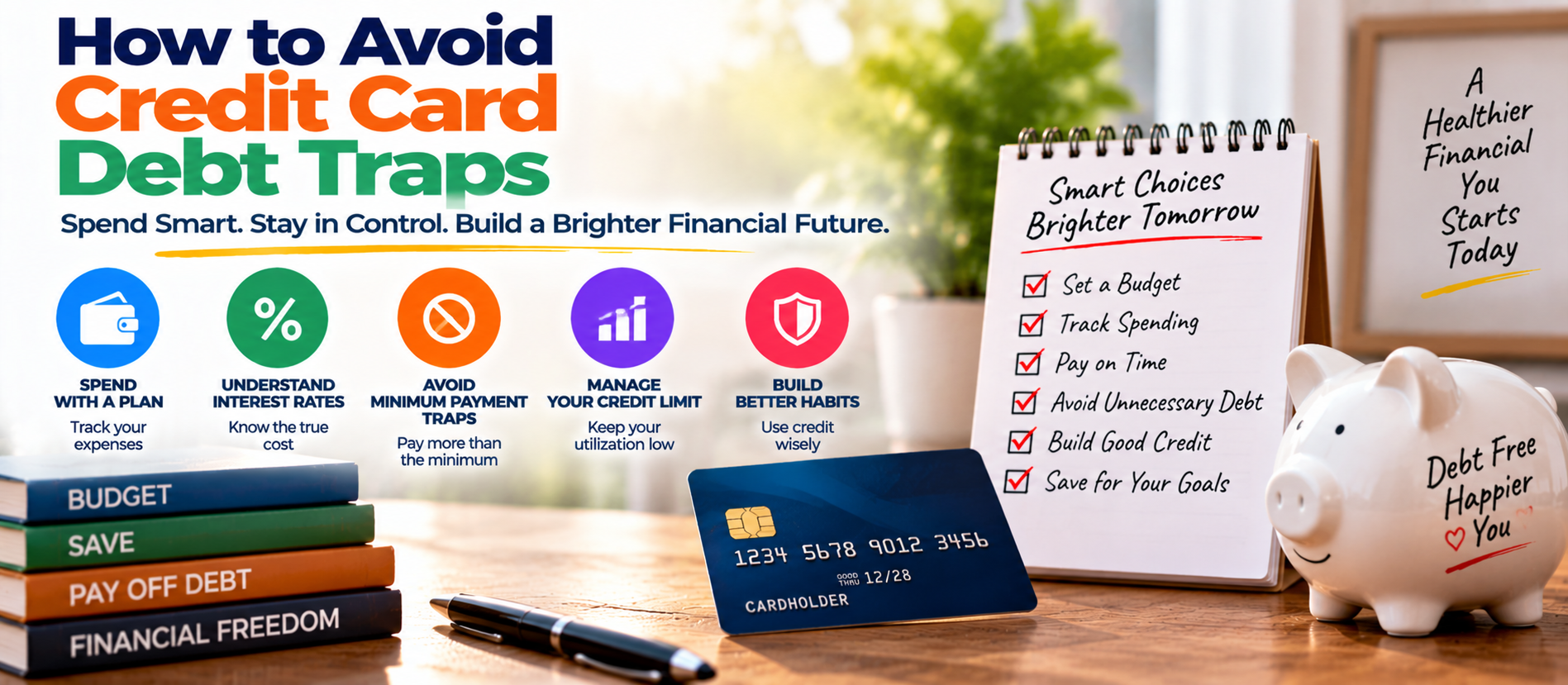
You can avoid credit card debt traps by spending within your budget, paying more than the minimum whenever possible, understanding interest rates and fees, limiting unnecessary borrowing, and reviewing your balance regularly.
The most important rule is simple: do not treat your credit limit as extra income. A credit limit is borrowed money that must usually be repaid under specific terms.
What Is a Credit Card Debt Trap?
A credit card debt trap happens when borrowing becomes difficult to control or repay. This often occurs when a person continues using credit cards while making only small payments toward an existing balance.
Common signs of a debt trap include:
- Carrying a growing balance every month.
- Paying only the minimum amount due.
- Using one card to manage debt on another.
- Using credit for regular essential expenses because cash is unavailable.
- Missing payments or paying late.
- Not knowing the total amount owed.
1. Understand How Credit Card Interest Works
Before using a credit card, understand the interest rate and how interest may be charged.
If you do not pay the balance according to the card's terms, interest may be charged on unpaid amounts. A high annual percentage rate, or APR, can make borrowing expensive.
Always review:
- The purchase interest rate.
- Cash advance rates.
- Balance transfer terms.
- Late payment fees.
- Annual fees, if any.
- Penalty rates or other charges.
Credit card terms vary by provider and location. Reading the account agreement can help you avoid unexpected costs.
2. Do Not Spend Based on Your Credit Limit
A large credit limit does not mean you can afford a large purchase.
Your spending decisions should be based on your income, savings, and budget. If you cannot reasonably repay a purchase, putting it on a credit card may create future pressure.
A useful question before making a purchase is:
“If I had to pay for this with cash today, would I still buy it?”
This question can help separate genuine needs from impulse purchases.
3. Create a Monthly Spending Budget
A budget gives your money a purpose before you spend it. Without a spending plan, it is easy to use a credit card for purchases that exceed your income.
Your budget may include:
- Housing.
- Food.
- Utilities.
- Transportation.
- Insurance.
- Debt payments.
- Savings.
- Personal and entertainment spending.
Track credit card purchases as part of your normal spending. Do not wait until the monthly statement arrives to discover how much you spent.
4. Pay the Full Statement Balance When Possible
Paying the full statement balance according to the card's terms may help you avoid or reduce interest charges on purchases.
If you cannot pay the full balance, try to understand how much interest the remaining balance may generate. Paying more than the minimum can reduce the debt faster and lower total interest costs.
The exact effect depends on the interest rate, account terms, and payment schedule.
Why Minimum Payments Can Become a Trap
The minimum payment is generally the smallest amount required to keep an account from becoming further delinquent under its terms. It is not necessarily a strategy for quickly eliminating debt.
When you pay only the minimum:
- Debt may take longer to repay.
- Interest may continue accumulating.
- A large part of the payment may go toward interest.
- You may remain financially vulnerable for longer.
Whenever possible, paying more than the minimum can help reduce the balance sooner.
5. Track Your Credit Card Balance Weekly
Many people check their credit card balance only when the statement arrives. By that time, spending may already be difficult to control.
Checking your balance weekly can help you:
- Spot unnecessary spending.
- Identify unfamiliar transactions.
- Stay aware of your total debt.
- Adjust spending before the balance becomes too large.
Regular monitoring helps prevent uncontrolled borrowing.
6. Avoid Using Credit Cards for Everyday Shortfalls
Using a credit card occasionally for planned purchases is different from depending on it to cover routine expenses every month.
💡 Key Insight
If you regularly use credit because your income does not cover food, rent, utilities, or other essential costs, the problem may be larger than the credit card itself.
Consider reviewing your budget, expenses, income, and available support options. Repeated borrowing for basic living costs can create a cycle that becomes difficult to escape.
7. Be Careful With Cash Advances
Cash advances can be expensive. They may involve fees and different interest terms from regular purchases.
Before taking a cash advance, review the total cost and repayment conditions carefully.
Cash advances should not be viewed as free emergency money simply because they are available through a credit card.
8. Avoid Impulse Buying
Online shopping, limited-time offers, and easy one-click payments can encourage impulsive spending.
Try using a waiting period before buying nonessential items. For example, wait one day or longer before making a larger discretionary purchase.
During that time, ask:
- Do I really need this?
- Can I afford to pay for it?
- Will I still want it later?
- Is there a lower-cost alternative?
A short pause can prevent many unnecessary purchases.
9. Do Not Open Too Many Cards for Rewards
Rewards, points, and cash-back offers can be attractive. However, rewards may encourage additional spending if you buy things simply to earn benefits.
A reward is rarely valuable if you pay significant interest or fees because of the purchase.
Choose credit products based on your financial needs rather than promotional excitement.
10. Understand Promotional Interest Offers
A low or introductory interest rate can appear attractive, but promotional offers often have specific conditions and end dates.
Before accepting an offer, understand:
- How long the promotional period lasts.
- What interest rate applies afterward.
- Whether fees apply.
- Whether new purchases have different terms.
- What happens if you miss a payment.
Never assume a promotional rate will continue indefinitely.
11. Use Balance Transfers Carefully
A balance transfer may help some borrowers organize or reduce interest costs, but it does not eliminate the underlying debt.
Potential risks include transfer fees, promotional expiration dates, and the temptation to continue using the old card after transferring the balance.
A balance transfer works best when it is part of a realistic repayment plan.
12. Keep an Emergency Fund
Unexpected expenses are one reason people accumulate credit card debt.
An emergency fund can provide cash for situations such as:
- Vehicle repairs.
- Urgent home repairs.
- Temporary income loss.
- Unexpected travel.
The right emergency fund amount depends on your personal circumstances. The purpose is to reduce dependence on high-cost borrowing during financial surprises.
13. Set Up Payment Reminders or Automation
Late payments can lead to fees and may have other financial consequences depending on local rules and account terms.
Calendar reminders, banking alerts, and automatic payments can help you remember due dates.
Before using automatic payments, make sure enough money is available in the linked account and understand how the payment system works.
15. Avoid Emotional Spending
Stress, boredom, sadness, and social pressure can lead to emotional spending.
If shopping becomes a regular response to difficult emotions, credit cards can make the problem easier to hide temporarily.
Try replacing emotional spending with alternatives such as:
- Walking or exercise.
- Talking with a trusted person.
- Working on a hobby.
- Following a planned entertainment budget.
Understanding your spending triggers can help you change the habit.
16. Stop Adding New Debt When Repayment Becomes Difficult
If you are struggling to reduce an existing balance, adding new charges can make the situation worse.
Consider temporarily limiting card use for nonessential purchases while focusing on understanding your total debt and repayment options.
Do not ignore the problem. Early action is usually easier than waiting until balances, fees, and missed payments increase.
What to Do If You Already Have Credit Card Debt
Start by gathering accurate information about every account.
List:
- Total balance.
- Interest rate.
- Minimum payment.
- Due date.
- Fees or promotional terms.
Then review your budget and determine how much you can realistically pay toward debt.
Some people use repayment approaches that focus on the smallest balance first or the highest-interest balance first. Each approach has potential advantages depending on motivation and financial costs.
If payments are becoming unmanageable, consider contacting the card issuer or a qualified, reputable financial or credit counseling professional to understand available options.
Common Credit Card Debt Mistakes to Avoid
Ignoring Statements
Statements contain important information about balances, charges, due dates, and account terms.
Paying Only the Minimum for Years
This can extend the repayment period and increase interest costs.
Borrowing to Maintain a Lifestyle
Regularly using debt for optional spending can create long-term financial pressure.
Closing Your Eyes to the Total Debt
Knowing your total balance is necessary before you can create a realistic plan.
Taking New Credit to Solve Old Spending Habits
New credit may temporarily reorganize debt but cannot solve the problem if spending remains uncontrolled.
A Simple Credit Card Safety Framework
- Spend only what fits your budget.
- Know your balance and due date.
- Understand interest rates and fees.
- Pay the full statement balance when possible.
- Pay more than the minimum when carrying debt.
- Avoid cash advances unless you fully understand the cost.
- Maintain emergency savings when possible.
- Review your spending habits regularly.
Frequently Asked Questions
What is the biggest credit card debt trap?
One of the most common traps is continuing to spend while carrying a growing balance and paying only the minimum amount due. Interest and repeated borrowing can make repayment increasingly difficult.
Is paying the minimum payment bad?
Making the required payment may help keep an account current under its terms, but paying only the minimum can make debt last longer and increase interest costs.
Should I stop using my credit card if I have debt?
If continued use is causing the balance to grow, limiting new nonessential charges may help. The best approach depends on your financial situation and repayment plan.
Can a balance transfer solve credit card debt?
A balance transfer may reduce interest costs in some situations, but it does not remove the debt. Fees, promotional terms, and future spending must be considered.
How can I avoid credit card debt while building credit?
Use credit only for planned purchases, monitor your balance, pay according to the account terms, and avoid borrowing more than you can repay.
Final Thoughts
Avoiding credit card debt traps begins with treating credit as borrowed money, not extra income. A budget, regular balance checks, controlled spending, and timely repayment can help you maintain better financial control.
Credit cards can provide convenience and other benefits, but those benefits can disappear when high balances and interest charges accumulate. Focus on affordability before rewards, promotions, or credit limits.
If debt already feels difficult to manage, take action early. Understanding what you owe and creating a realistic repayment plan can be an important first step.
For more helpful content about personal finance, investing, business, technology, SEO, AEO, GEO, and AI Search optimization, visit www.digiifrog.com.
Disclaimer
This article is for general educational and informational purposes only and does not constitute financial, legal, credit, or tax advice. Credit card terms, interest rates, fees, consumer protections, and regulations vary by location and provider. Consider consulting a qualified financial or credit professional for advice based on your personal circumstances.
Ready to Grow?
Talk to us about a strategy tailored to your brand — we will help you stand out in search, AI discovery and social.

Comments (0)
Log in to leave a comment.