📋 Quick Summary
In this article:
1. Start With an HVAC Energy Assessment
2. Replace Dirty Air Filters
3. Upgrade to a Smart Thermostat
4. Use Thermostat Settings Efficiently
5. Consider a High-Efficiency Air Conditioner
6. Consider a Heat Pump
7. Improve Furnace Efficiency
8. Avoid Oversized HVAC Equipment
9. Seal Leaky Ducts
10. Insulate Ductwork Where Needed
11. Improve Home Insulation
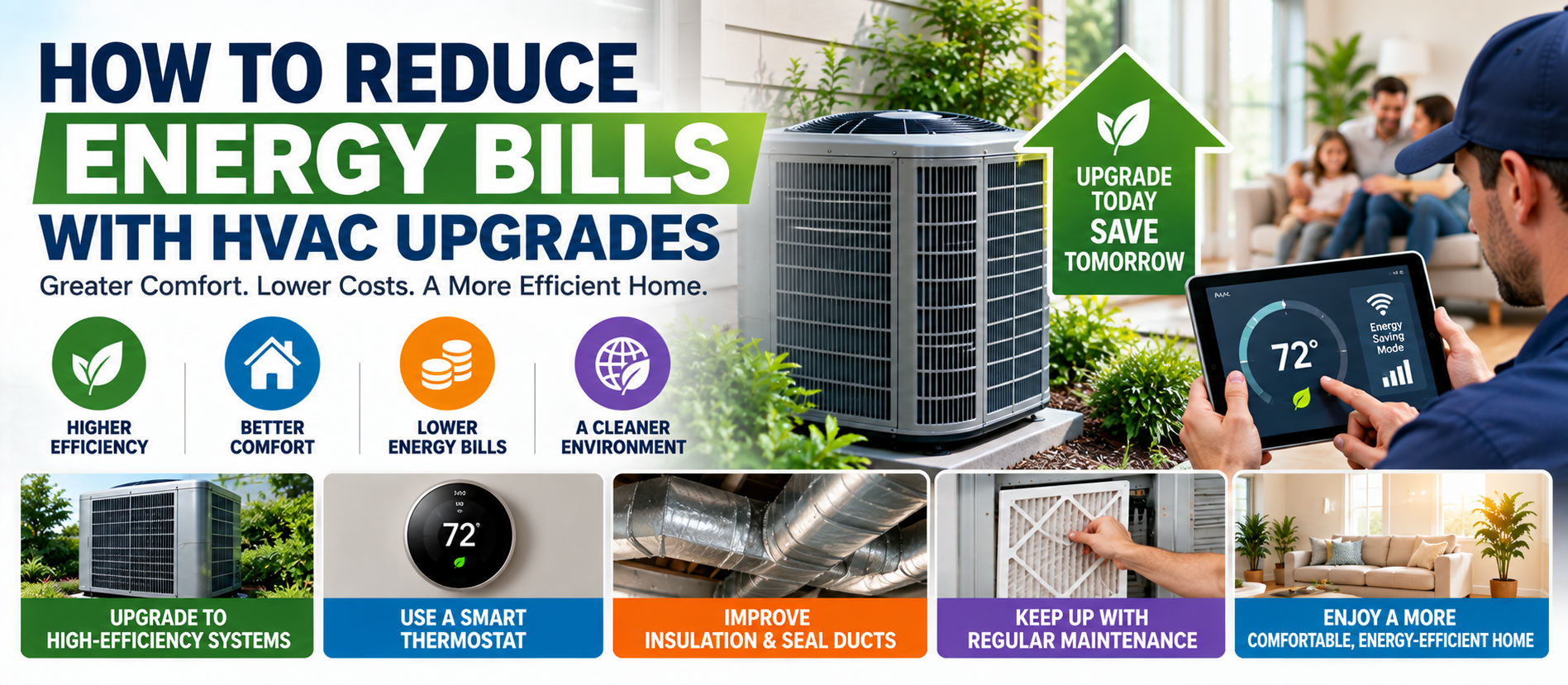
Heating and cooling can be a major part of household energy use. An older HVAC system may work hard to maintain a comfortable indoor temperature. Poor airflow, dirty filters, weak insulation, outdated controls, and inefficient equipment can increase operating costs.
The good news is that homeowners have several ways to improve HVAC efficiency. Some upgrades are simple, such as replacing filters and improving thermostat settings. Other projects require professional design and installation, such as replacing an aging air conditioner, heat pump, furnace, or duct system.
This guide explains how to reduce energy bills with HVAC upgrades. It covers practical improvements, equipment choices, maintenance, smart controls, ductwork, insulation, indoor comfort, and planning. The goal is to help homeowners understand which upgrades may reduce energy waste without using complicated language.
Why HVAC Efficiency Matters
HVAC systems run for many hours during hot and cold seasons. Even a small efficiency improvement can matter when equipment operates regularly.
An inefficient system may consume more energy because it has to run longer or work harder. Poor airflow can also reduce comfort. Some rooms may become too warm or too cold while the system continues running.
HVAC efficiency is not only about buying a new system. The entire setup matters. Equipment size, ductwork, insulation, controls, airflow, filters, maintenance, and building conditions all affect performance.
1. Start With an HVAC Energy Assessment
Before replacing equipment, identify where energy is being wasted. A qualified HVAC professional can evaluate system age, equipment condition, airflow, ductwork, controls, insulation, and other factors.
An energy assessment can help homeowners avoid spending money on an upgrade that does not address the real problem. For example, replacing a unit may not solve comfort issues caused by leaking ducts or inadequate insulation.
2. Replace Dirty Air Filters
A dirty filter can restrict airflow. When airflow is restricted, the HVAC system may have to work harder to move conditioned air.
Check the filter regularly and replace or clean it according to the equipment and filter manufacturer's recommendations. Homes with pets, construction dust, or other conditions may need more frequent attention.
Do not automatically choose the most restrictive filter available. The filter must be appropriate for the HVAC system and its airflow requirements.
3. Upgrade to a Smart Thermostat
A smart thermostat can help manage heating and cooling schedules. Many models allow homeowners to create schedules, adjust settings remotely, and monitor energy use.
The exact savings depend on the home, climate, equipment, schedule, and thermostat settings. A smart thermostat is most useful when it is programmed to reduce unnecessary heating or cooling when the home is empty or when occupants are sleeping.
4. Use Thermostat Settings Efficiently
Small changes in temperature settings can reduce HVAC runtime. Instead of maintaining the same temperature all day, adjust the setting based on occupancy and comfort needs.
Avoid constantly changing the thermostat by large amounts if the system is not designed for that type of operation. Follow manufacturer guidance and consider professional advice for heat pumps and specialized systems.
5. Consider a High-Efficiency Air Conditioner
If an older air conditioner is nearing the end of its useful life, a newer high-efficiency model may use less electricity for the same cooling task.
Efficiency ratings and equipment performance depend on the complete system, including indoor and outdoor components, installation quality, airflow, and ductwork. Compare the efficiency rating and estimated operating cost rather than looking only at the purchase price.
6. Consider a Heat Pump
Heat pumps can provide heating and cooling by moving heat rather than creating heat in the same way as traditional combustion equipment. They can be an energy-efficient option in many climates.
Modern heat pumps are available in different designs, including air-source and ductless systems. Suitability depends on climate, home design, electrical service, insulation, existing ductwork, and local energy costs.
7. Improve Furnace Efficiency
If your home uses a gas or other combustion furnace, efficiency depends on equipment condition, proper sizing, airflow, controls, venting, and maintenance.
When replacement is necessary, compare efficient models that are appropriate for your home's heating load. A high-efficiency furnace can perform poorly if it is badly sized or installed incorrectly.
8. Avoid Oversized HVAC Equipment
Bigger is not always better. An oversized air conditioner may cool the air quickly but cycle on and off more often. Short cycling can affect comfort, humidity control, and equipment operation.
Proper sizing should be based on the home's heating and cooling requirements rather than a simple rule based only on floor area.
9. Seal Leaky Ducts
Ducts carry conditioned air from the HVAC equipment to rooms throughout the home. Leaks can allow conditioned air to escape before it reaches the intended space.
Sealing accessible duct connections can improve system performance. Duct insulation may also be important when ducts pass through unconditioned areas.
10. Insulate Ductwork Where Needed
Ducts located in hot attics, crawl spaces, garages, or other unconditioned areas can gain or lose heat. Proper insulation can reduce unwanted temperature changes.
Use insulation appropriate for the duct system and local building requirements. Professional evaluation can help determine where duct insulation will provide the most value.
11. Improve Home Insulation
HVAC upgrades work better when the building envelope is efficient. Poor insulation can allow conditioned air to escape and outdoor temperatures to affect indoor spaces.
Check attic insulation, exterior walls, floors, and other areas based on the home's design and climate. Improving insulation can reduce heating and cooling demand before you invest in larger HVAC equipment.
12. Seal Air Leaks
Air leaks around windows, doors, utility penetrations, attic openings, and other gaps can increase heating and cooling demand.
Weatherstripping, caulking, and appropriate air-sealing work can reduce unwanted airflow. Major air-sealing projects should consider ventilation needs so the home remains safe and comfortable.
13. Upgrade to Variable-Speed Equipment
Some modern HVAC systems use variable-speed motors or variable-capacity compressors. These systems can adjust output to match changing demand instead of operating only at full capacity.
Potential benefits include more consistent temperatures, improved humidity control in suitable climates, quieter operation, and efficient part-load performance. Actual results depend on equipment selection and installation.
14. Consider Zoned HVAC
Zoned HVAC systems allow different areas of a home to be controlled separately. This can be useful when some rooms are used more often than others.
Zoning may reduce unnecessary conditioning in unoccupied areas. However, the system must be designed correctly. Improper zoning can create airflow or pressure problems.
15. Explore Ductless Mini-Split Systems
Ductless mini-splits can provide heating and cooling without traditional ductwork. They can be useful for additions, individual rooms, older homes without ducts, or spaces that are difficult to condition.
Multi-zone systems can serve several rooms with separate indoor units. A professional should evaluate whether the system is appropriate for the home's layout and climate.
16. Improve Ventilation Without Wasting Energy
Homes need appropriate ventilation for indoor air quality. However, uncontrolled air leakage can increase HVAC loads.
Energy-efficient ventilation strategies can provide fresh air while managing energy use. The right approach depends on the building, climate, occupancy, and indoor air quality requirements.
17. Maintain the Outdoor Unit
For systems with outdoor equipment, keep the area around the unit reasonably clear of leaves, debris, and excessive vegetation. Good airflow helps the system operate properly.
Do not bend delicate fins or attempt complex repairs. Follow the manufacturer's maintenance instructions and have professional service performed when needed.
18. Keep Indoor Vents and Registers Clear
Furniture, rugs, curtains, and other objects can block supply or return vents. Restricted airflow can affect comfort and system performance.
Keep vents accessible. If a room consistently receives too little or too much conditioned air, ask an HVAC professional to investigate instead of simply closing vents throughout the house.
19. Upgrade HVAC Controls
Modern controls can improve scheduling and system management. Smart thermostats, zoning controls, humidity controls, and equipment-specific controllers can help match HVAC operation to actual demand.
Choose controls that are compatible with the HVAC system. Some advanced equipment requires specific thermostats or control systems.
20. Use Humidity Control Wisely
Humidity affects comfort and can influence how homeowners set thermostats. In humid climates, controlling indoor humidity may allow a home to feel comfortable at a slightly higher cooling temperature.
Humidity control can involve HVAC operation, dedicated dehumidifiers, ventilation, air sealing, and moisture management. A professional assessment can identify the most suitable solution.
21. Maintain the Condensate Drain
Air conditioners and some heat pumps produce condensation during operation. A blocked condensate drain can cause water leaks or system shutdowns.
Follow the equipment manufacturer's maintenance recommendations. If water is appearing around the indoor unit, arrange professional inspection rather than ignoring it.
22. Schedule Preventive HVAC Maintenance
Regular maintenance can help identify dirty components, airflow problems, worn parts, refrigerant issues, electrical concerns, and other conditions that may affect performance.
Maintenance schedules vary by equipment and manufacturer. Many homeowners arrange professional service before major heating or cooling seasons.
23. Keep Coils Clean
Dirty indoor or outdoor coils can reduce heat transfer. This may increase operating time and reduce system performance.
Coil cleaning should follow manufacturer guidance. Some components are easy to maintain, while others require professional cleaning to avoid damage.
24. Check Refrigerant Problems Professionally
Air conditioners and heat pumps rely on correct refrigerant charge. A system that is low on refrigerant may have a leak or another problem.
Do not simply add refrigerant without identifying the cause. Refrigerant service should be performed by qualified professionals following applicable regulations.
25. Consider Heat Recovery Options
Some advanced HVAC systems can recover or reuse heat that would otherwise be lost. Heat recovery ventilation and other energy-recovery technologies can be useful in suitable buildings.
These systems are more complex than basic HVAC upgrades, so professional design is important.
26. Improve Window Performance
Windows influence heating and cooling demand. Poorly sealed or inefficient windows can allow unwanted heat transfer and air leakage.
Depending on the home, improvements may include weatherstripping, sealing, window treatments, storm windows, or replacement windows. Compare the cost and expected benefit before choosing a major replacement project.
27. Use Curtains and Blinds Strategically
Window coverings can reduce direct solar heat entering the home during hot periods. They can also provide some insulation at night in colder conditions.
Use coverings based on season, orientation, and daily sunlight. This is a low-cost strategy that can complement HVAC upgrades.
28. Reduce Heat From Appliances
Cooking appliances, lighting, electronics, and other equipment generate heat. During hot weather, unnecessary indoor heat can increase cooling demand.
Use energy-efficient appliances and lighting where practical. Consider outdoor cooking when appropriate and safe. Turn off devices that are not needed.
29. Upgrade Lighting to LEDs
LED lighting generally uses less electricity and produces less heat than many older lighting technologies. Reduced heat output can also slightly reduce cooling demand.
LED upgrades are usually simple and can be completed gradually as older bulbs need replacement.
30. Combine HVAC Upgrades With Energy Efficiency
The best results often come from combining several improvements. A high-efficiency HVAC system may perform better when paired with good insulation, sealed ducts, appropriate controls, efficient windows, and good maintenance.
Think of the home as a complete system. Reducing heating and cooling demand can sometimes be more cost-effective than buying the largest or most expensive HVAC unit.
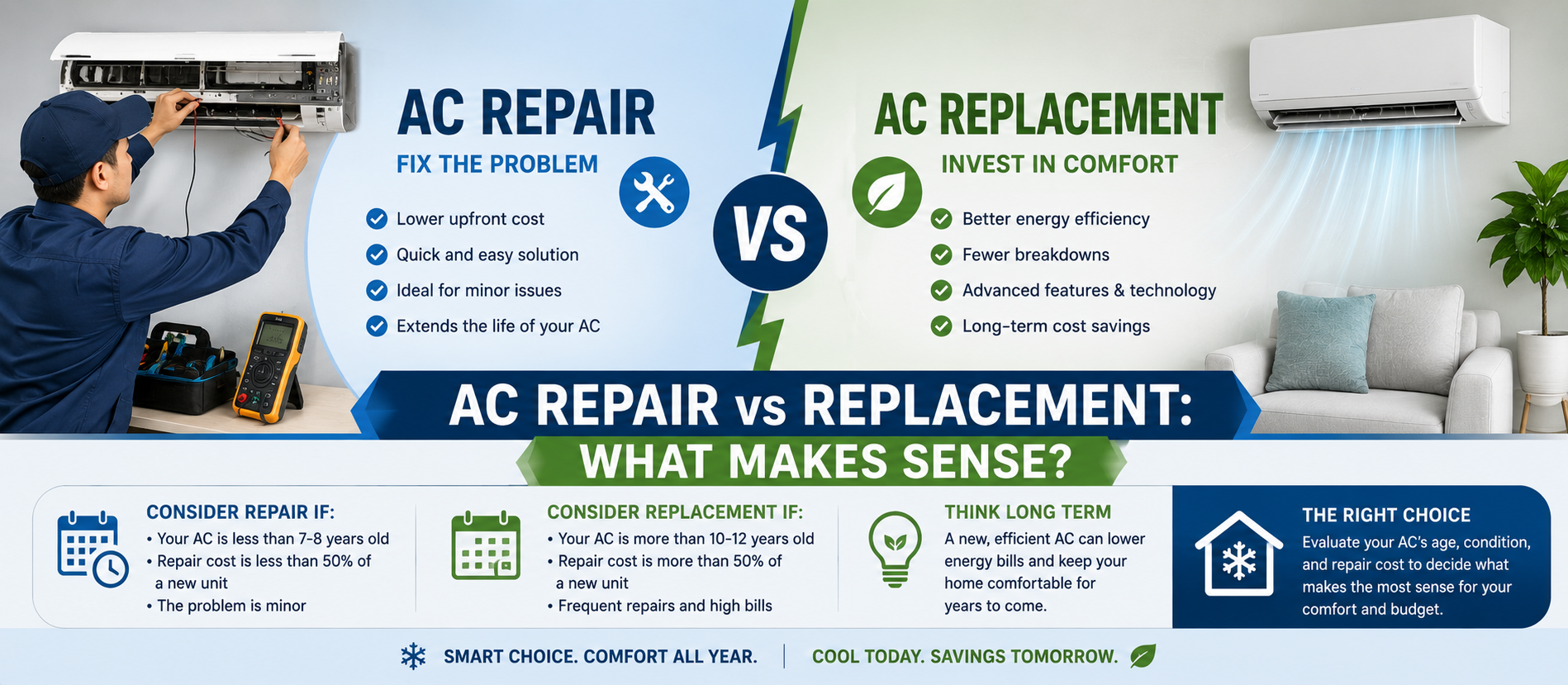
31. Compare Repair vs. Replacement
An aging HVAC system may need frequent repairs. At some point, continued repair costs and declining efficiency may make replacement worth considering.
Compare the age and condition of the system, repair history, efficiency, comfort problems, estimated future costs, and expected service life. A qualified HVAC professional can provide options rather than assuming replacement is always necessary.
32. Check Equipment Sizing Before Replacement
Before purchasing new equipment, ask how the contractor determined the required capacity. Proper load calculations are important.
Correct sizing supports comfort, efficiency, humidity control, and equipment performance. Avoid selecting equipment based only on the size of the old system.
33. Choose Professional Installation
Installation quality can have a major effect on HVAC performance. Even efficient equipment can perform poorly if it is installed incorrectly.
Ask contractors about system sizing, ductwork, airflow, controls, commissioning, warranty requirements, and maintenance. A professional installation should include appropriate testing and setup.
34. Monitor Your Energy Bills
Track energy use before and after major HVAC upgrades. Compare bills across similar weather periods when possible.
Energy costs can change because of weather, utility rates, occupancy, and other factors. A single bill does not prove that an upgrade succeeded or failed. Look for patterns over time.
35. Understand HVAC Efficiency Ratings
HVAC equipment uses different efficiency metrics depending on the equipment type and region. Air conditioners and heat pumps may have seasonal cooling and heating efficiency ratings. Furnaces use heating efficiency ratings.
When comparing equipment, ask the contractor to explain the rating in practical terms. Consider expected operating conditions, installation quality, local energy prices, and equipment compatibility.
36. Ask About Rebates and Incentives
Energy-efficiency programs may offer rebates, tax benefits, financing, or other incentives. Availability depends on location, utility provider, equipment type, eligibility, and program rules.
Check current local and utility program requirements before assuming an incentive applies. Ask contractors for documentation and verify the program through the relevant official source.
37. Create an HVAC Upgrade Budget
HVAC upgrades range from low-cost maintenance to major equipment replacement. Create a budget that includes equipment, installation, ductwork, electrical work, controls, permits, and possible building-envelope improvements.
Compare total project cost with expected energy savings, comfort benefits, repair avoidance, and expected equipment life. Avoid making a decision based only on the initial purchase price.
38. Best Low-Cost HVAC Efficiency Improvements
- Replace or clean filters as recommended.
- Keep vents and returns clear.
- Use reasonable thermostat schedules.
- Seal obvious air leaks.
- Maintain doors and windows.
- Keep outdoor equipment clear.
- Use curtains and blinds strategically.
- Schedule preventive maintenance.
- Reduce unnecessary indoor heat.
- Monitor energy use.
39. HVAC Upgrades That May Require a Larger Investment
- High-efficiency air conditioner replacement.
- Heat pump installation.
- High-efficiency furnace replacement.
- Duct sealing and insulation.
- Duct replacement or redesign.
- Zoned HVAC systems.
- Ductless mini-split systems.
- Advanced smart controls.
- Home insulation and air sealing.
- Energy-efficient ventilation systems.
40. Common HVAC Upgrade Mistakes to Avoid
- Choosing equipment based only on purchase price.
- Installing equipment without proper sizing.
- Ignoring leaking ducts.
- Ignoring insulation problems.
- Buying an incompatible thermostat.
- Skipping professional installation.
- Ignoring maintenance after installation.
- Assuming the newest equipment automatically guarantees savings.
- Ignoring comfort problems in individual rooms.
- Failing to compare operating costs.
How to Plan an HVAC Upgrade Step by Step
- Review your current energy bills.
- List comfort and HVAC problems.
- Check the age and maintenance history of the equipment.
- Inspect filters, vents, and accessible ductwork.
- Ask a qualified professional for an assessment.
- Compare repair and replacement options.
- Check equipment sizing and efficiency ratings.
- Ask about ductwork, insulation, and controls.
- Compare written installation estimates.
- Check applicable rebates or incentives.
- Schedule professional installation.
- Monitor energy use after the upgrade.
AEO: Frequently Asked Questions
How can HVAC upgrades reduce energy bills?
HVAC upgrades can reduce energy use by improving equipment efficiency, airflow, controls, insulation, duct performance, and system operation. Actual savings depend on the home, climate, equipment, usage, utility rates, and installation quality.
What HVAC upgrade saves the most energy?
There is no single upgrade that saves the most energy in every home. The best opportunity depends on the condition of the existing equipment, ductwork, insulation, air leakage, climate, and household usage. A professional assessment can identify the largest sources of waste.
Is a smart thermostat worth it?
A smart thermostat can help reduce unnecessary heating and cooling by using schedules and occupancy-based controls. Its value depends on how the home is used and whether the thermostat is compatible with the HVAC system.
Should I replace my old HVAC system?
Replacement may make sense when equipment is aging, inefficient, unreliable, expensive to repair, or unable to maintain comfort. Compare repair history, efficiency, expected future costs, and replacement options with a qualified HVAC professional.
Can duct sealing lower energy bills?
Sealing significant duct leaks can reduce the loss of conditioned air, especially when ducts pass through unconditioned spaces. A professional assessment can identify whether duct sealing or insulation is worthwhile.
Are heat pumps energy efficient?
Heat pumps can be highly efficient because they transfer heat rather than generating heat in the same way as many traditional heating systems. Suitability and operating cost depend on climate, equipment, electricity prices, home design, and installation.
Does HVAC maintenance reduce energy use?
Proper maintenance can help equipment operate as designed by addressing issues such as dirty components, restricted airflow, and other performance problems. Maintenance requirements vary by system and manufacturer.
How can I reduce HVAC costs without replacing the system?
Start with filters, thermostat settings, airflow, duct leaks, insulation, air sealing, maintenance, window coverings, and reducing unnecessary indoor heat. These improvements may reduce HVAC demand without immediate equipment replacement.
SEO, AEO, GEO & AI Search Optimization
This article is optimized around search topics including how to reduce energy bills with HVAC upgrades, HVAC energy efficiency, energy-efficient HVAC systems, HVAC upgrades for homeowners, reduce heating and cooling costs, smart thermostat savings, duct sealing, heat pump efficiency, and air conditioning energy savings.
The content uses short paragraphs, direct explanations, practical lists, question-based headings, and FAQ answers. This structure supports traditional SEO and helps answer engines, generative search systems, and AI-powered search tools understand the topic, identify key questions, and retrieve concise answers.
Final Thoughts
Reducing HVAC energy costs is not always about buying the most expensive equipment. The best results often come from improving the entire system. Proper equipment sizing, efficient technology, sealed ducts, good insulation, smart controls, regular maintenance, and sensible thermostat settings can all contribute to lower energy use.
Start with the problems that affect your home most. A professional HVAC assessment can help identify whether the biggest opportunity is equipment replacement, ductwork, insulation, controls, maintenance, or another improvement.
Before making a major investment, compare written estimates and understand the expected operating costs. Check available incentives and make sure installation is performed correctly.
With a planned approach, HVAC upgrades can improve comfort, reduce energy waste, and support more predictable household energy costs over time.
Digiifrog
Website: www.digiifrog.com
Digiifrog specializes in SEO, AEO, GEO, AI Search optimization, content marketing, and digital growth strategies.
Ready to Grow?
Talk to us about a strategy tailored to your brand — we will help you stand out in search, AI discovery and social.

Comments (0)
Log in to leave a comment.