📋 Quick Summary
In this article:
What Is Property Ownership Transfer?
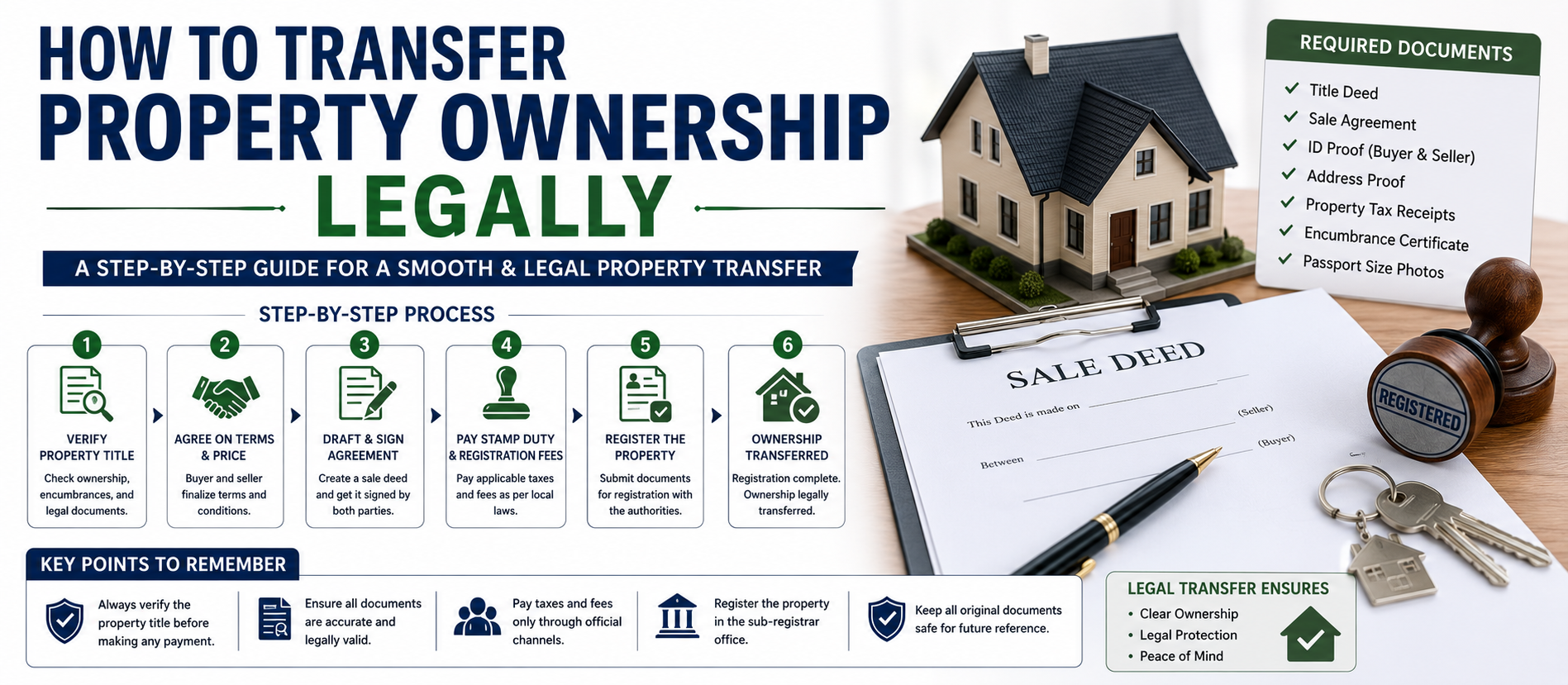
Step-by-Step Property Transfer Process
1. Verify Ownership
2. Conduct Due Diligence
3. Prepare the Transfer Documents
4. Execute the Deed
5. Register the Transfer
💡 Key Insight
Transferring property ownership is one of the most important legal transactions an individual or business can undertake. Whether the transfer occurs through a sale, gift, inheritance, divorce settlement, family arrangement, or business restructuring, every step should comply with applicable laws and registration requirements.
Failure to complete a lawful transfer can lead to ownership disputes, financial losses, tax complications, and future litigation. This guide explains the legal process, required documents, common mistakes, and best practices for transferring property ownership safely.
What Is Property Ownership Transfer?
A property transfer is the legal process through which ownership rights move from one party to another. Depending on local law, transfers may occur through registered deeds, court orders, inheritance proceedings, or other legally recognized instruments.
- Sale transactions
- Gift transfers
- Inheritance
- Family settlements
- Business transfers
- Court-ordered transfers
Why Legal Transfer Matters
- Establishes lawful ownership
- Protects buyer and seller rights
- Prevents title disputes
- Supports financing and resale
- Ensures compliance with local regulations
Common Documents Required
- Title deed
- Sale deed or transfer deed
- Identity documents
- Property tax receipts
- Encumbrance certificate
- Building approvals where applicable
- Government registration records
Step-by-Step Property Transfer Process
1. Verify Ownership
Confirm the seller has legal authority to transfer the property by reviewing title documents and official land records.
2. Conduct Due Diligence
Check for mortgages, liens, pending litigation, unpaid taxes, zoning issues, or ownership disputes.
3. Prepare the Transfer Documents
Ensure all legal documents accurately describe the property, purchase price (if any), parties involved, and transfer conditions.
4. Execute the Deed
The transfer document should be properly signed, witnessed, and completed according to applicable legal requirements.
5. Register the Transfer
Registration with the appropriate government authority is often essential to complete the transfer and update official ownership records.
Transfers by Gift
Gift transfers often require a properly executed gift deed and compliance with applicable registration and tax rules.
Transfers Through Inheritance
Inherited property may require probate, succession documents, wills, or legal heir certificates depending on local law.
Business Property Transfers
Commercial transfers frequently involve additional due diligence, corporate approvals, tax planning, and regulatory compliance.
Taxes and Fees
- Stamp duties
- Registration fees
- Transfer taxes
- Capital gains considerations
- Inheritance or gift tax where applicable
Common Mistakes to Avoid
- Skipping title verification
- Using incomplete documents
- Ignoring unpaid taxes
- Failing to register the transfer
- Not obtaining professional legal advice
Role of Lawyers
Qualified property lawyers help verify ownership, prepare documents, identify legal risks, and ensure compliance throughout the transfer process.
Digital Property Records
Many jurisdictions now offer online property records and electronic registration systems, making verification faster and more transparent.
SEO, AEO, GEO & AI Search Optimization
SEO, AEO, GEO, and AI Search Optimization improve the visibility of educational legal content across Google, Bing, answer engines, and AI-powered search experiences.
Frequently Asked Questions
Can property ownership be transferred without registration?
Requirements vary by jurisdiction, but many legal systems require registration for full legal effect.
Should I verify the title before buying?
Yes. Title verification is one of the most important steps in any property transaction.
Do I need a lawyer?
Professional legal advice is strongly recommended for significant property transactions.
Conclusion
⚠ Watch Out
Legally transferring property ownership requires careful planning, accurate documentation, due diligence, and compliance with applicable laws. Proper registration, professional guidance, and thorough verification help protect all parties while reducing the risk of future disputes.
Digiifrog
Website: www.digiifrog.com
Digital Marketing, SEO, AEO, GEO & AI Search Solutions for Modern Businesses.
Ready to Grow?
Talk to us about a strategy tailored to your brand — we will help you stand out in search, AI discovery and social.


Comments (0)
Log in to leave a comment.