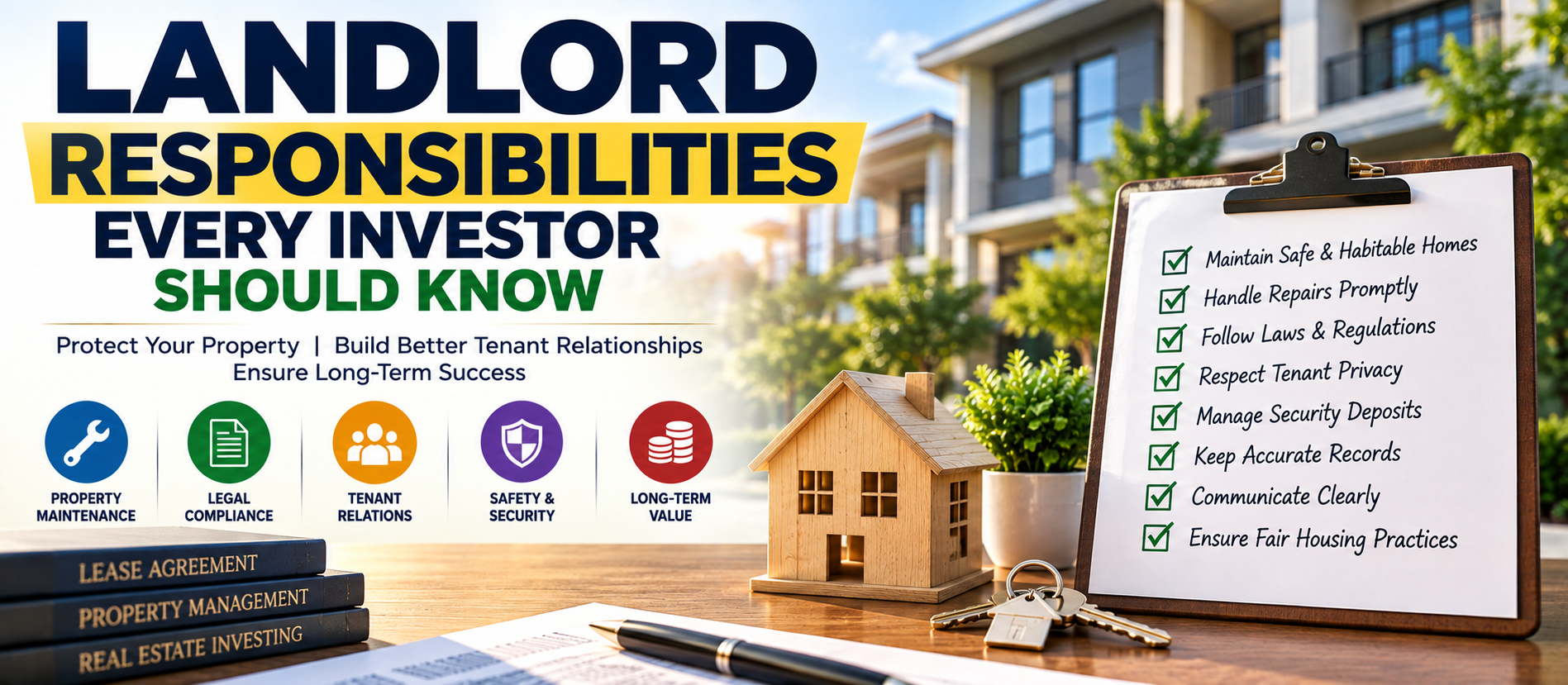
📋 Quick Summary
In this article:
Quick Answer: What Are a Landlord's Main Responsibilities?
1. Provide a Safe and Habitable Property
2. Maintain Major Property Systems
3. Respond to Repair Requests Promptly
Use a Simple Repair Priority System
4. Follow the Lease Agreement
5. Respect Tenant Privacy and Lawful Entry
6. Handle Security Deposits Carefully
Best Practices for Security Deposits
7. Document Property Condition at Move-In and Move-Out
8. Maintain Common Areas
9. Follow Building, Housing, Health, Fire, and Zoning Rules
💡 Key Insight
Owning a rental property can create steady income and long-term wealth. But rental ownership is more than collecting rent. A landlord also takes on important legal, financial, safety, and management responsibilities.
Good landlords understand these duties before a property is rented. They create clear leases. They maintain safe housing. They respond to repair requests. They protect tenant privacy. They keep accurate records. They also follow the rental laws that apply to the property.
This guide explains the most important landlord responsibilities every real estate investor should understand. The content uses simple language, short paragraphs, direct answers, practical checklists, and search-friendly questions.
Quick Answer: What Are a Landlord's Main Responsibilities?
A landlord is generally responsible for providing a safe and legally compliant rental property, maintaining required systems and facilities, responding to repairs, following the lease, handling security deposits correctly, respecting tenant privacy, keeping proper records, and following applicable housing and anti-discrimination rules.
The exact duties depend on the property's location, property type, lease, and applicable laws. In the United States, landlord-tenant rules can come from state statutes, local ordinances, common law, and federal law. Many states also recognize some form of a warranty of habitability. Always verify the rules that apply to the specific property.
1. Provide a Safe and Habitable Property
One of the most important landlord responsibilities is providing a property that is safe and fit for occupation.
Common requirements can include safe plumbing, working electrical systems, suitable heating or cooling where required, secure doors and windows, safe stairs, proper sanitation, and compliance with housing or building codes.
Investors should not wait for a tenant complaint before checking property conditions. A proactive inspection process can identify problems early.
- Inspect the property before a new tenancy.
- Repair known health and safety problems.
- Check plumbing and electrical systems.
- Inspect doors, windows, locks, stairs, and handrails.
- Look for leaks, moisture, pests, and structural concerns.
- Maintain required smoke, carbon monoxide, and other safety equipment.
- Keep common areas safe and accessible.
2. Maintain Major Property Systems
Rental properties contain systems that tenants depend on every day. These can include plumbing, electrical equipment, water heaters, heating and cooling systems, elevators, drainage, and appliances supplied by the landlord.
The lease should explain which routine tasks belong to the tenant and which belong to the owner. However, a lease may not remove mandatory duties imposed by law.
A strong maintenance plan should include routine checks for plumbing, electrical systems, HVAC equipment, roofs, drainage, water heaters, supplied appliances, common-area lighting, and safety equipment.
Regular maintenance can also help investors control long-term ownership costs. A small repair is often easier to manage than a major failure caused by months of neglect.
3. Respond to Repair Requests Promptly
Repair management is one of the most visible landlord duties. Tenants need a clear and reliable way to report problems.
An investor can use email, a tenant portal, property management software, or a dedicated phone number. The important point is to create a system before a problem occurs.
Use a Simple Repair Priority System
- Emergency: Fire, major water leaks, serious electrical hazards, or other immediate safety risks.
- Urgent: Problems that seriously affect basic use of the property.
- Routine: Minor issues that can be scheduled within a reasonable period.
Document the date of the request, the response, the contractor, the work performed, and the completion date. A written maintenance history helps with budgeting, future repairs, and dispute resolution.
4. Follow the Lease Agreement
The lease is a core management document. It should clearly describe rent, deposits, utilities, maintenance duties, permitted use, pets, entry rules, renewal terms, and termination procedures.
Landlords should follow the lease consistently. If the owner makes an important promise in the agreement, that promise should be honored.
Investors should also avoid using a generic lease without checking whether it matches current local law. A lease created for another state, city, or property type may not be appropriate.
5. Respect Tenant Privacy and Lawful Entry
Owning a property does not automatically give a landlord unlimited access to it.
Entry rules vary by jurisdiction. Routine inspections, repairs, and property showings may require advance notice. Emergencies may be treated differently.
For example, federal housing regulations governing certain assisted housing require reasonable advance notification for routine inspections and repairs, while emergency entry can be allowed without advance notice. Private rental laws may use different rules.
Investors should check the notice period, acceptable reasons for entry, and required notice method that apply to the property.
A good practice is to treat the rental as the tenant's home during the lease term. Schedule access professionally and avoid unnecessary visits.
6. Handle Security Deposits Carefully
Security deposits are a common source of landlord disputes. Local rules may control the maximum deposit, how the money is held, whether interest is required, permitted deductions, required notices, and the deadline for returning the balance.
Do not assume that one security-deposit procedure applies everywhere.
Best Practices for Security Deposits
- Record the amount received.
- Use the legally required holding method.
- Complete a move-in condition report.
- Take dated photographs when appropriate.
- Keep repair invoices and receipts.
- Separate normal wear from tenant-caused damage.
- Provide required itemized statements.
- Return the balance within the applicable legal deadline.
Federal housing regulations also demonstrate how detailed security-deposit rules can be. Some programs require specific handling, itemized deductions, and prompt return of unused balances, while state and local law can add further requirements.
7. Document Property Condition at Move-In and Move-Out
A detailed inspection report can protect both the owner and tenant.
Before move-in, record the condition of floors, walls, ceilings, doors, windows, appliances, fixtures, bathrooms, kitchens, outdoor areas, and other important parts of the property.
Use clear, dated photographs where appropriate. Keep copies of signed inspection documents.
Repeat the process when the tenant leaves. Compare the two records carefully.
The goal is to distinguish normal wear and tear from damage that may legally be charged to the tenant.
8. Maintain Common Areas
For apartments, multi-family properties, and buildings with shared spaces, common-area maintenance is a major responsibility.
Common areas can include:
- Hallways.
- Stairways.
- Elevators.
- Parking areas.
- Walkways.
- Shared laundry areas.
- Outdoor lighting.
- Garbage and waste facilities.
- Shared landscaping where applicable.
Inspect these areas regularly. Look for trip hazards, broken lights, damaged railings, water leaks, blocked exits, and other safety problems.
9. Follow Building, Housing, Health, Fire, and Zoning Rules
Landlords should understand the building, housing, health, fire, electrical, plumbing, and zoning requirements that apply to the property.
Requirements can change based on the property's age, location, number of units, construction, renovations, and intended use.
Keep copies of permits, inspection certificates, licenses, and compliance documents when required.
Do not assume that a property is compliant simply because it was compliant when purchased. Regulations can change, and renovations can create new requirements.
10. Follow Fair Housing and Anti-Discrimination Rules
Tenant selection must be handled carefully. In the United States, federal fair housing law prohibits certain forms of housing discrimination. State and local laws may provide additional protections.
Investors should use consistent screening criteria. Similar applicants should be evaluated through a consistent process.
⚠ Watch Out
Avoid advertising language or screening practices that create discrimination concerns. Document legitimate business reasons for decisions.
Because protected classes, exemptions, and requirements can vary by jurisdiction and property type, investors should obtain qualified local advice when needed.
11. Protect Tenant Health and Safety
Health and safety risks deserve special attention. Problems can include unsafe electrical equipment, water leaks, pests, poor ventilation, damaged stairs, broken locks, and hazardous building materials.
Older properties may require additional care. Certain building materials may require special inspection, repair, or renovation procedures.
If a problem could immediately affect life, health, or safety, treat it as an emergency. Use qualified professionals for specialized work rather than attempting unsafe repairs without the required training.
12. Communicate Clearly With Tenants
Good communication reduces avoidable disputes.
Tenants should know how to contact the landlord or property manager. They should also know how to report emergencies, request repairs, and receive important notices.
A Useful Communication System
- Use one official maintenance channel.
- Confirm important requests in writing.
- Give realistic repair updates.
- Document completed work.
- Send required notices using the legally accepted method.
- Keep copies of important communications.
Avoid making important promises only through informal conversations. Written records create clarity for both sides.
13. Keep Accurate Financial Records
Landlords should maintain organized records for rent, deposits, repairs, utilities, taxes, insurance, management fees, contractors, and other property expenses.
At minimum, track:
- Monthly rent collected.
- Late payments and fees.
- Security deposits.
- Maintenance costs.
- Capital improvements.
- Property management fees.
- Insurance costs.
- Property taxes.
- Utilities paid by the owner.
- Legal and professional fees.
Good records help with budgeting and tax preparation. They also help investors measure the true operating performance of a rental property.
14. Maintain Appropriate Insurance
Insurance is an important part of rental-property risk management.
Coverage needs depend on the property, location, financing, tenant use, and policy terms. Investors should review property coverage, liability coverage, deductibles, exclusions, vacancy conditions, and claims procedures with an appropriately licensed insurance professional.
Insurance does not replace maintenance. A poorly maintained property can still create operational and legal problems even when it is insured.
15. Manage Contractors and Property Managers
Hiring a property manager does not always remove the owner's responsibilities. The management agreement should clearly explain who handles repairs, inspections, tenant communication, rent collection, notices, emergencies, and compliance tasks.
Investors should also keep contractor records. A useful vendor file can include:
- Contractor name and contact information.
- License or certification information where required.
- Insurance documentation where appropriate.
- Scope of work.
- Quotes and approvals.
- Invoices.
- Completion records.
Delegating a task is not the same as ignoring the result. Owners should review important work and keep evidence that required maintenance was completed.
16. Plan Preventive Maintenance
Reactive maintenance can be expensive. Preventive maintenance helps investors find problems before they become major failures.
| Maintenance AreaWhat to CheckWhy It Matters | ||
| Roof and drainage | Leaks, gutters, drainage, visible damage | Helps reduce water damage |
| HVAC | Filters, servicing, unusual noise, performance | Improves reliability |
| Plumbing | Leaks, pressure, fixtures, drainage | Finds water problems early |
| Electrical | Visible damage and reported issues | Supports safe operation |
| Safety devices | Required alarms and equipment | Protects occupants |
| Exterior | Walkways, lighting, railings, surfaces | Reduces safety risks |
| Pest control | Signs of infestation | Reduces property damage |
The exact maintenance schedule should match the property, equipment, climate, manufacturer guidance, and local requirements.
17. Understand Tenant Responsibilities Too
Landlord responsibilities do not mean tenants have no responsibilities.
Tenants commonly have duties such as keeping the unit reasonably clean, using systems properly, avoiding deliberate damage, reporting repair needs, and following the lease.
Federal housing regulations provide examples where tenants are responsible for reasonable care, safe use of utilities and facilities, sanitary waste disposal, and avoiding damage, subject to the specific program rules.
The lease should clearly divide owner and tenant responsibilities. This reduces confusion about cleaning, filters, yard care, utilities, trash, minor upkeep, and damage.
18. Protect the Tenant's Right to Peaceful Use
Tenants generally have a right to use the rented property without unreasonable interference.
Repeated unnecessary visits, disruptive behavior, or improper entry can create conflict and may violate local law.
Investors should schedule inspections and showings properly. When access is needed for repairs, explain the reason and follow applicable notice requirements.
19. Handle Lease Renewals and Terminations Correctly
Ending or renewing a tenancy can be a legal process. Required notice periods may depend on the lease, rent-payment period, reason for termination, and local law.
Do not rely on verbal instructions. Use legally valid written notices and keep proof of delivery.
If a tenant stops paying rent or violates the lease, follow the required legal process. Do not assume that changing locks, removing belongings, or cutting services is a lawful shortcut.
When a dispute becomes serious, consult a qualified local professional instead of relying only on a generic online form.
20. Use Technology to Improve Property Management
Technology can make landlord responsibilities easier to track.
Property management software can help with rent collection, maintenance requests, inspections, documents, tenant communication, and financial reporting.
AI tools can help organize maintenance notes, summarize inspection reports, create checklists, and identify missing information.
Technology should support human review. It should not replace legal advice or local compliance checks.
21. Common Landlord Mistakes Investors Should Avoid
Ignoring Small Repairs
A small leak can become major water damage. A loose handrail can become a safety problem. Early action is usually easier than emergency repair.
Using a Generic Lease
A lease copied from another location may not match current local law. Use a location-appropriate agreement and review it when rules change.
Poor Security-Deposit Records
Deposit disputes often involve missing inspection records, unclear deductions, or missed deadlines. Keep a complete paper trail.
Entering Without Proper Notice
Property ownership does not automatically eliminate tenant privacy rights. Follow the entry rules that apply to the property.
Failing to Document Repairs
Verbal conversations are easy to forget. Written records create a clear timeline.
Applying Rules Inconsistently
Inconsistent screening, fees, or lease enforcement can create legal and management problems.
Treating Maintenance as an Unexpected Cost
Maintenance should be included in the investment budget. Investors should plan for routine repairs, replacements, inspections, and professional services.
22. A Simple Landlord Workflow for Investors
- Before renting: Inspect the property, confirm compliance, prepare the lease, arrange insurance, and document the property's condition.
- At move-in: Complete the inspection report, collect required funds, provide required information, and explain maintenance procedures.
- During tenancy: Collect rent, respond to repairs, maintain the property, document communication, and complete preventive maintenance.
- Before renewal: Review the lease, property condition, maintenance history, rent rules, and required notices.
- At move-out: Inspect the property, compare conditions, calculate lawful deductions if applicable, return the deposit correctly, and preserve records.
23. How Landlord Responsibilities Affect Investment Returns
Landlord duties are not only legal obligations. They also affect investment performance.
Well-maintained properties can reduce emergency repair costs. Clear communication can reduce disputes. Accurate records can improve budgeting. Preventive maintenance can extend the useful life of building systems.
Investors should include maintenance and compliance in the property's financial model rather than treating them as unexpected expenses.
A realistic operating budget may need to include repairs, capital replacements, insurance, taxes, management fees, professional services, compliance costs, and periods of vacancy where appropriate.
24. AEO, GEO, and AI Search Optimization for Landlord Content
People increasingly ask direct questions about rental property ownership through search engines and AI assistants. A useful landlord guide should answer those questions clearly.
Property businesses can improve content clarity by using descriptive headings, short paragraphs, direct answers, checklists, tables, and FAQs.
Useful Search Questions
- What are a landlord's main responsibilities?
- Who is responsible for rental property repairs?
- How should landlords handle security deposits?
- Can a landlord enter a rental property without notice?
- What should be included in a landlord maintenance checklist?
- What records should rental property investors keep?
- What are common landlord mistakes?
Clear answers help readers and make the content easier for search systems and AI models to interpret.
Frequently Asked Questions
What is the most important landlord responsibility?
Providing safe, legally compliant, and properly maintained housing is one of the central landlord responsibilities. Exact requirements depend on local law.
Is the landlord responsible for every repair?
No. Responsibility depends on local law, the lease, the type of repair, and who caused the damage. Landlords generally remain responsible for many major property and habitability obligations.
Can landlords enter a rental property whenever they want?
Usually, landlords must follow applicable entry rules. Notice requirements vary by location and situation. Emergencies may have different rules.
How should landlords manage security deposits?
Follow the rules that apply to the property. Those rules may cover deposit limits, storage, interest, deductions, notices, and return deadlines.
Why are move-in inspections important?
They create a record of the property's condition before the tenant takes possession. This can help both sides distinguish existing conditions from later damage.
Should landlords use property management software?
It can be useful, especially as the portfolio grows. Software can organize rent, repairs, inspections, documents, communication, and deadlines.
What records should a landlord keep?
Keep leases, inspection reports, repair records, invoices, payment records, notices, deposit records, insurance documents, permits, and important communications as required by applicable law.
Do landlord responsibilities change by location?
Yes. Rental rules can vary by country, state, province, city, property type, and building classification. Always verify the current requirements for the specific property.
Final Landlord Responsibility Checklist
- Know the laws that apply to the property.
- Provide safe and habitable housing.
- Maintain required building systems.
- Respond to repairs promptly.
- Respect tenant privacy.
- Handle deposits correctly.
- Document property condition.
- Follow applicable fair housing and anti-discrimination rules.
- Maintain common areas.
- Keep financial and maintenance records.
- Use qualified contractors when needed.
- Maintain appropriate insurance.
- Follow lawful notice and eviction procedures.
- Use preventive maintenance.
- Review compliance regularly.
Conclusion
Successful rental property investing requires more than buying a property and collecting rent. Landlords are also responsible for managing the property, protecting tenant safety, following the lease, responding to repairs, handling deposits, respecting privacy, maintaining records, and following applicable laws.
The best way to manage these duties is to build a repeatable system. Use a clear lease. Create a maintenance workflow. Document inspections. Track financial records. Schedule preventive maintenance. Review local requirements regularly.
Rules vary by location, so this article should be treated as general educational information, not legal advice. Investors should consult qualified local professionals for property-specific legal, tax, insurance, and compliance questions.
Digiifrog: Digital Growth for Modern Businesses
Digiifrog helps businesses build stronger digital visibility through practical content, digital marketing, website strategy, SEO, AEO, GEO, and AI Search-focused solutions.
Visit www.digiifrog.com to learn more.
Source Notes
General landlord-tenant concepts in this article are informed by public legal and housing guidance. U.S. landlord-tenant rules can come from state statutes, local ordinances, common law, and federal law. Federal housing regulations also provide detailed examples involving owner maintenance, repairs, entry, inspections, security deposits, and tenant duties. Requirements for private rental properties vary by jurisdiction.
Disclaimer: This article is for educational and informational purposes only. It does not create an attorney-client relationship and should not be treated as legal, tax, insurance, or investment advice. Always verify current local requirements before making decisions about a rental property.
Ready to Grow?
Talk to us about a strategy tailored to your brand — we will help you stand out in search, AI discovery and social.


Comments (0)
Log in to leave a comment.