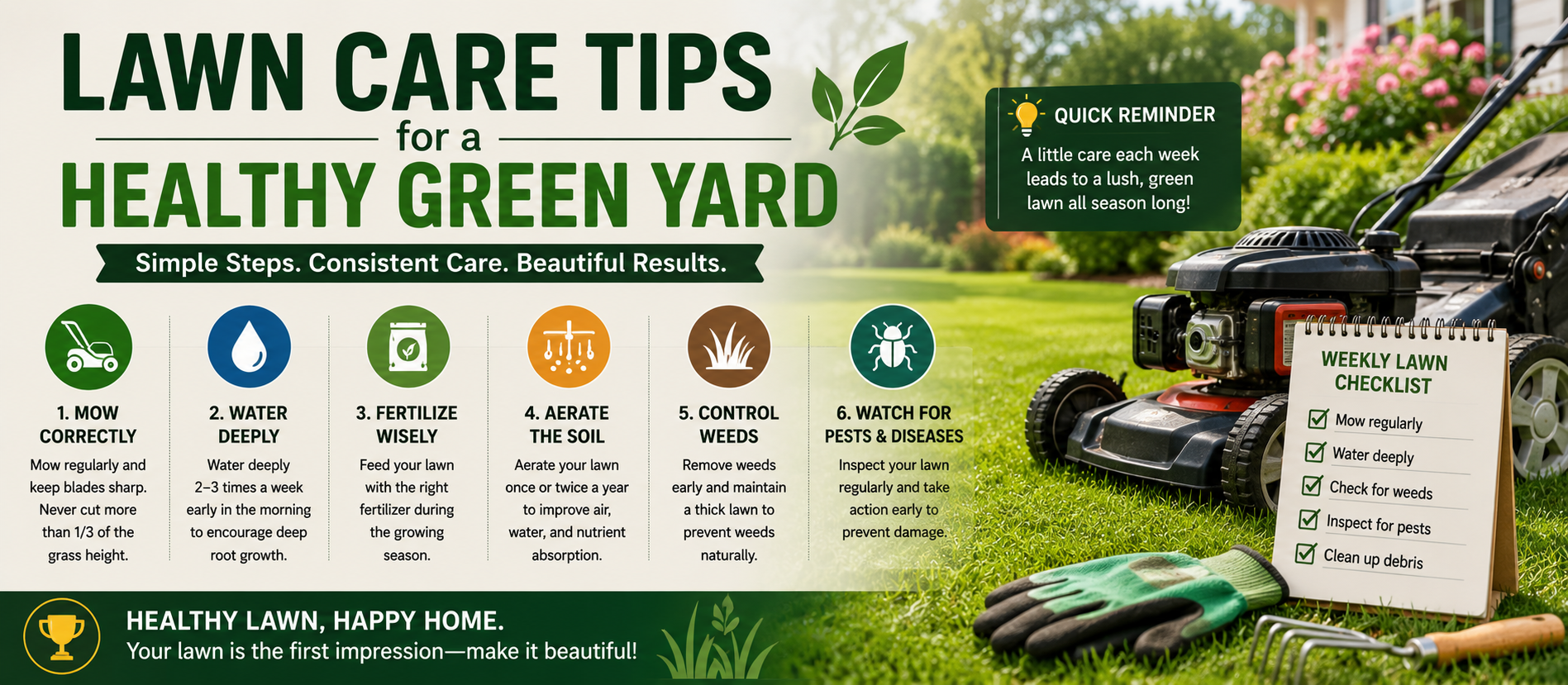
📋 Quick Summary
In this article:
Cool-Season Grasses
Warm-Season Grasses
Soil Health: The Foundation of a Green Lawn
A lush, healthy green lawn is one of the most attractive features of any property. A well-maintained yard enhances curb appeal, increases property value, improves outdoor living spaces, and creates a welcoming environment for family and guests. However, achieving and maintaining a vibrant lawn requires more than occasional mowing and watering.
Proper lawn care involves understanding grass growth, soil health, watering schedules, fertilization techniques, weed management, pest control, seasonal maintenance, and modern landscaping practices. Whether you are a first-time homeowner or an experienced gardener, following the right lawn care strategies can transform your yard into a beautiful outdoor oasis.
In this comprehensive guide, we explore proven lawn care tips that help homeowners maintain a healthy green yard throughout the year while improving sustainability and long-term lawn health.
Published by Digiifrog
Website: www.digiifrog.com
Why Lawn Care Matters
A healthy lawn offers numerous benefits beyond aesthetics. Proper lawn maintenance contributes to environmental health and enhances the overall functionality of outdoor spaces.
- Improves property appearance
- Increases home value
- Reduces soil erosion
- Improves air quality
- Supports cooling around the home
- Creates recreational space
- Enhances environmental sustainability
A thriving lawn serves as an investment in both your property and your quality of life.
Understanding Your Lawn Type
Before implementing lawn care practices, it is important to identify the type of grass growing in your yard.
Cool-Season Grasses
- Kentucky Bluegrass
- Perennial Ryegrass
- Fine Fescue
- Tall Fescue
These grasses perform best in cooler climates and thrive during spring and fall.
Warm-Season Grasses
- Bermuda Grass
- Zoysia Grass
- St. Augustine Grass
- Centipede Grass
Warm-season grasses grow actively during summer and prefer warmer temperatures.
Soil Health: The Foundation of a Green Lawn
Healthy soil provides the nutrients and support necessary for strong grass growth.
Improve Soil Quality
- Conduct soil testing
- Monitor pH levels
- Add organic matter
- Improve drainage
- Reduce soil compaction
Understanding soil conditions allows homeowners to create targeted lawn care plans.
Watering Your Lawn Correctly
Proper watering is one of the most important aspects of lawn care.
Best Watering Practices
- Water deeply but less frequently
- Water early in the morning
- Avoid evening watering
- Adjust schedules for weather conditions
- Monitor soil moisture levels
Deep watering encourages stronger root development and drought resistance.
Signs of Overwatering
- Mushy soil
- Fungal growth
- Yellowing grass
- Excessive thatch buildup
Signs of Underwatering
- Dry patches
- Footprints remaining visible
- Slow growth
- Brown discoloration
Mowing for Lawn Health
Mowing practices significantly influence lawn appearance and health.
Mowing Tips
- Never remove more than one-third of grass height
- Keep mower blades sharp
- Adjust cutting height seasonally
- Alternate mowing patterns
- Leave grass clippings when appropriate
Proper mowing encourages denser growth and healthier turf.
Fertilization Strategies
Grass requires nutrients to maintain color, growth, and resilience.
Essential Nutrients
- Nitrogen
- Phosphorus
- Potassium
Fertilization Best Practices
- Follow soil test recommendations
- Apply seasonally appropriate fertilizers
- Avoid over-fertilization
- Use slow-release products when possible
- Water after application if required
Balanced nutrition promotes healthy growth while minimizing environmental impact.
Weed Control for a Beautiful Lawn
Weeds compete with grass for nutrients, sunlight, and water.
Common Lawn Weeds
- Dandelions
- Crabgrass
- Clover
- Plantain
- Nutsedge
Weed Prevention Techniques
- Maintain dense turf
- Apply mulch in landscape beds
- Use pre-emergent treatments when appropriate
- Pull weeds before seed production
- Improve lawn health overall
Managing Lawn Pests
Pests can damage lawns by feeding on roots, stems, and grass blades.
Common Lawn Pests
- Grubs
- Armyworms
- Chinch bugs
- Mole crickets
- Sod webworms
Pest Management Tips
- Monitor lawn conditions regularly
- Identify pests accurately
- Promote healthy grass growth
- Use integrated pest management techniques
- Consult professionals when necessary
Preventing Lawn Diseases
Fungal and bacterial diseases can impact lawn appearance and health.
Common Lawn Diseases
- Brown patch
- Dollar spot
- Rust disease
- Snow mold
- Leaf spot
Disease Prevention
- Avoid overwatering
- Improve air circulation
- Maintain proper mowing heights
- Reduce excessive thatch
- Follow balanced fertilization programs
Aeration for Strong Root Systems
Soil compaction restricts water, oxygen, and nutrient movement.
Benefits of Aeration
- Improves root growth
- Enhances water penetration
- Reduces compaction
- Improves nutrient absorption
- Supports thicker turf growth
Aeration is especially beneficial for high-traffic lawns.
Overseeding for Lawn Improvement
Overseeding introduces new grass seed into existing turf.
Benefits
- Fills thin areas
- Improves lawn density
- Enhances disease resistance
- Improves color consistency
- Reduces weed invasion
Seasonal Lawn Care Checklist
Spring Lawn Care
- Clean debris
- Test soil
- Apply fertilizer
- Inspect for weeds
- Begin mowing schedule
Summer Lawn Care
- Monitor watering
- Raise mowing height
- Watch for pests
- Avoid over-fertilization
Autumn Lawn Care
- Aerate soil
- Overseed thin areas
- Apply fall fertilizer
- Remove leaves
Winter Lawn Care
- Minimize foot traffic
- Store equipment properly
- Plan next season's improvements
Smart Lawn Care Technology
Technology is making lawn care more efficient than ever.
Popular Smart Lawn Tools
- Smart irrigation controllers
- Weather-based watering systems
- Robotic lawn mowers
- Soil moisture sensors
- Lawn monitoring applications
These innovations help homeowners optimize lawn care while conserving resources.
Eco-Friendly Lawn Care Practices
Sustainable lawn care protects both your yard and the environment.
- Use organic fertilizers
- Reduce chemical applications
- Compost grass clippings
- Conserve water
- Promote biodiversity
- Select drought-tolerant grass varieties
Environmentally responsible lawn care contributes to long-term sustainability.
Common Lawn Care Mistakes
- Overwatering
- Mowing too short
- Ignoring soil health
- Applying excessive fertilizer
- Neglecting aeration
- Failing to control weeds early
⚠ Watch Out
Avoiding these mistakes helps maintain a healthy and attractive lawn.
AEO: Frequently Asked Questions
How often should I water my lawn?
Most lawns benefit from deep watering once or twice per week, depending on weather and soil conditions.
What is the best time to mow grass?
Late morning or early evening is often ideal because temperatures are moderate and grass is dry.
How can I make my lawn greener?
Proper watering, balanced fertilization, healthy soil, and regular mowing contribute to greener grass.
When should lawns be aerated?
Aeration is typically most effective during active growing seasons, such as spring or fall depending on grass type.
Do lawn care practices increase property value?
Yes. Attractive landscaping and healthy lawns can improve curb appeal and property marketability.
SEO, GEO, and AI Search Optimization Insights
Homeowners frequently search phrases such as "how to maintain a healthy lawn," "best lawn care tips," and "how to get greener grass naturally." AI-powered search platforms prioritize comprehensive content that provides direct answers, practical advice, and structured information.
Content optimized for SEO, AEO, GEO, and AI Search performs well when it includes detailed explanations, actionable checklists, FAQs, and seasonal guidance.
Final Thoughts
A healthy green lawn is the result of consistent care, proper planning, and attention to detail. By focusing on soil health, watering efficiency, mowing techniques, fertilization, pest management, and seasonal maintenance, homeowners can enjoy a beautiful yard throughout the year.
Whether your goal is enhancing curb appeal, creating outdoor living spaces, or improving environmental sustainability, following these lawn care tips will help you build and maintain a thriving landscape.
Digiifrog
Website: www.digiifrog.com
Digiifrog delivers SEO, AEO, GEO, AI Search optimization, digital marketing, content strategy, and growth solutions designed to help businesses succeed in the evolving search ecosystem.
Ready to Grow?
Talk to us about a strategy tailored to your brand — we will help you stand out in search, AI discovery and social.


Comments (0)
Log in to leave a comment.