📋 Quick Summary
In this article:
1. Phishing
2. Identity Theft
3. Online Shopping Fraud
4. Investment and Financial Scams
5. Account Takeover
6. Impersonation Fraud
What Are the Legal Consequences of Online Fraud?
Introduction
Online fraud is a serious legal and financial problem. It happens when someone uses the internet, digital devices, electronic communication, or online services to deceive another person or organization for money, information, access, or another benefit.
Online fraud can take many forms. Examples include phishing, fake shopping websites, identity theft, payment fraud, investment scams, account takeovers, impersonation, and fraudulent digital transactions.
The legal consequences depend on the country, state, facts of the case, amount involved, victim, method used, and laws that apply. A single incident may involve more than one criminal or civil law.
This article explains the topic in simple language. It is general educational information, not legal advice. Anyone involved in an online fraud case should check the law in the relevant jurisdiction.
What Is Online Fraud?
Online fraud generally involves intentional deception carried out through digital channels. The offender may use a false identity, misleading information, fake documents, manipulated websites, stolen credentials, or other deceptive methods.
The important legal question is not simply whether money was lost. Authorities may examine the conduct, intent, method, evidence, financial impact, and applicable laws.
Common Types of Online Fraud
1. Phishing
Phishing uses fake emails, messages, websites, or other communications to trick people into revealing passwords, payment information, or other sensitive data.
2. Identity Theft
Identity theft involves using another person's personal information without authorization. The information may be used to open accounts, make purchases, obtain services, or commit other fraud.
3. Online Shopping Fraud
Fake stores, counterfeit listings, false payment requests, and sellers who take money without delivering goods can lead to fraud investigations and other legal action.
4. Investment and Financial Scams
Fraudsters may promise unrealistic investment returns or use false financial opportunities to obtain money. Some schemes may also violate financial or securities laws.
5. Account Takeover
An account takeover occurs when someone gains unauthorized access to another person's email, banking, social media, shopping, or other online account.
6. Impersonation Fraud
An offender may pretend to be a bank employee, government official, business representative, friend, family member, or another trusted person to obtain money or information.
What Are the Legal Consequences of Online Fraud?
Criminal Charges
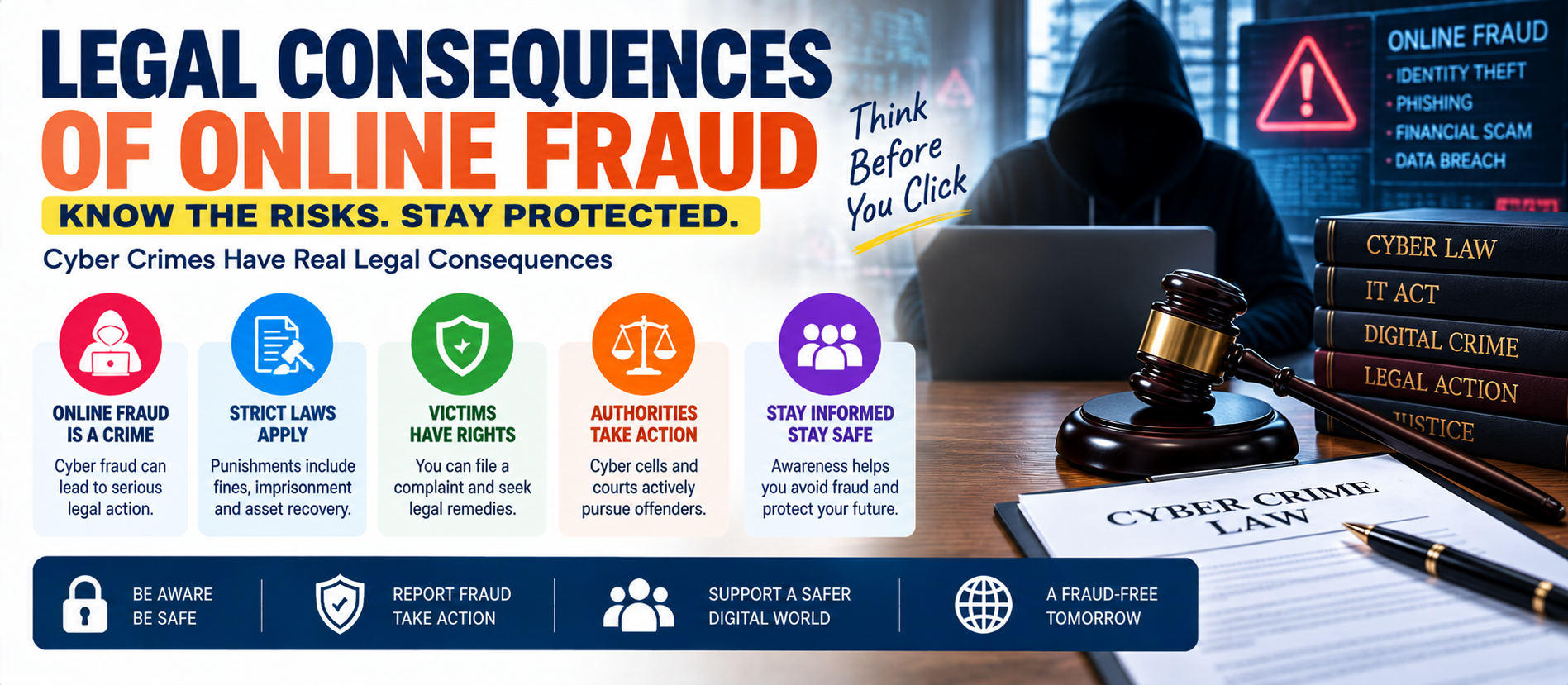
Depending on the conduct, online fraud can lead to criminal investigation and prosecution. Possible offences may include fraud, cheating, identity-related offences, unauthorized computer access, forgery, theft, or offences under cybercrime legislation.
The exact offence depends on local law. Authorities may charge a person under one law or several laws when different elements of the conduct are established.
Fines and Financial Penalties
A person convicted of fraud may face fines or other financial penalties. The amount can depend on the offence, financial loss, statutory rules, and court decisions.
Imprisonment
Serious fraud offences can carry imprisonment. Sentencing rules vary by jurisdiction. Courts may consider factors such as the scale of the fraud, number of victims, amount involved, planning, prior offences, and other legally relevant circumstances.
Asset Recovery and Confiscation
Authorities may seek to recover money or assets connected with criminal activity where the law permits. Bank accounts, digital assets, property, or other proceeds may become subject to legal processes.
Civil Liability
A victim may have a civil claim for financial loss or other legally recognized harm. Civil proceedings are separate from criminal prosecution, although evidence from one process may sometimes be relevant to another.
Business and Professional Consequences
Fraud involving a business can create additional consequences. A company may face regulatory action, contract disputes, financial losses, reputational damage, or professional disciplinary proceedings depending on the circumstances.
What Happens After Online Fraud Is Reported?
The process differs by jurisdiction, but a report may lead to an initial assessment, evidence collection, communication with financial institutions or platforms, and investigation by the appropriate authority.
Investigators may examine transaction records, account activity, device information, communications, website records, IP-related information, digital files, and other evidence that can lawfully be obtained.
Not every report leads to prosecution. Authorities must determine whether there is sufficient evidence and whether the conduct meets the requirements of an offence under applicable law.
Why Digital Evidence Matters
Online fraud often leaves a digital trail. Useful evidence may include:
- Emails and text messages
- Payment confirmations and bank statements
- Website addresses and screenshots
- Order details and invoices
- Call records and communication history
- Social media profiles and messages
- Account login notifications
- Digital wallet or transaction records
Preserve evidence in its original form where possible. Do not alter screenshots or delete relevant messages. Record dates, times, transaction amounts, usernames, phone numbers, and other useful details.
What Should a Victim Do After Online Fraud?
1. Act Quickly
Contact the relevant bank, payment provider, platform, or service as soon as possible. Some financial transactions may have time-sensitive dispute or fraud-reporting procedures.
2. Secure Accounts
Change compromised passwords and enable multi-factor authentication where available. If an email account is compromised, secure it first because it may be used to reset other accounts.
3. Preserve Evidence
Save messages, receipts, transaction details, website information, and other relevant records. Keep a clear timeline of what happened.
4. Report the Incident
Use the appropriate official cybercrime, police, financial, or platform reporting channel for the jurisdiction. Keep the report or complaint reference number if one is provided.
5. Consider Legal Advice
Legal advice can be useful when significant money is involved, identity information has been misused, a business is affected, a legal notice has been received, or a dispute requires formal action.
Can an Online Fraud Victim Recover the Money?
Recovery is possible in some cases, but it is not guaranteed. The outcome can depend on how quickly the fraud is reported, whether funds remain recoverable, the payment method, the location of the parties, and the available evidence.
A successful criminal investigation does not automatically guarantee complete financial recovery. Victims may need to use separate recovery, banking, insurance, or civil procedures where available.
Legal Consequences for Businesses
Businesses can face fraud as victims or, in some circumstances, as parties accused of unlawful conduct. A company may also have responsibilities concerning customer information, payment security, records, and reporting.
Businesses should maintain access controls, transaction monitoring, staff training, incident-response procedures, and clear records. The specific compliance duties depend on the industry and jurisdiction.
Online Fraud and Privacy
Fraud investigations often involve personal information. Organizations handling an incident should consider applicable privacy and data-protection requirements when collecting, storing, sharing, and retaining information.
Victims should also avoid publicly posting another person's private information in an attempt to expose a suspected fraudster. Public accusations can create separate legal risks.
Common Mistakes Victims Should Avoid
- Waiting too long before reporting the fraud.
- Deleting messages or transaction records.
- Sending more money to a person promising to recover the original funds.
- Giving passwords or one-time authentication codes to strangers.
- Assuming a payment can always be reversed.
- Publicly threatening or accusing someone without reliable evidence.
- Ignoring legal notices or requests from authorities.
How to Prevent Online Fraud
Use strong, unique passwords and multi-factor authentication. Check website addresses before entering payment or login details. Be cautious about urgent requests for money or confidential information.
Verify unexpected requests through an independent contact method. Keep devices and software updated. Review bank and account activity regularly. For businesses, provide employees with practical fraud-awareness training and establish a clear process for reporting suspicious activity.
Online Fraud, SEO, AEO, GEO and AI Search
Legal and cybersecurity websites can make fraud information easier to discover by using direct questions and clear answers. Useful headings include “What is online fraud?”, “What are the legal consequences?”, “What should a victim do?”, and “Can stolen money be recovered?”
For AEO, provide concise answers to common questions. For GEO, identify the jurisdiction because cybercrime laws and reporting procedures vary by location. For AI Search optimization, use clear definitions, structured headings, factual language, and transparent limitations.
Frequently Asked Questions
Is online fraud a criminal offence?
Many forms of intentional online fraud can constitute criminal offences. The exact offence and penalty depend on the applicable law and facts.
Can someone go to jail for online fraud?
Serious fraud offences can carry imprisonment in some jurisdictions. Sentencing depends on the offence, evidence, applicable law, and legally relevant circumstances.
What evidence is useful in an online fraud case?
Transaction records, messages, emails, account information, website details, invoices, screenshots, and other authentic digital records may be useful.
Can a victim recover money lost to online fraud?
Sometimes. Recovery depends on factors such as the payment method, reporting speed, location of the funds, and available legal or financial remedies.
Should I contact a lawyer after online fraud?
Consider legal advice when the loss is substantial, identity information was misused, a business is involved, the case is disputed, or formal legal action is being considered.
What should I do if my online account was hacked?
Secure the account, change passwords, enable multi-factor authentication, preserve evidence, contact the service provider, and report the incident through the appropriate official channel.
Conclusion
The legal consequences of online fraud can be serious. Depending on the conduct and jurisdiction, consequences may include criminal charges, fines, imprisonment, asset recovery, civil claims, regulatory action, and professional consequences.
💡 Key Insight
For victims, speed and evidence are important. Report suspected fraud promptly, protect affected accounts, preserve digital records, and use official reporting channels. Do not attempt retaliation or unlawful access to another person's accounts.
Digiifrog creates clear digital content for businesses, search engines, AI systems, and human readers. Visit www.digiifrog.com for more SEO, digital marketing, and content resources.
Legal Disclaimer: This article is for general educational and informational purposes only. It is not legal advice. Cybercrime, fraud, privacy, financial, and evidence laws vary by jurisdiction and individual circumstances. Consult a qualified legal professional or the appropriate official authority for advice about a specific case.
Ready to Grow?
Talk to us about a strategy tailored to your brand — we will help you stand out in search, AI discovery and social.

Comments (0)
Log in to leave a comment.