📋 Quick Summary
In this article:
Core Components of Network Security
Intrusion Detection and Prevention (IDS/IPS)
Virtual Private Networks (VPNs)
Identity and Access Management (IAM)
Modern Network Security Technologies
💡 Key Insight
Every modern business depends on computer networks to connect employees, customers, cloud services, applications, and devices. As organizations expand their digital operations, cyber threats such as ransomware, phishing, insider attacks, and data breaches continue to increase. A strong network security strategy is essential for protecting business assets, maintaining customer trust, and ensuring operational continuity.
This WordPress-ready guide explains the fundamentals of network security, core technologies, best practices, and emerging trends. The content is optimized for SEO, AEO, GEO, and AI Search optimization.
What Is Network Security?
Network security is the combination of policies, technologies, and procedures used to protect networks, connected devices, applications, and data from unauthorized access, misuse, disruption, and cyber attacks.
Why Network Security Matters
- Protects confidential business information.
- Prevents ransomware and malware infections.
- Supports regulatory compliance.
- Maintains business continuity.
- Strengthens customer confidence.
Core Components of Network Security
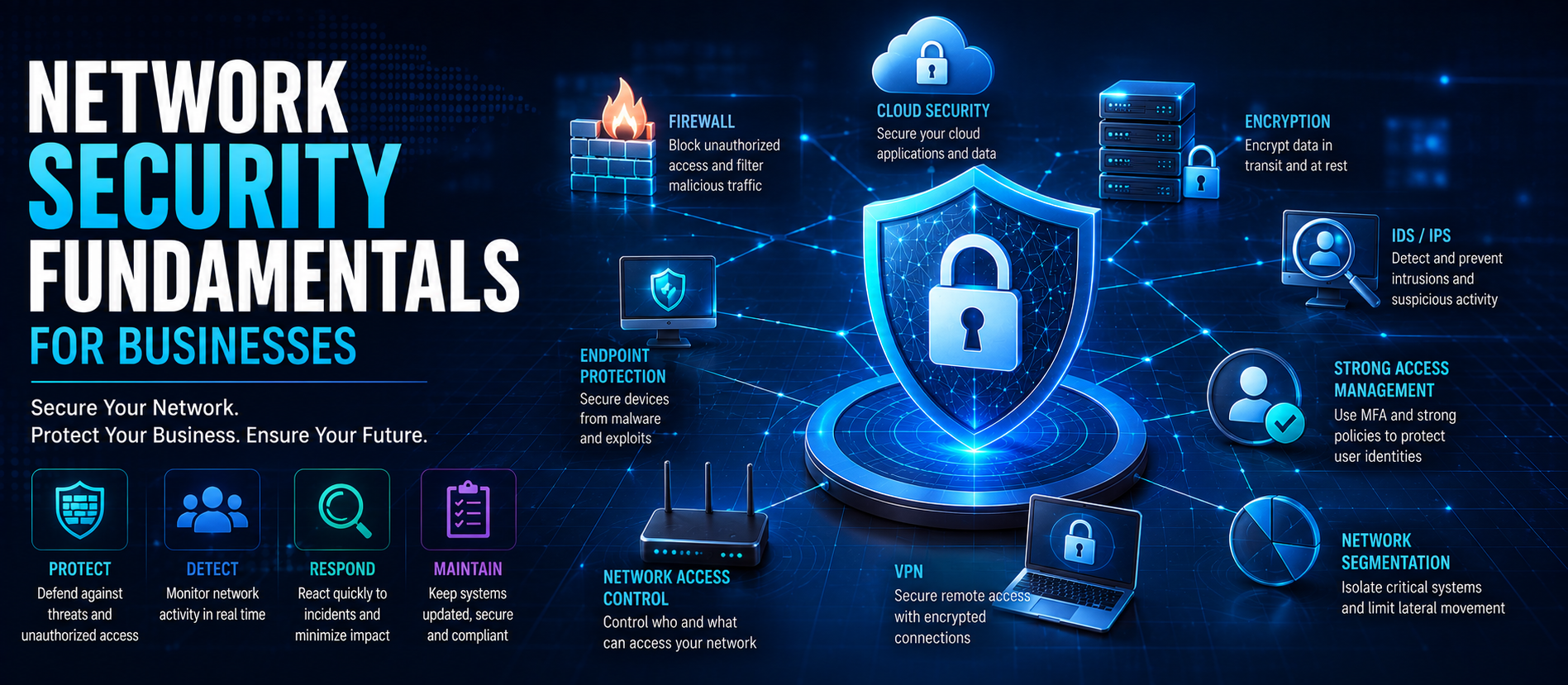
Firewalls
Filter inbound and outbound network traffic based on defined security rules.
Intrusion Detection and Prevention (IDS/IPS)
Detect and block suspicious activity before it compromises systems.
Virtual Private Networks (VPNs)
Encrypt remote connections for employees and branch offices.
Identity and Access Management (IAM)
Control user identities using least privilege, RBAC, and Multi-Factor Authentication (MFA).
Endpoint Protection
Secure laptops, desktops, mobile devices, and servers against malware and unauthorized access.
Network Segmentation
Separate critical systems to reduce lateral movement during attacks.
Modern Network Security Technologies
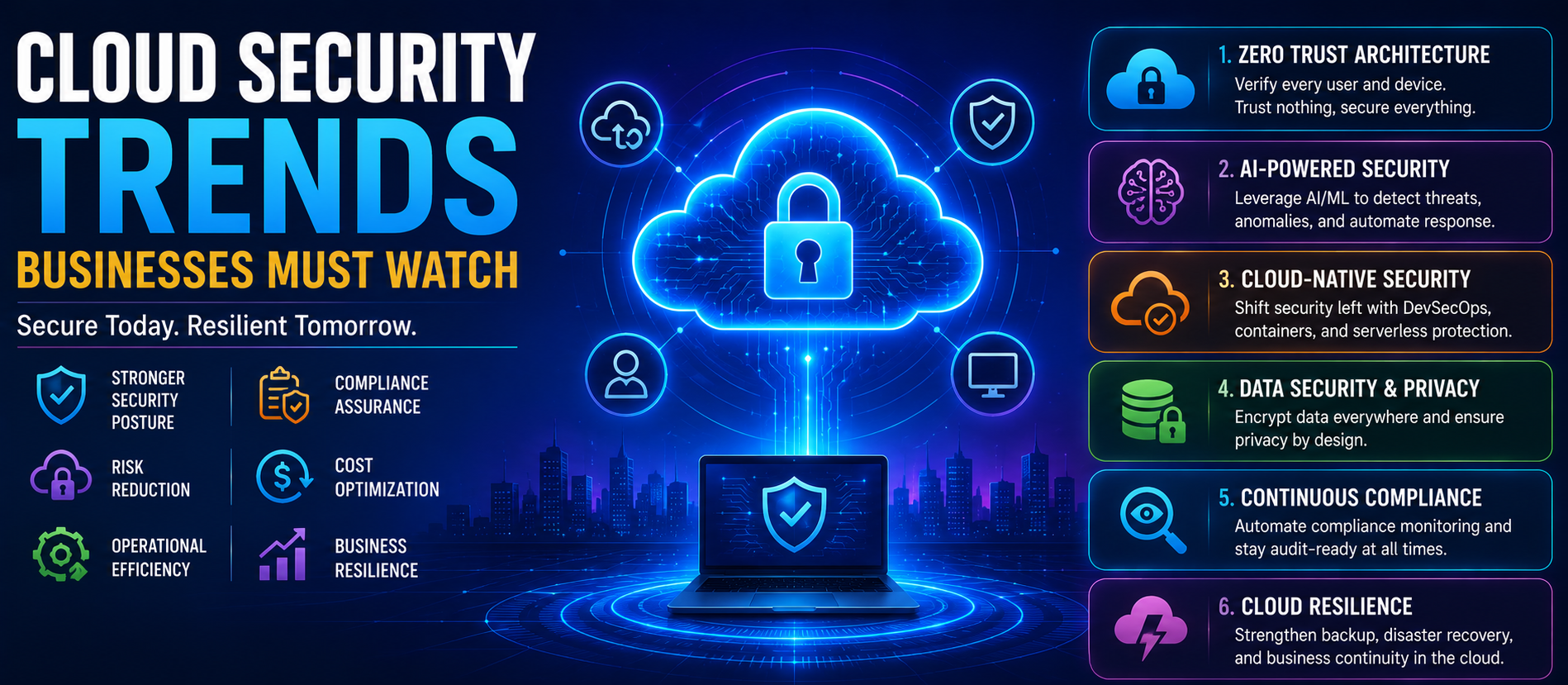
- Zero Trust Architecture
- Extended Detection & Response (XDR)
- Security Information and Event Management (SIEM)
- Network Detection & Response (NDR)
- Cloud Security Posture Management (CSPM)
- Secure Access Service Edge (SASE)
Common Network Threats
- Phishing attacks
- Ransomware
- Distributed Denial-of-Service (DDoS)
- Insider threats
- Credential theft
- Misconfigured cloud resources
Best Practices
- Enable MFA across all critical accounts.
- Apply security patches promptly.
- Monitor logs continuously.
- Encrypt sensitive data in transit and at rest.
- Perform regular vulnerability assessments and penetration testing.
- Maintain secure backups following the 3-2-1 rule.
- Provide ongoing employee security awareness training.
AI and Network Security
Artificial Intelligence helps security teams detect anomalies, prioritize threats, automate incident response, and identify suspicious network behavior before significant damage occurs.
Business Benefits
- Reduced cyber risk
- Improved uptime
- Lower recovery costs
- Better compliance
- Enhanced digital resilience
SEO, AEO & GEO Best Practices
Use structured headings, semantic keywords, practical examples, direct answers, and FAQ sections to improve discoverability across Google, Bing, ChatGPT, Gemini, Copilot, and other AI-powered search platforms.
AEO & GEO Optimized FAQs
What is network security?
Network security protects computer networks, connected devices, and data using technologies, policies, and monitoring.
Why is MFA important?
MFA adds an extra layer of authentication, reducing the risk of credential theft and unauthorized access.
What is Zero Trust?
Zero Trust assumes no user or device is trusted by default and continuously verifies every access request.
How often should businesses assess network security?
Organizations should continuously monitor networks and perform regular vulnerability assessments, audits, and penetration tests.
Conclusion
Network security is the foundation of every modern cyber security program. By combining layered defenses, Zero Trust principles, employee awareness, AI-powered monitoring, and continuous improvement, businesses can significantly reduce cyber risk and build resilient digital operations in 2026 and beyond.
For more expert insights on Cyber Security, Cloud Security, SEO, AEO, GEO, AI Search Optimization, and Digital Transformation, visit Digiifrog at www.digiifrog.com.
Ready to Grow?
Talk to us about a strategy tailored to your brand — we will help you stand out in search, AI discovery and social.

Comments (0)
Log in to leave a comment.