
📋 Quick Summary
In this article:
Quick Answer: Can Landscaping Increase Home Value?
Why Landscaping Matters for Home Value
1. Start With Excellent Curb Appeal
2. Create a Healthy and Well-Maintained Lawn
3. Add Professional Landscape Design
4. Choose Native and Climate-Appropriate Plants
5. Use Layered Planting for a Professional Look
6. Upgrade Walkways and Garden Paths
7. Improve the Front Entrance Landscape
8. Add Outdoor Lighting
9. Build an Attractive Patio or Outdoor Living Area
10. Create Defined Outdoor Zones
Professional landscaping can improve curb appeal, create more usable outdoor space, and make a property more attractive to potential buyers. A home's exterior is often the first thing visitors notice. A clean, balanced, and well-maintained landscape can create a strong first impression before someone even enters the property.
Landscaping is not only about planting flowers or cutting grass. A professional approach considers the entire outdoor environment. It may include lawn care, trees, shrubs, pathways, lighting, patios, drainage, privacy features, and outdoor living areas.
Not every landscaping project will increase a home's value by the same amount. Results depend on the local real estate market, property condition, climate, project quality, maintenance requirements, and buyer preferences. However, thoughtful landscaping can improve a property's appearance and marketability.
This guide explains practical professional landscaping ideas to increase home value. The recommendations focus on attractive, functional, and sustainable improvements that can help homeowners create a better outdoor environment.
Quick Answer: Can Landscaping Increase Home Value?
Landscaping can increase a property's appeal and may contribute to home value by improving curb appeal, usability, privacy, and the overall impression of the property. The financial impact varies by location and project. The best landscaping improvements usually match the home's style, climate, neighborhood, and maintenance expectations of potential buyers.
Why Landscaping Matters for Home Value
The exterior of a home creates an immediate impression. An untidy yard with overgrown plants, damaged pathways, or poor outdoor lighting can make a property feel neglected. In contrast, a clean and well-designed landscape can make the home appear cared for and inviting.
Professional landscaping can improve:
- Curb appeal.
- First impressions.
- Outdoor functionality.
- Privacy.
- Property appearance.
- Usable living space.
- Environmental comfort.
Landscaping should be viewed as part of the overall property presentation. A beautiful garden may be valuable, but it should also be practical and appropriate for the property.
1. Start With Excellent Curb Appeal
Curb appeal is one of the most important goals of front-yard landscaping. The front of the home should look clean, balanced, and welcoming.
Simple improvements can include:
- Keeping the lawn trimmed.
- Removing dead plants and weeds.
- Pruning overgrown shrubs.
- Refreshing garden bed edges.
- Adding healthy plants.
- Cleaning walkways and driveways.
- Improving the appearance of the entryway.
A professional landscaping plan does not need to be overly complicated. A simple, organized design often creates a stronger impression than a crowded landscape.
2. Create a Healthy and Well-Maintained Lawn
A healthy lawn can make an outdoor space look larger, cleaner, and more inviting. Lawn condition is especially noticeable from the street.
Basic lawn care may include:
- Regular mowing.
- Appropriate watering.
- Seasonal care based on grass type.
- Removing weeds.
- Repairing damaged areas.
- Improving soil conditions when necessary.
The best lawn strategy depends on the local climate and water availability. In dry regions, homeowners may prefer drought-tolerant landscaping rather than maintaining a large, water-intensive lawn.
3. Add Professional Landscape Design
A professional landscape design considers the relationship between the home, plants, pathways, outdoor features, and surrounding environment.
Good design often uses:
- Balanced plant placement.
- Clear pathways.
- Appropriate plant sizes.
- Seasonal interest.
- Visual focal points.
- Functional outdoor zones.
Before starting a major project, consider how the landscape will look as plants mature. A small shrub can eventually become large enough to block windows, pathways, or other features.
4. Choose Native and Climate-Appropriate Plants
Plants should be selected based on the local climate, soil, sunlight, and maintenance requirements.
Climate-appropriate plants can offer several advantages:
- Better adaptation to local conditions.
- Potentially lower water needs.
- Reduced maintenance requirements.
- Improved long-term plant health.
- Support for local outdoor ecosystems when appropriate.
Homeowners should avoid selecting plants only because they look attractive at a nursery. Consider mature size, growth rate, water requirements, and long-term maintenance.
5. Use Layered Planting for a Professional Look
Professional landscapes often use layers to create depth and visual interest.
A basic layered design may include:
- Taller trees or large shrubs in the background.
- Medium-sized shrubs in the middle area.
- Smaller plants and ground cover near the front.
The exact design depends on the available space and architecture of the home. Avoid planting too densely. Plants need room to grow and proper airflow.
6. Upgrade Walkways and Garden Paths
Walkways guide people through the property and can significantly improve outdoor appearance.
Possible materials include:
- Natural stone.
- Pavers.
- Concrete.
- Gravel where appropriate.
- Brick.
A walkway should be attractive, stable, and appropriate for the location. Professional installation can help address grading, drainage, and long-term durability.
7. Improve the Front Entrance Landscape
The front entrance is a key visual focal point. Landscaping around the entry should highlight the home rather than hide it.
Consider:
- Well-maintained plants.
- Seasonal containers.
- Clean pathways.
- Appropriate outdoor lighting.
- Balanced planting beds.
- A visible and welcoming entrance.
Keep plants from blocking doors, windows, house numbers, and important access areas.
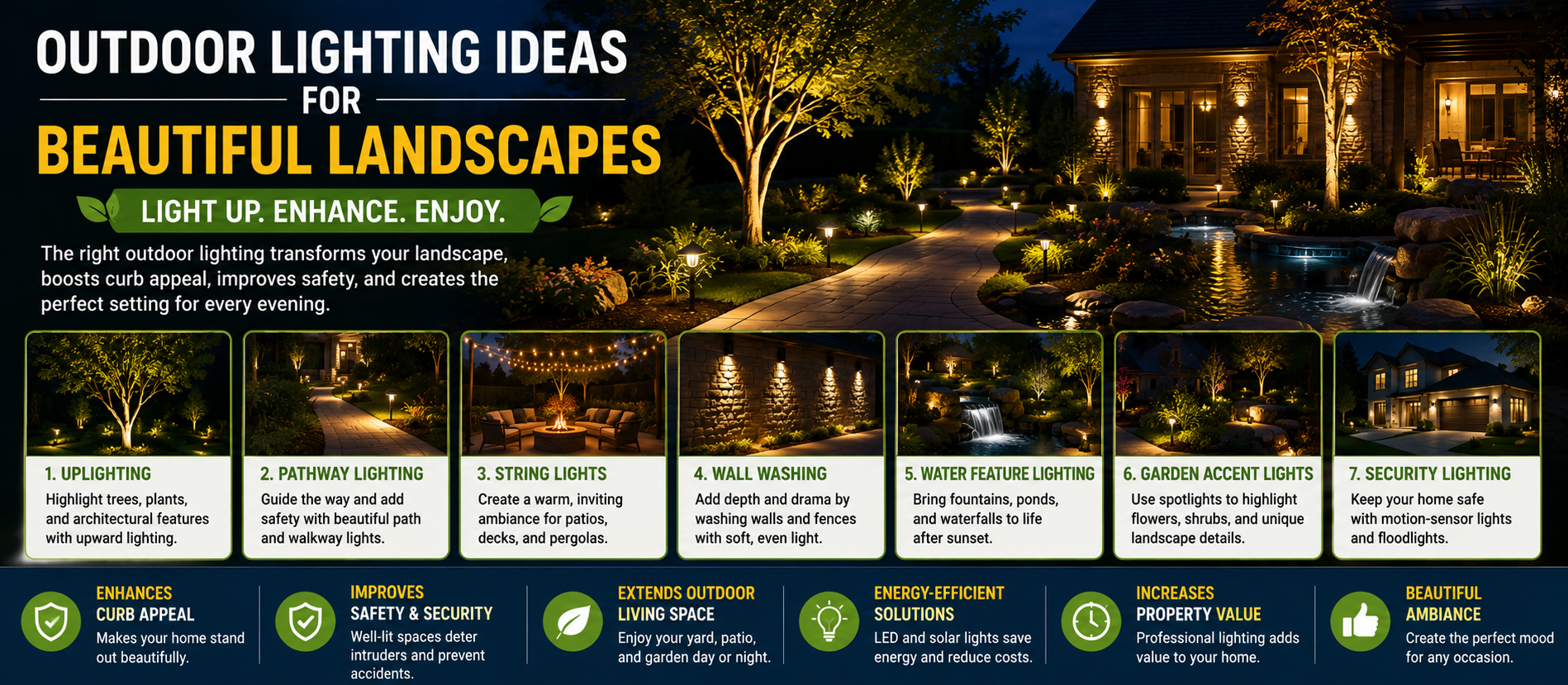
8. Add Outdoor Lighting
Landscape lighting can improve the appearance and usability of outdoor areas after sunset.
Lighting can be used for:
- Walkways.
- Entry areas.
- Patios.
- Landscape features.
- Trees.
- Outdoor seating areas.
⚠ Watch Out
Avoid excessive lighting. A professional design should provide useful illumination without creating unnecessary glare.
Outdoor electrical work should be performed according to applicable safety requirements by qualified professionals when needed.
9. Build an Attractive Patio or Outdoor Living Area
Outdoor living areas can make a property feel more functional. A well-designed patio may provide space for dining, relaxing, or entertaining.
Popular features include:
- Patios.
- Decks.
- Outdoor seating areas.
- Pergolas.
- Shade structures.
- Outdoor kitchens where appropriate.
The best outdoor living area matches the size of the property and the lifestyle of potential users. A simple, high-quality space can be more appealing than an oversized project that overwhelms the yard.
10. Create Defined Outdoor Zones
Professional landscaping often organizes the yard into clear functional areas.
For example:
- An entry garden.
- A seating area.
- A dining space.
- A children's play area.
- A garden area.
- An open lawn space.
Defined zones can make the property feel organized and help buyers imagine how they might use the outdoor space.
11. Improve Privacy With Strategic Landscaping
Privacy is important to many homeowners. Landscaping can provide visual separation from neighboring properties when designed carefully.
Options may include:
- Appropriate hedges.
- Small trees.
- Privacy screens.
- Trellises.
- Fencing combined with planting.
Before planting near property boundaries, consider local rules, mature plant size, utility locations, and maintenance responsibilities.
12. Add Shade With Trees and Structures
Shade can make outdoor areas more comfortable during warm weather. Well-placed trees may also improve the appearance of a property.
Choose tree species carefully based on:
- Climate.
- Mature size.
- Root growth.
- Maintenance needs.
- Distance from buildings and utilities.
A certified or qualified tree professional can provide guidance when planting large trees or managing mature trees.
13. Use Mulch to Improve Garden Beds
Mulch can create a clean and finished appearance around plants. Depending on the material and application, it may also help manage weeds and moisture.
Mulch should be used appropriately. Avoid piling mulch directly against tree trunks or building structures.
Refresh garden beds when mulch becomes thin, uneven, or visually worn.
14. Install Attractive Garden Borders
Clear borders can make landscaping look organized. Garden edging separates lawns, pathways, and planting areas.
Possible materials include:
- Stone.
- Brick.
- Metal edging.
- Concrete products.
- Other durable landscape materials.
Choose materials that complement the home's exterior and the overall landscape style.
15. Add Seasonal Color Carefully
Flowers and seasonal plants can make an outdoor area feel lively. However, too many different colors and plant types can create a cluttered appearance.
A professional approach may use a limited color palette that complements the home.
Seasonal color can be added through:
- Flower beds.
- Containers.
- Entryway planters.
- Small accent gardens.
16. Improve Drainage Before Adding Decorative Features
Drainage problems can damage lawns, plants, pathways, and building areas. A landscape should manage water appropriately rather than simply hide wet areas with decorative materials.
Signs of possible drainage problems include:
- Standing water.
- Repeated muddy areas.
- Water flowing toward the home.
- Erosion.
- Plant damage caused by excess water.
Drainage improvements should be designed carefully. Significant grading or drainage work may require professional planning and compliance with local requirements.
17. Consider Sustainable Landscaping
Sustainable landscaping focuses on creating outdoor spaces that use resources responsibly and suit local environmental conditions.
Possible strategies include:
- Choosing climate-appropriate plants.
- Reducing unnecessary water use.
- Using efficient irrigation practices.
- Improving soil health.
- Using mulch appropriately.
- Reducing unnecessary chemical use.
Sustainable landscaping can appeal to homeowners who prefer lower-maintenance and resource-conscious outdoor spaces.
18. Install Efficient Irrigation Where Appropriate
Watering needs vary based on climate, plant type, soil, and weather. An efficient irrigation system may help manage watering when properly designed and maintained.
Potential features include:
- Zone-based watering.
- Timers or smart controls.
- Drip irrigation for appropriate planting areas.
- Seasonal adjustments.
Irrigation should be monitored for leaks, overspray, and unnecessary water use.
19. Keep Trees and Shrubs Properly Maintained
Overgrown vegetation can make a home look neglected and may block windows, walkways, or outdoor lighting.
Regular maintenance may include:
- Removing dead or damaged plant material.
- Appropriate pruning.
- Maintaining clearance from structures.
- Managing plant size.
Large trees and hazardous branches should be evaluated by qualified professionals.
20. Add a Focal Point
A focal point can give an outdoor space a stronger design identity.
Possible focal points include:
- A specimen tree.
- A small water feature where practical.
- A sculpture.
- A fire feature installed and used safely.
- An attractive seating area.
- A decorative garden structure.
One strong focal point is often enough. Too many competing features can make a landscape feel crowded.
21. Improve the Driveway Area
The driveway is often a major visual element of the front property. Keep the area clean and well-maintained.
Consider:
- Repairing obvious surface damage.
- Adding attractive planting borders.
- Improving nearby lighting.
- Keeping vegetation from blocking access.
Do not add landscaping that reduces vehicle visibility or creates unsafe access conditions.
22. Create Low-Maintenance Landscaping
Many buyers appreciate attractive landscaping that does not require excessive weekly work.
Low-maintenance ideas may include:
- Perennial plants suited to the region.
- Appropriate shrubs.
- Mulched planting beds.
- Drought-tolerant plants where suitable.
- Simple garden layouts.
Low maintenance does not mean zero maintenance. Every landscape requires some level of care.
23. Make the Backyard Feel Like an Extension of the Home
A backyard can become an additional living space when it is comfortable and easy to use.
Simple improvements can include:
- Comfortable seating.
- Defined gathering areas.
- Shade.
- Lighting.
- Clean pathways.
- Attractive planting.
The goal is to make the outdoor area feel connected to the property without overcrowding the available space.
24. Avoid Over-Personalized Landscaping
When the goal is increasing market appeal, extremely personal landscaping choices may not appeal to every buyer.
For example, a very unusual color scheme, large decorative collection, or highly specialized garden may limit broad appeal.
A balanced landscape with flexible outdoor spaces often appeals to a wider audience.
25. Maintain the Landscape Regularly
Even the best landscape design can lose its impact without regular care.
Basic maintenance includes:
- Mowing and lawn care.
- Weed control.
- Pruning when appropriate.
- Removing dead plants.
- Refreshing mulch.
- Cleaning pathways.
- Checking irrigation systems.
Regular maintenance helps protect the appearance of the landscaping investment.
Professional Landscaping vs. DIY Landscaping
DIY landscaping can work well for simple tasks. However, professional services may be valuable for complex projects involving design, drainage, grading, irrigation, retaining structures, mature trees, or large installations.
A professional landscaper can help create a coordinated plan that considers:
- Property layout.
- Climate conditions.
- Plant growth.
- Drainage.
- Maintenance needs.
- Budget.
Landscaping Ideas for Small Yards
Small yards can still make a strong impression. The key is efficient use of space.
Consider:
- Vertical planting.
- Compact furniture.
- Small patios.
- Clearly defined planting areas.
- Simple color schemes.
- Appropriately sized plants.
A crowded small yard can feel even smaller. Clean lines and open areas can create a more spacious appearance.
Landscaping Ideas for Large Properties
Large properties offer more design opportunities but may also require more maintenance.
Divide the landscape into manageable areas and create a clear overall plan. Avoid installing features simply because there is available space.
A large property may benefit from:
- Defined outdoor zones.
- Pathways connecting different areas.
- Strategic tree placement.
- Large planting beds with manageable plant selections.
Common Landscaping Mistakes That Can Hurt Curb Appeal
Overcrowding Plants
Plants need room to mature. Overcrowding can make the landscape look messy and increase maintenance needs.
Ignoring Drainage Problems
Decorative improvements should not replace proper drainage planning.
Choosing Plants That Do Not Suit the Climate
High-maintenance plants that struggle in local conditions can become expensive and difficult to maintain.
Using Too Many Different Materials
Too many colors, textures, and materials can create a disorganized appearance.
Forgetting Long-Term Maintenance
Every landscaping project should include a realistic maintenance plan.
How to Prioritize Landscaping Projects
If your budget is limited, start with the improvements that address visible problems and improve overall appearance.
A practical order may be:
- Fix drainage and safety concerns.
- Remove dead or damaged vegetation.
- Improve lawn and garden maintenance.
- Clean pathways and outdoor surfaces.
- Upgrade the front entrance.
- Add planting and design improvements.
- Consider larger outdoor living projects.
This approach helps homeowners focus on the foundation before investing in decorative features.
Simple Professional Landscaping Checklist
- Lawn is healthy and maintained.
- Dead plants and weeds are removed.
- Trees and shrubs are properly maintained.
- Garden beds have clear edges.
- Plants suit the local climate.
- Walkways are clean and safe.
- The front entrance looks welcoming.
- Outdoor lighting is functional and appropriate.
- Drainage concerns are addressed.
- Outdoor spaces are functional and organized.
- Privacy features are attractive and practical.
- The landscape has a realistic maintenance plan.
SEO, AEO, GEO, and AI Search Optimization
This article is designed to answer common questions about professional landscaping ideas to increase home value using clear structure and direct explanations.
For SEO, relevant search topics include landscaping ideas to increase home value, professional landscaping, curb appeal landscaping, and best landscaping improvements for home value.
For AEO, the article directly answers questions such as:
- Can landscaping increase home value?
- What landscaping improvements improve curb appeal?
- What are the best low-maintenance landscaping ideas?
- Should I hire a professional landscaper?
For GEO and AI Search optimization, the article uses concise answers, structured headings, checklists, practical examples, and clear language that AI-powered search systems can more easily understand and summarize.
Frequently Asked Questions
Does professional landscaping increase home value?
Professional landscaping can improve curb appeal and property attractiveness, which may contribute to marketability and value. The financial impact varies by location, property type, project quality, and buyer demand.
What landscaping adds the most curb appeal?
A healthy lawn, maintained trees and shrubs, clean garden beds, attractive pathways, a welcoming entrance, and balanced planting can all improve curb appeal.
What is the best landscaping for a low-maintenance yard?
Climate-appropriate plants, manageable garden beds, appropriate mulch, perennial planting, and efficient irrigation can help reduce maintenance requirements.
Should I landscape before selling my home?
Basic cleanup and curb appeal improvements may help the property make a better first impression. Focus first on removing dead plants, maintaining the lawn, trimming overgrowth, and improving the entrance area.
Are outdoor living spaces good for home value?
Functional outdoor spaces can improve property appeal. The best project depends on the property's size, neighborhood, climate, and buyer preferences.
How can I improve my yard on a limited budget?
Start with maintenance, cleanup, lawn care, pruning, garden bed edging, and simple planting improvements. These steps can improve appearance without requiring a major construction project.
Final Thoughts
Professional landscaping is one of the most effective ways to improve the appearance and usability of a home's outdoor space. A thoughtful landscape can create stronger curb appeal, improve privacy, provide outdoor living areas, and make the property feel more complete.
The best landscaping projects are not always the most expensive. Simple improvements such as healthy plants, clean pathways, a maintained lawn, strategic lighting, and an attractive entry can make a major difference.
Focus on quality, functionality, climate-appropriate design, and realistic maintenance. When planning complex projects, work with qualified landscaping and construction professionals who understand local conditions and applicable requirements.
For more useful content about home improvement, home services, landscaping, technology, SEO, AEO, GEO, and AI Search optimization, visit www.digiifrog.com.
Disclaimer
This article provides general educational information. Landscaping results and potential effects on property value vary based on location, property condition, market demand, project quality, climate, and other factors. Large landscaping projects involving drainage, grading, structures, electrical systems, trees, or property boundaries may require qualified professionals, permits, or compliance with local regulations.
Ready to Grow?
Talk to us about a strategy tailored to your brand — we will help you stand out in search, AI discovery and social.

Comments (0)
Log in to leave a comment.