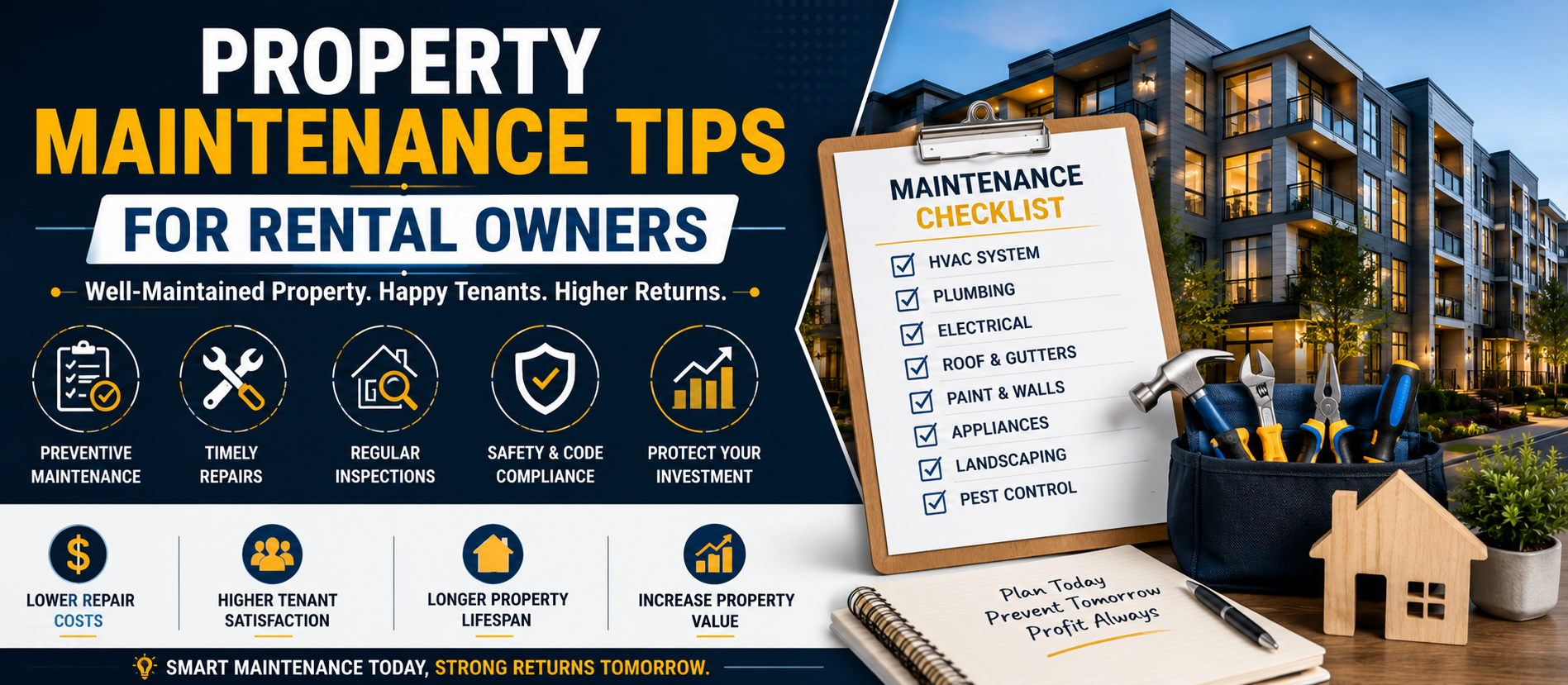
📋 Quick Summary
In this article:
Why Property Maintenance Matters
Create a Preventive Maintenance Plan
Conduct Regular Property Inspections
Establish Clear Tenant Communication
Seasonal Maintenance Checklist
💡 Key Insight
Owning rental property can be one of the most rewarding real estate investments, generating consistent income, long-term appreciation, and financial security. However, successful rental property ownership requires more than simply collecting rent each month. Effective property maintenance is essential for protecting asset value, attracting quality tenants, reducing vacancy rates, and maximizing profitability.
Well-maintained rental properties not only create positive tenant experiences but also prevent costly repairs, improve safety, and enhance long-term investment performance. Whether you own a single-family rental home, apartment building, duplex, or commercial rental property, proactive maintenance can save significant time and money.
This comprehensive guide explores the most important property maintenance tips every rental owner should follow to protect their investment and ensure long-term success.
Why Property Maintenance Matters
Property maintenance directly affects tenant satisfaction, property value, rental income, and overall profitability. Ignoring maintenance issues often leads to larger and more expensive problems in the future.
Benefits of proper maintenance include:
- Higher property value
- Reduced repair costs
- Improved tenant retention
- Lower vacancy rates
- Enhanced safety
- Stronger cash flow
- Better property appearance
Successful landlords view maintenance as an investment rather than an expense.
Create a Preventive Maintenance Plan
Preventive maintenance is one of the most effective ways to reduce long-term costs. Instead of waiting for systems to fail, landlords should schedule regular inspections and servicing.
A preventive maintenance plan may include:
- HVAC inspections
- Roof inspections
- Plumbing checks
- Electrical evaluations
- Pest control services
- Safety equipment testing
Preventive maintenance helps identify minor issues before they become major repairs.
Conduct Regular Property Inspections
Routine inspections allow landlords to monitor property condition and identify maintenance concerns early.
Recommended inspection types include:
- Move-in inspections
- Move-out inspections
- Quarterly inspections
- Seasonal inspections
- Annual property reviews
Regular inspections also encourage tenants to maintain the property responsibly.
Maintain HVAC Systems
Heating, ventilation, and air conditioning systems are among the most important components of any rental property.
Maintenance recommendations:
- Replace air filters regularly
- Schedule annual servicing
- Inspect ductwork
- Check thermostat performance
- Clean condenser units
Proper HVAC maintenance improves energy efficiency and extends equipment lifespan.
Protect the Roof
Roof repairs can be expensive, making preventive care especially important.
Property owners should:
- Inspect roofing annually
- Remove debris
- Check for leaks
- Inspect flashing
- Repair damaged shingles promptly
Early intervention prevents water damage and structural issues.
Monitor Plumbing Systems
Plumbing problems can cause extensive damage if not addressed quickly.
Landlords should regularly inspect:
- Water heaters
- Pipes and fittings
- Drainage systems
- Toilets
- Faucets
- Water pressure
⚠ Watch Out
Prompt repairs reduce the risk of leaks, mold growth, and water damage.
Electrical Safety Maintenance
Electrical issues pose serious safety risks. Regular inspections help ensure compliance with local regulations and reduce fire hazards.
Important maintenance tasks include:
- Inspecting outlets
- Testing circuit breakers
- Checking smoke detectors
- Examining wiring
- Replacing damaged fixtures
Electrical safety should always be a top priority.
Maintain Exterior Appearance
First impressions matter. A well-maintained exterior improves tenant satisfaction and property value.
Exterior maintenance includes:
- Lawn care
- Landscaping
- Pressure washing
- Painting
- Fence repairs
- Driveway maintenance
Attractive curb appeal also supports future tenant acquisition.
Keep Common Areas Clean
For multifamily properties, common areas require consistent attention.
Focus on:
- Hallways
- Stairwells
- Parking areas
- Laundry rooms
- Elevators
- Community spaces
Clean shared spaces improve tenant satisfaction and property reputation.
Address Repairs Immediately
Delaying repairs often leads to larger problems and increased costs.
Respond quickly to:
- Water leaks
- HVAC failures
- Electrical problems
- Security concerns
- Structural damage
Fast response times help build positive landlord-tenant relationships.
Establish Clear Tenant Communication
Tenants play an important role in property maintenance.
Encourage tenants to:
- Report maintenance issues promptly
- Follow property guidelines
- Practice preventative care
- Use maintenance request systems
Effective communication helps identify problems early.
Seasonal Maintenance Checklist
Different seasons create unique maintenance requirements.
Spring
- Inspect roofing
- Check landscaping
- Service HVAC systems
- Clean gutters
Summer
- Inspect irrigation systems
- Monitor air conditioning performance
- Check exterior paint
Fall
- Prepare heating systems
- Clean gutters
- Inspect windows and doors
Winter
- Protect pipes from freezing
- Inspect heating equipment
- Remove snow and ice
Prevent Pest Infestations
Pest problems can damage property and negatively impact tenant satisfaction.
Preventive measures include:
- Regular inspections
- Sealing entry points
- Proper waste management
- Professional pest control services
Early treatment minimizes property damage and tenant complaints.
Upgrade Safety Features
Safety improvements protect tenants and reduce liability risks.
Important upgrades include:
- Smoke detectors
- Carbon monoxide detectors
- Security lighting
- Fire extinguishers
- Security cameras
- Emergency exits
Landlords should ensure compliance with local safety regulations.
Budget for Maintenance Expenses
Successful property owners maintain dedicated maintenance reserves.
Common budgeting guidelines include:
- 1%–2% of property value annually
- Separate emergency repair funds
- Capital improvement reserves
Proper budgeting prevents financial stress when unexpected repairs occur.
Use Property Management Software
Modern property management platforms help landlords streamline maintenance operations.
Benefits include:
- Maintenance tracking
- Online tenant requests
- Automated reminders
- Vendor management
- Financial reporting
Technology improves efficiency and accountability.
Build Relationships with Reliable Contractors
Trusted contractors can significantly improve maintenance outcomes.
Consider building relationships with:
- Plumbers
- Electricians
- HVAC technicians
- Roofing specialists
- General contractors
- Landscaping professionals
Reliable service providers often respond faster during emergencies.
Energy Efficiency Improvements
Energy-efficient upgrades can reduce operating costs while attracting tenants.
Popular improvements include:
- LED lighting
- Smart thermostats
- Energy-efficient windows
- Improved insulation
- Water-saving fixtures
These upgrades can improve both profitability and tenant satisfaction.
Document All Maintenance Activities
Detailed records help protect landlords and improve operational management.
Maintain documentation for:
- Repairs completed
- Inspection reports
- Vendor invoices
- Warranty information
- Maintenance schedules
Accurate records support future budgeting and legal compliance.
Common Property Maintenance Mistakes
- Ignoring small problems
- Skipping inspections
- Underestimating maintenance budgets
- Hiring unqualified contractors
- Poor documentation
- Delaying repairs
- Neglecting safety systems
Avoiding these mistakes can significantly improve investment performance.
SEO, AEO, GEO, and AI Search for Property Owners
Modern landlords and property management companies increasingly rely on digital marketing to attract tenants and investors. Optimizing content for SEO, AEO (Answer Engine Optimization), GEO (Generative Engine Optimization), and AI Search can improve visibility across search engines and AI-powered platforms.
Educational content focused on property maintenance, tenant management, rental investment strategies, and landlord best practices helps establish authority and attract qualified audiences.
As AI-driven search continues evolving, comprehensive and informative content becomes increasingly valuable for real estate professionals.
Frequently Asked Questions
How often should rental properties be inspected?
Many landlords conduct inspections quarterly, semi-annually, or annually depending on property type and lease agreements.
How much should landlords budget for maintenance?
Many experts recommend reserving approximately 1% to 2% of property value annually for maintenance expenses.
What maintenance issue is most expensive?
Major roof damage, foundation issues, HVAC replacement, and extensive water damage are often among the most costly repairs.
Should landlords use professional property managers?
Professional management can be beneficial for owners managing multiple properties or living far from their investments.
Why is preventive maintenance important?
Preventive maintenance helps reduce repair costs, extend equipment lifespan, and improve tenant satisfaction.
Final Thoughts
Property maintenance is one of the most important responsibilities of successful rental ownership. A proactive maintenance strategy protects property value, enhances tenant experiences, reduces costly repairs, and supports long-term profitability.
By implementing preventive maintenance programs, conducting regular inspections, responding quickly to repairs, and leveraging modern technology, rental owners can maximize investment performance and maintain high-quality rental properties.
Digiifrog helps real estate professionals, landlords, property managers, and investors improve online visibility through advanced SEO, AEO, GEO, AI Search optimization, content marketing, and digital growth strategies.
Website: www.digiifrog.com
Ready to Grow?
Talk to us about a strategy tailored to your brand — we will help you stand out in search, AI discovery and social.


Comments (0)
Log in to leave a comment.