📋 Quick Summary
In this article:
Quick Answer: What Is Seasonal Pest Control?
Why Seasonal Pest Prevention Matters
The Foundation of Year-Round Pest Control
1. Remove Easy Food Sources
2. Reduce Moisture and Standing Water
3. Reduce Shelter and Hiding Places
4. Block Entry Points
Prepare for Ant and Insect Activity
Check for Termite or Wood-Damage Concerns
Focus Keyword: Seasonal Pest Control Tips for Homeowners
A practical pest control plan focuses on prevention, regular inspection, sanitation, moisture control, and safe treatment when needed. This guide provides a simple seasonal framework that homeowners can use throughout the year.
Digiifrog creates clear, useful, and search-friendly digital content for businesses and service providers.
Quick Answer: What Is Seasonal Pest Control?
Seasonal pest control is a year-round approach to reducing pest problems by adjusting prevention and inspection tasks as weather and pest activity change. A good plan includes removing food and water sources, reducing hiding places, sealing entry points, maintaining outdoor areas, monitoring for signs of activity, and using pest control products carefully when prevention alone is not enough.
The exact pests and their activity patterns vary by climate, location, property type, and season. However, a consistent prevention routine can help homeowners identify problems earlier and reduce the conditions that attract pests.
Why Seasonal Pest Prevention Matters
Many homeowners only think about pest control after seeing insects or rodents inside. By that point, the underlying conditions may already be present. A small gap around a pipe, a leaking faucet, uncovered food, standing water, clutter, or overgrown vegetation can create opportunities for pests.
Seasonal prevention encourages you to inspect your home regularly. Instead of performing one large pest-control project every few years, you complete smaller tasks throughout the year.
- Check for new gaps and cracks.
- Remove food and water sources.
- Repair leaks and moisture problems.
- Reduce clutter and outdoor debris.
- Maintain screens, doors, and weather stripping.
- Monitor for droppings, gnaw marks, nests, or insect activity.
- Respond early when a problem appears.
The Foundation of Year-Round Pest Control
A simple prevention strategy can be organized around four basic ideas: remove food, reduce water, limit shelter, and block entry.
1. Remove Easy Food Sources
Store food in suitable sealed containers. Clean crumbs and spills. Wash dishes instead of leaving food residue overnight. Empty indoor trash regularly and keep outdoor bins closed. Pet food can also attract pests, so store it properly and avoid leaving uneaten food out longer than necessary.
2. Reduce Moisture and Standing Water
Check under sinks, around appliances, near drains, and in basements for leaks or damp areas. Outdoors, inspect gutters, containers, plant trays, and other places where water may collect.
3. Reduce Shelter and Hiding Places
Clutter can create places where pests hide. Keep storage areas organized. Remove unnecessary cardboard, paper piles, and outdoor debris. Inspect wood piles, dense vegetation, and other materials near the structure.
4. Block Entry Points
Inspect around windows, doors, utility lines, pipes, vents, foundations, and roof areas. Repair damaged screens and weather stripping. Seal appropriate cracks and gaps using materials suitable for the location and building surface.
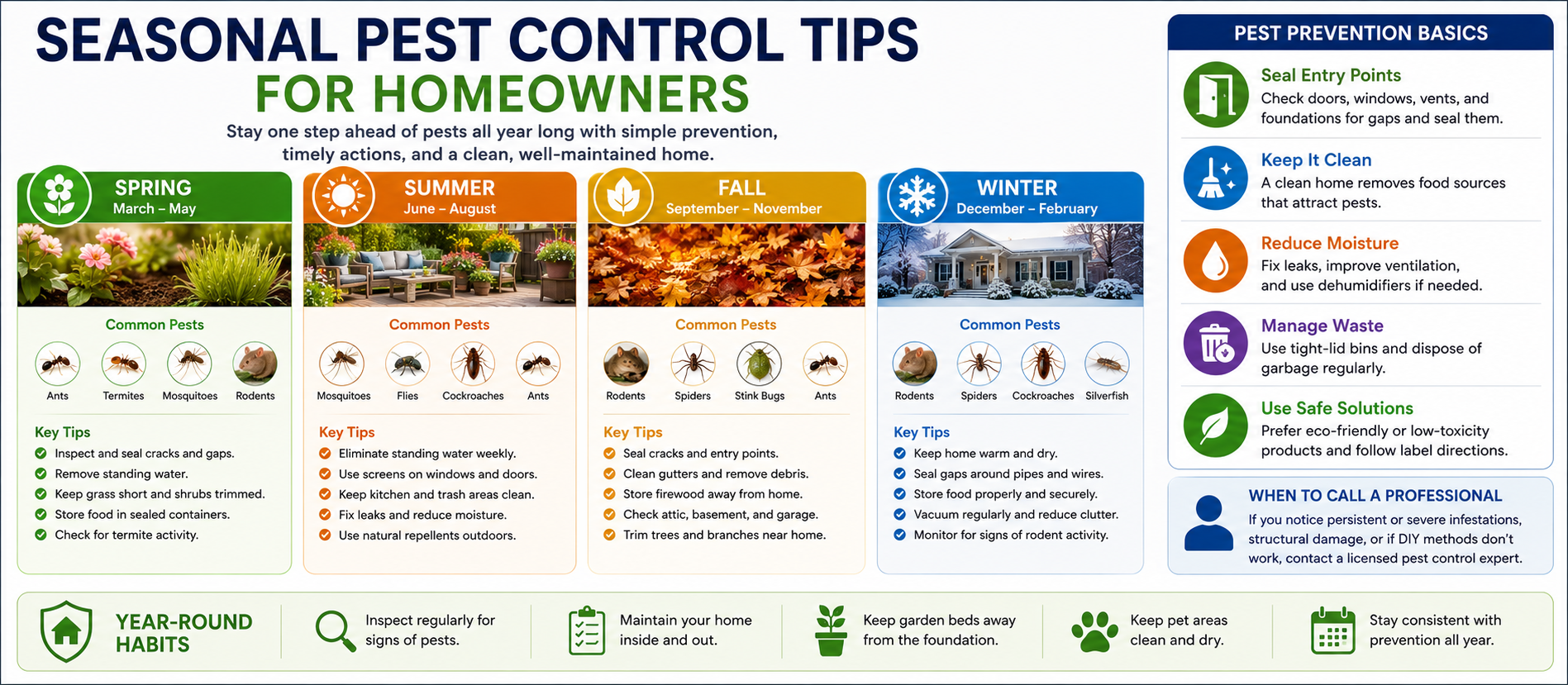
Spring Pest Control Tips
Spring is an important time to inspect a property after winter. Rising temperatures and increased moisture can create favorable conditions for many pests. Start with a full indoor and outdoor inspection.
Inspect the Exterior
- Walk around the entire foundation.
- Look for cracks, gaps, or damaged seals.
- Check window and door screens.
- Inspect weather stripping and door sweeps.
- Look for damaged vents or openings.
- Remove leaves, branches, and debris close to the house.
Control Moisture
Spring rain can expose drainage and moisture problems. Clean gutters and make sure water is directed away from the structure. Repair leaking outdoor faucets and inspect indoor plumbing. Check basements and crawl spaces for dampness.
Prepare for Ant and Insect Activity
Clean kitchen counters and floors regularly. Store sugar, grains, snacks, and other food securely. Inspect around doors and windows for insect entry points. If you notice a trail of ants, focus first on cleaning the area and identifying where they are entering.
Check for Termite or Wood-Damage Concerns
Homeowners should inspect for signs of wood damage, excessive moisture, or other unusual activity around wooden structures. If you suspect termites or another wood-damaging pest, a qualified inspection may be necessary. Avoid assuming that all wood damage has the same cause.
Spring Pest Control Checklist
- Clean gutters and outdoor drainage areas.
- Inspect the foundation.
- Repair damaged screens.
- Seal visible entry gaps where appropriate.
- Trim vegetation away from the building.
- Clean garages, sheds, and storage spaces.
- Check for plumbing leaks.
- Remove standing water.
- Clean kitchen and food storage areas.
- Monitor for new insect activity.
Summer Pest Control Tips
Summer often brings increased activity from mosquitoes, flies, ants, cockroaches, and other insects. Outdoor entertaining, open doors, warm temperatures, and standing water can all increase opportunities for pests.
Eliminate Standing Water
Inspect buckets, plant saucers, outdoor containers, clogged gutters, tarps, and other areas that may hold water. Empty or manage water-holding items regularly when practical. This is an important part of reducing mosquito breeding opportunities.
Keep Outdoor Food Areas Clean
After grilling or eating outdoors, clean food residue from tables and cooking surfaces. Keep trash containers covered. Clean up fallen fruit and spilled bird seed when applicable. Store animal feed securely.
Protect Doors and Windows
Summer often means open windows and more traffic through doors. Repair torn screens. Make sure doors close properly. Consider door sweeps or other appropriate barriers where gaps are present.
Manage Outdoor Vegetation
Keep grass and vegetation maintained. Avoid allowing dense growth to remain directly against the home. Remove unnecessary piles of leaves, lumber, and debris that may create shelter.
Summer Pest Control Checklist
- Inspect the yard for standing water.
- Clean gutters and drains.
- Repair screens.
- Keep outdoor trash covered.
- Clean grills and outdoor eating areas.
- Store food and pet supplies securely.
- Trim vegetation near the home.
- Inspect garages and sheds.
- Monitor for ants, flies, mosquitoes, and other insect activity.
- Address leaks and damp areas quickly.
Fall Pest Control Tips
Fall is a transition season. As temperatures change, some pests may seek protected indoor spaces. This makes exterior inspection especially important.
Seal Entry Points
Check around pipes, utility lines, doors, windows, vents, and the foundation. Even small openings can provide access to pests. Pay attention to garages, basements, attics, and storage areas.
Inspect for Rodent Activity
Look for signs such as droppings, gnaw marks, nesting material, or unexplained food damage. If you find evidence of rodents, focus on identifying how they may be entering and remove accessible food, water, and shelter sources.
Manage Leaves and Outdoor Debris
Fallen leaves and accumulated debris can create damp hiding places. Keep gutters and drainage areas clear. Organize wood, garden supplies, and storage materials so you can inspect around them.
Prepare Indoor Storage Areas
Before storing seasonal items, inspect them. Use organized storage rather than allowing large piles of cardboard and loose materials to accumulate. Periodically inspect attics, basements, garages, and utility rooms.
Fall Pest Control Checklist
- Inspect doors and windows for gaps.
- Check weather stripping and door sweeps.
- Seal appropriate cracks around pipes and utilities.
- Clean fallen leaves and debris.
- Inspect gutters.
- Check attics, basements, and garages.
- Look for rodent signs.
- Store food and pet supplies securely.
- Reduce clutter in storage areas.
- Inspect outdoor structures.
Winter Pest Control Tips
Winter pest prevention often focuses on indoor shelter and rodent exclusion. A warm home can provide food, water, and protected nesting spaces.
Inspect the Kitchen Carefully
Check cabinets, drawers, behind appliances, and pantry areas. Clean crumbs and food residue. Store dry goods in suitable sealed containers. Keep trash covered and remove garbage regularly.
Check Utility Areas
Inspect around water pipes, heating systems, laundry equipment, and other utility openings. These areas can contain gaps and moisture. Repair leaks and seal suitable entry points.
Reduce Clutter
Organized storage makes it easier to identify pest activity. Avoid creating long-term piles of paper, cardboard, fabric, or other materials that may provide shelter.
Monitor, Do Not Ignore
Small signs can be useful warnings. New droppings, gnaw marks, damaged packaging, unusual odors, nests, or repeated insect sightings should be investigated. Early action is often easier than waiting for activity to increase.
Winter Pest Control Checklist
- Inspect pantry and food storage areas.
- Clean behind and under appliances when safely accessible.
- Check cabinets and drawers.
- Inspect basements, attics, and utility rooms.
- Look for gaps around pipes and wiring.
- Repair leaks.
- Keep trash containers covered.
- Reduce indoor clutter.
- Monitor for droppings and gnaw marks.
- Review any recurring pest problems from earlier seasons.
Common Household Pests and Prevention Basics
Ants
Reduce access to food. Clean crumbs and spills. Store food securely. Inspect possible entry points around doors, windows, and utility areas. Persistent activity may require identification of the species and a more targeted treatment plan.
Cockroaches
Sanitation and moisture control are important. Clean food preparation areas, remove food residue, repair leaks, reduce clutter, and seal cracks where appropriate. If activity continues, consider professional advice or a targeted pest management approach.
Rodents
Rodent prevention includes sealing entry points, protecting food and garbage, reducing clutter, and removing accessible water sources. Regular inspections for droppings and gnaw marks can help identify activity early.
Mosquitoes
Focus on standing water and outdoor maintenance. Regularly inspect containers and areas that can collect water. Maintain screens and consider additional local mosquito-control guidance when disease activity is a concern.
Spiders
Reduce clutter, vacuum corners and storage spaces, repair screens, and limit insect prey by maintaining general pest prevention practices. Identify the species before making assumptions about risk.
Termites and Other Wood-Damaging Pests
Reduce moisture problems and inspect wood, foundations, and structural areas. Suspected structural pest activity should be evaluated by an appropriately qualified professional.
Integrated Pest Management for Homeowners
Integrated Pest Management, often called IPM, is a practical approach that emphasizes prevention and monitoring before relying heavily on routine pesticide use.
A simple homeowner IPM process can include the following steps:
- Identify the pest. Different pests require different strategies.
- Inspect the property. Look for food, water, shelter, and entry points.
- Remove the conditions attracting pests. Improve sanitation, fix leaks, and reduce clutter.
- Block access. Repair screens and seal suitable gaps.
- Monitor activity. Note where and when pests appear.
- Use targeted treatment when necessary. Follow product labels and use the least risky effective approach appropriate for the situation.
- Review the results. If the problem continues, identify what was missed or seek professional help.
When Should You Call a Pest Control Professional?
Some problems are difficult to solve with basic homeowner prevention. Consider professional help when you see repeated or widespread activity, suspect a structural pest problem, cannot identify the pest, or have an infestation in an inaccessible area.
Professional assistance may also be useful when DIY efforts have not solved the underlying problem. Ask what pest was identified, what conditions are contributing to the activity, what treatment is recommended, and what prevention steps should continue after service.
Using Pesticides Safely
Prevention should come first whenever possible. If you choose to use a pesticide, read the entire label and follow the directions. Do not use more product than instructed. Do not use an outdoor product indoors unless its label specifically allows that use. Keep children and pets away from treated areas as directed.
Store products in their original containers and dispose of unused materials and containers according to local instructions and label directions. Do not transfer pesticides into food or drink containers.
A Simple Year-Round Pest Control Calendar
January to March
Inspect indoor storage, kitchens, basements, and utility areas. Repair leaks and reduce clutter. Review rodent prevention.
April to June
Inspect the exterior, clean gutters, repair screens, manage moisture, and begin monitoring for spring and early summer insects.
July to September
Remove standing water, maintain outdoor food areas, inspect vegetation, and monitor warm-weather insect activity.
October to December
Seal entry points, clean outdoor debris, organize storage, and focus on preventing rodents and other pests from finding indoor shelter.
SEO, AEO, GEO, and AI Search Optimization for Pest Control Businesses
Home service businesses can improve online visibility by publishing useful answers to real homeowner questions. Traditional SEO benefits from clear topic targeting and well-organized content. AEO benefits from direct answers and structured FAQs. GEO and AI Search Optimization benefit from specific, factual, easy-to-understand information that clearly explains services, locations, processes, and next steps.
Useful pest-control content can answer questions such as:
- What pests are most active in spring?
- How can homeowners prevent rodents in winter?
- How do you reduce standing water around a home?
- What should be included in a seasonal pest inspection?
- When should a homeowner call a pest control professional?
For local visibility, businesses should maintain accurate service areas, consistent contact information, clearly described services, and location-specific pages where appropriate. Content should be genuinely useful rather than repeating the same keywords.
Frequently Asked Questions
What is the best time of year for pest control?
Pest prevention is a year-round process. The best tasks depend on the season, local climate, and the pests common in your area. Regular inspection and prevention are useful throughout the year.
How often should I inspect my home for pests?
A seasonal inspection is a practical minimum for many homeowners. You can also check high-risk areas, such as kitchens, basements, garages, and exterior entry points, more frequently.
What is the first step in pest prevention?
Start by removing easy access to food, water, and shelter. Then inspect and block entry points where practical.
Can I prevent rodents without using pesticides?
Yes. Exclusion, food storage, sanitation, moisture control, clutter reduction, and trapping can all be part of a rodent prevention and control plan.
Should I spray pesticides around my home every season?
Routine pesticide use is not always necessary. A prevention-first approach can reduce the need for treatment. When treatment is needed, identify the pest and follow the product label or seek professional guidance.
Why do pests keep returning?
Recurring activity can mean that the underlying cause remains. Check for entry points, food, water, shelter, moisture, or nearby outdoor conditions that continue to attract pests.
Final Thoughts
The most effective seasonal pest control plan is consistent. You do not need to complete every task every week. Instead, build a routine around the changing seasons.
In spring, inspect and repair. In summer, focus on moisture, standing water, and outdoor sanitation. In fall, seal entry points and prepare for pests seeking shelter. In winter, protect food, inspect indoor spaces, and monitor for rodents.
A simple prevention-first strategy can make pest control easier to manage. Clean regularly, repair leaks, reduce clutter, maintain the exterior, block entry points, and respond early when you notice signs of activity.
For clear, practical, and search-optimized digital content, visit Digiifrog at www.digiifrog.com.
Disclaimer: This article is for general informational purposes only. Pest species, treatment requirements, pesticide rules, and health risks vary by location and situation. Always follow product labels and applicable local requirements. For significant infestations, suspected structural damage, or pests that may create health or safety concerns, contact a qualified professional or relevant local authority.
Ready to Grow?
Talk to us about a strategy tailored to your brand — we will help you stand out in search, AI discovery and social.

Comments (0)
Log in to leave a comment.