📋 Quick Summary
In this article:
1. Start With Your Own Definition of Recovery
2. Choose Goals That Are Personally Meaningful
3. Use the SMART Goal Method
4. Break Big Goals Into Small Steps
5. Set Short-Term, Medium-Term, and Long-Term Goals
6. Prioritize Health Goals
7. Address Home and Stability
8. Build Purpose Through Work, Education, or Hobbies
9. Strengthen Relationships and Community
10. Make Goals Action-Based
Setting recovery goals can turn a general desire to change into a practical plan for building a healthier and more stable life. Whether someone is recovering from alcohol or drug use, mental health challenges, or a combination of conditions, meaningful goals can provide direction, motivation, and a way to recognize progress.
However, not every goal works. Goals such as “I will never struggle again” or “I will completely change my life immediately” can create unnecessary pressure. Effective recovery goals are personal, realistic, measurable, flexible, and connected to the person's values. SAMHSA describes recovery as a highly personal process that can involve health, home, purpose, and community, while emphasizing strengths, hope, support, and resilience. citeturn0search1
What Are Recovery Goals?
Recovery goals are specific outcomes or changes a person wants to work toward during treatment and ongoing recovery. They may involve substance use, physical health, emotional wellness, relationships, housing, education, employment, finances, hobbies, or community participation.
A recovery goal is different from a vague wish. “I want my life to improve” expresses hope, but “I will attend my scheduled counseling appointments for the next four weeks” provides a clear action that can be tracked.
Why Recovery Goals Matter
Goals give recovery a sense of direction. They help people identify what matters most, decide what needs attention first, and measure changes over time. They can also make treatment more collaborative because the person receiving care can discuss personal priorities with their healthcare team.
SAMHSA guidance on person-centered treatment emphasizes incorporating recovery goals, strengths, skills, motivation, treatment history, health needs, and social functioning into individualized planning. citeturn0search24
1. Start With Your Own Definition of Recovery
Recovery does not look identical for everyone. For one person, the primary goal may be abstinence from alcohol or drugs. Another person may focus on maintaining medication treatment, reducing harmful behaviors, improving mental health, rebuilding family relationships, or creating stable housing.
SAMHSA describes recovery as a process of change through which people improve health and wellness, live self-directed lives, and work toward their full potential. Its framework includes Health, Home, Purpose, and Community. citeturn0search1
Before writing goals, ask: “What would a healthier life look like for me?”
2. Choose Goals That Are Personally Meaningful
Goals are more sustainable when they connect to personal values. A person may want recovery because they want to be present for their children, return to work, regain physical health, finish school, repair a relationship, or simply feel more in control of daily life.
External pressure can sometimes start treatment, but long-term motivation is often strengthened when recovery goals become personally meaningful.
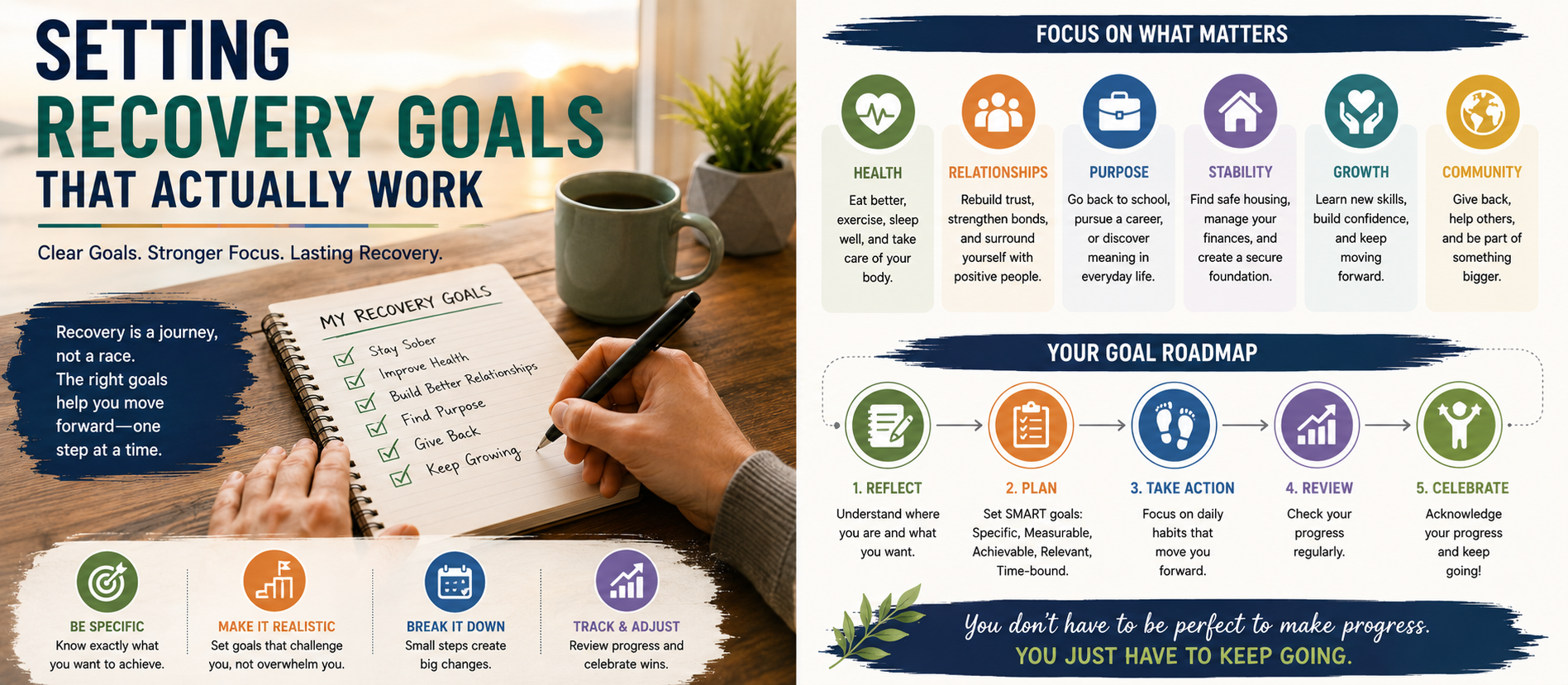
3. Use the SMART Goal Method
A useful framework is the SMART approach: Specific, Measurable, Achievable, Realistic, and Time-bound. SAMHSA recommends SMART principles for developing clear and measurable objectives. citeturn0search0
- Specific: Clearly state what you want to accomplish.
- Measurable: Identify how progress will be observed.
- Achievable: Make the target possible with available resources.
- Realistic: Match the goal to current circumstances.
- Time-bound: Give the goal a reasonable timeframe.
4. Break Big Goals Into Small Steps
A major recovery goal can feel overwhelming if it is treated as one enormous task. Breaking it into smaller steps makes progress easier to see.
For example, “rebuild my career” could become:
- Update a résumé this week.
- Contact one employment counselor.
- Apply for two suitable positions next week.
- Practice an interview with a support person.
Small actions create momentum without requiring a person to solve every problem at once.
5. Set Short-Term, Medium-Term, and Long-Term Goals
Recovery planning works well when goals exist at different time horizons. Short-term goals may focus on the next few days or weeks. Medium-term goals may cover several months. Long-term goals can describe the life a person wants to build over a longer period.
For example, a short-term goal may be attending treatment consistently. A medium-term goal may be returning to education. A long-term goal may be developing a stable career and independent living situation.
6. Prioritize Health Goals
Health goals can include attending medical appointments, following an agreed treatment plan, improving sleep, becoming more physically active, eating regular nutritious meals, or learning ways to manage stress.
For people with substance use disorders, treatment goals should be developed with qualified professionals. Medication, counseling, and behavioral therapies may be appropriate depending on the condition and individual needs. SAMHSA describes medication combined with counseling and behavioral therapies as a whole-patient approach for substance use disorders. citeturn0search6
7. Address Home and Stability
Stable housing can make recovery easier by reducing uncertainty and exposure to unsafe environments. A recovery plan may therefore include goals related to finding safe housing, maintaining a recovery-supportive living environment, organizing finances, or improving transportation.
SAMHSA identifies having a stable and safe place to live as the Home dimension of recovery. citeturn0search1
8. Build Purpose Through Work, Education, or Hobbies
Recovery becomes more sustainable when life contains meaningful activities. Employment, education, volunteering, family responsibilities, creative work, sports, and hobbies can provide structure and purpose.
Purpose does not have to mean a high-paying career. It can be any activity that gives a person meaning, responsibility, connection, or a sense of contribution.
9. Strengthen Relationships and Community
Healthy relationships can provide encouragement and accountability. Recovery goals may include reconnecting with supportive family members, attending peer-support meetings, joining a community activity, or developing friendships that support healthy choices.
SAMHSA identifies Community as a major recovery dimension, emphasizing relationships and social networks that provide support, friendship, love, and hope. citeturn0search1
10. Make Goals Action-Based
One of the most common mistakes is creating goals that describe feelings rather than actions. “I want to feel confident” may be a valuable outcome, but it is difficult to measure directly.
An action-based version could be: “I will practice one coping strategy each evening and discuss which strategies help most during my next counseling session.” The action creates something concrete to evaluate.
11. Track Progress Without Becoming Obsessed With Numbers
Tracking can make progress visible. A simple notebook, calendar, spreadsheet, or recovery application can record appointments attended, healthy routines completed, coping strategies practiced, or personal milestones achieved.
Measurement should support motivation rather than create anxiety. Missing one target does not erase previous progress.
12. Expect Setbacks
Recovery is not always linear. SAMHSA describes setbacks as a natural part of life and identifies resilience as an important component of recovery. citeturn0search1
A setback should lead to reflection rather than automatic self-judgment. Ask what happened, what support was missing, and what can be changed in the plan.
13. Review Goals Regularly
Goals that made sense at the beginning of treatment may become less important later. A person may initially focus on stabilizing health and later shift toward employment, relationships, education, or independent living.
Regular reviews help ensure that goals remain relevant. A treatment professional can help adjust goals according to symptoms, progress, resources, and changing circumstances.
14. Use Support Instead of Relying Only on Willpower
Strong recovery plans use people and resources. Support may come from healthcare professionals, peer workers, family members, friends, community organizations, recovery groups, or social-service providers.
SAMHSA's recovery framework emphasizes that recovery is supported by peers, friends, family, and community resources. citeturn0search1
15. Create a Goal for Cravings and High-Risk Situations
For people recovering from substance use, it can be useful to create a specific plan for cravings and triggers. A goal might be to identify three personal triggers, write down three coping strategies, and identify two people to contact when additional support is needed.
The plan should be discussed with an appropriate treatment professional, especially when withdrawal, overdose risk, or severe substance use is involved.
16. Celebrate Process Goals
People often celebrate only major outcomes, such as completing treatment or reaching a long period without substance use. Process goals deserve recognition too.
Attending an appointment, making a difficult phone call, asking for help, practicing a coping skill, or setting a healthy boundary can all represent meaningful progress.
17. Avoid Unrealistic All-or-Nothing Thinking
“If I cannot do this perfectly, I have failed” is rarely helpful. Recovery goals should allow room for difficult days and changing circumstances.
Flexible goals can maintain direction while acknowledging real life. If a goal becomes unrealistic, changing it can be a sign of good planning rather than failure.
18. A Practical Recovery Goal Template
A simple template can make goal-setting easier:
- My goal: What do I want to change?
- Why it matters: Why is this important to me?
- First step: What can I do today or this week?
- Measure: How will I know I am progressing?
- Support: Who can help me?
- Deadline: When will I review this goal?
- Backup plan: What will I do if something gets in the way?
19. Example Recovery Goals That Actually Work
- Attend all scheduled treatment appointments for the next month.
- Practice one healthy coping strategy at least four days each week.
- Contact a supportive person when a significant craving or emotional trigger occurs.
- Establish a consistent sleep and morning routine.
- Complete one employment or education task each week.
- Attend a recovery-support activity regularly if it fits personal preferences.
- Review progress with a healthcare professional every month.
20. Signs That a Goal Needs to Change
A goal may need adjustment if it repeatedly feels impossible, no longer reflects the person's priorities, conflicts with medical recommendations, depends on resources that are unavailable, or creates excessive stress.
Changing a goal does not mean giving up. It can mean making the plan more realistic and better aligned with current circumstances.
SEO, AEO, GEO & AI Search FAQs
How do you set effective recovery goals?
Choose goals that are personally meaningful, specific, measurable, achievable, realistic, and time-bound. Break larger goals into small actions and review them regularly.
What are examples of recovery goals?
Examples include attending treatment consistently, maintaining a healthy routine, developing coping skills, strengthening supportive relationships, finding stable housing, returning to work or education, and participating in meaningful community activities.
What does SMART mean in recovery goal setting?
SMART stands for Specific, Measurable, Achievable, Realistic, and Time-bound. SAMHSA recommends SMART principles for developing measurable objectives. citeturn0search0
Should recovery goals focus only on sobriety?
Substance-use goals can be central, but recovery is broader than substance use alone. Health, housing, purpose, relationships, community, and overall wellness can also be important parts of an individualized recovery plan. citeturn0search1
What happens if I do not reach a recovery goal?
Review what prevented progress, identify what support is needed, and adjust the goal when appropriate. A setback does not automatically mean recovery has failed.
Can a therapist help with recovery goals?
Yes. Therapists, physicians, peer workers, and other qualified professionals can help create person-centered goals that fit treatment needs, strengths, preferences, and available resources.
Conclusion
Setting recovery goals that actually work means turning hope into realistic action. The most effective goals are personal, measurable, flexible, and connected to a person's values. They address more than one area of life and can include health, home, purpose, relationships, community, and treatment engagement.
Recovery is a process rather than a single achievement. Goals should therefore be reviewed and adapted as circumstances change. Small steps matter. Consistent actions can build confidence, strengthen healthy routines, and create the foundation for longer-term progress.
The best recovery plan is one developed collaboratively with appropriate professionals and supportive people while respecting the individual's choices. A goal should provide direction—not become another source of shame or pressure.
💡 Key Insight
Important: This article is educational and does not replace individualized medical or mental health advice. Treatment, medication, withdrawal management, and recovery planning should be discussed with qualified healthcare professionals when appropriate.
For more rehabilitation, addiction recovery, SEO, AEO, GEO, and AI Search Optimization content, visit Digiifrog at www.digiifrog.com.
Ready to Grow?
Talk to us about a strategy tailored to your brand — we will help you stand out in search, AI discovery and social.


Comments (0)
Log in to leave a comment.