📋 Quick Summary
In this article:
Why Immediate Roof Repair Matters
1. Active Roof Leaks
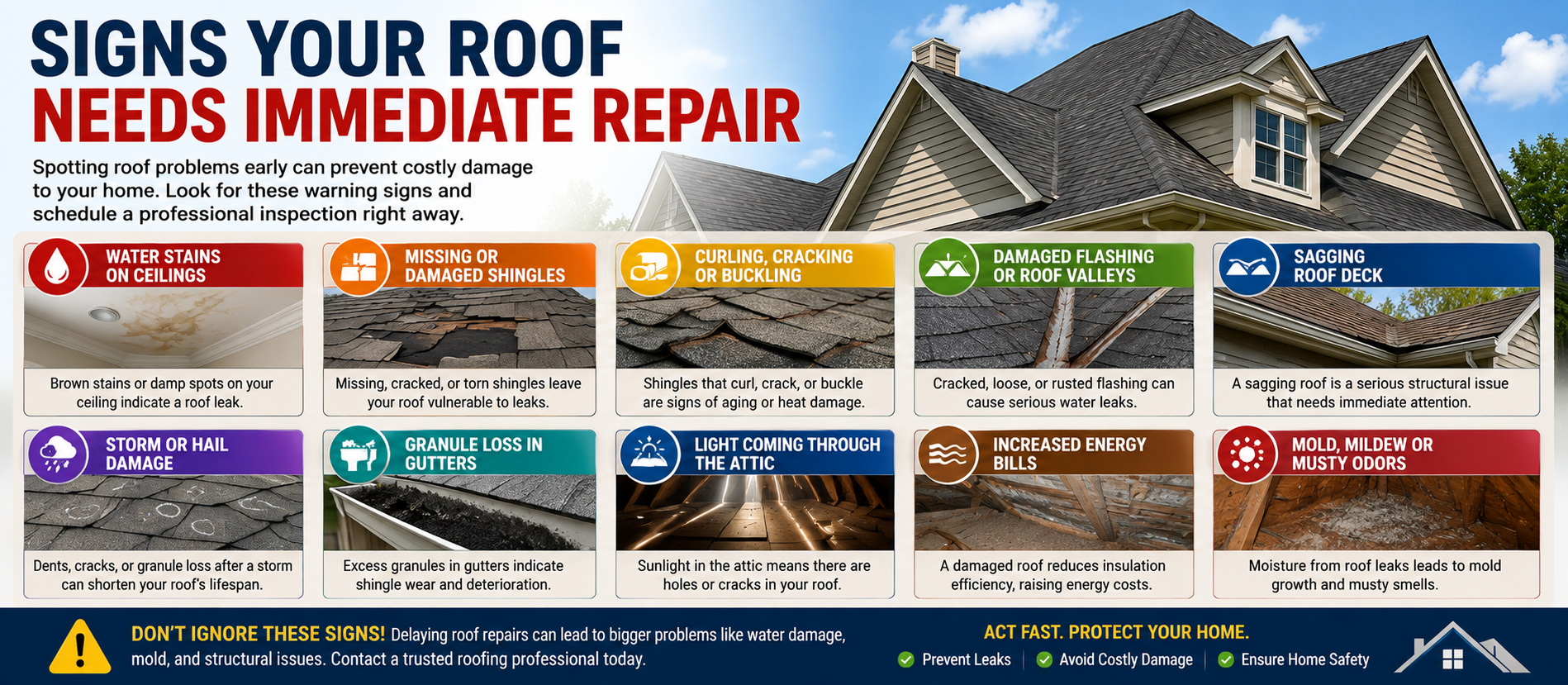
2. Water Stains on Ceilings or Walls
3. Missing or Damaged Shingles
4. Curling or Buckling Shingles
5. Cracked Roofing Materials
6. Damaged or Missing Flashing
7. Sagging Roof Areas
8. Granules in Gutters
9. Excessive Moss, Algae, or Organic Growth
10. Damaged Roof Valleys
11. Damaged Chimney Flashing
💡 Key Insight
Your roof is one of the most important protective systems in a home or commercial property. It shields the building from rain, wind, sunlight, snow, temperature changes, debris, and other environmental conditions. Because much of a roof is above eye level, damage can remain unnoticed until a leak, structural problem, or interior stain becomes obvious.
Signs your roof needs immediate repair should never be ignored. Missing or damaged shingles, active leaks, water stains, sagging areas, exposed roofing materials, damaged flashing, blocked drainage, and storm-related damage can indicate that the roofing system is no longer performing as intended. Some problems may be relatively localized, while others can develop into extensive water damage or structural deterioration if they are left untreated.
⚠ Watch Out
Knowing the warning signs helps homeowners, landlords, property managers, and businesses decide when to arrange a professional roof inspection. It also helps property owners distinguish between routine maintenance and situations that may require prompt or emergency attention.
This guide explains the most important roof warning signs, common causes of roof damage, what property owners can do safely, when professional roofing service is necessary, repair-versus-replacement considerations, preventive maintenance, and modern roofing trends.
This WordPress-ready HTML article is prepared for Digiifrog (www.digiifrog.com) with a strong focus on SEO, AEO, GEO, and AI Search optimization.
Why Immediate Roof Repair Matters
A roof problem rarely improves simply because it is ignored. A small damaged area can allow water to enter beneath roofing materials, where moisture may affect underlayment, insulation, decking, ceilings, walls, and other building components.
Early repair can sometimes limit the scope of damage and help protect the interior of the property. Prompt attention is particularly important after severe weather, when visible roof damage or active leaks may indicate that the roofing system has been compromised.
1. Active Roof Leaks
An active leak is one of the clearest signs that a roof requires attention. Water entering through the roof can appear as ceiling stains, dripping water, damp insulation, wet walls, or moisture around light fixtures.
The visible location of a ceiling stain does not necessarily identify the exact point where water entered the roof. Water can travel along decking, framing, insulation, or other surfaces before appearing inside.
If water is actively entering the building, arrange for professional roofing evaluation as soon as possible. If water is near electrical equipment or fixtures, avoid contact with the affected area and seek appropriate professional assistance.
2. Water Stains on Ceilings or Walls
Brown, yellow, gray, or discolored marks on ceilings and upper walls can indicate previous or ongoing moisture intrusion. A stain may appear after heavy rainfall or may remain visible long after the original leak has stopped.
Do not assume that repainting the ceiling solves the problem. The source of the moisture should be identified before cosmetic repairs are made.
3. Missing or Damaged Shingles
Asphalt shingles and other roof coverings can become cracked, broken, curled, lifted, or completely detached due to age, wind, hail, falling branches, or installation problems.
Missing shingles leave areas of the roof more exposed to weather. Individual damaged shingles may sometimes be repaired or replaced, but widespread deterioration can indicate that a larger roofing assessment is necessary.
4. Curling or Buckling Shingles
Shingles that curl at the edges, buckle, or develop visible deformation can indicate aging, heat exposure, moisture problems, poor ventilation, installation issues, or other conditions.
Widespread curling or buckling should be evaluated by a roofing professional because it can affect the roof's ability to shed water effectively.
5. Cracked Roofing Materials
Cracks in shingles, tiles, membranes, flashing, or other roofing components can create pathways for water intrusion. The significance of a crack depends on its location, size, material, and the overall condition of the roof.
After severe weather, a professional inspection can help determine whether visible cracks represent isolated damage or part of a larger problem.
6. Damaged or Missing Flashing
Flashing helps direct water away from vulnerable areas such as chimneys, roof valleys, walls, vents, skylights, and other roof penetrations. Damaged, loose, corroded, or improperly installed flashing can contribute to leaks.
Because flashing problems can be difficult to identify from the ground, professional inspection is valuable when leaks occur around roof penetrations.
7. Sagging Roof Areas
A visibly sagging roof is a serious warning sign. Sagging may indicate moisture-damaged decking, weakened structural components, excessive loads, long-term deterioration, or another structural condition.
Do not walk on a visibly sagging roof. Arrange for professional assessment promptly. If there is a significant structural concern or immediate collapse risk, keep people away from the affected area and seek emergency assistance.
8. Granules in Gutters
Asphalt shingles are covered with protective granules. Some granule loss is normal over time, but a large or increasing amount of granules in gutters and downspouts can indicate shingle deterioration.
Granule loss should be considered together with shingle age, visible wear, exposed surfaces, and other symptoms.
9. Excessive Moss, Algae, or Organic Growth
Moss and algae are particularly common in damp or shaded environments. Some surface growth may primarily affect appearance, but heavy moss growth can hold moisture against roofing materials and may interfere with water shedding.
Do not use aggressive cleaning techniques that could damage shingles. A roofing professional can recommend an appropriate approach for the roofing material.
10. Damaged Roof Valleys
Roof valleys collect and direct significant amounts of rainwater. Damaged shingles, deteriorated flashing, accumulated debris, or improper installation in a valley can create leak risks.
Because valleys are critical drainage areas, visible deterioration should receive professional attention.
11. Damaged Chimney Flashing
Chimneys create a large penetration through the roof and require carefully installed flashing. Deteriorated flashing, cracked masonry, damaged sealants, or improperly maintained chimney components can contribute to water entry.
When a leak appears near a chimney, both the roofing and chimney conditions should be evaluated.
12. Roof Damage After a Storm
High winds, hail, falling branches, heavy rain, and other severe weather can damage roofing materials. Some damage may be visible from the ground, while other problems require close professional inspection.
After a significant storm, look from a safe location for missing materials, displaced objects, damaged gutters, visible debris, or obvious changes in the roof surface. Avoid climbing onto the roof yourself.
13. Damaged Gutters and Downspouts
Gutters and downspouts are part of the property's water-management system. Detached gutters, blocked downspouts, overflowing gutters, or damaged drainage components can direct water toward walls, foundations, and roof edges.
Gutter problems do not always mean the roof itself is damaged, but poor drainage can contribute to roofing and building-envelope problems.
14. Water Pooling on a Low-Slope Roof
Standing water that remains on a low-slope or flat roof after normal drainage periods can indicate drainage problems, blocked drains, inadequate slope, membrane issues, or other conditions.
Persistent ponding water should be evaluated by a professional because prolonged moisture exposure can affect roofing materials and underlying components.
15. Damaged Roof Membranes
Commercial and some residential low-slope roofs use membranes rather than traditional shingles. Punctures, tears, open seams, blisters, cracks, and deteriorated edges can allow water to penetrate the system.
Membrane repairs should be performed using materials and methods compatible with the existing roofing system.
16. Daylight Visible Through the Roof
If daylight is visible through areas where the roof should be enclosed, there may be a gap, hole, displaced material, or structural opening.
Do not assume that a small opening is harmless. Water, pests, wind, and debris may enter through the same opening.
17. Damaged Roof Decking
Roof decking forms a structural surface beneath many roofing systems. Water intrusion can cause decking to weaken, rot, delaminate, or otherwise deteriorate.
Decking damage is often discovered during professional roof repair when damaged roofing materials are removed. The extent of the repair depends on the condition and affected area.
18. Mold or Musty Odors in the Attic
A musty smell in an attic can indicate moisture, inadequate ventilation, condensation, or other building-envelope problems. Mold-like growth may also be associated with persistent moisture.
An attic inspection can help determine whether the moisture source is the roof, ventilation system, plumbing, condensation, or another part of the building.
19. Wet or Compressed Insulation
Roof leaks can wet attic insulation. Moist insulation may lose some of its intended performance and can create conditions favorable to mold or material deterioration.
If insulation is repeatedly becoming wet, the moisture source should be identified and corrected rather than simply replacing the insulation.
20. Increased Heating or Cooling Costs
A sudden or unexplained increase in energy costs can have many causes, including weather, equipment efficiency, occupancy, insulation, air leakage, and utility-rate changes. Roof problems can also affect insulation and building-envelope performance in some situations.
Energy costs alone do not prove that a roof is failing, but they can be one clue when combined with attic moisture, damaged insulation, or other building symptoms.
21. Peeling Paint or Damaged Interior Finishes
Peeling paint, bubbling drywall, stained trim, warped materials, or deteriorating ceiling finishes may result from moisture intrusion.
Interior damage should be investigated rather than covered up. The source could be a roof leak, plumbing problem, condensation, or another moisture source.
22. Damaged Roof Vents
Roof vents and other penetrations require proper flashing and sealing. Cracked vent components, deteriorated seals, or damaged flashing can create localized leak points.
When moisture appears near a vent, a professional should inspect both the vent and surrounding roofing materials.
23. Skylight Leaks
Skylights can provide natural light but create additional roof penetrations. Deteriorated seals, damaged flashing, condensation, or installation problems can cause water around a skylight.
Do not assume the skylight itself needs replacement until the surrounding roofing and flashing have been evaluated.
24. Roof Edge Damage
Roof edges are exposed to wind and water and may be particularly vulnerable after storms. Damaged fascia, soffits, drip edges, or edge flashing can affect water management and allow moisture into the building envelope.
Visible edge damage should be evaluated, especially if gutters have also become loose or detached.
25. Signs of Roof Rot
Wood components can deteriorate when exposed to persistent moisture. Soft, discolored, or visibly deteriorated wood in accessible areas can be a warning sign of long-term water exposure.
Do not probe potentially weakened structural components or walk on questionable surfaces. Professional inspection is safer.
26. Common Causes of Roof Damage
- Age and normal material deterioration
- Wind and hail
- Falling branches
- Improper installation
- Poor roof ventilation
- Persistent moisture
- Blocked drainage
- Flashing failure
- Ice or snow-related conditions in appropriate climates
- Foot traffic or mechanical damage
- Animal activity
- Incompatible repairs or materials
27. Roof Age and Repair Decisions
Every roofing material has an expected service life that varies according to material, installation quality, climate, maintenance, ventilation, and exposure. Age alone does not automatically mean a roof must be replaced.
An older roof with isolated damage may still be repairable, while a newer roof with widespread storm or installation damage may require significant work. A professional inspection provides better information than age alone.
28. Roof Repair vs. Roof Replacement
Repair may be appropriate when damage is localized and the surrounding roof remains in good condition. Replacement becomes more likely when damage is widespread, materials are extensively deteriorated, the roof has reached the end of its practical service life, or repeated repairs are no longer cost-effective.
Property owners should compare the condition of the entire roofing system, not simply the cost of repairing one visible defect.
29. Emergency Roof Repair Situations
Some roof problems require particularly prompt attention. Examples include major active leaks, large openings, severe storm damage, substantial sagging, exposed structural components, or situations where water is entering electrical areas.
In an emergency, prioritize personal safety. Do not climb onto a damaged or wet roof. Use containers to manage minor interior dripping only when doing so is safe, and contact an appropriate roofing professional.
30. What to Do After a Roof Leak
- Keep people away from dangerous or wet areas.
- Protect belongings from dripping water when safe.
- Avoid electrical equipment exposed to moisture.
- Document visible damage with photographs from safe locations.
- Contact a qualified roofing professional.
- Address the moisture source before cosmetic repairs.
31. Do Not Walk on a Damaged Roof
Roof surfaces can be slippery, unstable, steep, or structurally weakened. A property owner may also unintentionally damage roofing materials by walking on them.
Ground-level observation and professional inspection are safer alternatives.
32. How Professional Roof Inspections Work
A roofing professional may inspect roofing materials, flashing, valleys, penetrations, drainage, visible structural conditions, attic areas, and other components. The exact inspection process depends on roof type and accessibility.
Some contractors also use drones or other imaging tools for large or difficult-to-access roofs, although technology does not eliminate the need for professional judgment.
33. Roof Repair Cost Factors
Roof repair prices vary widely. Important factors can include:
- Type and extent of damage
- Roofing material
- Roof pitch and accessibility
- Height of the building
- Amount of damaged decking
- Flashing requirements
- Labor and equipment
- Emergency service needs
- Weather conditions
- Required permits
- Interior or exterior restoration
Request a written estimate that explains the scope of work and identifies what is included.
34. Insurance and Storm Damage
Storm-related roof damage may involve an insurance claim depending on the policy, cause of damage, exclusions, deductibles, and other terms. Property owners should review their policy and follow the insurer's claims process.
A roofing contractor can document visible damage, but property owners should avoid assuming that every roof issue is covered by insurance.
35. How to Choose a Reliable Roofing Contractor
Verify Licensing and Insurance
Requirements vary by location. Confirm that the contractor meets applicable licensing and insurance requirements.
Ask for a Detailed Estimate
The estimate should explain materials, labor, repair areas, preparation, cleanup, and any exclusions.
Check Experience
Choose a contractor familiar with your roof type and the conditions common in your area.
Review References and Reputation
Look for consistent customer feedback and evidence of professional communication and workmanship.
Ask About Warranties
Understand both workmanship warranties and manufacturer warranties, including their limitations.
36. Questions to Ask Before Roof Repair
- What caused the roof damage?
- Is the damage localized or widespread?
- Can the existing roof be repaired?
- Is replacement necessary now?
- Does the decking need repair?
- Are flashing or drainage components damaged?
- What materials will be used?
- Are permits required?
- What is included in the estimate?
- What warranty is provided?
- How will the property be protected during the repair?
- Who handles cleanup and disposal?
37. Common Roof Repair Mistakes
Ignoring Small Leaks
A small leak can become a larger moisture problem if its source remains unresolved.
Only Repairing Interior Damage
Painting over a ceiling stain does not repair the roof or stop moisture intrusion.
Choosing the Cheapest Contractor Without Comparing Scope
A low estimate may exclude important materials, preparation, flashing work, or restoration.
Walking on the Roof Without Proper Training
Roof surfaces can be dangerous and may be damaged by improper foot traffic.
Applying Temporary Sealant as a Permanent Solution
Temporary weatherproofing can sometimes help limit immediate exposure, but the underlying roofing defect should still be professionally addressed.
38. Preventive Roof Maintenance
Preventive maintenance can help identify deteriorating components before they become major failures. Recommended maintenance depends on roof type and climate but may include periodic inspections, gutter cleaning, flashing checks, removal of damaging debris, and attention to vegetation near the roof.
39. Keep Gutters and Downspouts Clear
Blocked gutters can cause water to overflow near roof edges and exterior walls. Keeping drainage pathways clear helps move rainwater away from vulnerable parts of the property.
Gutter cleaning can involve ladders and roof-edge exposure, so consider professional service if access is unsafe.
40. Trim Problematic Branches
Tree branches that rub against roofing materials can cause wear, while falling branches can create serious damage. Appropriate tree maintenance can reduce some risks.
Large or hazardous branches should be handled by qualified tree professionals rather than through unsafe DIY cutting.
41. Maintain Roof Ventilation
Appropriate attic ventilation can help manage heat and moisture in suitable roofing systems. Poor ventilation can contribute to condensation, heat buildup, and premature material deterioration.
Ventilation requirements vary by roof design and climate. A roofing professional can evaluate whether the existing system is appropriate.
42. Roof Maintenance for Commercial Properties
Commercial roofs often cover large areas and may use specialized membranes, coatings, drainage systems, rooftop equipment, and access pathways. Small problems can become expensive when they affect a large building.
Commercial property managers should maintain documented inspection and maintenance schedules and respond promptly to reported leaks.
43. Roof Maintenance for Rental Properties
Landlords and property managers should establish clear procedures for tenants to report leaks, ceiling stains, damaged shingles, or other roofing concerns. Prompt communication can help prevent small problems from becoming larger property-management issues.
Local laws and lease terms may establish responsibilities for maintenance and repair.
44. Modern Roofing Technology
Roofing professionals increasingly use digital inspection reports, drones, thermal imaging where appropriate, moisture-detection tools, satellite imagery, project-management software, and advanced roofing materials.
These tools can improve documentation and help contractors evaluate difficult-to-access areas, although results should be interpreted by experienced professionals.
45. AI and Predictive Roof Maintenance
Artificial intelligence and data analytics are beginning to support roof inspection and maintenance through image analysis, weather tracking, asset management, predictive maintenance, and automated documentation.
AI can help identify patterns or prioritize inspections, but it should complement rather than replace qualified roofing professionals, especially when structural safety is involved.
46. Roofing, SEO, AEO, GEO and AI Search
Roofing companies also need strong digital visibility to attract local customers searching for repair services. SEO helps roofing businesses appear in traditional search results. AEO focuses on directly answering customer questions. GEO helps content become useful in generative search experiences, while AI Search optimization emphasizes clear, structured, trustworthy, and location-relevant information.
A roofing website should explain repair services, inspection processes, emergency roofing, storm damage, roof replacement, service areas, material options, maintenance, warranties, and frequently asked questions.
Helpful content can answer questions such as how to tell whether a roof is leaking, when shingles need replacement, whether storm damage requires immediate repair, how much roof repair may cost, and when a roof should be replaced instead of repaired.
47. Future Trends in Roofing Services
The roofing industry is becoming increasingly technology-driven. Drone inspections, digital documentation, predictive maintenance, advanced weather-resistant materials, cool-roof technologies, solar integration, smart building monitoring, and AI-assisted analysis are changing how roof assets are managed.
Property owners may increasingly use digital maintenance records to track roof age, inspections, repairs, warranties, and recurring problems.
48. Key Roofing Trends for 2026
- Drone-assisted roof inspections
- AI-supported visual analysis
- Predictive roof maintenance
- Digital inspection reports
- Advanced weather-resistant materials
- Cool-roof systems
- Solar-ready roofing
- Smart building monitoring
- Preventive maintenance programs
- Digital warranty and asset tracking
Frequently Asked Questions About Roof Repair
What are the signs that a roof needs immediate repair?
Important warning signs include active leaks, water stains, missing or damaged shingles, major cracks, damaged flashing, sagging areas, exposed roofing materials, daylight visible through the roof, and significant storm damage.
Can a small roof leak be ignored?
No. Even a small leak can allow moisture into roofing assemblies and interior building materials. The source should be professionally evaluated.
How do I know if my roof needs repair or replacement?
The decision depends on the extent of damage, roof age, material condition, repair history, and overall system performance. A professional inspection can help compare repair and replacement options.
What should I do if my roof is leaking during a storm?
Prioritize safety, protect belongings from water when safe, avoid wet electrical equipment, and contact a qualified roofing professional. Do not climb onto the roof during a storm.
Can missing shingles cause a roof leak?
Yes. Missing shingles can expose underlying roofing components to weather and may create pathways for water intrusion.
How often should a roof be inspected?
Inspection needs vary according to roof age, material, climate, weather exposure, and maintenance history. Professional inspections are especially useful after significant storms and when warning signs appear.
Is a sagging roof an emergency?
A significant or worsening sag can indicate a structural problem and should be treated seriously. Keep people away from the affected area and seek professional assessment promptly.
Can roof damage increase energy costs?
Roof damage can affect insulation or building-envelope performance in some situations, but higher energy costs have many possible causes. A professional assessment can help identify the source.
Conclusion
Knowing the signs your roof needs immediate repair can help protect your property from larger damage. Active leaks, ceiling stains, missing shingles, curling or cracked materials, damaged flashing, sagging areas, ponding water, damaged vents, and storm-related damage all deserve attention.
Property owners should avoid walking on damaged roofs or attempting complex repairs without appropriate training. A qualified roofing professional can inspect the system, identify the source of the problem, explain repair and replacement options, and provide a written scope of work.
Preventive maintenance also matters. Keeping drainage systems clear, monitoring roof materials, maintaining appropriate ventilation, addressing storm damage promptly, and scheduling professional inspections can help extend the useful life of a roofing system.
Modern roofing technology is making inspections and maintenance more data-driven through drones, digital reports, thermal tools, predictive analytics, and AI-assisted image analysis. These tools can improve decision-making while professional judgment remains essential for safety and repair quality.
For businesses looking to improve their digital presence, automate customer inquiries, build AI-powered websites, implement SEO, AEO, GEO, AI Search optimization, and develop modern technology solutions for roofing and home-service companies, Digiifrog can help. Visit www.digiifrog.com to learn more.
Quick Answer: What Are the Signs Your Roof Needs Immediate Repair?
The most important signs include active leaks, water stains, missing or damaged shingles, curling or buckling shingles, cracked roofing materials, damaged flashing, sagging areas, excessive granule loss, ponding water, visible daylight through the roof, damaged vents, and significant storm damage. If any of these conditions are present, especially active water intrusion or structural damage, arrange for professional roof inspection and repair as soon as possible.
Ready to Grow?
Talk to us about a strategy tailored to your brand — we will help you stand out in search, AI discovery and social.


Comments (0)
Log in to leave a comment.