📋 Quick Summary
In this article:
Quick Answer: Why Is Social Media Important for Realtors?
1. Start With Clear Social Media Goals
2. Choose the Right Social Media Platforms
3. Define Your Target Audience
4. Build a Strong Local Personal Brand
5. Create More Than Listing Posts
6. Use Short-Form Video
7. Showcase Properties Professionally
8. Become a Neighborhood Expert
9. Share Useful Market Updates
10. Educate Buyers and Sellers
12. Write Captions That Encourage Engagement
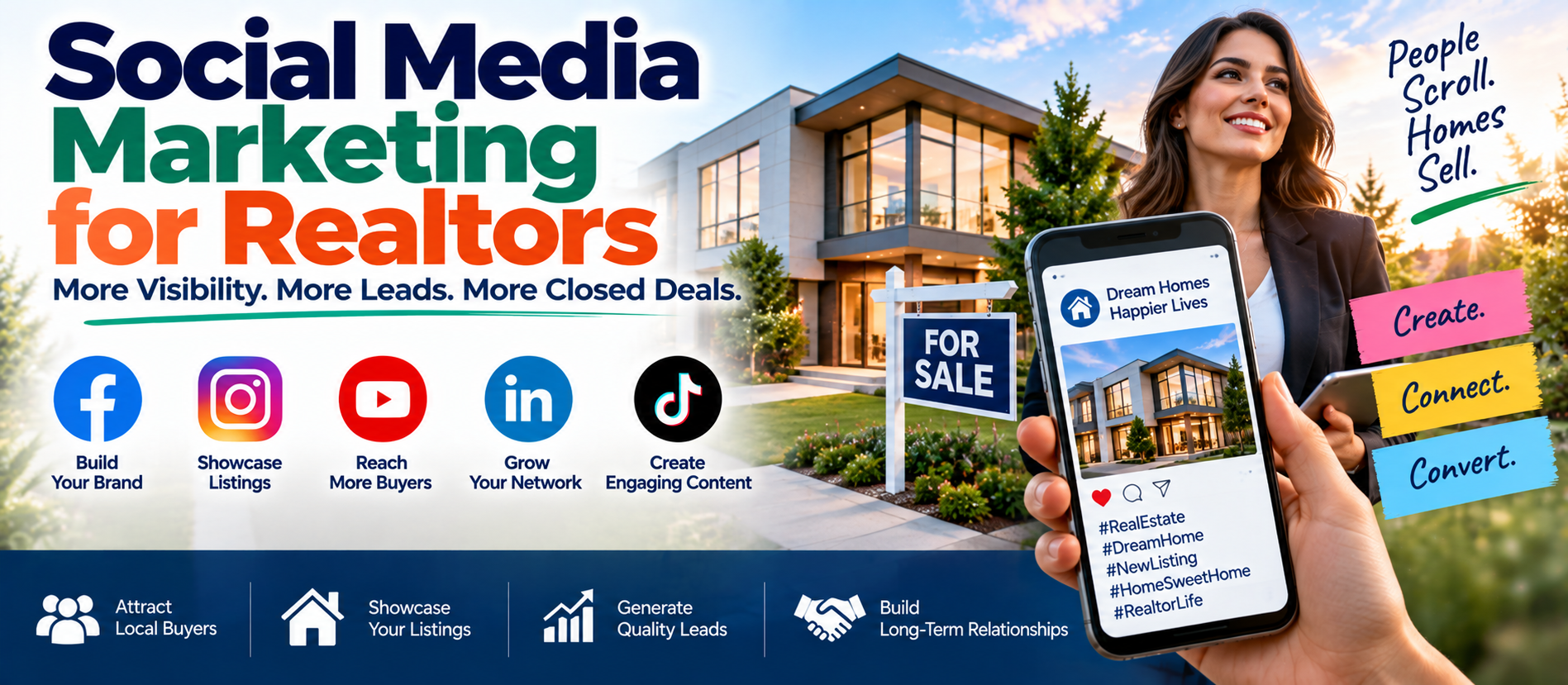
Social media marketing for realtors is one of the most effective ways to build local visibility, establish trust, showcase properties, and stay connected with potential buyers and sellers. Real estate is a relationship-driven industry, and social platforms give realtors a practical way to remain visible throughout the customer journey.
The goal is not simply to post listings every day. Successful social media marketing for realtors combines local expertise, useful information, engaging visuals, consistent communication, and a clear strategy.
Quick Answer: Why Is Social Media Important for Realtors?
Social media helps realtors reach local audiences, build credibility, showcase properties, educate buyers and sellers, generate conversations, and maintain long-term relationships with potential clients.
The best results usually come from consistent content rather than occasional promotional posts. Realtors should focus on becoming a useful and recognizable local source of real estate information.
1. Start With Clear Social Media Goals
Before choosing content ideas, define what you want social media to achieve.
Common goals include:
- Building local brand awareness.
- Generating buyer inquiries.
- Attracting potential sellers.
- Promoting listings.
- Growing an email or contact database.
- Building relationships with the local community.
- Establishing expertise in a specific neighborhood or property type.
Each goal may require a different content strategy. For example, listing videos can support property marketing, while educational content may attract people who are still researching the market.
A clear goal also makes performance easier to measure.
2. Choose the Right Social Media Platforms
Realtors do not need to be active everywhere. It is usually better to use a few platforms consistently than to create inactive accounts on every network.
Facebook can support community engagement and local conversations. Instagram works well for visual content, property photos, and short videos. LinkedIn can support professional networking and commercial real estate marketing. YouTube is useful for longer property tours, neighborhood guides, and educational videos.
The right platform depends on your target audience, location, property type, and available content resources.
3. Define Your Target Audience
Social media content becomes stronger when it speaks to a specific audience.
Your audience may include:
- First-time homebuyers.
- Luxury property buyers.
- Home sellers.
- Real estate investors.
- Families relocating to the area.
- Commercial property clients.
- Renters planning to buy.
A first-time buyer may need basic guidance about financing, inspections, and the buying process. An investor may be more interested in rental demand, location data, and property opportunities.
You can serve more than one audience, but your content should remain organized and easy to understand.
4. Build a Strong Local Personal Brand
Real estate clients often choose an agent they know, trust, and remember. Your social media profile should clearly communicate who you are and what markets you serve.
Your profile should make it easy to understand:
- Your name and professional identity.
- The locations you serve.
- Your real estate specialization.
- How people can contact you.
- What type of information followers can expect.
Use a consistent profile image, professional description, and recognizable communication style across your major platforms.
Personal branding does not mean sharing everything about your private life. It means showing the experience, values, knowledge, and personality that help clients understand why they may want to work with you.
5. Create More Than Listing Posts
One of the biggest mistakes in real estate social media marketing is posting only property listings.
💡 Key Insight
Listings are important, but followers may lose interest if every post is a sales message. A stronger strategy uses different content categories.
Consider these content pillars:
- Property listings and tours.
- Local market updates.
- Buyer education.
- Seller education.
- Neighborhood guides.
- Community news and events.
- Real estate tips.
- Behind-the-scenes content.
- Client success stories, where appropriate and permitted.
This approach helps you create a useful content mix while keeping your business visible.
6. Use Short-Form Video
Short videos can help realtors communicate quickly and show personality. A simple video can explain a local market topic, introduce a neighborhood, answer a common question, or highlight a useful property feature.
Ideas include:
- A quick property walkthrough.
- “Three things to know before buying a home.”
- A neighborhood introduction.
- A weekly market update.
- Common home-selling mistakes.
- A behind-the-scenes look at a showing.
The most important factor is clarity. Videos do not always need expensive production. Good lighting, understandable audio, useful information, and a clear message can be more important than complex effects.
7. Showcase Properties Professionally
Property marketing should provide useful information rather than simply showing attractive rooms.
A strong property post may include:
- High-quality images or video.
- A clear description.
- Important property features.
- Relevant location information.
- A clear call to action.
Always follow applicable advertising rules, brokerage requirements, platform policies, and local real estate regulations.
Accuracy matters. Avoid misleading descriptions, edited images that misrepresent the property, or claims that cannot be supported.
8. Become a Neighborhood Expert
Real estate is highly local. People often want information about specific communities, schools, transportation, amenities, lifestyle, and housing options.
Neighborhood content can help you demonstrate local knowledge.
You might create posts about:
- Community features.
- Parks and public spaces.
- Transportation options.
- Local business districts.
- New developments.
- Housing styles.
- General market activity.
When discussing locations, remain accurate and avoid statements that could violate fair housing or other applicable laws. Focus on objective property and community information.
9. Share Useful Market Updates
Market updates can position a realtor as a reliable source of information.
Possible topics include:
- Changes in local inventory.
- Average days on market.
- General pricing trends.
- Buyer demand.
- New construction activity.
Explain what the information means in simple language. Instead of sharing numbers without context, help followers understand possible implications.
Always identify the geographic area and time period covered by market information. Real estate conditions can vary significantly between neighborhoods and regions.
10. Educate Buyers and Sellers
Educational content can attract people before they are ready to contact an agent.
Useful buyer topics include:
- How to prepare for a home purchase.
- Questions to ask during a property viewing.
- Understanding inspections.
- How to compare properties.
Seller topics may include:
- Preparing a home for sale.
- Improving property presentation.
- Understanding the selling process.
- Common pricing considerations.
Educational content should be clear and general. Avoid presenting social media posts as personalized legal, financial, or tax advice.
12. Write Captions That Encourage Engagement
A social media caption should be easy to scan and understand.
Start with a strong opening. Then provide useful information and finish with a clear next step.
Examples of calls to action include:
- Ask a relevant question.
- Invite followers to send a message.
- Encourage viewers to save a useful post.
- Direct people to a website for more information.
Avoid using every post as an aggressive sales pitch. Conversations and trust are often more valuable than immediate clicks.
13. Respond to Comments and Messages
Social media is not only a publishing tool. It is also a communication channel.
Respond professionally to relevant comments and inquiries. Timely communication can create a positive impression and help potential clients feel comfortable starting a conversation.
Do not share confidential information publicly. Move sensitive conversations to appropriate private and secure communication channels when necessary.
16. Connect Social Media With Your Website
Social media should support your broader digital marketing strategy.
Useful destinations may include:
- Your property search pages.
- Neighborhood guides.
- Real estate blogs.
- Buyer and seller resources.
- Contact forms.
A website gives you more control over your content and can help visitors move from social media discovery to a deeper relationship with your business.
For long-term digital growth, social media and website content should work together.
17. Use SEO, AEO, GEO, and AI Search Strategies
Modern real estate marketing is not limited to traditional search engines. People increasingly ask direct questions through search platforms and AI-powered tools.
SEO for Realtors
Create useful website and social content around relevant topics such as neighborhoods, home buying, home selling, and local market information.
AEO for Realtors
Answer common questions directly. For example: “What should I ask before buying a home?” or “How long does it usually take to sell a property in this market?”
GEO for Realtors
Geographic context is essential in real estate. Clearly identify cities, neighborhoods, regions, and service areas when appropriate. Local information should be accurate and genuinely useful.
AI Search Optimization
AI systems tend to benefit from clear structure and direct information. Use descriptive headings, short explanations, accurate facts, and specific local context.
18. Track the Right Performance Metrics
Follower count alone does not determine success.
Important metrics may include:
- Reach.
- Engagement.
- Video views.
- Website visits.
- Direct messages.
- Qualified inquiries.
- Appointments.
- Conversions.
Review results regularly. If a type of content consistently creates useful conversations, consider producing more content on that topic.
19. Common Social Media Marketing Mistakes Realtors Should Avoid
Posting Only Listings
Followers may not stay engaged if every post is promotional. Add educational and local content.
Being Inconsistent
An inactive account can make it difficult to build momentum. Choose a realistic posting schedule.
Ignoring Local Relevance
Generic real estate advice may not demonstrate why someone should choose you as a local expert.
Using Misleading Information
Accuracy is essential. Misleading property descriptions or unsupported claims can damage trust.
Ignoring Engagement
Publishing content without responding to genuine questions misses an important relationship-building opportunity.
Frequently Asked Questions
What is the best social media platform for realtors?
The best platform depends on the audience and business goals. Facebook, Instagram, YouTube, and LinkedIn can each support different real estate marketing strategies.
How often should a realtor post on social media?
A consistent and sustainable schedule is usually more effective than posting excessively for a short period. Choose a frequency that allows you to maintain quality.
What should realtors post besides listings?
Realtors can post neighborhood guides, market updates, buyer and seller education, real estate tips, short videos, and behind-the-scenes content.
Does social media help realtors get leads?
Social media can help generate awareness and conversations that may become leads. Results are generally stronger when social media is connected to a clear follow-up and website strategy.
Should realtors use paid social media ads?
Paid advertising can help increase reach, but campaigns should follow applicable housing laws and platform policies. Start with a clear objective and measure lead quality.
Final Thoughts
Social media marketing for realtors works best when it focuses on trust, local knowledge, useful information, and consistent communication.
Do not treat social media as a digital billboard. Use it as a way to educate people, answer questions, showcase properties responsibly, and demonstrate your understanding of the communities you serve.
A strong strategy combines property marketing with educational content, neighborhood expertise, short videos, professional communication, and clear calls to action.
For long-term results, connect your social media efforts with your website, local SEO strategy, AEO content, GEO-focused information, and AI Search optimization.
For more insights about digital marketing, SEO, AEO, GEO, AI Search optimization, business, and technology, visit www.digiifrog.com.
Disclaimer
This article is for general educational and informational purposes only. It does not constitute legal, financial, tax, advertising, real estate, or professional advice. Realtors should follow all applicable laws, fair housing requirements, brokerage rules, advertising regulations, professional standards, and social media platform policies.
Ready to Grow?
Talk to us about a strategy tailored to your brand — we will help you stand out in search, AI discovery and social.


Comments (0)
Log in to leave a comment.