📋 Quick Summary
In this article:
Why Frameworks Matter in Modern Development
Frontend Development Frameworks
Vue.js
Backend Development Frameworks
Node.js Frameworks
Full-Stack Development Frameworks
Software development continues to evolve at an extraordinary pace. Businesses demand faster development cycles, scalable applications, improved security, cloud-native architectures, and seamless user experiences. To meet these expectations, developers increasingly rely on modern software frameworks that simplify coding, improve productivity, and accelerate application delivery.
💡 Key Insight
Software frameworks provide reusable components, standardized structures, built-in security features, testing capabilities, and development best practices. Whether building web applications, mobile apps, enterprise platforms, APIs, cloud-native solutions, or AI-powered software, selecting the right framework is essential for long-term success.
This comprehensive guide explores the top software frameworks for modern development, their advantages, use cases, emerging trends, and how they support SEO, AEO, GEO, and AI-powered digital ecosystems.
What Is a Software Framework?
A software framework is a structured foundation that provides developers with pre-built tools, libraries, components, and architectural guidelines for building applications.
- Reusable code modules
- Standardized architecture
- Security features
- Database integration
- Testing tools
- Performance optimization
- Developer productivity enhancements
Frameworks reduce development complexity while improving maintainability and scalability.
Why Frameworks Matter in Modern Development
Modern applications must support cloud infrastructure, mobile devices, APIs, AI integrations, microservices, and real-time communication.
Frameworks help organizations:
- Reduce development time
- Improve code quality
- Enhance security
- Support scalability
- Standardize development processes
- Accelerate deployment
Frontend Development Frameworks
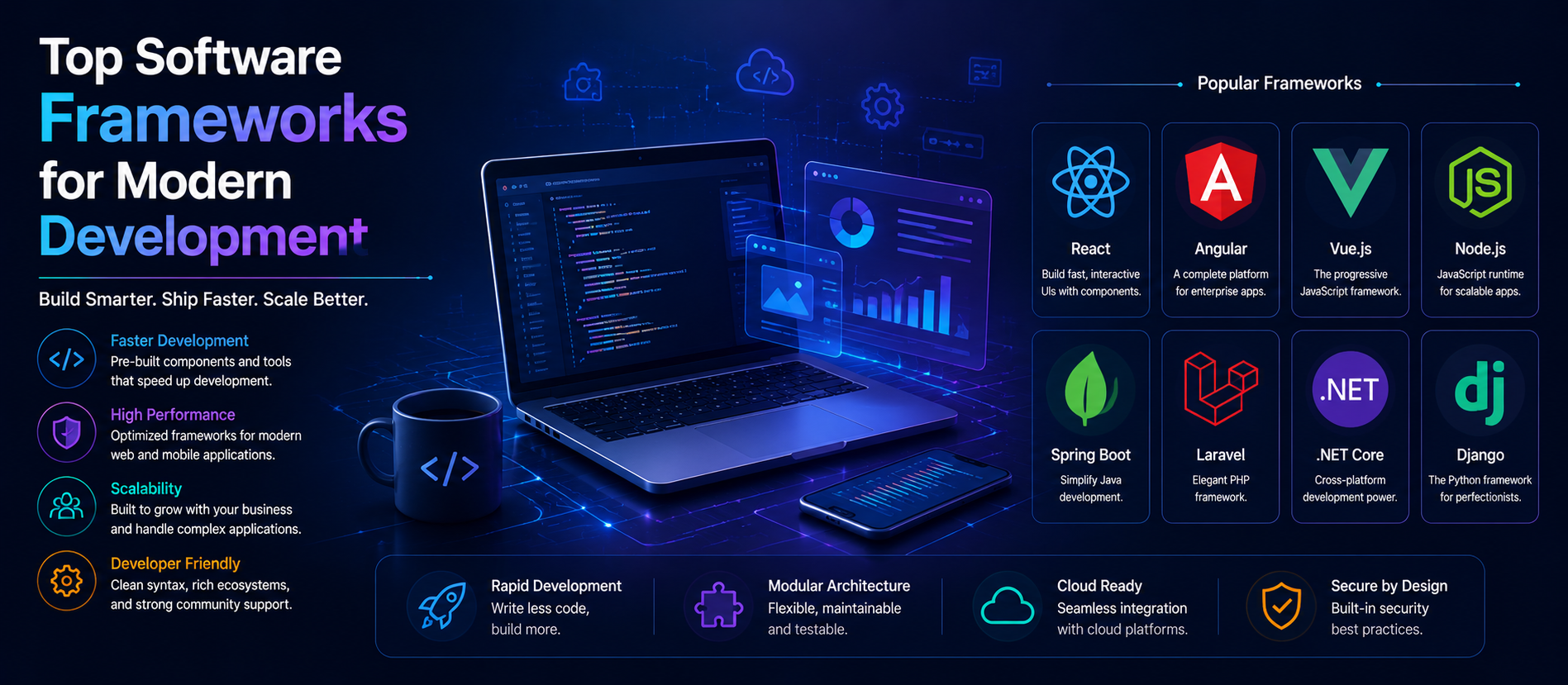
React
React remains one of the most widely adopted frontend frameworks for building interactive user interfaces.
- Component-based architecture
- Virtual DOM performance
- Large developer community
- Reusable UI components
Angular
Angular offers a comprehensive framework for enterprise-scale applications.
- TypeScript support
- Dependency injection
- Built-in routing
- Enterprise-grade architecture
Vue.js
Vue provides simplicity and flexibility while maintaining strong performance.
- Easy learning curve
- Fast rendering
- Progressive adoption
- Lightweight architecture
Backend Development Frameworks
Node.js Frameworks
Node.js continues driving modern backend development.
- High performance
- Real-time applications
- Scalable architecture
- API development
Laravel
Laravel remains one of the most popular PHP frameworks.
- Elegant syntax
- Rapid development
- Authentication features
- Database management
Django
Django provides robust tools for secure and scalable Python applications.
- Built-in security
- Admin interfaces
- Rapid development
- Strong ecosystem
Full-Stack Development Frameworks
Full-stack frameworks allow developers to build complete applications efficiently.
- Frontend integration
- Backend services
- Database connectivity
- API support
- Authentication systems
These frameworks streamline development workflows.
Mobile Application Frameworks
Flutter
Flutter enables cross-platform mobile development from a single codebase.
- Native performance
- Fast UI rendering
- Cross-platform deployment
- Rich widget libraries
React Native
React Native remains popular for building mobile applications efficiently.
- Code reuse
- Large ecosystem
- Native device access
- Rapid development
Cloud-Native Frameworks
Cloud computing has changed software architecture significantly.
- Microservices support
- Containerization
- Scalable deployments
- Cloud integration
Cloud-native frameworks help organizations build resilient and scalable applications.
Microservices Frameworks
Microservices architecture allows organizations to build modular applications.
- Independent deployments
- Service isolation
- Improved scalability
- Faster updates
Many modern frameworks now include microservices capabilities.
AI and Machine Learning Frameworks
Artificial Intelligence development increasingly relies on specialized frameworks.
- Machine learning models
- Data processing
- Model training
- AI deployment
- Predictive analytics
These frameworks accelerate AI innovation across industries.
Enterprise Development Frameworks
Large organizations require frameworks capable of supporting complex applications.
- Security controls
- Compliance support
- Scalable architecture
- Advanced integrations
- Performance optimization
Enterprise frameworks focus on reliability and governance.
API Development Frameworks
APIs have become essential for modern software ecosystems.
- REST API support
- GraphQL integration
- Authentication services
- Performance optimization
- Developer tooling
API-focused frameworks simplify connectivity between applications.
Security Features in Modern Frameworks
Security remains a top priority in software development.
- Authentication systems
- Authorization controls
- Input validation
- Encryption support
- Threat protection
Frameworks increasingly include built-in security best practices.
Benefits of Using Modern Frameworks
- Faster development cycles
- Improved maintainability
- Enhanced scalability
- Better security
- Reduced development costs
- Stronger developer productivity
Challenges Developers Should Consider
- Learning curves
- Framework updates
- Compatibility issues
- Performance trade-offs
- Dependency management
Selecting the right framework requires careful evaluation.
Emerging Framework Trends in 2026
AI-Assisted Development
Frameworks increasingly integrate AI-powered coding assistance.
Serverless Architectures
Developers are embracing frameworks optimized for serverless environments.
Edge Computing Support
Applications are moving closer to users through edge deployment models.
Low-Code Integration
Frameworks increasingly support visual development workflows.
Cloud-Native Optimization
Modern frameworks are designed specifically for distributed cloud environments.
How Software Frameworks Support SEO, AEO, GEO, and AI Search
SEO benefits from faster performance, improved page speed, structured content delivery, and better user experiences.
AEO relies on structured information architecture and optimized content accessibility.
GEO requires applications capable of delivering content optimized for AI-driven search systems.
Modern frameworks provide the technical foundation necessary for advanced digital visibility strategies.
Why Digiifrog Recommends Modern Development Frameworks
At Digiifrog, we believe selecting the right software framework is critical for building secure, scalable, and future-ready applications. Modern frameworks empower businesses to innovate faster, reduce development costs, and support evolving digital transformation initiatives.
Website: www.digiifrog.com
Conclusion
Software frameworks remain at the core of modern application development. From frontend user experiences and backend services to AI applications and cloud-native architectures, frameworks help organizations build powerful digital solutions efficiently.
As development technologies continue advancing, businesses and developers that embrace modern frameworks will be better positioned to create innovative, secure, and scalable software solutions capable of meeting future demands.
Ready to Grow?
Talk to us about a strategy tailored to your brand — we will help you stand out in search, AI discovery and social.

Comments (0)
Log in to leave a comment.