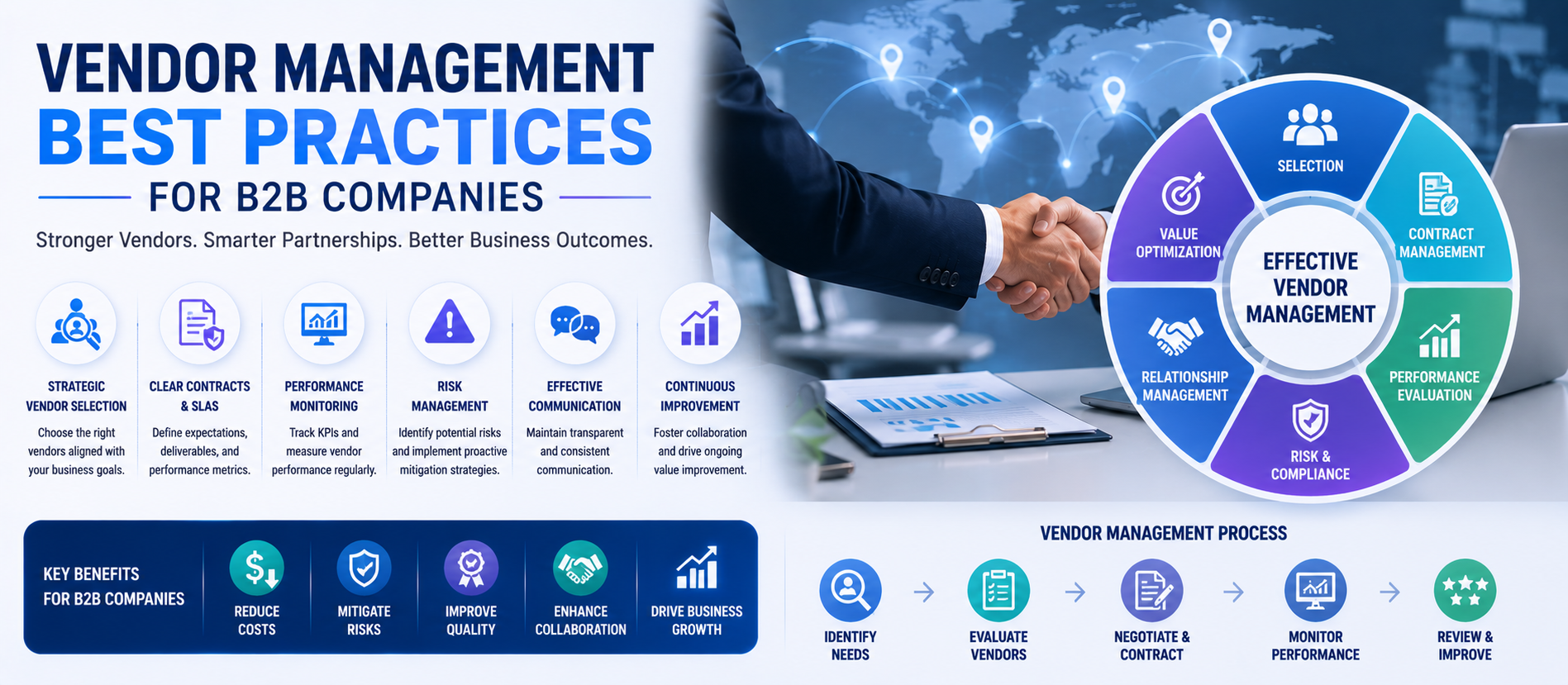
📋 Quick Summary
In this article:
Key Vendor Management Objectives
Develop a Vendor Management Strategy
Create Strong Vendor Contracts
Establish Vendor Performance Metrics
Vendor management has become a critical business function for modern B2B organizations. As companies increasingly rely on external suppliers, technology providers, logistics partners, consultants, and service vendors, the ability to manage vendor relationships effectively directly impacts operational efficiency, profitability, risk management, and customer satisfaction.
In 2026, vendor ecosystems are more complex than ever. Global supply chains, digital transformation initiatives, artificial intelligence, cloud-based technologies, and increasing customer expectations require businesses to adopt strategic vendor management practices. Organizations that successfully manage their vendors can reduce costs, improve service quality, mitigate risks, and gain a competitive advantage.
This comprehensive guide explores vendor management best practices for B2B companies, including vendor selection, performance monitoring, contract management, risk mitigation, supplier collaboration, and how SEO, AEO, GEO, and AI Search Optimization influence vendor-related business strategies.
What Is Vendor Management?
Vendor management is the process of selecting, evaluating, monitoring, and maintaining relationships with third-party suppliers and service providers. The goal is to maximize value while minimizing costs and risks.
Key Vendor Management Objectives
- Improve supplier performance
- Reduce procurement costs
- Ensure compliance
- Strengthen partnerships
- Minimize operational risks
- Enhance business continuity
Why Vendor Management Matters
Vendors often play a crucial role in delivering products and services. Poor vendor management can lead to delays, quality issues, compliance failures, and increased operational costs.
Business Benefits
- Cost optimization
- Improved efficiency
- Higher service quality
- Better risk management
- Stronger supplier relationships
- Enhanced customer satisfaction
Develop a Vendor Management Strategy
A successful vendor management program begins with a clear strategy aligned with business objectives.
Strategic Considerations
- Business goals
- Vendor categories
- Risk tolerance
- Performance expectations
- Compliance requirements
Having a structured approach helps organizations manage suppliers more effectively.
Select the Right Vendors
Vendor selection is one of the most important steps in the vendor management lifecycle.
Evaluation Criteria
- Industry expertise
- Financial stability
- Pricing structure
- Quality standards
- Scalability
- Technology capabilities
- Customer references
Choosing the right vendors lays the foundation for long-term success.
Conduct Vendor Due Diligence
Before entering into agreements, businesses should perform comprehensive due diligence.
- Financial reviews
- Compliance assessments
- Security evaluations
- Operational capability analysis
- Reputation research
Due diligence helps identify potential risks before they become costly problems.
Create Strong Vendor Contracts
Contracts establish expectations, responsibilities, and performance requirements.
Key Contract Elements
- Service Level Agreements (SLAs)
- Pricing terms
- Performance metrics
- Compliance requirements
- Termination clauses
- Data protection provisions
Well-structured contracts protect both parties and reduce misunderstandings.
Establish Vendor Performance Metrics
Performance measurement enables organizations to monitor supplier effectiveness.
Common KPIs
- On-time delivery rate
- Product quality score
- Response time
- Cost performance
- Customer satisfaction
- Contract compliance
Regular performance reviews help identify improvement opportunities.
Strengthen Vendor Relationships
Successful vendor management extends beyond transactions. Strategic partnerships create long-term value.
Relationship-Building Practices
- Regular communication
- Collaborative planning
- Performance feedback
- Joint problem-solving
- Transparency and trust
Strong relationships improve collaboration and innovation.
Implement Vendor Risk Management
Every vendor relationship introduces potential risks.
Common Risks
- Financial instability
- Cybersecurity threats
- Compliance violations
- Operational disruptions
- Supply chain delays
Proactive risk management improves business resilience.
Leverage Vendor Management Technology
Modern software solutions simplify vendor management processes.
Technology Benefits
- Centralized vendor data
- Automated workflows
- Performance tracking
- Risk monitoring
- Contract management
Technology improves visibility and operational efficiency.
Use Artificial Intelligence for Vendor Analytics
Artificial Intelligence is transforming vendor management through predictive insights and automation.
AI Applications
- Supplier risk prediction
- Performance analysis
- Contract intelligence
- Spend analytics
- Compliance monitoring
AI-driven insights support smarter decision-making.
Improve Procurement and Spend Visibility
Understanding vendor spending patterns helps organizations identify savings opportunities.
- Spend analysis
- Supplier consolidation
- Contract optimization
- Cost benchmarking
Visibility improves procurement efficiency and financial control.
Ensure Regulatory Compliance
Compliance management is essential for reducing legal and operational risks.
Compliance Areas
- Data privacy regulations
- Industry standards
- Contractual obligations
- Environmental requirements
- Security policies
Vendor Collaboration and Innovation
Many organizations treat vendors as strategic partners capable of contributing ideas, expertise, and innovation.
Collaborative relationships often lead to process improvements, cost reductions, and competitive advantages.
SEO, AEO, GEO and AI Search Optimization
SEO Optimization
B2B companies should optimize procurement and vendor-related content to improve search visibility.
AEO Optimization
Create direct-answer content addressing vendor management questions.
GEO Optimization
Improve visibility within AI-generated search experiences.
AI Search Optimization
Develop authoritative content that AI systems can reference and recommend.
Common Vendor Management Challenges
- Poor communication
- Inconsistent performance
- Lack of visibility
- Compliance risks
- Technology limitations
- Supplier dependency
Future Trends in Vendor Management
The future of vendor management will be shaped by Artificial Intelligence, predictive analytics, automation, digital procurement platforms, and increased emphasis on sustainability and ESG initiatives.
Organizations that embrace these trends will strengthen supplier relationships and improve operational performance.
Best Practices Summary
- Select vendors strategically
- Perform due diligence
- Establish clear contracts
- Monitor performance regularly
- Strengthen communication
- Leverage technology and AI
- Manage risks proactively
Conclusion
💡 Key Insight
Effective vendor management is essential for B2B companies seeking operational excellence, cost efficiency, risk reduction, and long-term growth. By implementing structured vendor management practices and leveraging modern technologies, organizations can maximize value from supplier relationships while maintaining business agility.
At Digiifrog, we help businesses accelerate growth through SEO, AEO, GEO, AI Search Optimization, digital transformation, procurement innovation, and data-driven business strategies.
Website: www.digiifrog.com
Ready to Grow?
Talk to us about a strategy tailored to your brand — we will help you stand out in search, AI discovery and social.
Comments (0)
Log in to leave a comment.