📋 Quick Summary
In this article:
Quick Answer: What Is the Best Way to Control Weeds in a Home Garden?
Understand Annual and Perennial Weeds
Remove Weeds While They Are Small
Use Hand Pulling for Targeted Control
Practice Shallow Cultivation and Hoeing
Make Mulching Part of Your Weed Control Strategy
Focus Keyword: Weed Control Solutions for Home Gardens
Weeds are one of the most common challenges in a home garden. They compete with vegetables, flowers, shrubs, and other desirable plants for water, nutrients, sunlight, and growing space. If they are allowed to establish and produce seed, the problem can become larger in future seasons.
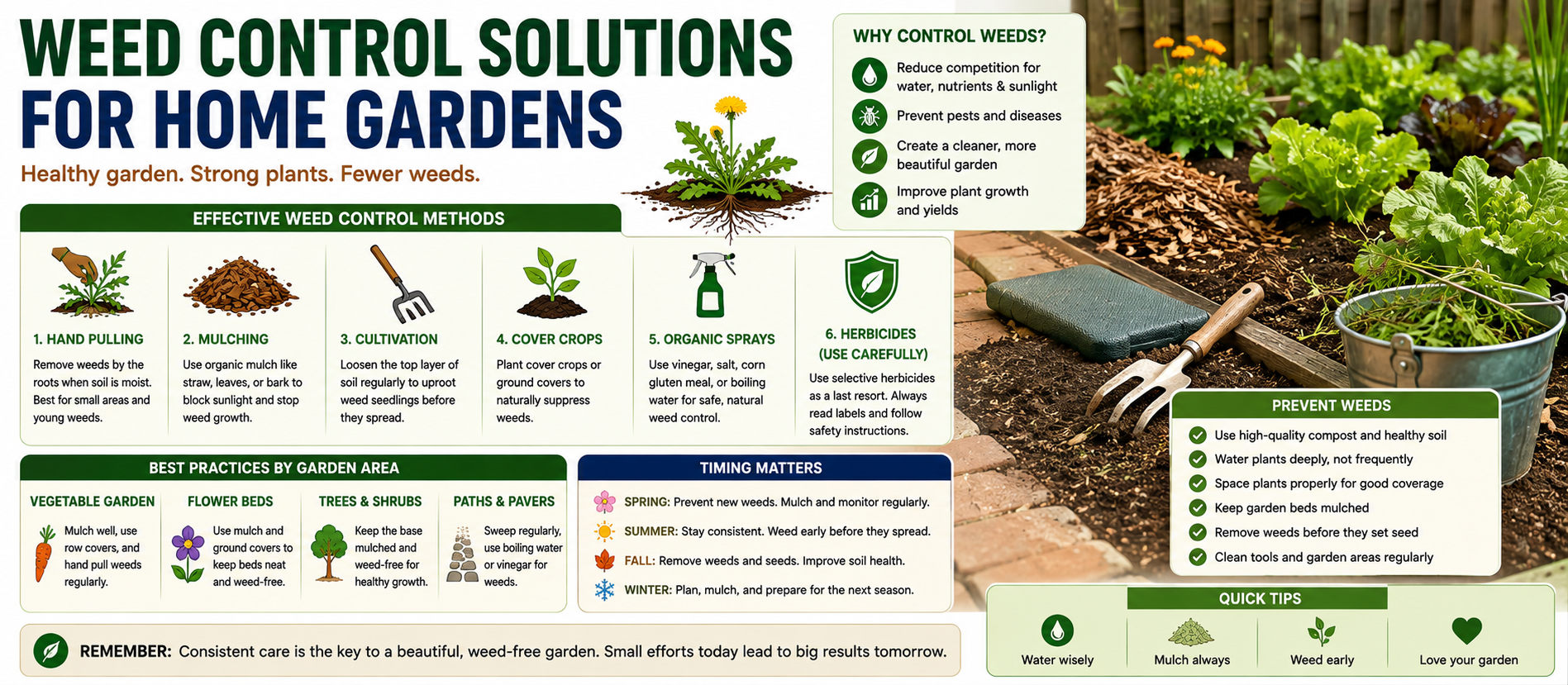
The most effective weed management plan usually does not depend on one method. Home gardeners often get better results by combining prevention, early removal, mulching, shallow cultivation, regular inspection, and careful site-specific decisions.
Quick Answer: What Is the Best Way to Control Weeds in a Home Garden?
The best approach is usually an integrated one. Remove young weeds early, prevent new weeds from establishing, cover suitable bare soil with mulch, avoid unnecessary deep cultivation, and inspect the garden regularly. Annual and perennial weeds may require different management methods.
Why Weed Control Matters
Weeds compete with desirable plants for important resources. Young vegetables and flowers can be especially affected when fast-growing weeds establish nearby. Large weed populations can also make watering, harvesting, pruning, and other garden tasks more difficult.
Early weed management reduces future work. A small seedling is generally easier to remove than a mature plant with a deep root system. Preventing weeds from flowering and producing seed can also reduce the number of new weeds that appear later.
Understand Annual and Perennial Weeds
Annual Weeds
Annual weeds usually complete their life cycle within one growing season. Many reproduce mainly through seed. Removing them while they are small and before they produce seed can be an effective long-term strategy.
Perennial Weeds
Perennial weeds can survive for multiple seasons. Some spread through roots, rhizomes, stolon, or other underground structures. Removing only the visible top growth may not remove the entire plant. These weeds often require repeated management and careful observation.
Start With Weed Prevention
Prevention is usually easier than controlling a large infestation. Remove existing weeds before planting. Inspect garden edges and neglected areas. Avoid allowing known weeds to flower and set seed. Use suitable mulch and reduce unnecessary periods of bare soil.
- Clear major weeds before planting.
- Inspect new planting areas regularly.
- Clean tools after working in heavily infested areas.
- Use suitable garden materials.
- Monitor compost and organic materials for unwanted growth.
- Do not allow problem weeds to become a major seed source.
Remove Weeds While They Are Small
Short, regular weeding sessions are often easier than waiting until an entire bed is covered. Young weeds usually have smaller root systems and are less likely to have produced seed.
Create a simple inspection routine. Check vegetable beds, flower borders, paths, raised beds, fence lines, and corners. Early action can save significant work later in the season.
Use Hand Pulling for Targeted Control
Hand pulling is useful when weeds are growing close to desirable plants. It allows targeted removal with less disturbance to the surrounding area.
Moderately moist soil can make pulling easier. Pull carefully and slowly, especially around young seedlings. For deeper-rooted weeds, a hand weeder or digging tool may help loosen the soil.
Practice Shallow Cultivation and Hoeing
Shallow cultivation can control many young weed seedlings in open soil. A hoe or similar tool can disrupt weeds near the surface before they become established.
Avoid unnecessary deep digging around established plants. Deep cultivation may damage shallow roots and bring buried weed seeds closer to the surface, where they may germinate.
Make Mulching Part of Your Weed Control Strategy
Mulch is one of the most useful weed prevention tools for home gardens. A suitable layer can reduce the amount of light reaching the soil surface and make it harder for many weed seeds to germinate and grow.
- Mulch can reduce weed growth.
- It can help conserve soil moisture.
- It may moderate soil temperature.
- It can reduce erosion and soil splash.
- Organic mulch may contribute organic matter as it decomposes.
Control established weeds before applying mulch. Mulch is most effective at reducing new seedlings. Some established perennial weeds may still grow through it.
Choose the Right Mulch
Shredded Leaves
Shredded leaves can be useful in many garden beds and gradually break down over time.
Suitable Weed-Free Straw
Suitable straw can be useful around vegetable plants. Avoid materials containing unwanted seeds.
Grass Clippings
Thin layers of suitable grass clippings may be useful in some gardens. Avoid creating dense layers that remain wet and restrict air movement.
Wood Chips and Bark
Wood chips and bark are commonly used around trees, shrubs, and perennial beds. Keep mulch away from direct contact with trunks and plant crowns.
Reduce Bare Soil
Large areas of exposed soil provide opportunities for weed seeds to germinate. Where appropriate, use mulch or thoughtful planting design to reduce unnecessary bare spaces.
Do not overcrowd plants simply to suppress weeds. Healthy plants still need adequate light, airflow, nutrients, and growing space.
Watch Garden Edges and Pathways
Garden edges, fence lines, pathways, and neglected corners often become weed sources. Seeds may arrive through wind, water, animals, footwear, tools, or imported materials.
- Check bed borders.
- Inspect raised-bed corners.
- Monitor fence lines.
- Remove young weeds from paths.
- Pay attention to areas around sheds and structures.
Manage Perennial Weeds With Persistence
Persistent weeds may require repeated action. Some have extensive roots or underground stems, making one-time removal ineffective. Repeated removal of regrowth can help reduce the plant over time.
Identify difficult weeds when possible. If an infestation is extensive or the plant is unfamiliar, seek reliable local horticultural guidance before selecting a management method.
Prevent Weeds From Producing Seed
Stopping unwanted plants before seed production is one of the most useful long-term habits for gardeners. Mature weeds can add large numbers of seeds to the soil and increase future maintenance.
If weeds are already flowering or carrying mature seed, remove and handle them carefully to avoid spreading seeds around the garden.
Be Careful With Tilling
Tilling can be useful when establishing a new garden, but repeated deep disturbance is not always the best weed-control method. Buried weed seeds may be brought to the surface, where they can germinate.
In established beds, targeted hand pulling and shallow cultivation are often less disruptive. Use soil disturbance intentionally rather than automatically.
Consider the Stale Seedbed Technique
For some new garden areas, gardeners prepare the soil, allow some weed seeds near the surface to germinate, and then remove the young weeds with minimal additional soil disturbance before planting the main crop.
This approach requires planning and timing. Its usefulness depends on the climate, crop, season, and planting schedule.
Use Irrigation Wisely
Water supports desirable plants and weeds. Where appropriate, targeted irrigation can focus water near crops instead of across large areas of exposed soil. Mulch can also help conserve moisture in suitable garden conditions.
Raised Beds and Weed Management
Raised beds do not automatically eliminate weeds, but they can make management easier by creating defined growing areas. They can simplify inspection, mulching, and targeted removal.
Before creating a new bed, consider the existing vegetation underneath and around the site. Persistent weeds should be addressed as part of site preparation.
Keep Garden Tools Ready
A small set of basic tools can make regular weed management easier.
- Hand weeder.
- Hand fork.
- Garden hoe.
- Oscillating hoe.
- Digging tool.
- Gloves.
- Collection bucket or bag.
Herbicides: Use Caution and Follow the Label
Herbicides are not necessary for every home garden. If a gardener decides to use a herbicide, the weed and surrounding plants should first be identified.
- Use only products labeled for the intended site and use.
- Read the complete current product label.
- Follow directions, restrictions, and protective requirements.
- Do not exceed the labeled amount.
- Avoid drift and unintended contact with desirable plants.
- Store and dispose of products according to applicable instructions.
Product registrations and permitted uses vary by location. Always follow current local requirements and product labeling.
Avoid Unverified Home Remedies
Online advice sometimes recommends household substances as simple weed killers. Natural or homemade does not automatically mean safe for soil, plants, pets, people, or nearby water.
A better approach is to begin with appropriate physical and preventive methods and seek reliable guidance when specialized control is needed.
Match the Method to the Garden Area
Vegetable Beds
Hand pulling, shallow cultivation, and suitable organic mulch are often practical options.
Flower Beds
Careful hand weeding and mulching can help protect ornamental plants while reducing weed growth.
Paths and Non-Planted Areas
Mechanical removal and appropriate barriers may be useful depending on the path material and surrounding landscape.
Areas Around Trees and Shrubs
Organic mulch can suppress weeds and improve appearance when applied carefully and kept away from direct contact with trunks.
A Simple Seasonal Weed Control Plan
Early Season
- Inspect beds before planting.
- Remove established weeds.
- Identify persistent problem areas.
- Prepare tools and mulch.
Planting Period
- Keep new plants free from close weed competition.
- Use shallow cultivation where appropriate.
- Protect suitable cleared soil with mulch.
Mid-Season
- Inspect regularly.
- Remove young weeds.
- Refresh mulch when necessary.
- Prevent flowering and seed production.
Late Season
- Record recurring weed problems.
- Prevent mature weeds from spreading seed.
- Plan improvements for the next growing season.
Common Weed Control Mistakes to Avoid
Waiting Too Long
Large, mature weeds are usually harder to remove than young seedlings.
Digging Too Deeply
Unnecessary deep cultivation can damage roots and bring additional weed seeds to the surface.
Applying Mulch Over Large Established Weeds
Control major existing weeds first. Some established plants can continue growing through mulch.
Ignoring Garden Edges
Untended edges can become a continuing source of seeds and spreading roots.
Assuming One Method Works Everywhere
Different weeds and different garden areas require different approaches.
SEO, AEO, GEO, and AI Search Optimization for Gardening Content
Gardening businesses, landscapers, nurseries, and home-service companies can improve digital visibility by answering practical questions clearly and directly.
Traditional SEO benefits from helpful keyword-focused content and logical headings. AEO benefits from direct answers and FAQ sections. GEO and AI Search optimization benefit from accurate, well-structured information that explains what to do, why it matters, and when local expertise may be useful.
Frequently Asked Questions
What is the easiest way to control weeds in a home garden?
For many small gardens, regular early hand weeding combined with suitable mulch is a practical approach.
Does mulch completely stop weeds?
No. Mulch can reduce many new weeds, but established perennial weeds may still grow through it.
Why do weeds keep returning?
Seeds may already be present in the soil, and some perennial weeds can regrow from roots or underground stems.
How often should I weed my garden?
Regular short inspections are often more effective than waiting for a major infestation.
Can I use herbicide in a vegetable garden?
Only use a product when its current label specifically permits the intended crop, site, and application. Follow all applicable directions and restrictions.
Final Thoughts
Effective weed control solutions for home gardens depend on consistency rather than one dramatic treatment. Remove weeds early, prevent seed production, protect suitable soil with mulch, cultivate carefully, and monitor problem areas.
The goal does not always need to be a completely weed-free garden. A practical goal is to keep weeds below the level where they seriously compete with desirable plants or create unnecessary maintenance problems.
By combining prevention, hand removal, shallow cultivation, mulching, good garden design, and careful decision-making, home gardeners can reduce weed pressure and support healthier, more productive growing spaces.
For clear, practical, SEO-friendly, AEO-ready, GEO-focused, and AI Search optimized digital content, visit Digiifrog at www.digiifrog.com.
Disclaimer: This article is for general informational and educational purposes only. Weed species, climate, soil conditions, product labels, and local regulations vary by location. Always identify plants carefully and follow applicable local guidance and current product labels before using any herbicide or other weed-control product.
Ready to Grow?
Talk to us about a strategy tailored to your brand — we will help you stand out in search, AI discovery and social.


Comments (0)
Log in to leave a comment.