📋 Quick Summary
In this article:
Understanding Auto Insurance Premiums
💡 Key Insight
Auto insurance is an essential financial protection tool for vehicle owners. Whether you drive a compact car, a luxury sedan, an SUV, or an electric vehicle, understanding what affects your auto insurance premium can help you make smarter financial decisions and potentially save hundreds or even thousands of dollars each year.
Many drivers are surprised when they receive insurance quotes that differ significantly from those of friends, family members, or colleagues. The reality is that insurance companies evaluate dozens of factors when calculating premiums. These factors help insurers estimate risk and determine the likelihood of future claims.
In this comprehensive guide from Digiifrog, we explore the major factors influencing auto insurance premiums, explain how insurance companies assess risk, and provide practical strategies for reducing insurance costs while maintaining adequate coverage.
Website: www.digiifrog.com
Understanding Auto Insurance Premiums
An auto insurance premium is the amount you pay to maintain insurance coverage on your vehicle. Premiums may be paid monthly, quarterly, semi-annually, or annually depending on the insurer and policy structure.
⚠ Watch Out
Insurance companies calculate premiums based on risk. The higher the perceived risk of accidents, claims, theft, or damages, the higher your premium is likely to be.
Insurers rely on advanced analytics, historical claim data, artificial intelligence, predictive modeling, and underwriting guidelines to determine pricing.
Your Driving Record
One of the most important factors affecting auto insurance premiums is your driving history.
Insurance companies closely examine:
- Traffic violations
- Speeding tickets
- Reckless driving incidents
- DUI or impaired driving convictions
- Previous insurance claims
- At-fault accidents
Drivers with clean records generally qualify for lower premiums because they are viewed as lower-risk policyholders.
Conversely, multiple violations or accidents often lead to higher insurance costs.
Age and Driving Experience
Age plays a major role in determining insurance rates.
Young drivers often face higher premiums because statistical data shows they are more likely to be involved in accidents.
Drivers typically experience lower rates as they gain experience and maintain clean records.
Insurance costs may rise again for older drivers due to age-related risk factors.
Common risk groups include:
- Teen drivers
- Newly licensed drivers
- Senior drivers
- Experienced middle-aged drivers
Vehicle Type and Model
The vehicle you drive significantly impacts insurance premiums.
Insurers evaluate:
- Vehicle value
- Repair costs
- Replacement costs
- Safety ratings
- Theft rates
- Performance capabilities
Luxury cars and high-performance vehicles generally cost more to insure because repairs and replacements are expensive.
Vehicles with strong safety ratings may qualify for discounts.
Location and Geographic Risk
Your location can substantially affect auto insurance rates.
Insurance companies analyze local factors including:
- Population density
- Traffic congestion
- Crime rates
- Vehicle theft statistics
- Accident frequency
- Weather-related risks
Urban drivers often pay more than rural drivers due to increased accident and theft risks.
Annual Mileage
The more you drive, the more exposure you have to potential accidents.
Insurance companies typically ask how many miles or kilometers you drive annually.
Higher mileage often results in:
- Greater accident exposure
- More wear and tear
- Increased claim probability
Low-mileage drivers may qualify for usage-based discounts.
Insurance Coverage Choices
Your selected coverage level directly influences premiums.
Liability Coverage
Provides protection for damages caused to others.
Collision Coverage
Covers damage to your vehicle following accidents.
Comprehensive Coverage
Protects against theft, vandalism, fire, weather events, and other non-collision risks.
Uninsured Motorist Coverage
Provides protection when involved with uninsured drivers.
Higher coverage limits generally result in higher premiums.
Deductible Amount
A deductible is the amount you pay before insurance coverage begins.
Higher deductibles often lead to lower premiums because policyholders assume more financial responsibility.
For example:
- $250 deductible = Higher premium
- $500 deductible = Moderate premium
- $1,000 deductible = Lower premium
Choosing the right deductible requires balancing affordability and risk tolerance.
Credit-Based Insurance Scores
In some regions, insurers consider credit-related information when calculating premiums.
Studies suggest correlations between financial behavior and claim frequency.
Factors may include:
- Payment history
- Debt levels
- Credit utilization
- Financial stability
Better financial management can sometimes contribute to lower insurance rates.
Claims History
Your previous insurance claims significantly affect future premiums.
Frequent claims may indicate increased risk.
Insurers often review:
- Number of claims
- Claim severity
- Type of incidents
- At-fault versus not-at-fault accidents
A strong claims-free history can help secure favorable pricing.
Vehicle Safety Features
Modern safety technology can reduce accident risks and insurance costs.
Popular safety features include:
- Anti-lock braking systems
- Airbags
- Blind-spot monitoring
- Automatic emergency braking
- Lane departure warnings
- Adaptive cruise control
Vehicles equipped with advanced safety systems may qualify for discounts.
Vehicle Theft Risk
Insurance companies analyze theft statistics for specific vehicle models.
Cars frequently targeted by thieves may attract higher comprehensive insurance premiums.
Protective features that may reduce risk include:
- GPS tracking
- Immobilizers
- Alarm systems
- Secure parking
Marital Status
Some insurers consider marital status during underwriting.
Historical data often indicates married individuals file fewer claims compared to certain other demographic groups.
As a result, married drivers may receive lower premiums in some markets.
Occupation and Profession
Certain insurance providers factor occupation into pricing models.
Occupational considerations may reflect:
- Driving frequency
- Work schedules
- Vehicle usage patterns
- Statistical claim trends
Eligibility for discounts varies among insurers.
Usage-Based Insurance Programs
Technology is transforming auto insurance pricing.
Usage-based insurance programs utilize telematics devices or mobile apps to monitor driving behavior.
Metrics may include:
- Speed
- Braking habits
- Acceleration patterns
- Time of day driven
- Total mileage
Safe drivers may earn significant discounts through these programs.
Electric Vehicles and Insurance Costs
Electric vehicles are becoming increasingly popular, but insurance pricing can vary.
Factors affecting EV insurance include:
- Battery replacement costs
- Specialized repair requirements
- Advanced technology systems
- Vehicle value
As EV adoption grows, insurers continue refining pricing models.
How Artificial Intelligence Influences Premiums
Artificial intelligence has become a major force in insurance underwriting.
AI systems analyze vast amounts of data to:
- Predict accident likelihood
- Assess risk profiles
- Detect fraud
- Improve claim processing
- Generate personalized pricing
These technologies help insurers offer more accurate and individualized premiums.
Ways to Lower Your Auto Insurance Premium
If you want to reduce insurance costs, consider these proven strategies:
- Maintain a clean driving record
- Increase your deductible
- Bundle insurance policies
- Compare quotes regularly
- Install anti-theft devices
- Drive fewer miles
- Choose vehicles with strong safety ratings
- Take defensive driving courses
- Review coverage annually
- Avoid unnecessary claims
Common Auto Insurance Myths
Red Cars Cost More to Insure
Vehicle color generally does not affect premiums.
Older Cars Always Cost Less to Insure
Insurance costs depend on multiple variables, not just age.
Minimum Coverage Is Always Enough
Minimum legal requirements may not provide sufficient financial protection.
Your Premium Never Changes
Insurance rates frequently change based on risk factors and market conditions.
Frequently Asked Questions
What is the biggest factor affecting auto insurance premiums?
Your driving history is typically one of the most influential factors.
Does my vehicle affect insurance rates?
Yes. Vehicle value, repair costs, safety features, and theft rates all impact premiums.
Can I lower my premium without reducing coverage?
Often yes. Shopping around, maintaining a clean driving record, and bundling policies may help.
Do insurance companies use AI?
Yes. AI plays an increasingly important role in underwriting, pricing, fraud detection, and claims processing.
Final Thoughts
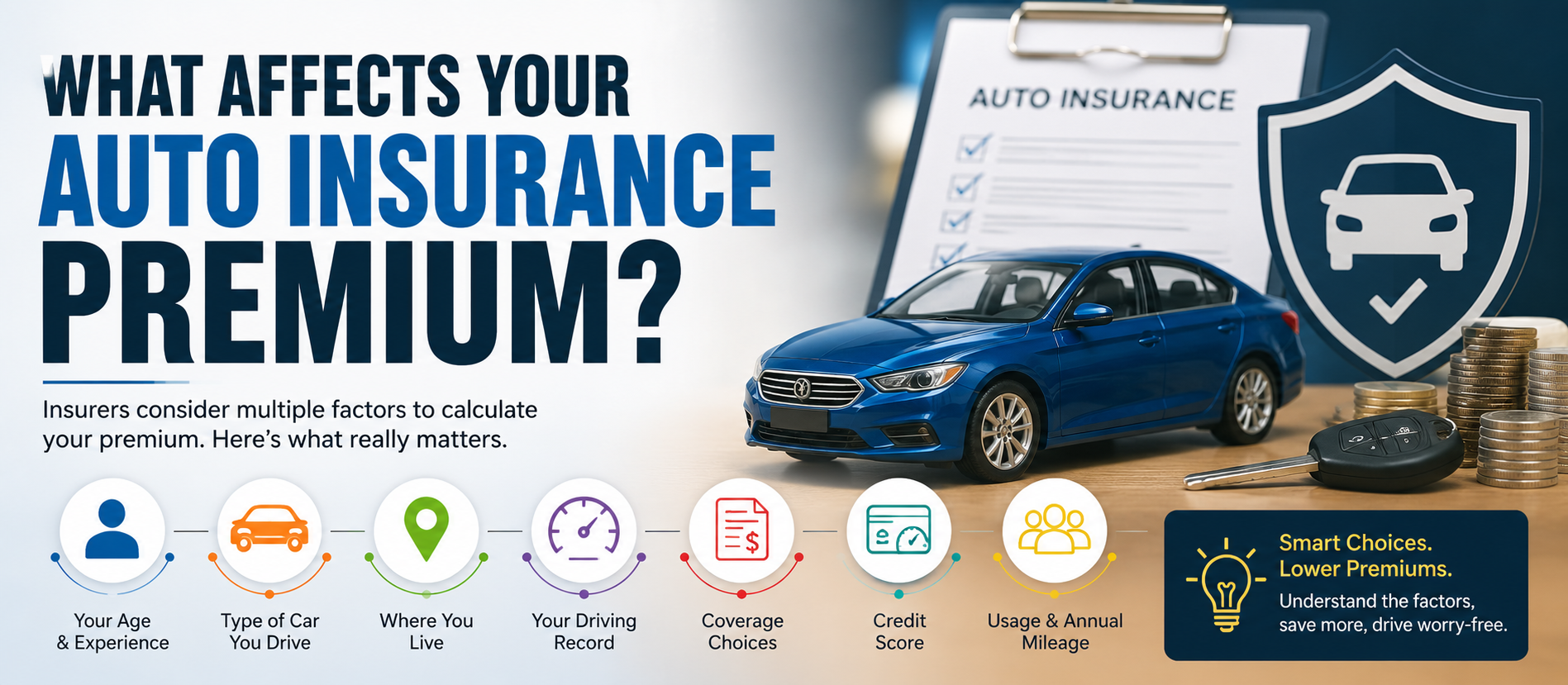
Understanding what affects your auto insurance premium is essential for making informed financial decisions. Insurance companies consider a wide range of factors including driving history, age, vehicle type, location, mileage, claims history, coverage choices, deductibles, and emerging technologies such as AI-driven risk assessment.
By understanding these variables, drivers can identify opportunities to reduce costs while maintaining appropriate protection. Regular policy reviews, safe driving habits, and strategic coverage decisions can help ensure long-term financial security.
As the insurance industry continues evolving through digital transformation, artificial intelligence, telematics, and data-driven underwriting, consumers who stay informed will be better positioned to secure competitive premiums and comprehensive protection.
For more insurance insights, digital marketing solutions, AI Search optimization strategies, and business growth resources, visit Digiifrog at www.digiifrog.com.
Ready to Grow?
Talk to us about a strategy tailored to your brand — we will help you stand out in search, AI discovery and social.


Comments (0)
Log in to leave a comment.