📋 Quick Summary
In this article:
Quick Answer: Which Documents Are Usually Needed for an Insurance Claim?
Why Do Insurers Ask for Documents?
1. Basic Documents Needed for Many Insurance Claims
2. Documents for a Car Insurance Claim
3. Documents for a Homeowners or Renters Insurance Claim
4. Documents for a Health or Medical Insurance Claim
Documents that may be requested
5. Documents for a Life Insurance Claim
6. Documents for Travel Insurance Claims
7. Documents for Business Insurance Claims
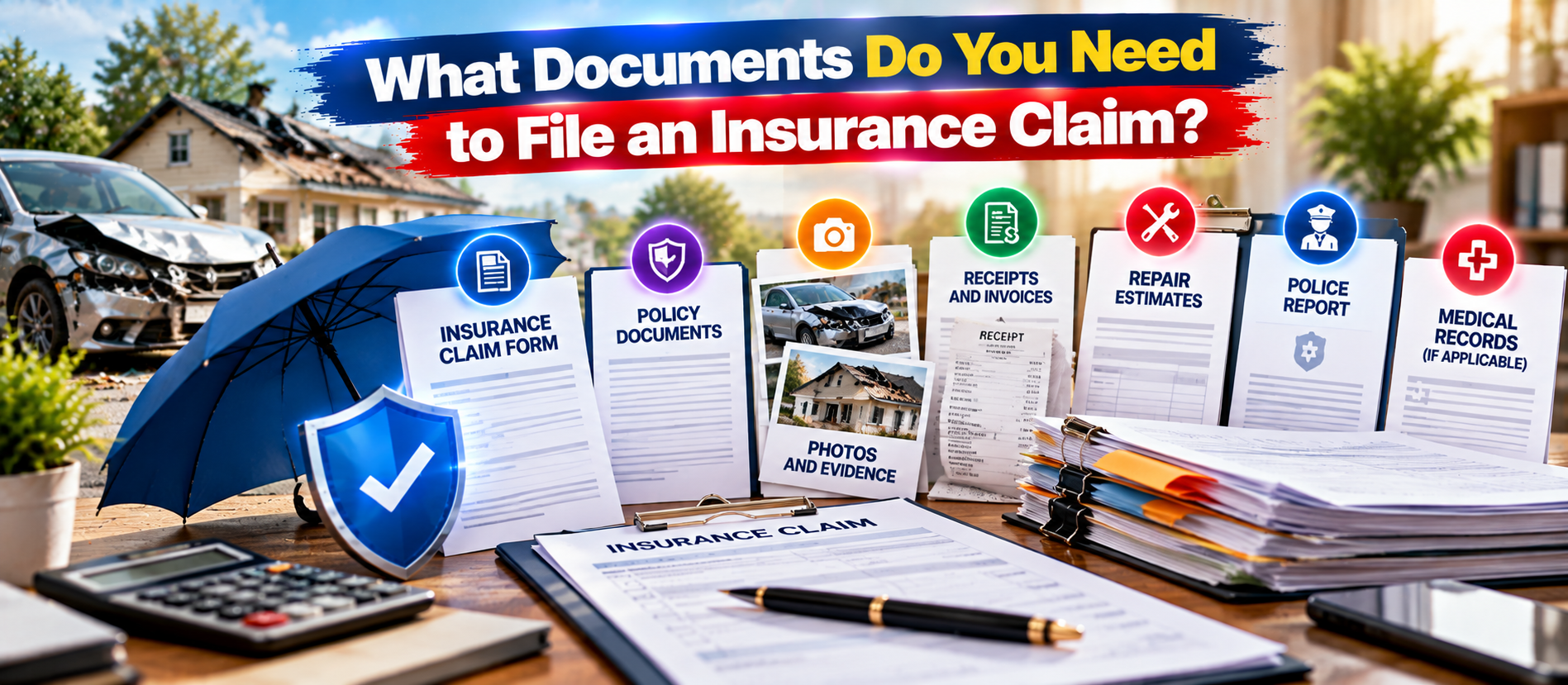
The documents you need to file an insurance claim depend on the type of policy and what happened. Most claims require basic policy details, a completed claim form, proof of the loss, and records that show the value of the damage or expense. Some claims also need photos, receipts, repair estimates, medical records, police reports, or other official documents.
Preparing the right paperwork can help the insurer review your claim more smoothly. It can also reduce follow-up questions and help you keep track of what you submitted. However, there is no single checklist for every claim. Your insurer may request additional documents based on the policy and the facts of the event.
Quick Answer: Which Documents Are Usually Needed for an Insurance Claim?
Common insurance claim documents include your policy number, identification, a completed claim form, a clear description of the incident, photos or videos of the damage, receipts or proof of ownership, repair estimates, and bank details if the insurer needs them for payment. Depending on the claim, you may also need a police report, medical records, invoices, travel documents, or proof of lost income.
Check the insurer’s claim instructions before sending documents. Requirements vary by policy, insurer, claim type, and country. Keep copies of everything, submit accurate information, and ask for confirmation that the insurer has received your documents.
Why Do Insurers Ask for Documents?
Insurers use documents to confirm who is making the claim, whether the policy may cover the event, what damage or expense occurred, and how much the claim may be worth. The documents help the insurer compare the facts with the policy terms.
For example, a receipt may show when an item was purchased and how much it cost. Photos may show the condition of damaged property. A repair estimate may explain the work and materials needed. A police report may record information about a theft or road incident.
Documents do not guarantee that a claim will be approved. The insurer still checks the policy, exclusions, limits, deductibles, and facts of the event. Complete and accurate records simply make it easier to assess the claim.
1. Basic Documents Needed for Many Insurance Claims
Several documents are common across different types of insurance. You may not need every item on this list, so follow the insurer’s instructions.
- Policy number or policy schedule: Helps the insurer locate your coverage details.
- Identification: May be required to confirm your identity and contact information.
- Claim form: Records the type of loss, date, location, and details requested by the insurer.
- Incident description: A clear account of what happened, when it happened, and what was affected.
- Photos or videos: Show the damage, scene, or condition of the affected property when it is safe and appropriate to record.
- Proof of ownership or value: Receipts, invoices, warranties, inventory lists, or other records may help establish value.
- Estimates or invoices: Explain the cost of repairs, replacement, treatment, or other expenses.
- Contact details: Information for relevant witnesses, service providers, or other parties, where applicable.
- Payment details: The insurer may request verified bank or payment information after confirming the claim.
Never send sensitive information through an unverified link or to an unknown person. Use the insurer’s official website, app, branch, or verified claims contact. Ask why a document is needed if the request seems unusual.
2. Documents for a Car Insurance Claim
Car insurance claims may involve vehicle damage, theft, third-party damage, bodily injury, or other events. The documents required depend on the type of claim and local rules.
Common documents
- Insurance policy details and claim form.
- Driver’s licence and vehicle registration documents, where required.
- Photos or videos of the vehicle damage and incident scene, if safe to take.
- Details of the date, time, place, and circumstances of the incident.
- Police report or incident reference number when required, such as for theft, injury, or certain collisions.
- Repair estimate, garage assessment, and final repair invoice, where applicable.
- Details of other drivers, vehicles, witnesses, or third parties involved.
- Proof of ownership or finance information if requested.
In some countries, the insurer may ask for a vehicle inspection before repairs begin. Do not authorize major repairs or dispose of damaged parts until you understand the insurer’s process, unless urgent action is needed to protect people or prevent further damage. Follow the policy and local legal requirements.
If someone is injured, prioritize emergency care and report the incident as required. Do not delay urgent medical help while collecting paperwork.
3. Documents for a Homeowners or Renters Insurance Claim
Home and renters claims may involve fire, water damage, theft, storm damage, or loss of personal belongings. The insurer may ask for evidence of the event, damage, ownership, and repair or replacement costs.
Useful documents
- Policy details and completed claim form.
- Photos or videos of damaged rooms, belongings, and the wider affected area.
- Inventory of damaged or missing items, including descriptions, quantities, and estimated values.
- Purchase receipts, order confirmations, warranties, or bank statements that help show ownership and value.
- Repair estimates from qualified contractors or technicians.
- Invoices for emergency services, temporary repairs, or eligible accommodation costs.
- Police report or reference number for theft or vandalism, where required.
- Proof of address, ownership, tenancy, or other documents requested by the insurer.
Make the property safe and take reasonable steps to prevent further damage. Keep receipts for urgent work and photograph the damage before cleanup when it is safe to do so. Do not put yourself at risk to obtain evidence. Ask the insurer how to handle damaged items and whether an inspection is required.
For renters, a landlord’s property policy may not cover the tenant’s personal belongings. Provide a list of your own damaged property and check what your renters policy covers.
4. Documents for a Health or Medical Insurance Claim
Health insurance paperwork depends on the plan, the treatment, and whether the claim uses direct billing, cashless service, or reimbursement. Some providers submit claims directly. Others require you to pay first and request repayment.
Documents that may be requested
- Health insurance policy or membership details.
- Claim form completed by the insured person and, where required, the treating provider.
- Medical reports, diagnosis details, or treatment summaries relevant to the claim.
- Itemized hospital or clinic bills.
- Receipts showing payments made.
- Prescriptions, test reports, or referral documents when relevant.
- Discharge summary for a hospital stay, if applicable.
- Proof of identity and payment details where required.
- Pre-authorization or approval reference for treatments that require it.
Only provide medical information through the insurer’s approved process. Submit records that are relevant to the claim and follow privacy instructions. Ask the insurer whether original bills, certified copies, digital records, or translations are required.
Some plans have strict filing deadlines. Check the policy or member handbook and contact the insurer promptly if you need help understanding the requirements.
5. Documents for a Life Insurance Claim
A life insurance claim is often made by a beneficiary or another person authorized under the policy. Requirements vary by insurer, policy, and local law.
Common documents may include:
- Policy number or original policy document, if available.
- Claim form completed by the beneficiary or claimant.
- Death certificate issued by the appropriate authority.
- Identification and contact details of the claimant.
- Documents showing the claimant’s relationship to or entitlement under the policy, if requested.
- Bank or payment details for an approved claim.
- Medical records, attending physician statements, or other evidence if the insurer needs them under the policy.
- Police or official investigation records when relevant to the circumstances of death.
Contact the insurer for its exact checklist. If a document is unavailable, ask whether an official duplicate or alternative proof can be accepted. Do not assume a claim will be rejected simply because you do not have the original policy document; the insurer may be able to locate the policy using other details.
6. Documents for Travel Insurance Claims
Travel claims can involve medical treatment abroad, trip cancellation, missed connections, lost baggage, or travel delays. The supporting documents depend on the benefit being claimed.
- Medical expenses: Medical reports, itemized bills, payment receipts, prescriptions, and proof of travel may be required.
- Trip cancellation: Booking confirmations, cancellation invoices, refund details, and evidence of the covered reason for cancellation.
- Travel delay: Airline or carrier confirmation showing the delay and its reason, plus receipts for eligible extra expenses.
- Lost or delayed baggage: Baggage reports, carrier reference numbers, baggage tags, receipts for essential purchases, and proof of ownership or value.
- Lost passport or documents: Police report or consular documents where applicable, along with replacement costs.
Keep boarding passes, tickets, hotel bookings, and receipts until the trip is complete and any claim is resolved. Report baggage problems to the carrier promptly and keep the reference number. For urgent medical situations, seek appropriate care first and contact the insurer’s assistance service as soon as practical.
7. Documents for Business Insurance Claims
Business claims may involve damaged property, stolen equipment, liability allegations, cyber incidents, employee injuries, or interrupted operations. The insurer may need both event evidence and business records.
Documents may include:
- Policy schedule and claim form.
- Photos, incident reports, and a timeline of what happened.
- Invoices, purchase records, asset registers, and stock lists.
- Repair estimates and replacement quotes.
- Sales records, financial statements, payroll records, and tax documents for a business interruption claim.
- Customer contracts, correspondence, and complaint records for certain liability claims.
- IT logs, security alerts, forensic reports, and evidence of response steps for some cyber claims.
- Employee incident reports and relevant records for workplace injury claims, subject to local law and privacy requirements.
- Police or regulator reference numbers when relevant.
After a cyber incident, preserve relevant logs and evidence and follow the policy’s notification process. Do not delete affected systems or records before checking the response plan and getting appropriate technical guidance. If the policy requires prompt notification, report the incident even if the full extent of the loss is not yet known.
Business interruption claims may need detailed financial records to show the effect of the covered event. Keep sales reports, invoices, payroll records, and evidence of extra expenses organized and backed up.
8. Proof of Loss: What Counts as Evidence?
Proof of loss is information that helps show what happened and the value of the loss. The best evidence depends on the item, event, and policy.
Examples include:
- Receipts and invoices showing purchase price or repair cost.
- Photos or videos showing the condition before or after an event.
- Bank or card statements that support a purchase when a receipt is missing.
- Warranty records, serial numbers, and product details.
- Independent repair estimates or professional assessments.
- Inventory lists and accounting records.
- Official reports, reference numbers, and relevant correspondence.
If you no longer have a receipt, do not create or alter one. Ask the insurer what alternative evidence it can accept. A bank statement, order history, warranty registration, photograph, or inventory record may help, depending on the policy and claim.
Provide clear descriptions and realistic values. Inflated, misleading, or fabricated information can delay a claim and may lead to denial or legal consequences.
9. How to Organize Your Claim Documents
A simple filing system can save time. Create a folder for the claim and use clear file names. Keep a separate copy of the documents you send.
- Start with the policy. Save the policy schedule, wording, and claim instructions.
- Write a timeline. Record the date, time, location, key events, and people contacted.
- Collect evidence. Save photos, videos, reports, receipts, estimates, and invoices.
- Group documents by category. Use folders such as claim form, proof of loss, expenses, official reports, and insurer messages.
- Keep originals safe. Send copies unless the insurer specifically asks for an original. If an original is required, use a traceable method and keep proof of delivery.
- Track every submission. Record what you sent, when you sent it, and the insurer’s confirmation or reference number.
- Protect private information. Use secure channels and avoid sharing documents through public links.
Before submitting, check that files are readable, pages are complete, dates are visible, and the information matches across forms and supporting records.
10. Common Mistakes That Can Delay an Insurance Claim
- Missing the deadline: Some policies require prompt notice or submission within a set period. Check the rules early.
- Leaving sections blank: Complete all required parts of the form or ask whether a field can be marked not applicable.
- Submitting unclear photos: Use well-lit images and include both wide views and close-ups where useful.
- Sending inconsistent details: Check dates, amounts, names, and descriptions across all documents.
- Failing to keep copies: Save everything submitted and all messages from the insurer.
- Discarding damaged items too soon: Ask about inspection requirements first, unless removal is needed for safety or to prevent further damage.
- Guessing at values: Use records and reasonable estimates, and label estimates clearly.
- Ignoring requests for more information: Respond within the stated time or ask for an extension if needed.
- Using unofficial submission links: Confirm that the channel belongs to the insurer before sending sensitive data.
Not every delay is caused by the claimant. Some claims need investigation, expert assessment, or third-party records. Good organization can still reduce avoidable back-and-forth.
11. What to Do If You Do Not Have Every Document
You may not have every receipt, report, or original document. This does not always mean you cannot file a claim. The insurer may accept other evidence, depending on the policy and circumstances.
Contact the claims team and explain what is missing. Ask whether they will accept a duplicate, bank statement, digital order confirmation, photograph, repair assessment, or other supporting record. If a police report or official certificate is pending, ask whether you can submit the claim first and provide the document later.
Do not wait to report an event simply because you are still collecting evidence, unless the insurer’s instructions clearly say otherwise. Many policies require prompt notification. You can often report the incident and then follow the claims team’s instructions for remaining documents.
Keep a record of the advice you receive, including the date, the person you spoke with, and any reference number.
12. What Happens After You Submit the Documents?
After receiving your claim, the insurer may acknowledge it, check the policy, review the evidence, and ask follow-up questions. It may arrange an inspection, request an expert report, contact a service provider, or ask for more financial or medical records.
Respond to requests accurately and within the stated time. If you cannot meet a deadline, contact the insurer and explain why. Keep copies of all new documents and note when you send them.
The insurer will assess the claim under the policy terms and applicable rules. It may approve the claim, approve part of it, request more evidence, or decline it. If the claim is declined or the payment differs from your understanding, ask for the reasons in writing and review the policy wording. You may have access to an internal complaint process, an ombudsman, regulator, or other dispute route depending on your country.
Insurance Claim Document Checklist
Use this general checklist as a starting point. Your insurer may require different or additional documents.
- Policy number and policy schedule.
- Completed claim form.
- Identification and contact details, where required.
- Clear incident description and timeline.
- Photos or videos of the damage, if safe to take.
- Receipts, invoices, inventory, or other proof of ownership and value.
- Repair estimates, medical bills, or other cost records relevant to the claim.
- Police, carrier, hospital, or other official report when applicable.
- Bank or payment details through a verified channel, if requested.
- Copies of emails, messages, claim references, and documents already submitted.
Before sending the package, check the insurer’s own checklist and confirm how it wants files submitted.
Frequently Asked Questions About Insurance Claim Documents
What documents are needed for most insurance claims?
Many claims require policy details, a claim form, identification where needed, an incident description, proof of loss, and records showing the value of the damage or expense. The exact list depends on the policy and claim type.
Can I file an insurance claim without a receipt?
Sometimes. Ask the insurer whether it accepts alternative proof, such as a bank statement, online order history, warranty record, photograph, or inventory list. Never create or alter a receipt.
Do I need a police report for an insurance claim?
Not for every claim. A report may be needed for theft, vandalism, certain vehicle incidents, or other events depending on the policy and local rules. Ask the insurer and follow any legal reporting requirements.
Should I send original documents or copies?
Send copies unless the insurer specifically requests an original. If you must send an original, use a traceable method and keep a copy and proof of delivery.
Can I submit missing documents later?
Often, the insurer can tell you whether a claim can be opened while you obtain remaining documents. Report the event promptly and ask for the deadline for each missing item.
How do I prove the value of damaged property?
Use receipts, invoices, bank records, warranties, photographs, inventory lists, or independent repair and replacement estimates. The insurer’s accepted evidence and valuation rules may vary.
How long do I have to file an insurance claim?
Deadlines vary by policy, claim type, and country. Notify the insurer as soon as practical and check the contract for reporting and document submission deadlines.
Can an insurer ask for more documents after I file?
Yes. The insurer may need additional information to confirm coverage, investigate the event, or calculate the loss. Respond accurately and keep records of what you submit.
How can I send claim documents safely?
Use the insurer’s verified portal, official app, branch, or confirmed contact details. Avoid public file-sharing links and verify unusual requests before sharing personal, financial, or medical information.
What should I do if my claim is denied because documents are missing?
Ask for the decision and reasons in writing. Review the policy and the insurer’s instructions, then ask whether you can provide the missing evidence or use the available complaint or dispute process in your country.
Final Thoughts: Prepare Your Documents Before You Submit
The documents needed for an insurance claim depend on the policy and the event. Most claims need policy details, a completed form, a clear account of what happened, and evidence of the loss. Photos, receipts, estimates, official reports, and financial or medical records may also be required.
Start by checking the insurer’s instructions. Report the event promptly, keep accurate records, and send documents through a verified channel. Save copies and track every submission. If a document is missing, ask what alternative proof may be accepted instead of guessing or delaying without advice.
⚠ Watch Out
Careful preparation cannot guarantee approval, but it can make the review process clearer and reduce avoidable delays.
Find more practical insurance guides at Digiifrog — www.digiifrog.com.
Disclaimer: This article is for general educational purposes only. It is not legal, insurance, medical, or financial advice. Document requirements and claim deadlines vary by policy, insurer, and country. Follow your policy wording and official claims instructions, and consult a licensed professional or relevant regulator when needed.
Talk to us about a strategy tailored to your brand — we will help you stand out in search, AI discovery and social.


Comments (0)
Log in to leave a comment.