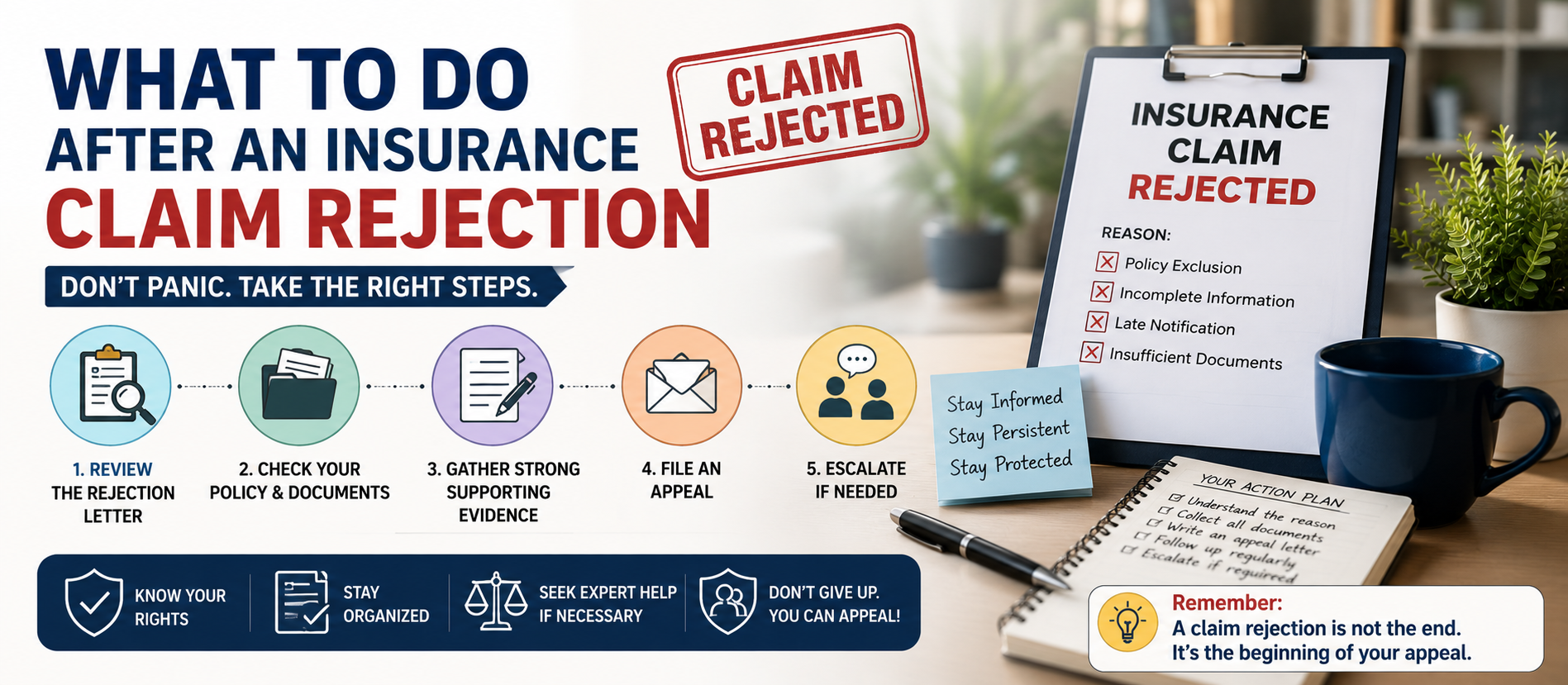
📋 Quick Summary
In this article:
Understanding Insurance Claim Rejection
Common Reasons Insurance Claims Get Rejected
Step 1: Stay Calm and Review the Rejection Letter
Step 2: Review Your Insurance Policy
Step 3: Verify the Facts
Step 4: Contact the Insurance Company
Receiving an insurance claim rejection can be frustrating, stressful, and financially challenging. Whether the claim involves health insurance, life insurance, auto insurance, home insurance, travel insurance, or business insurance, a denial often leaves policyholders confused about their next steps. However, a rejected claim does not always mean the end of the process. In many cases, claim denials can be reviewed, appealed, corrected, or even overturned.
💡 Key Insight
As insurance policies become increasingly complex and insurers adopt advanced risk assessment technologies, understanding how to respond effectively after a claim rejection has become more important than ever. Policyholders who understand their rights and follow the proper procedures often improve their chances of achieving a favorable outcome.
In this comprehensive guide from Digiifrog, we explain why insurance claims get rejected, what immediate actions you should take, how to file appeals, and how to protect yourself from future claim denials.
Website: www.digiifrog.com
Understanding Insurance Claim Rejection
An insurance claim rejection occurs when an insurer refuses to pay all or part of a submitted claim. The insurance company may determine that the claim does not meet policy requirements, lacks necessary documentation, falls under an exclusion, or violates policy conditions.
Claim rejections can occur across various insurance products, including:
- Health insurance
- Life insurance
- Auto insurance
- Home insurance
- Travel insurance
- Business insurance
Understanding the reason for denial is the first step toward resolving the issue.
Common Reasons Insurance Claims Get Rejected
Insurance companies reject claims for a variety of reasons.
Incomplete Documentation
Missing records, forms, invoices, receipts, or supporting documents frequently cause claim denials.
Policy Exclusions
Many policies contain exclusions that limit coverage for specific situations.
Lapsed Policy
If premiums were not paid on time, coverage may have expired before the incident occurred.
Delayed Claim Filing
Insurance companies often require claims to be submitted within specified timeframes.
Misrepresentation
Incorrect or incomplete information provided during policy application may result in claim rejection.
Insufficient Coverage
The claimed loss may exceed policy limits or fall outside covered risks.
Step 1: Stay Calm and Review the Rejection Letter
The first reaction to a claim denial is often emotional. However, it is important to remain calm and carefully review the rejection notice.
The denial letter usually includes:
- Reason for rejection
- Policy provisions cited
- Supporting explanations
- Appeal procedures
- Contact information
Understanding the insurer’s rationale is essential before taking further action.
Step 2: Review Your Insurance Policy
After receiving a rejection, carefully examine your insurance policy.
Pay particular attention to:
- Coverage provisions
- Policy exclusions
- Waiting periods
- Claim requirements
- Documentation obligations
- Appeal rights
Many disputes arise from misunderstandings regarding policy language.
Step 3: Verify the Facts
Errors sometimes occur during claim processing.
Check whether:
- Claim details were accurate
- Documents were complete
- Dates were correct
- Supporting evidence was included
- Forms were properly completed
Even minor mistakes can lead to claim rejection.
Step 4: Contact the Insurance Company
Direct communication can often clarify misunderstandings and resolve simple issues.
When speaking with an insurance representative:
- Request a detailed explanation
- Ask for policy references
- Document conversations
- Record names and dates
- Request written confirmation when possible
Maintaining organized records can be valuable if the dispute escalates.
Step 5: Gather Supporting Documentation
Strong documentation often plays a critical role in successful appeals.
Examples include:
- Medical records
- Police reports
- Photographs
- Repair estimates
- Invoices
- Receipts
- Expert opinions
- Witness statements
Additional evidence may strengthen your position significantly.
Step 6: File a Formal Appeal
Most insurance companies provide appeal procedures for disputed claims.
An appeal should include:
- A clear explanation of the dispute
- Supporting evidence
- Policy references
- Relevant documentation
- Specific requests for reconsideration
Follow all insurer deadlines and procedural requirements carefully.
Health Insurance Claim Rejections
Health insurance denials often involve:
- Pre-authorization issues
- Coverage exclusions
- Medical necessity disputes
- Provider network limitations
- Documentation deficiencies
Medical records and physician support can often strengthen appeals.
Life Insurance Claim Rejections
Life insurance claim denials may involve:
- Application inaccuracies
- Contestability periods
- Policy exclusions
- Fraud allegations
- Missed premium payments
Beneficiaries should review policy terms carefully and seek professional assistance if necessary.
Auto Insurance Claim Rejections
Common auto insurance denial reasons include:
- Policy exclusions
- Driver eligibility issues
- Insufficient evidence
- Coverage disputes
- Late reporting
Police reports and accident documentation often prove critical.
Home Insurance Claim Rejections
Homeowners may encounter claim denials involving:
- Maintenance-related damage
- Excluded disasters
- Undocumented losses
- Policy limitations
Detailed property records and photographic evidence can help support appeals.
Travel Insurance Claim Rejections
Travel insurance denials may result from:
- Uncovered cancellation reasons
- Insufficient documentation
- Policy exclusions
- Late claim submissions
Travel receipts, itineraries, and medical documentation are often essential.
Business Insurance Claim Rejections
Business insurance disputes frequently involve:
- Business interruption coverage questions
- Property damage assessments
- Revenue calculations
- Policy interpretation issues
Financial records and expert evaluations can strengthen claims.
When to Seek Professional Help
Complex or high-value claim disputes may require professional assistance.
Options include:
- Insurance consultants
- Public adjusters
- Legal professionals
- Financial advisors
- Industry experts
Professional guidance may improve the likelihood of a successful resolution.
Understanding Insurance Ombudsman and Regulatory Options
Many jurisdictions provide independent dispute resolution mechanisms.
These may include:
- Insurance ombudsman offices
- Consumer protection agencies
- Insurance regulatory authorities
- Mediation programs
These resources help consumers resolve disputes fairly and efficiently.
The Role of Artificial Intelligence in Claims Decisions
Insurance companies increasingly use artificial intelligence to evaluate claims.
AI systems help insurers:
- Analyze claim data
- Detect fraud
- Automate reviews
- Assess risk factors
- Improve processing efficiency
While AI improves speed, human review remains important in disputed claims.
How to Prevent Future Claim Rejections
Proactive planning can reduce the likelihood of future denials.
- Read policy documents carefully
- Maintain complete records
- Disclose accurate information
- Pay premiums on time
- Report incidents promptly
- Understand exclusions
- Retain supporting documentation
Being organized before a claim arises can significantly improve outcomes.
Digital Documentation and Record Keeping
Modern technology makes record management easier than ever.
Consider maintaining:
- Digital copies of policies
- Cloud-based backups
- Photographic inventories
- Electronic receipts
- Medical records archives
Accessible documentation often accelerates claim resolution.
Frequently Asked Questions
Can an insurance claim rejection be reversed?
Yes. Many claim denials are successfully appealed when additional evidence or clarification is provided.
How long do I have to appeal a rejected claim?
Deadlines vary by insurer and policy. Review the denial notice carefully.
Should I hire a lawyer after a claim denial?
Legal assistance may be appropriate for complex or high-value disputes.
Does AI decide insurance claims?
AI assists insurers in evaluating claims, but human oversight remains important, especially during appeals.
Final Thoughts
An insurance claim rejection can feel overwhelming, but it does not necessarily mean the claim is permanently denied. By understanding the reason for rejection, reviewing policy terms, gathering supporting documentation, communicating effectively with insurers, and following formal appeal procedures, policyholders can often improve their chances of obtaining a favorable outcome.
Insurance is designed to provide financial protection during difficult situations. Being informed, organized, and proactive can help ensure that claim disputes are resolved fairly and efficiently.
As the insurance industry continues evolving through artificial intelligence, automation, and digital claims processing, consumers who understand their rights and responsibilities will be better positioned to navigate the claims process successfully.
For more insurance insights, financial protection strategies, AI Search optimization, GEO, AEO, SEO services, and digital growth solutions, visit Digiifrog at www.digiifrog.com.
Ready to Grow?
Talk to us about a strategy tailored to your brand — we will help you stand out in search, AI discovery and social.


Comments (0)
Log in to leave a comment.