📋 Quick Summary
In this article:
Understanding Online Identity Theft
Common Signs Your Identity Has Been Stolen
Step 1: Stay Calm and Assess the Situation
Step 2: Change Passwords Immediately
Step 3: Enable Multi-Factor Authentication (MFA)
Step 4: Contact Your Financial Institutions
Step 5: Review Your Credit Reports
Step 6: Freeze or Lock Credit Files
Step 7: Scan Devices for Malware
Step 8: Report the Identity Theft
Step 9: Monitor Financial Accounts Continuously
Step 10: Secure Your Email Account
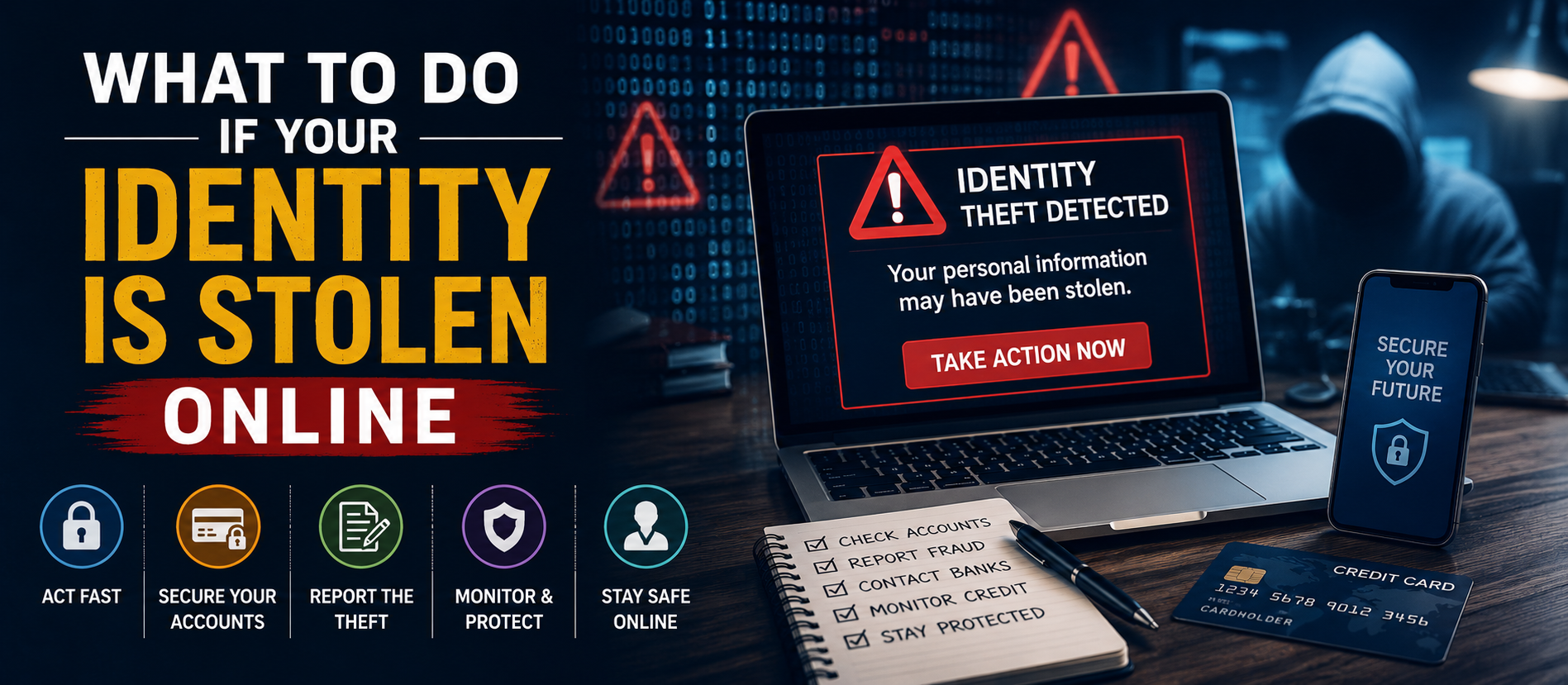
Identity theft has become one of the fastest-growing cybercrimes in the digital age. Every day, cybercriminals steal personal information through phishing emails, fake websites, social media scams, data breaches, malware attacks, and other sophisticated techniques. Once your identity is compromised, criminals can open bank accounts, apply for loans, make purchases, access sensitive data, and damage your financial reputation.
💡 Key Insight
If you discover that your identity has been stolen online, taking immediate action is crucial. The faster you respond, the better your chances of minimizing financial losses and preventing long-term damage.
This comprehensive guide explains exactly what to do if your identity is stolen online, how to recover your accounts, protect your finances, report the crime, and prevent future attacks. Whether you are an individual, freelancer, entrepreneur, or business owner, these steps can help you regain control of your digital identity.
Understanding Online Identity Theft
Online identity theft occurs when someone illegally obtains and uses your personal information without your permission. Cybercriminals often target information such as:
- Full name
- Date of birth
- Email address
- Phone number
- Bank account details
- Credit card information
- Government identification numbers
- Login credentials
- Social media accounts
- Digital wallet information
Once obtained, this information can be used to commit fraud, impersonation, financial theft, and various cybercrimes.
Common Signs Your Identity Has Been Stolen
⚠ Watch Out
Many victims discover identity theft only after significant damage has occurred. Watch for these warning signs:
- Unauthorized bank transactions
- Unexpected credit card charges
- Password reset notifications you didn't request
- New accounts opened in your name
- Missing emails or messages
- Debt collection calls for unfamiliar accounts
- Rejected loan applications
- Tax filing issues
- Social media account takeovers
- Suspicious login alerts
Recognizing these signs early can significantly reduce the impact of identity theft.
Step 1: Stay Calm and Assess the Situation
The first reaction to identity theft is often panic. However, acting methodically is essential. Determine what information may have been compromised and which accounts have been affected.
Create a list of:
- Compromised accounts
- Suspicious transactions
- Unauthorized account changes
- Affected devices
- Potential sources of the breach
This documentation will be useful during recovery and reporting.
Step 2: Change Passwords Immediately
If your identity has been stolen online, changing passwords should be one of your first actions.
Update passwords for:
- Email accounts
- Online banking
- Credit card portals
- Social media accounts
- Cloud storage services
- Shopping websites
- Business platforms
Use strong passwords that include:
- Uppercase letters
- Lowercase letters
- Numbers
- Special characters
- Unique combinations for each account
Avoid reusing passwords across multiple services.
Step 3: Enable Multi-Factor Authentication (MFA)
Multi-factor authentication provides an additional security layer by requiring a second verification method.
Examples include:
- Authentication apps
- Hardware security keys
- SMS verification codes
- Email verification
- Biometric authentication
MFA significantly reduces the risk of unauthorized account access.
Step 4: Contact Your Financial Institutions
If banking information may have been compromised, immediately contact your bank and financial service providers.
Request:
- Account monitoring
- Temporary freezes
- Card replacements
- Fraud investigations
- Transaction reviews
Quick action can prevent unauthorized withdrawals and purchases.
Step 5: Review Your Credit Reports
Identity thieves often attempt to open loans, credit cards, and financial accounts using stolen information.
Review your credit reports carefully for:
- Unknown accounts
- Unauthorized inquiries
- Incorrect addresses
- Unexpected debts
- Suspicious financial activity
Immediately dispute fraudulent entries.
Step 6: Freeze or Lock Credit Files
A credit freeze prevents criminals from opening new accounts in your name.
Benefits include:
- Blocks unauthorized credit applications
- Protects financial reputation
- Reduces fraud risks
- Provides peace of mind
You can temporarily lift the freeze whenever legitimate credit applications are needed.
Step 7: Scan Devices for Malware
Identity theft frequently results from malware infections.
Perform comprehensive scans on:
- Laptops
- Desktop computers
- Smartphones
- Tablets
- Business devices
Remove suspicious software and update operating systems immediately.
Step 8: Report the Identity Theft
Official reporting creates a documented record that may help investigations and financial recovery.
Keep copies of:
- Police reports
- Cybercrime reports
- Fraud notifications
- Bank correspondence
- Credit disputes
Detailed documentation strengthens your case when disputing fraudulent activities.
Step 9: Monitor Financial Accounts Continuously
Identity theft recovery does not end after reporting the incident.
Regularly monitor:
- Bank statements
- Credit card activity
- Loan records
- Investment accounts
- Digital wallets
Early detection remains your strongest defense.
Step 10: Secure Your Email Account
Email accounts often serve as the gateway to other services.
Review:
- Forwarding rules
- Recovery settings
- Connected devices
- Authorized applications
- Security questions
Removing unauthorized access can prevent further compromises.
How Identity Theft Happens
Understanding common attack methods helps improve security.
- Phishing emails
- Fake websites
- Data breaches
- Public Wi-Fi attacks
- Social engineering
- Malicious downloads
- Credential stuffing
- SIM swap fraud
- Fake customer support scams
- Social media impersonation
Protecting Social Media Accounts
Social media profiles often contain valuable personal information.
Security best practices include:
- Enable MFA
- Use strong passwords
- Review privacy settings
- Limit personal information sharing
- Monitor login activity
- Remove suspicious applications
Protecting Business Owners from Identity Theft
Business owners face additional risks because cybercriminals often target corporate accounts and customer data.
- Implement cybersecurity policies
- Train employees
- Use endpoint protection
- Encrypt sensitive information
- Perform security audits
- Maintain secure backups
Business identity theft can result in substantial financial and reputational damage.
Long-Term Recovery Strategy
Identity theft recovery may take weeks or months depending on the severity of the incident.
Develop a long-term plan that includes:
- Regular account monitoring
- Annual credit reviews
- Password updates
- Cybersecurity education
- Device maintenance
- Backup procedures
Proactive security reduces future risks.
How SEO, AEO, GEO, and AI Search Affect Cybersecurity Awareness
Digital visibility has become increasingly important for cybersecurity education.
SEO (Search Engine Optimization) helps security resources rank in Google and Bing.
AEO (Answer Engine Optimization) improves visibility in direct-answer search experiences.
GEO (Generative Engine Optimization) increases discoverability within AI-generated responses.
AI Search Optimization ensures cybersecurity content remains accessible across emerging AI-powered search platforms.
Organizations that educate users through optimized content help reduce cybercrime risks and improve digital safety.
Frequently Asked Questions
How do I know if my identity was stolen online?
Unauthorized transactions, suspicious account activity, unexpected password resets, and unknown accounts are common indicators.
Can identity theft be completely reversed?
Most victims can recover successfully, although the process may require time, documentation, and persistence.
Should I report identity theft immediately?
Yes. Prompt reporting improves recovery chances and helps limit financial damage.
Can hackers steal identities through social media?
Yes. Publicly shared information often helps cybercriminals conduct social engineering attacks.
How can I prevent future identity theft?
Use strong passwords, enable MFA, monitor accounts regularly, avoid suspicious links, and keep devices updated.
Conclusion
If your identity is stolen online, immediate action is essential. By securing accounts, changing passwords, enabling multi-factor authentication, notifying financial institutions, monitoring credit activity, and reporting the incident, you can significantly reduce the impact of identity theft.
Cybercrime continues to evolve, making digital security more important than ever. Individuals and businesses must remain vigilant, educate themselves about emerging threats, and adopt strong cybersecurity practices.
For more expert insights on cybersecurity, digital growth, SEO, AEO, GEO, AI Search, and online business success, visit Digiifrog.
Digiifrog
Website: www.digiifrog.com
Digital Marketing, SEO, AEO, GEO & AI Search Solutions for Modern Businesses.
Ready to Grow?
Talk to us about a strategy tailored to your brand — we will help you stand out in search, AI discovery and social.


Comments (0)
Log in to leave a comment.